Closed Chain Hip Abduction: Exercises and Setup
Understanding Closed Chain Hip Abduction: Mechanics and Functional Role
In strength and conditioning, the distinction between open and closed kinetic chain movements shapes how muscles fire and stabilize joints. Traditional hip abduction often brings to mind seated selectorized machines or side-lying leg raises, both of which are open chain patterns where the foot moves freely through space. To explore how seated equipment compares with practical hip mechanics, consulting a dedicated hip abduction guide can clarify how non-weight-bearing patterns isolate the lateral musculature.
Closed chain hip abduction, by contrast, occurs when the distal segment—usually the foot—is planted firmly against an immovable surface like the ground or a sturdy training platform. When the foot is fixed, the role of the hip abductor complex, comprising the gluteus medius, gluteus minimus, and tensor fasciae latae, fundamentally shifts. Rather than sweeping the lower limb away from the midline, these muscles pull on the pelvis to control tilt, stabilize the sacrum, and keep the hips level over the standing leg. For trainees building fundamental bodyweight regimens, reviewing an exercise closed chain guide provides a clear picture of how grounded movements drive functional movement control.
Functionally, grounded lateral hip control is vital for human locomotion. During every walking stride, running gait cycle, or single-leg landing, the stance-leg abductors must contract vigorously to prevent the contralateral hip from dipping toward the floor. Developing closed kinetic chain control creates pelvic equilibrium, enhances multi-directional agility, and builds a stable foundation for compound lifts like squats and lunges.
Core Closed Chain Hip Abduction Exercises for Strength and Stability
Implementing targeted closed chain hip abduction exercises into a training program requires attention to alignment, deliberate tempo, and stable footing. Grounded drills teach the lateral hip complex to withstand gravitational forces and ground reaction torque.
- Pelvic Drops and Hip Hikes: Standing upright on one leg on an elevated step or firm balance block with the free leg hanging slightly off the edge, allow the free hip to lower gently toward the floor by relaxing the stance hip. Drive down through the stance foot and contract the grounded glute to pull the free hip back up above parallel. This movement isolates the stance leg abductors in a pure closed chain pelvic-leveling pattern. Trainees seeking broader lower-body programming can pair this with a comprehensive hip exercise guide to balance lateral work with sagittal glute training.
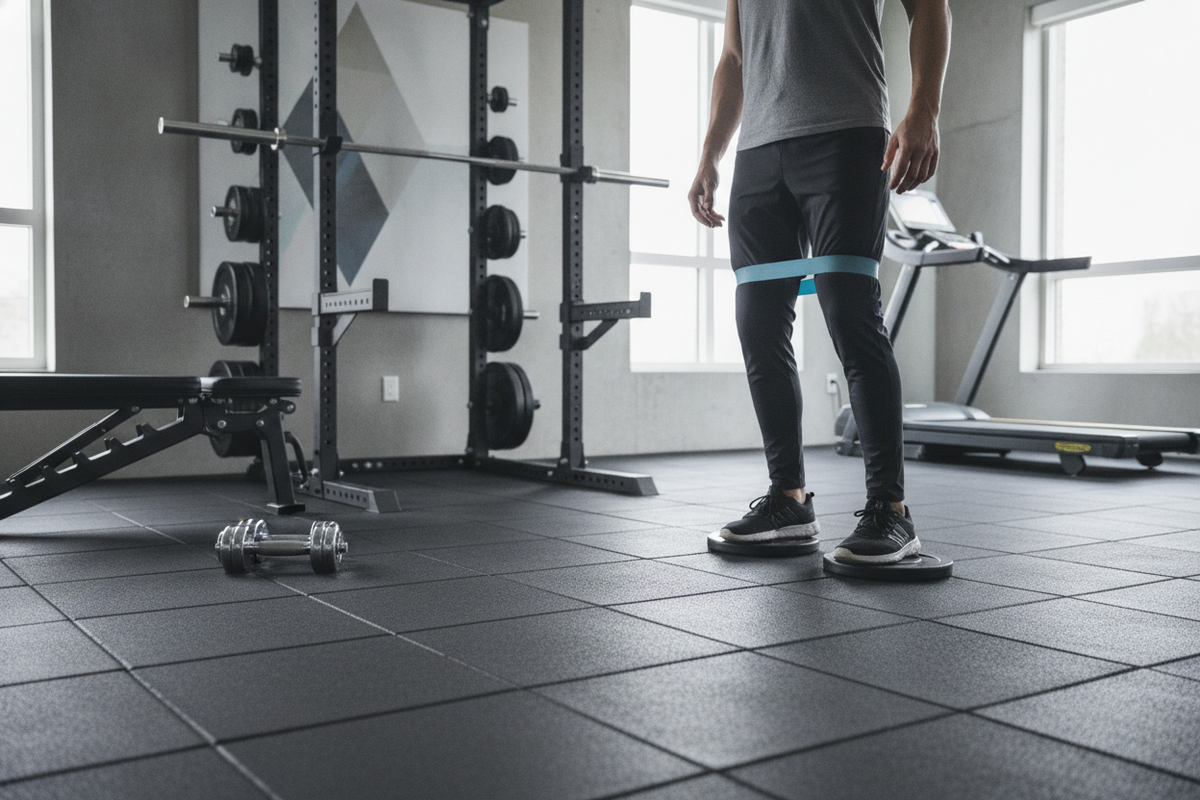
- Banded Stance-Leg Resisted Abduction: Place a resistance loop around both ankles or calves. Step the moving leg outward while maintaining strict vertical stability through the grounded foot. While the moving leg performs an open chain abduction, the stance leg acts as an isometric closed chain stabilizer, resisting the lateral pull of the elastic band.
- Strict Lateral Step-Downs: Standing atop a low box, lower the non-working heel toward the floor alongside the platform while keeping the pelvis level and hips square. The grounded leg abductor controls lateral shifting and prevents the knee from collapsing inward during descent.
- Grounded Side Planks: While resting on an elbow, press the outer edge of the bottom foot into a firm training mat to lift the hips into a straight diagonal line. The bottom hip works in a closed chain capacity, driving against the surface to suspend pelvic weight against gravity.
Kinetic Vector Alignment and Common Execution Errors
Executing grounded hip drills demands precision. Because the pelvis and spine are directly linked, compensations often manifest when the lateral hip musculature fatigues or lacks initial motor control. Integrating these movement concepts alongside an exercise chain guide reinforces whole-body coordination and structural awareness.
A common error during pelvic drops and hip hikes is lateral lumbar flexion, commonly described as torso side-bending. Trainees frequently crunch their obliques to hike the pelvis rather than contracting the stance-leg glute medius. The torso should remain tall and neutral, ensuring that pelvic movement originates solely from the grounded hip joint.
Another frequent issue is improper knee tracking on the stance leg. Under lateral tension, the knee may drift inward into valgus collapse. Cues should emphasize pressing through the tripod of the foot—the heel, big toe base, and fifth metatarsal—while gently externally rotating the femur so the knee tracks in line with the second toe. Maintaining slow tempos and incorporating brief isometric pauses at peak contraction encourages muscular endurance over momentum.
Flooring Demands: Friction, Subfloor Defense, and Single-Leg Stability
Closed chain training places specialized mechanical demands on home gym flooring. During unilateral loading, your entire body mass, plus any added resistance, concentrates onto the surface area of a single shoe sole. When lateral stability drills are introduced, this contact generates significant lateral shear forces against the floor.
On smooth domestic surfaces such as hardwood, laminate, or glazed tile, high-shear forces can cause standard lightweight yoga mats or unsecured foam tiles to slide. A shifting base disrupts kinetic chain alignment and forces the foot to claw for traction, distracting from targeted pelvic stabilization.
Home trainees also face a balance between surface density and cushioning. Highly compressible, squishy foam pads can destabilize the ankle joint by creating an unpredictable foundation, leading to premature fatigue in the lower leg rather than the hip. Conversely, training directly on bare concrete provides traction but lacks the acoustic damping and joint comfort needed for dynamic step-downs. Dense rubber flooring or heavy commercial-grade exercise mats provide the necessary structural firmness for foot proprioception while preventing concentrated point loads from damaging home subfloors when using step platforms or weights.
Home Gym Layout, Mat Selection, and Equipment Staging
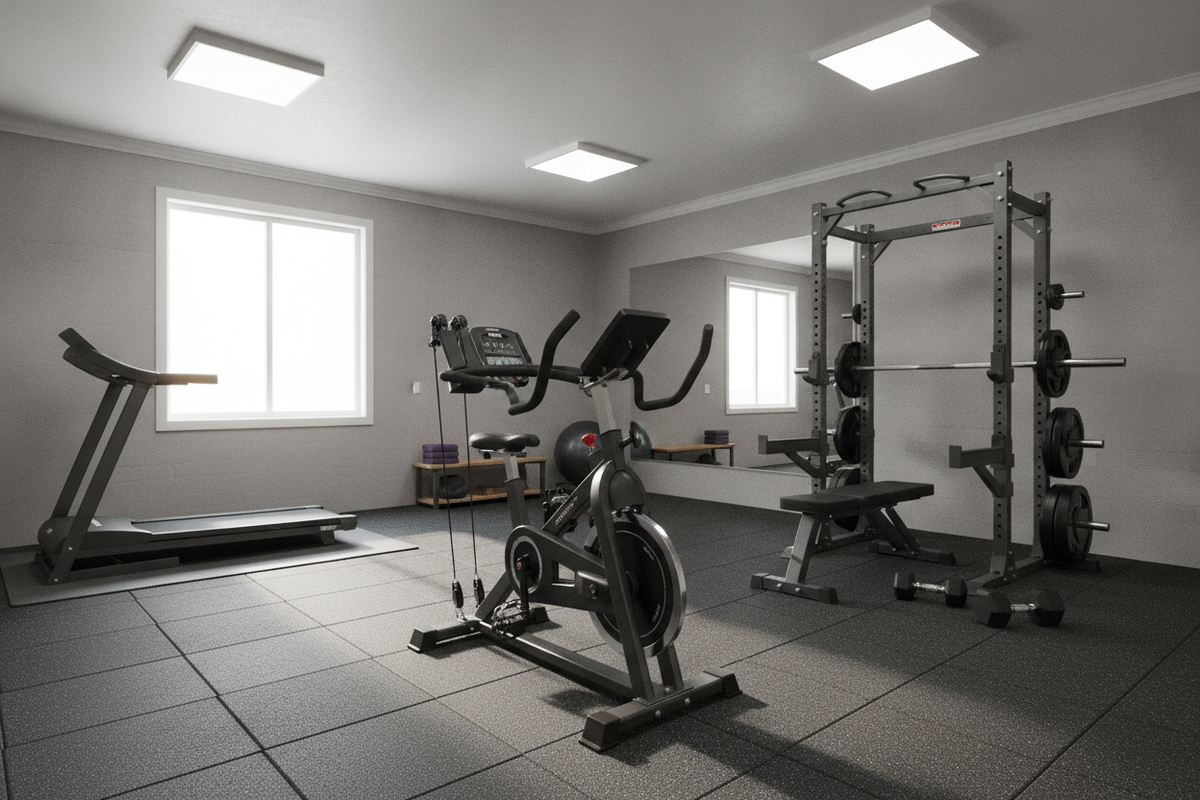
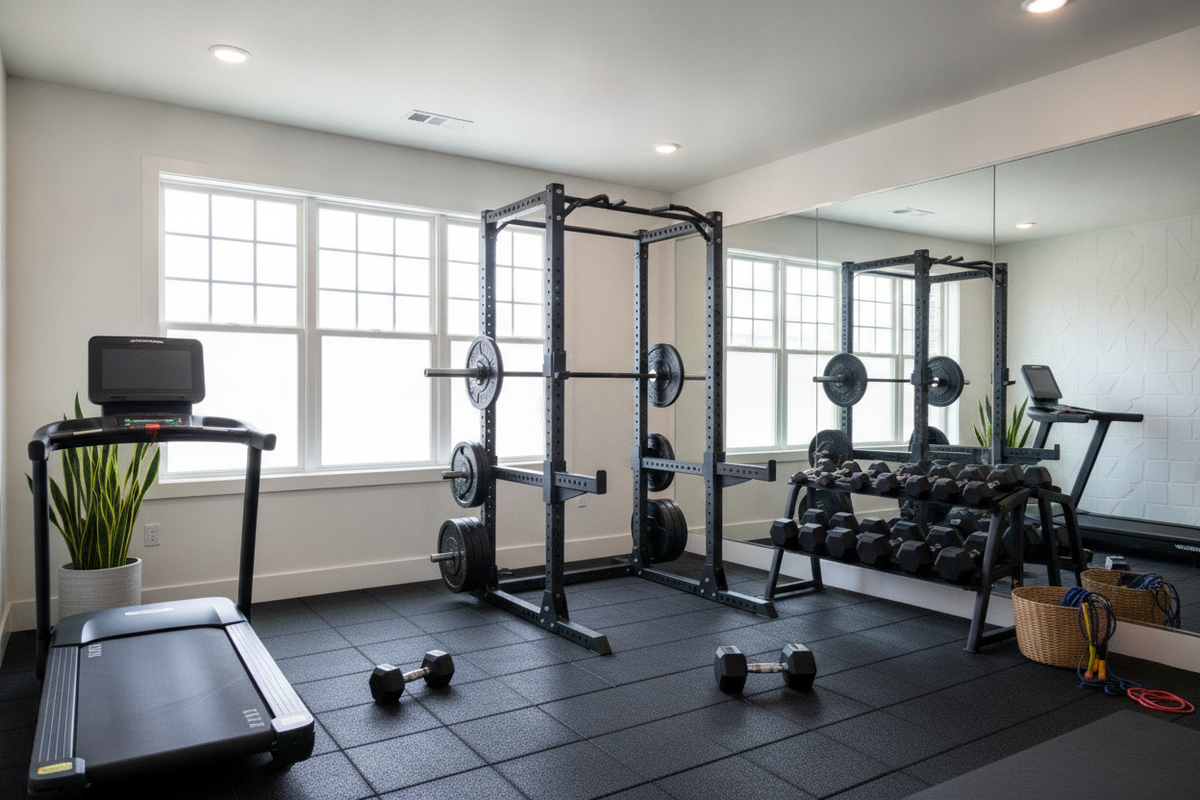
Setting up a functional space for closed chain hip abduction exercises requires thoughtful layout and dependable equipment choices. In my observation, a stable mat base transforms subtle stability drills from frustrating balancing acts into focused strength work.
- Mat Selection and Grip: Choose dense, non-slip rubber mats with textured surfaces that resist stretching or bunching when pushed against horizontally. Ensure the mat underside grips the underlying flooring securely, utilizing non-skid underlays if placing rubber over finished hardwood.
- Platform Clearance: When staging balance blocks or aerobic step platforms for hip hikes, position them squarely in the center of the mat surface. Leave adequate clearance on all sides so the free foot can hang and descend without grazing walls or adjacent racks.
- Auxiliary Support Placement: For trainees refining unilateral balance, place a sturdy upright rack, wall anchor, or dowel within arm's reach to offer light fingertip support without encouraging leaning.
- Surface Cleanliness: Keep training mats free from dust, chalk, and perspiration. Regular surface cleaning maintains frictional contact, ensuring shoes grip firmly during lateral hip drives and isometric holds.