
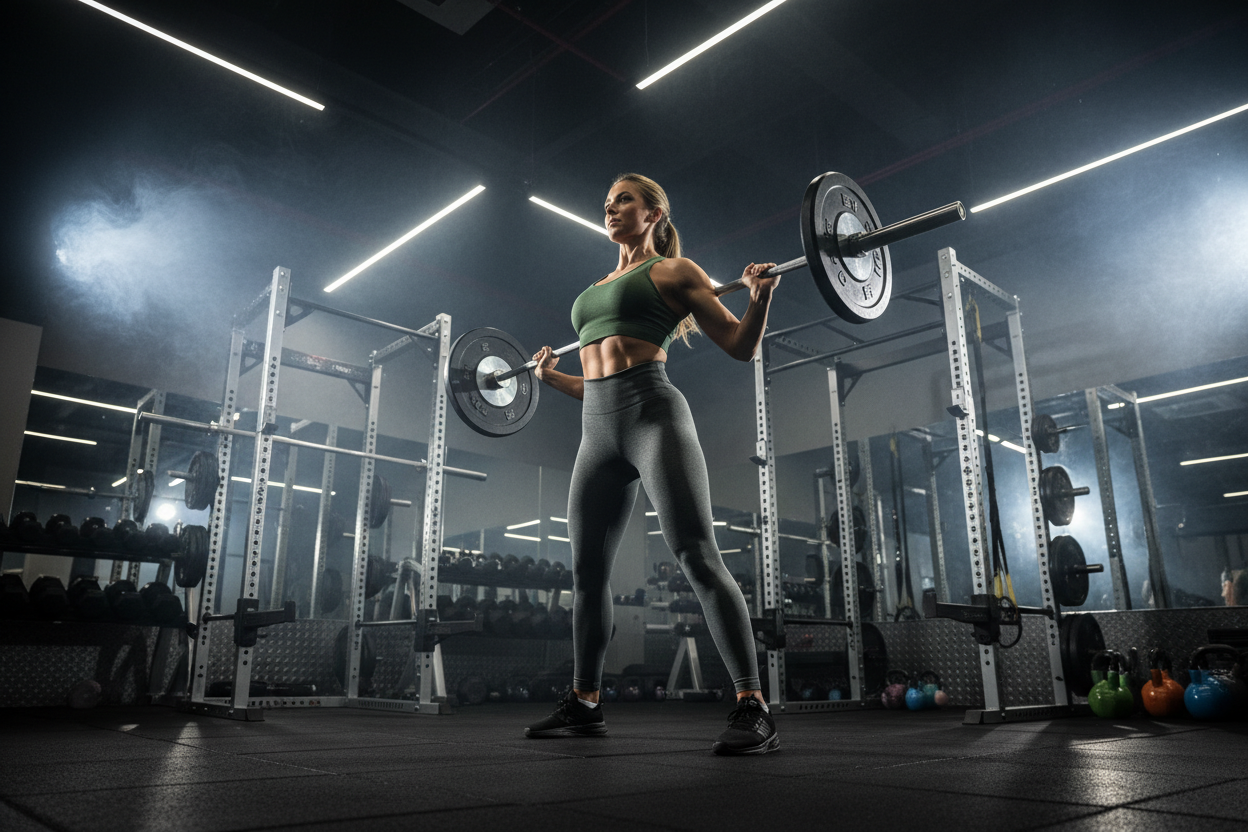
Building Power: The Definitive Guide to Bum and Hip Exercises
Most gym-goers treat lower body training as a simple equation: just squat and the results will come. But if you have been grinding away at the rack without seeing significant changes in your silhouette or power output, you are likely missing the nuance of true posterior chain training.
Developing the glutes and hips isn't just about aesthetics; it is about establishing a stable base for almost every athletic movement you perform. To actually change your physique, you need to execute **bum and hip exercises** with a focus on mechanical tension and metabolic stress, not just mindless movement.
Key Takeaways
- Compound First: Always prioritize multi-joint movements like hip thrusts and deadlifts before isolation work.
- Mind-Muscle Connection: If you don't feel the glutes contracting, you are likely compensating with your lower back or hamstrings.
- Volume Matters: The glutes are large muscles that respond well to a mix of heavy loads (low reps) and metabolic burnout (high reps).
- Unilateral Training: Single-leg exercises are non-negotiable for fixing imbalances in the hip complex.
The Science of Glute Hypertrophy
Before grabbing a barbell, you need to understand what you are trying to build. The buttocks aren't one single muscle; they are a complex group consisting of the gluteus maximus, medius, and minimus.
The maximus creates that front-to-back size, while the medius and minimus provide the shape and hip stability. Effective hip and buttock exercises must target all three heads. If you only move in one plane of motion (like only doing squats), you leave significant gains on the table.
The Best Exercises for Hips and Buttocks
1. The Hip Thrust (The King of Extension)
Squats are great, but the hip thrust is the undisputed king of glute isolation. It places the glutes in a position of maximum shortening against the load.
The Fix: Keep your chin tucked and your ribs down. Many lifters arch their back, turning this into a lumbar spine exercise. Drive through your heels until your hips are fully locked out.
2. Bulgarian Split Squats
This is the movement everyone loves to hate. It is arguably one of the best exercises for hips and buttocks because it forces the stabilizing muscles to work overtime.
The Fix: To target the glutes specifically, lean your torso forward slightly (about 30 degrees) and keep your shin vertical. An upright torso shifts the tension to the quads.
3. Cable Glute Kickbacks
While the previous two build mass, kickbacks sculpt. This isolation movement allows you to fatigue the muscle fibers without taxing your central nervous system heavily.
The Fix: Don't swing your leg using momentum. A slight pause at the top of the movement creates the peak contraction necessary for growth.
Common Mistakes That Kill Progress
The most frequent issue I see as a coach is "sleepy glutes," or gluteal amnesia. This happens when your hip flexors are so tight from sitting all day that your glutes cannot fully fire.
If you perform a deadlift and feel it entirely in your lower back, your hips aren't doing their job. You must incorporate dynamic stretching for the hip flexors before your session to unlock your range of motion.
My Training Log: Real Talk
Let's be honest about what heavy hip training actually feels like. When I first started pushing heavy weight on hip thrusts (moving past the 300lb mark), the biggest limiting factor wasn't my strength—it was the pain in my hip bones.
I remember distinctly the first time I used a thin barbell pad; I woke up the next day with deep, purple bruising right across my iliac crests. It looked like I'd been in a fight. I learned the hard way that you need a high-density foam pad, and sometimes even a yoga mat folded under that, once the weight gets serious.
There is also the "glute trembles." It’s that specific, wobbly sensation when you walk down the gym stairs after a session where you truly hit the posterior chain. If you can walk down those stairs normally without gripping the rail, you probably didn't go hard enough on the split squats.
Conclusion
Building a powerful lower body requires patience and a tolerance for discomfort. By selecting the right **bum and hip exercises** and focusing intensely on form over ego-lifting, you will build a posterior chain that is both show and go. Stop looking for shortcuts and start embracing the heavy hinge.
Frequently Asked Questions
How often should I train my glutes and hips?
For most intermediates, training glutes 2 to 3 times per week is optimal. The glutes recover relatively quickly compared to the lower back, allowing for higher frequency.
Why do I feel these exercises in my lower back?
This usually indicates poor core bracing or anterior pelvic tilt. Reduce the weight, tuck your pelvis slightly, and focus on squeezing the glutes to initiate the movement rather than arching the spine.
Can I build hips without weights?
You can improve shape and tone with bodyweight exercises, but significant muscle growth (hypertrophy) generally requires progressive overload. Eventually, you will need to add resistance like bands, dumbbells, or barbells to continue seeing results.


