Calories Burned Weight Lifting: Training and Floor Setup
Understanding Energy Output and Calorie Expenditure in Resistance Training
Evaluating calorie burned weight lifting dynamics requires looking beyond generic estimates found on automated cardiovascular displays. Resistance training functions through distinct metabolic pathways where energy turnover is influenced by systemic muscular involvement, total mechanical work performed, and the density of the training session. Rather than viewing calorie burn as a static rate, lifters benefit from examining the primary physiological variables that dictate work capacity.
Primary Drivers of Resistance Energy Demands
Every strength movement demands fuel to generate force, stabilize joints, and recover between efforts. The overall energy expenditure of a session depends heavily on individual body mass, the total volume lifted across sets, and the recruitment of motor units. When training with progressive resistance, lifters often wonder how many calories do you burn in weight lifting sessions across varying durations. The answer is shaped by systemic fatigue and sustained muscular tension rather than simple clock time.
Compound Movement Patterns Versus Isolated Loading
Movement choice plays a decisive role in metabolic demand. Multi-joint exercises such as squats, deadlifts, overhead presses, and bent-over rows require simultaneous activation across multiple large muscle groups. In contrast, isolated loading—such as bicep curls, lateral raises, or triceps extensions—involves minimal stabilizing musculature and yields a smaller systemic energy draw. To structure balanced compound splits that maximize work capacity across major muscle groups, consult our comprehensive strength training workout guide. Because lower body movements recruit extensive musculature and demand high metabolic drive, referring to a detailed leg workout strength guide provides valuable structural sequencing.
Rest Intervals, Pacing, and Training Density
Training density represents the volume of physical work executed within a designated timeframe. Traditional strength protocols feature longer recovery periods to support maximum force output on subsequent attempts. Shorter rest intervals elevate heart rate and increase sustained energy turnover throughout the workout window. Balancing rest periods against load sustainability allows lifters to adjust the metabolic demand of their routines without compromising technical execution.
Modalities and Programming Variables That Shift Energy Demands
The equipment chosen and the manner in which sets are arranged introduce notable shifts in how energy is spent during strength work.
Free Weights Versus Fixed Resistance Tracks
Free weights, including barbells and dumbbells, require the lifter to stabilize three-dimensional planes of motion throughout each repetition. This constant core stabilization and joint micro-adjustment increase total muscular engagement. Conversely, selectorized apparatuses guide movement along predetermined paths, isolating specific muscles while lowering the need for full-body bracing. For lifters pairing barbell complexes with guided plate-loaded stations, exploring our curated weight lifting collection offers stable equipment selections.
Circuit Structures and Dynamic Super-Sets
Structuring exercises into paired supersets or multi-station circuits significantly alters the conditioning stimulus of resistance work. By alternating non-competing muscle groups—such as moving immediately from an upper-body push to a lower-body hinge—lifters can sustain steady muscular work while localized muscle groups recover. This framework compresses session duration while elevating metabolic work, helping individuals achieve substantial training output in compact 30- to 45-minute windows.
Lifting Cadence and Time Under Tension
Modifying tempo changes the mechanical stress experienced by working tissues. Deliberate eccentric phases prolong time under tension, requiring prolonged force production from muscle fibers. Explosive concentric drives demand rapid motor unit recruitment, demanding immediate surges in energy availability. Adjusting tempo provides an accessible lever for increasing training intensity without necessarily adding external plate weight.
Subfloor Integrity and Foundation Stability During High-Output Lifting
A frequently neglected factor in lifting performance and energy output is the training surface beneath your feet. Executing heavy lifts or rapid transitions requires an unyielding, high-traction foundation to ensure mechanical efficiency.
Footing Grip and Kinetic Chain Force Transfer
Force generation begins at the contact points between the feet and the floor. When executing structural lifts like deadlifts, cleans, or lunges, any lateral foot slippage or squishy compression degrades force transmission through the kinetic chain. High-density rubber surfaces provide firm traction and minimal surface deformation, allowing lifters to drive through their heels and midfoot without losing mechanical leverage.
Dumbbell and Plate Drop Absorption for Home Training Spaces
High-density workouts often require rapid transitions between exercises, increasing the likelihood that free weights will be set down firmly or dropped. Without dedicated impact attenuation, repeated drops can compromise concrete foundations, crack residential tile, or scuff hardwood flooring. Protective floor layers mitigate structural shock and diffuse localized force spikes across a broader surface area, preserving the structural integrity of residential floors.
Subfloor Protection Under Heavy Equipment Racks
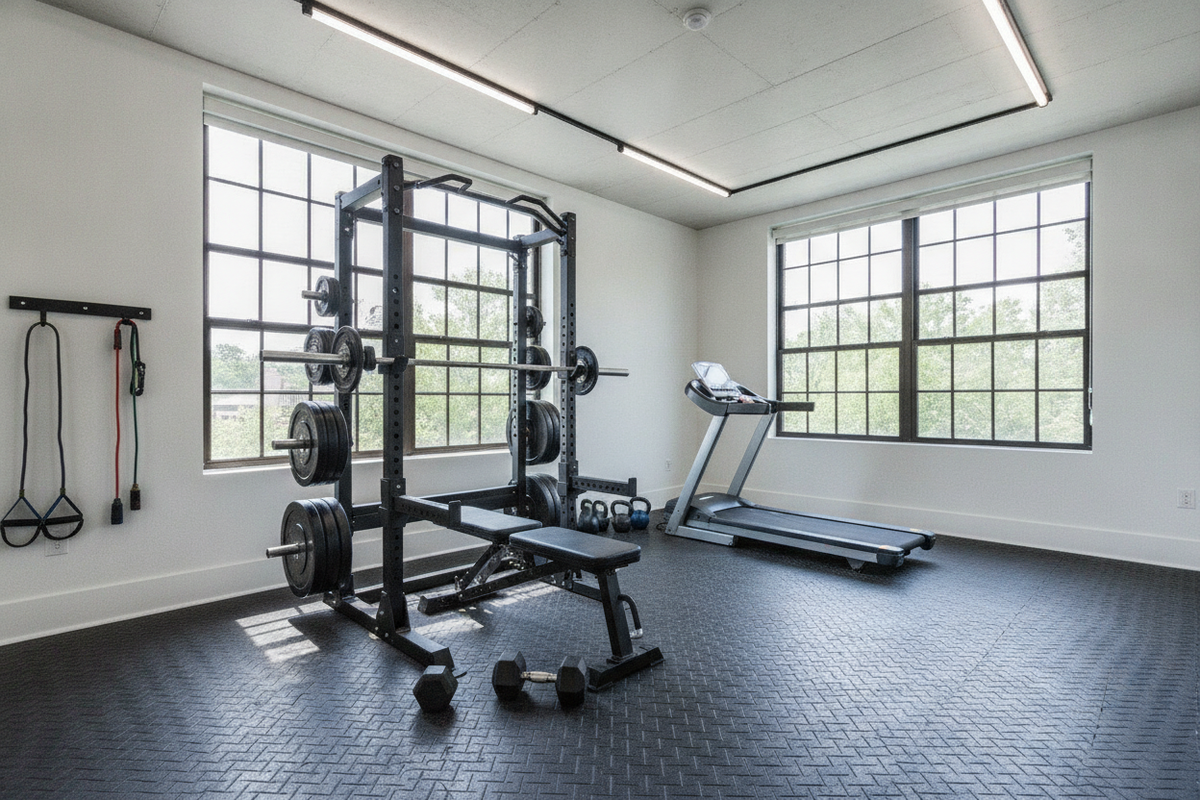
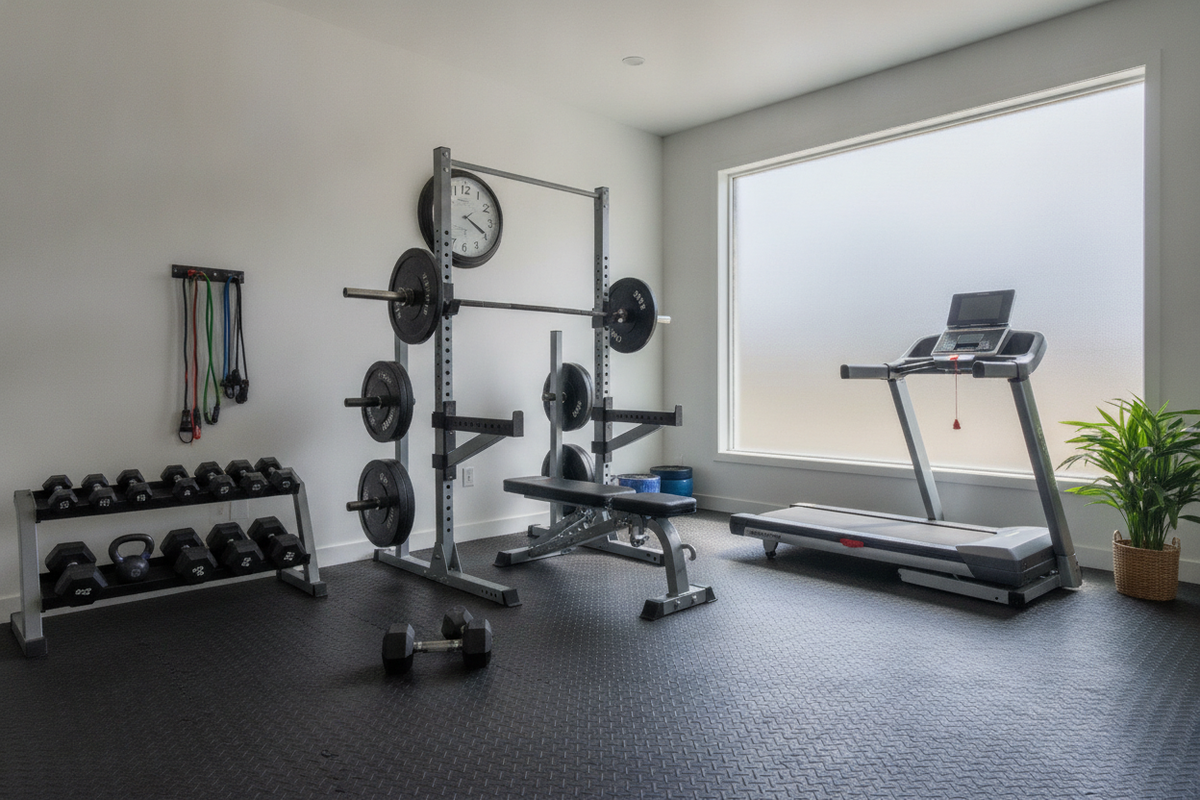
Static storage racks, power cages, and weight trees concentrate significant load onto small footprint brackets. Over extended periods, these point loads can indent or puncture unprotected flooring. Installing durable, shock-dispersing rubber mats creates a robust protective barrier between heavy steel frames and sensitive subfloors, preventing long-term structural wear.
Home Gym Staging Blueprints for Safe, High-Density Sessions
Optimizing a home training space for energetic, high-density lifting requires thoughtful spatial zoning, resilient surface coverage, and ongoing floor care.
Zoning Functional Liftoff and Transition Areas
An effective home gym layout separates heavy loading platforms from open functional zones. Dedicate clear runway space for kettlebell swings, lunges, and dumbbell circuits away from plate storage and rack uprights. When arranging versatile resistance gear like bands, collars, and adjustable handles, reviewing a dedicated strength training collection helps furnish an adaptable training zone.
Integrating Resilient Matting for Multi-Directional Stability
Creating an expansive, non-slip foundation for lunges, deadlifts, and circuit transitions is straightforward with a heavy-duty gym workout product. Seamless, large-format matting eliminates shifting seams and provides uniform traction across multi-directional movement patterns. In my own home gym staging, I appreciate how a wide, dense mat surface keeps heavy adjustable dumbbells completely steady during ground setups without marring the concrete below.
Maintaining Surface Hygiene and Mat Longevity
High-intensity lifting naturally produces sweat, chalk residue, and ambient dust. Keeping gym mats clean ensures long-term slip resistance and hygiene. Periodically sweep away loose debris and wipe down rubber surfaces using a damp microfiber mop with mild, non-abrasive soap. Avoid petroleum-based cleaners or harsh chemical bleaches that could degrade high-density materials over time, ensuring a safe, stable surface for every workout.