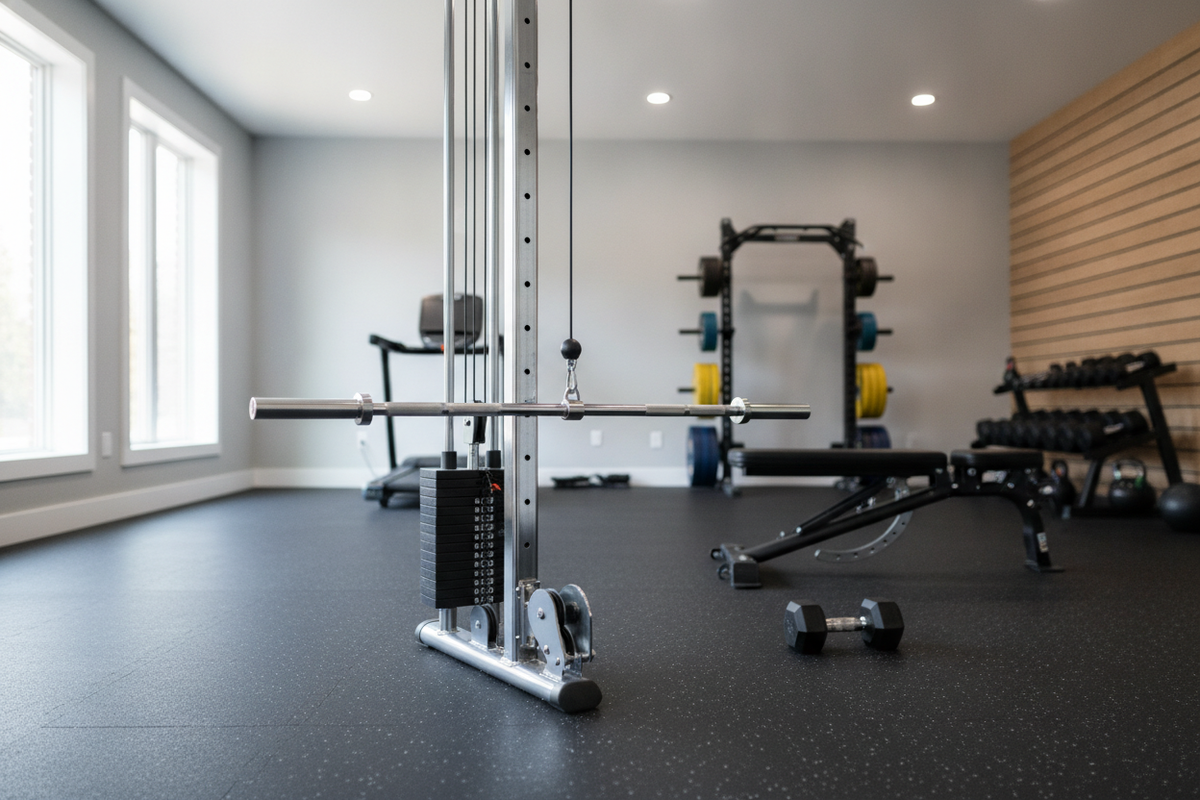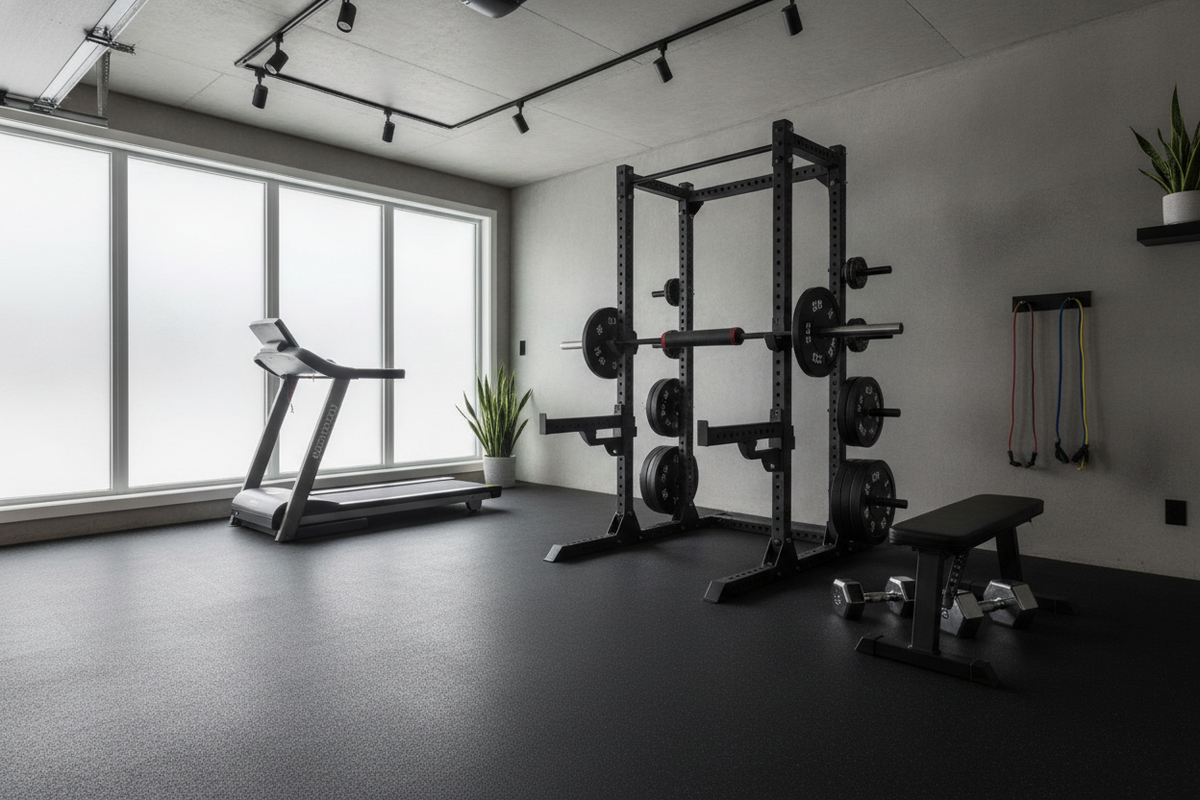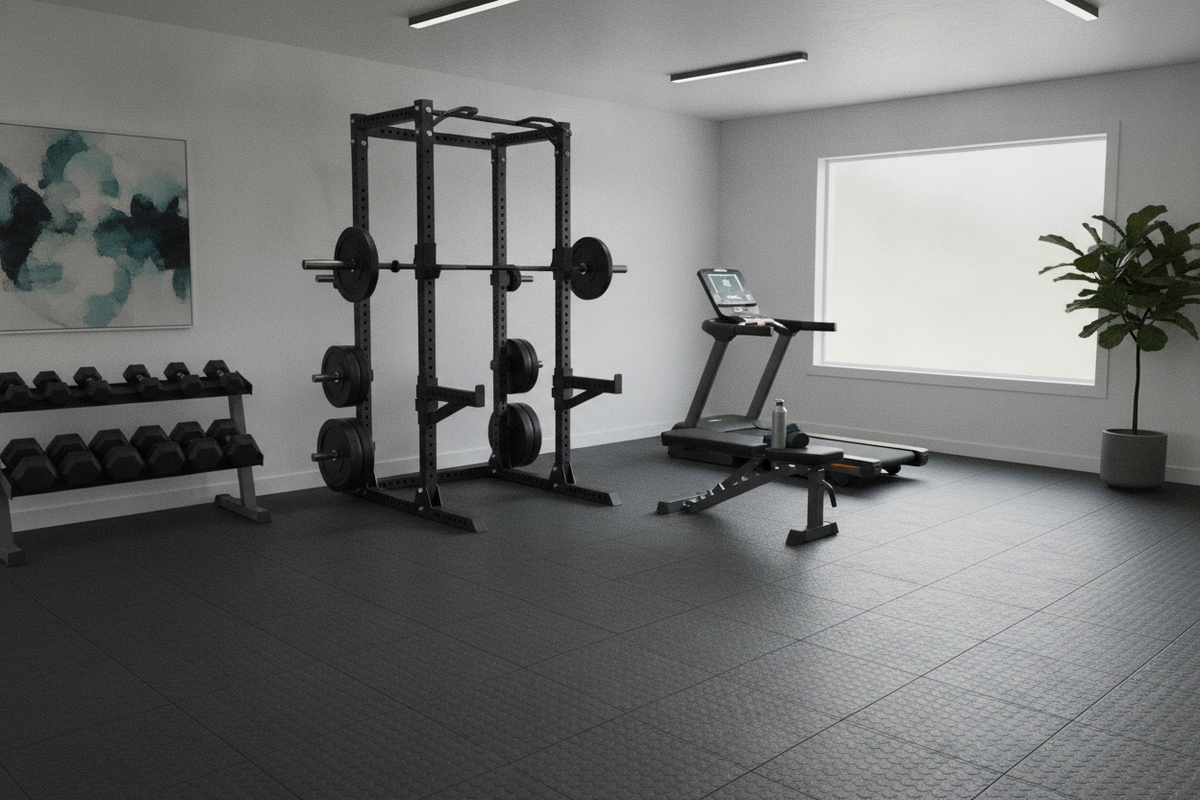
Rogue Gym Flooring Alternatives for Home Gyms
When planning a training space, many lifters immediately look at high-profile brands known for outfitting commercial gyms. Heavy-duty commercial rubber surfaces provide excellent traction and subfloor protection, but they also bring logistical hurdles that make residential builds tricky. Seeking out practical rogue gym flooring alternatives allows home gym builders to find durable surfaces that ship directly to your door, fit residential layouts, and bypass the headaches of heavy commercial freight.
Why Look for Rogue Gym Flooring Alternatives?
Commercial gym brands excel at bulk outfitting. However, ordering premium commercial rolled rubber flooring often requires a freight delivery truck, lift-gate fees, and multiple pairs of hands just to move a single roll into a garage or basement. When you order heavy commercial rubber, freight shipping costs can dramatically increase the overall project budget.
Another major reason lifters search for rogue gym mat alternatives is the installation environment. Inside an enclosed house or attached garage, the strong chemical off-gassing from vulcanized recycled rubber can linger for weeks. Homeowners frequently want materials with low odor, lighter individual section weights, and easier handling that one person can install on a weekend afternoon.
Comparing Heavy Duty Home Gym Flooring Options
Selecting the right heavy duty home gym flooring comes down to balancing floor protection, budget, and layout flexibility. Several options compete directly with traditional high-end rolled goods:
- Horse Stall Mats: Sourced from local farm supply stores, traditional stall mats are renowned for density and low cost. They handle dropped barbells and heavy iron plates effortlessly. However, stall mats are notorious for strong sulfur odors, oily manufacturing residues, and minor dimensional variations that make seamless seams difficult to achieve.
- Rolled Rubber Flooring: Available from specialty fitness suppliers, rolls create a clean, uniform look with fewer seams across large open areas. While they look sleek like commercial gyms, rolled rubber demands precise trimming, carpet tape or adhesive, and serious physical effort to maneuver.
- Interlocking Rubber Tiles: Modular tiles snap together without permanent glue. They are much easier to carry down basement stairs or arrange around odd room corners, though lower-grade versions may separate during high-impact lateral workouts.
- High-Density Workout Mats: Standalone, multi-layered fitness mats provide a quick, single-piece platform that covers substantial square footage without adhesive or multiple seams.
Roll Out Rubber Gym Mats for Quick Garage Setup
For many lifters, the ideal middle ground between permanent flooring and bare concrete is portable roll out rubber gym mats. Rather than gluing down continuous commercial rolls from wall to wall, rolling out individual heavy-duty surfaces allows you to define dedicated lifting zones.
If you prefer a clean setup without hauling heavy agricultural rubber or waiting weeks for off-gassing, browse an adaptable gym mat collection designed specifically for residential fitness spaces. Deploying a dedicated large exercise mat and gym flooring gives you ample room for barbell routines, kettlebell circuits, and floor work without requiring complex cutting or permanent perimeter tape.
Best Flooring for Garage Gym Spaces Over Concrete
Deciding on the best flooring for garage gym projects almost always means addressing bare concrete slabs. Concrete provides a stable base, but unpadded impacts from dropped bumper plates, dumbbells, or steel racks will quickly pit, crack, and dust the surface. Concrete also sweats during seasonal humidity shifts, meaning trapped moisture beneath poorly ventilated flooring can lead to mildew.
To avoid chipping your subfloor under power racks and heavy barbells, consult our heavy duty gym mat guide on shock absorption and subfloor resilience. Taking precautions to prevent surface scratches from shifting equipment also keeps your garage clean; our protective gym mat guide covers how to keep benches and weight trees from marring concrete coatings.
Rubber Flooring vs Dense Foam: What Most People Need
A common debate when shopping for rogue flooring alternatives is whether to invest in solid rubber flooring or high-density foam tiles. For heavy strength equipment, solid rubber remains the standard. Rubber resists compression under hundreds of pounds of steel, ensuring that your squat rack, bench, and weight stacks remain completely stable during heavy lifts.
Foam interlocking mats, while cheaper and softer underfoot, crush permanently under heavy equipment posts and can create an unstable foundation for heavy squats or deadlifts. However, most people who balance strength training with mobility work, yoga, or plyometrics prefer a hybrid surface—dense enough to support dropped weights while offering enough micro-cushioning to protect joints during burpees and floor stretches.
Installation, Odor Control, and Equipment Placement
Once you have chosen your flooring, careful preparation ensures a clean, long-lasting workout space:
- Airing Out Mats: If using recycled rubber or stall mats, let them sit outdoors in a covered, well-ventilated patio or open garage for several days before bringing them indoors. Wiping surfaces down with warm water and neutral soap speeds up the removal of release oils.
- Trimming with a Straight Edge: When fitting mats around garage walls, pillars, or your power rack, use a sharp utility knife along a heavy metal straight edge. Making multiple shallow score marks creates a far cleaner seam than forcing a dull blade through thick rubber in a single cut.
- High Traffic Areas: Secure corners and high-motion walking paths with double-sided floor tape to eliminate tripping hazards where mats meet bare concrete.
- Rack Anchoring: If you plan to bolt down equipment, cut rubber around rack feet or bolt through the rubber directly into concrete anchors, ensuring zero shifting during intense workouts.
By evaluating your specific training style, shipping logistics, and garage conditions, you can easily choose reliable rogue gym flooring alternatives that keep your equipment stable and your subfloor protected for years of training.