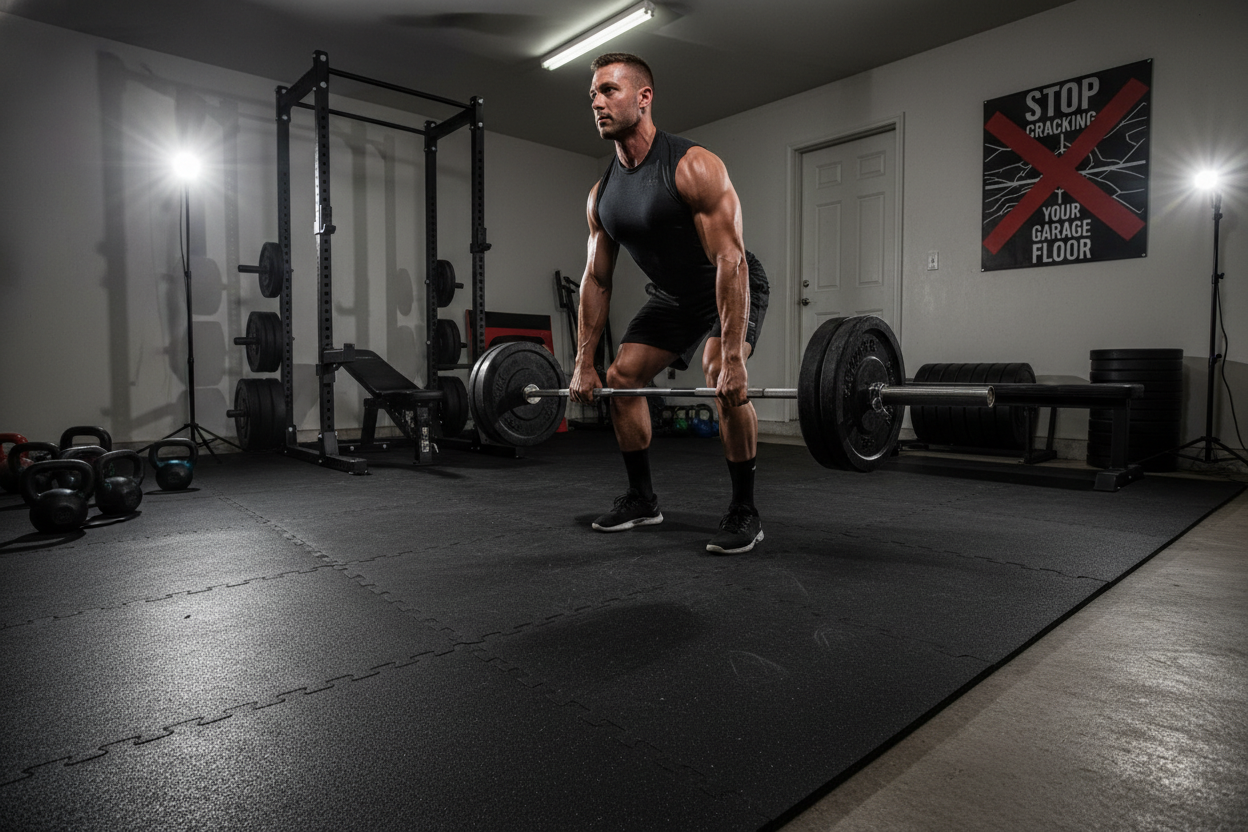
Heavy Duty Gym Mats: Stop Cracking Your Garage Floor
There is nothing quite like the heart-stopping sound of a loaded barbell crashing onto an unprotected garage floor. Whether you are building a budget basement setup or a premium garage iron paradise, your foundation dictates what you can and cannot do in your space.
Investing in genuine heavy duty gym mats is the single most important decision you will make for your home gym. It protects your property, dampens deafening noise, and saves your joints during high-impact workouts. In this guide, we will break down exactly what to look for so you can lift heavy with total peace of mind.
Key Takeaways
- Minimum Thickness: Always aim for at least 3/4-inch thickness if you plan on dropping barbells or heavy dumbbells.
- Material is King: Vulcanized rubber offers superior durability and less odor compared to recycled crumb rubber.
- Density Matters: High-density mats prevent equipment from sinking, ensuring a stable lifting surface.
- Size and Weight: Standard 4x6 foot mats weigh around 100 pounds, making them incredibly stable without needing adhesives.
Choosing the Right Foundation
When shopping for heavy duty gym flooring, it is easy to get overwhelmed by the options. Not all rubber is created equal, and choosing the wrong material can lead to crumbling floors and a lingering chemical smell.
Thickness Matters
For general fitness and cardio equipment, a 3/8-inch mat might suffice. However, if you are moving serious iron, 3/4-inch is the gold standard. This thickness absorbs the shock of dropped deadlifts and olympic lifts, dispersing the kinetic energy before it reaches your concrete slab.
Vulcanized vs. Recycled Crumb Rubber
Vulcanized rubber is heat-treated, making it non-porous, highly durable, and resistant to absorbing sweat and moisture. Recycled crumb rubber is cheaper but can flake over time under heavy abuse. If you want true heavy duty gym floor mats that will outlast your equipment, vulcanized is the way to go.
Sizing and Space Planning
Planning your layout requires understanding the footprint of your equipment. A standard power rack usually requires an 8x8 foot space, which perfectly fits four standard 4x6 foot mats.
Stall Mats vs. Premium Gym Mats
Many lifters turn to agricultural horse stall mats as a budget-friendly flooring for weight lifting. While they are thick and indestructible, they often have a grooved bottom that can feel slightly squishy under maximum loads, and the off-gassing odor can be intense. Premium fitness mats feature a flat bottom for maximum stability and undergo a mitigation process to eliminate the strong rubber smell.
From Our Gym: Honest Take
We have tested everything from cheap interlocking foam tiles to high-end commercial rolls. Personally, my garage gym is outfitted with standard 3/4-inch flat-bottom vulcanized mats. During a heavy clean-and-jerk session last winter, I bailed on a 275lb barbell. It crashed directly onto the floor. The mats absorbed the impact entirely—no cracked concrete, no damaged bumper plates.
The only caveat? Moving them is a two-person job. At nearly 100 pounds per 4x6 sheet, wrestling them into place is a workout in itself. I highly recommend buying a cheap pair of locking pliers to grip the edges when dragging them into your garage.
Frequently Asked Questions
Are heavy duty gym mats worth the investment?
Absolutely. Replacing a cracked concrete foundation costs thousands of dollars. High-quality rubber mats cost a fraction of that and provide crucial shock absorption, acoustic dampening, and joint protection.
Can I put heavy equipment on interlocking foam tiles?
No. Foam tiles will compress permanently under the weight of power racks and heavy dumbbells. They also fail to protect the subfloor from dropped weights. Stick to dense rubber for heavy equipment.
How do I clean heavy duty gym floor mats?
Keep it simple. Sweep or vacuum loose debris regularly. For a deeper clean, use a mop with warm water and a pH-neutral cleaner (like a few drops of dish soap). Avoid harsh chemicals like bleach, which can break down the rubber over time.