
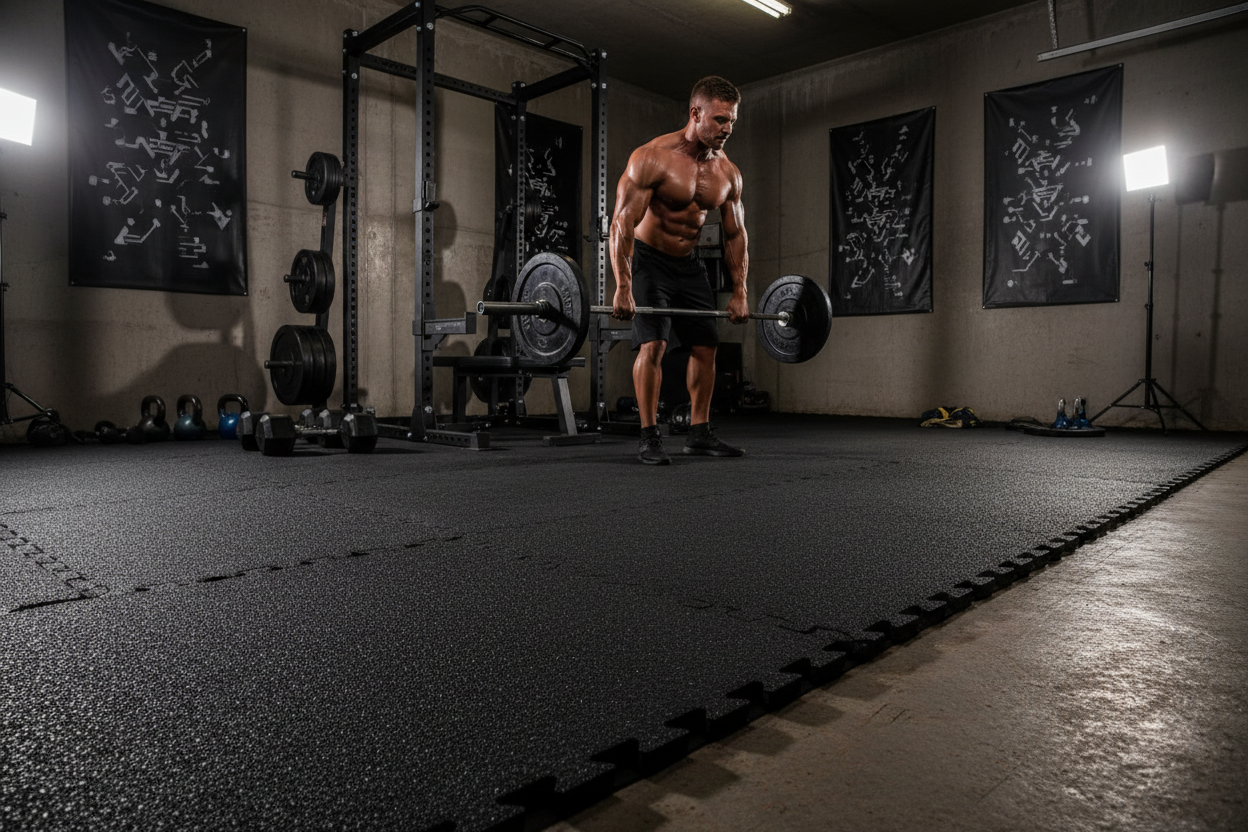
Gym Mats Heavy Duty: Stop Ruining Your Garage Floors
Nothing kills the vibe of a great home workout faster than the sound of a loaded barbell cracking your concrete foundation. When you are lifting real weight, standard yoga mats or cheap foam puzzle pieces just won't cut it. You need gym mats heavy duty enough to absorb shock, dampen noise, and protect your joints. Whether you are setting up in a two-car garage or a basement corner, we are breaking down exactly what to look for so you can lift with confidence and protect your home's value.
Key Takeaways
- Thickness matters: Aim for at least 3/8-inch to 3/4-inch thickness for heavy barbell training and dropping weights.
- Material is king: High-density vulcanized rubber offers the best durability, shock absorption, and longevity.
- Format dictates function: Heavy duty gym floor tiles are great for custom, odd-shaped spaces, while large standalone mats offer seamless lifting platforms.
- Protect your gear: Proper heavy duty gym matting extends the life of your bumper plates, dumbbells, and subfloors.
Decoding Thickness and Material Specs
The 3/4-Inch Gold Standard
If you are dropping barbells, 3/4-inch rubber is the undisputed champion. Anything thinner risks transferring kinetic energy straight into your subfloor. When shopping for heavy duty mats for gym spaces, pay close attention to the density. High-density vulcanized rubber won't compress under a 500-pound squat rack, keeping your lifting surface perfectly level and safe for heavy squats.
Crumb Rubber vs. Virgin Rubber
Crumb rubber is made from recycled tires and is generally more budget-friendly. It provides excellent bounce and shock absorption. Virgin rubber, on the other hand, is non-porous, easier to clean, and lacks the intense 'new tire' smell, making it a premium choice for indoor basement setups.
Planning Your Gym Flooring Heavy Duty Setup
Interlocking Tiles vs. Standalone Mats
For North American garage gyms, moisture and seasonal temperature fluctuations are real concerns. Heavy duty gym floor tiles with interlocking edges are incredibly DIY-friendly and allow for natural thermal expansion during hot summers. Conversely, standalone 4x6 foot stall-style mats are incredibly durable but can shift slightly over time if not properly taped or boxed in with a wooden border.
From Our Gym: Honest Take
When I first built out my garage gym, I tried to save money by using 1/4-inch recycled rubber rolls. Big mistake. After just three months of heavy deadlifts, the rubber began to flake, and I noticed hairline cracks in my concrete. Upgrading to a proper 3/4-inch heavy duty gym rubber mat completely changed the game. The knurling on my barbell no longer bites through to the floor when I drop a clean and jerk, and the noise reduction kept my neighbors from complaining. One caveat: high-end vulcanized mats are heavy—roughly 100 pounds for a 4x6 sheet—so bribe a friend with a post-workout shake to help you move them.
Frequently Asked Questions
Are heavy duty gym mats waterproof?
Most high-density rubber mats are highly water-resistant, making them ideal for sweaty workouts or humid basements. However, water can seep through the seams between mats, so it is crucial to mop up large spills quickly to prevent moisture from getting trapped against your subfloor.
Do I need to glue down heavy duty gym matting?
For most home gym applications, no. The sheer mass of 3/4-inch mats (often weighing 2-3 lbs per square foot) combined with the weight of your power rack is usually enough to keep them firmly in place. Double-sided carpet tape can secure the edges if you notice any shifting.
How do I get rid of the strong rubber smell?
New rubber flooring can have a strong odor due to off-gassing. To speed up this process, wash the mats with a mild soap and warm water solution, leave your garage doors open for cross-ventilation, and run a fan across the floor for the first few days.

