Lower Back Exercises With Cable Machine: Form & Setup
Why Train Lower Back Exercises with Cable Machine Systems
Building a resilient lumbar region and supporting the erector spinae muscles does not always require loading heavy barbells directly over the spine. Performing lower back exercises with cable machine setups introduces continuous tension throughout the entire range of motion. Unlike free weights, where the resistance vector is strictly vertical due to gravity, a cable stack lets you direct load horizontally or diagonally.
This horizontal line of pull shifts mechanical demands into the hips and glutes during hip hinges, reducing compressive spinal strain while training the posterior muscles to stabilize under load. For home gym lifters who want to train core muscles, build balanced back muscles, and support long-term lifting posture, cable machine exercises offer a controlled, joint-friendly alternative.
Essential Cable Machine Exercises for Lower Back Muscles
A well-rounded cable workout targets the posterior chain from multiple angles. Whether you are working around axial loading sensitivities or supplementing dedicated lower body strength machines, these exercises reinforce proper hinge patterns and lumbar endurance.
Cable Pull Through Form and Technique
The cable pull through is one of the most effective cable back exercises for targeting the glutes, hamstrings, and lower back without placing direct vertical compression on the vertebrae. Setting up with proper form ensures the work remains in the hips rather than turning into a squat.
- Attachment and Pulley Height: Set the pulley carriage to the lowest point on the cable stack and attach a durable rope attachment.
- Starting Position: Face away from the machine, straddling the cable. Reach between your legs to grasp the rope attachment with a neutral grip. Take one or two steps forward to lift the weight stack off the rest pin, establishing constant tension.
- Stance: Position your feet shoulder width apart, or slightly wider, with toes angled slightly outward. Keep knees slightly bent but firm.
- Movement: Hinge at the hips by pushing your pelvis backward toward the machine while keeping arms straight and your core tight. Allow your torso to tilt forward naturally while maintaining a flat lumbar spine.
- Lockout: Drive through the midfoot and heels, contracting the glutes and erectors to pull your torso upright. Finish in a neutral standing position without arching the lower back backward.
Cable Back Extension and Romanian Deadlift Variations
Lifters looking to develop erector endurance can perform low pulley variations that mimic barbell hinging. For more complementary lower-body hinge patterns, reviewing a comprehensive posterior chain leg workout guide can help you integrate compound hamstring movements.
To perform a cable Romanian deadlift, clip a straight bar or short straight bar attached to the low pulley. Facing the cable stack, take an overhand grip with hands shoulder width apart. Step back until the line of pull is diagonal. Hinge back at the hips, keeping the straight bar close to your shins and keeping knees slightly bent. Drive the hips forward to stand tall, focusing on keeping the shoulder blades retracted and upper body steady.
For a dedicated cable back extension, you can face a low pulley while seated on the floor or positioned on an incline bench, holding a rope attachment tight to your chest. Slowly flex forward from the hips before extending back to a neutral, tall posture against the constant resistance of the cable.
Seated Cable Row and Pulley Variations for Complete Back Muscles
While hinging movements target the lumbar region directly, horizontal pulling builds the upper back muscles, trapezius muscles, and deep stabilizers that support spinal alignment. As highlighted in our pull machine exercise guide, compound pulling movements help tie the entire posterior structure together.
A seated cable row requires the lower back to act as an isometric anchor. Sit upright with your chest lifted, grasp the handle, and pull toward your lower abdomen while driving your shoulder blades down and back. For lifters working through muscle imbalances, rotating to a single arm cable row challenges rotational stability and engages the deep core muscles alongside the lats. Pairing pulling variations with straight arm pushdowns ensures balanced shoulder positioning and strong thoracic extension.
Structuring a Posterior Chain Cable Workout Routine
Consistency and cadence matter far more than reckless loading when training the lower back. Many lifters follow a simple 3-3-3 training structure to organize their sessions: choosing three focused movements, performing three working sets per exercise, and adhering to a three-second eccentric lowering phase. This deliberate tempo enhances muscle growth and reinforces core stability without needing excessive weight on the pin.
A practical lower back and posterior chain routine might include:
- Cable Pull Through: 3 sets of 10 to 12 repetitions, using a slow three-second eccentric stretch to reinforce the hip hinge.
- Cable Romanian Deadlift or Low Extension: 3 sets of 8 to 10 repetitions, focusing on a neutral spine and active glute engagement.
- Seated Cable Row or Single Arm Cable Row: 3 sets of 10 to 12 repetitions, focusing on full retraction of the shoulder blades and steady lumbar bracing.
Signs of a Weak Posterior Chain and Key Benefits of Cable Exercises
A weak posterior chain often reveals itself through poor sitting posture, early hip fatigue during basic daily tasks, and difficulty maintaining a neutral back when lifting objects off the floor. When the glutes and lower back stabilizers do not fire efficiently, the body compensates by overusing hip flexors and rounding the upper body.
Integrating cable exercises into your weekly training offers distinct advantages:
- Continuous Tension: Unlike free weights, where leverage drops off at the top of a deadlift or hinge, cables keep constant tension across major muscle groups throughout the entire range.
- Adjustable Pull Angles: Changing pulley heights allows lifters to target specific weaknesses, accommodating different heights and range limitations.
- Controlled Fatigue: Cable stacks allow quick weight adjustments, making it easy to perform drop sets or scale resistance without dropping heavy plates.
Home Gym Cable Setup, Stance Traction, and Subfloor Care
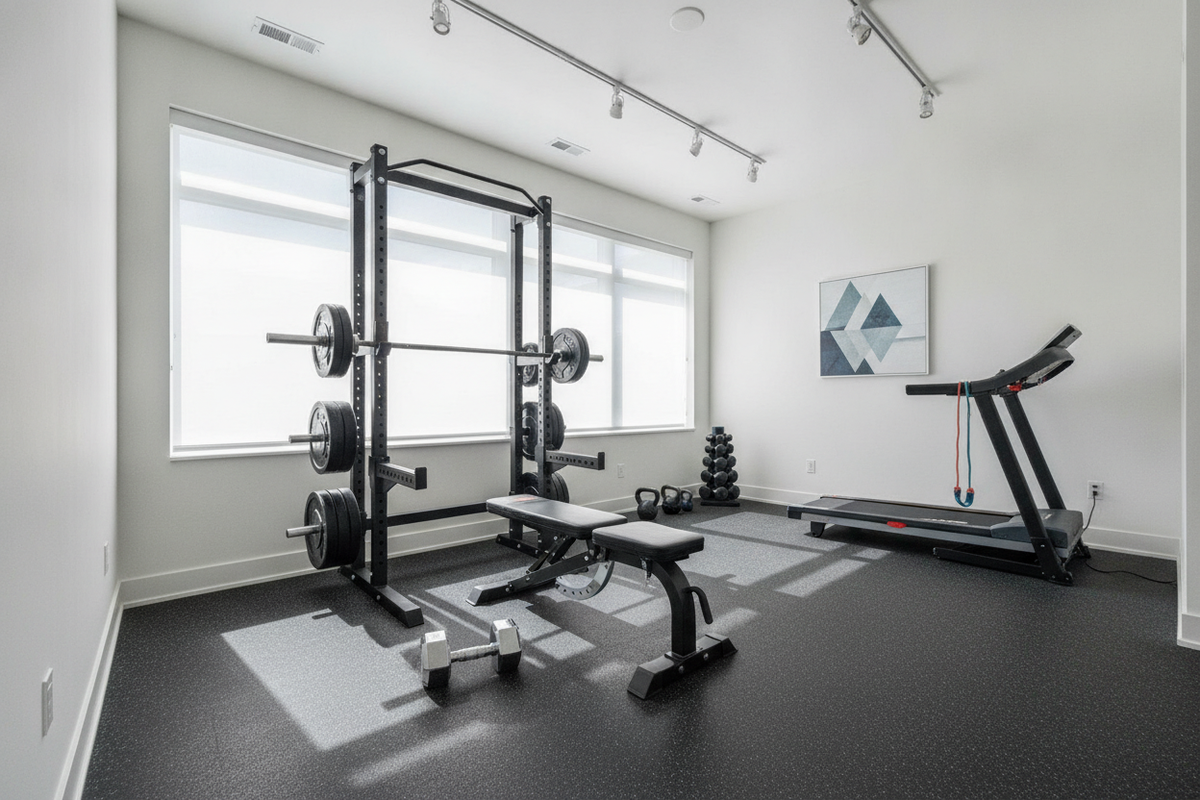
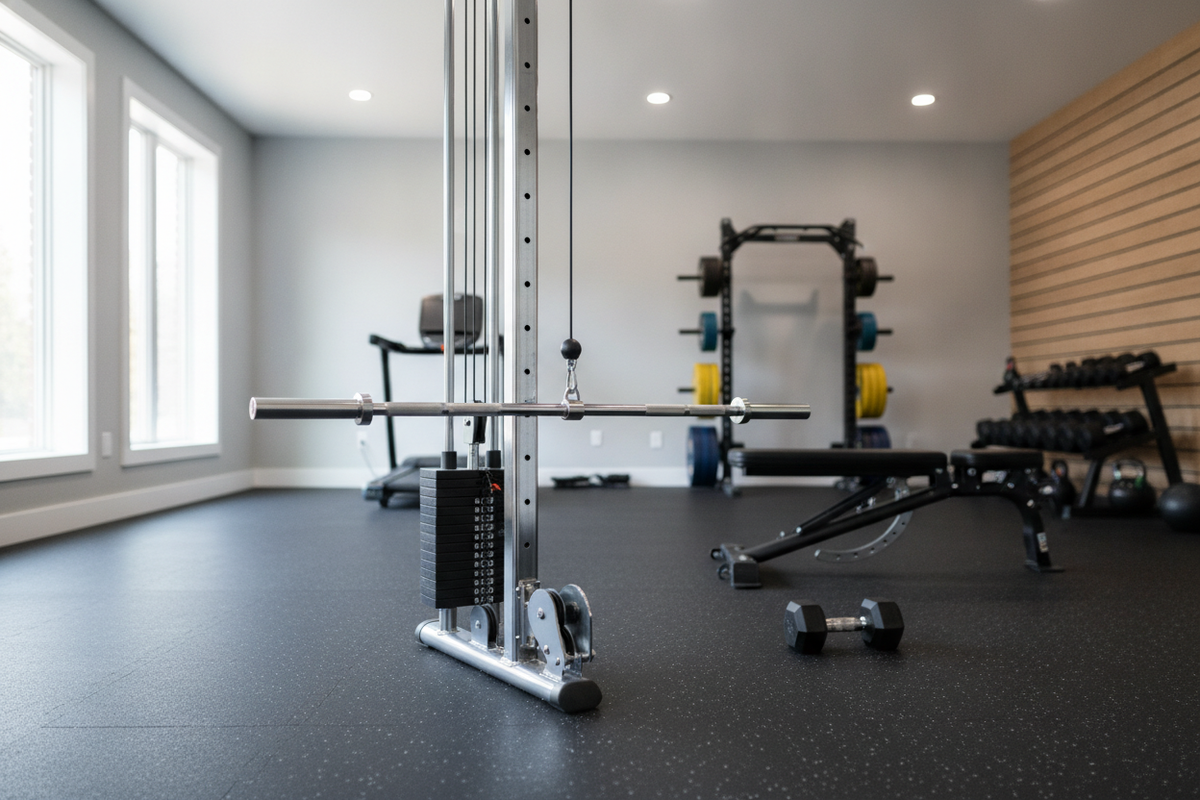
Executing cable pull throughs and heavy rows requires solid footing. Because the horizontal resistance pulls you toward the machine, your feet need positive grip against the floor to prevent slipping during the hinge. Setting up your station on high-density rubber gym mats creates the traction required for confident foot drive, especially when your stance is set feet shoulder width apart.
In home gym spaces where dual adjustable pulleys or functional trainers share room with pieces like a leg extension and curl machine, protective flooring is equally vital for preserving subfloors. Weight stacks continuously transfer vibration and shock into the floor during sets. In my view, placing heavy-gauge rubber under cable towers is the simplest way to stabilize equipment frames, eliminate base wobble during pulls, and keep your home gym floor in pristine condition.