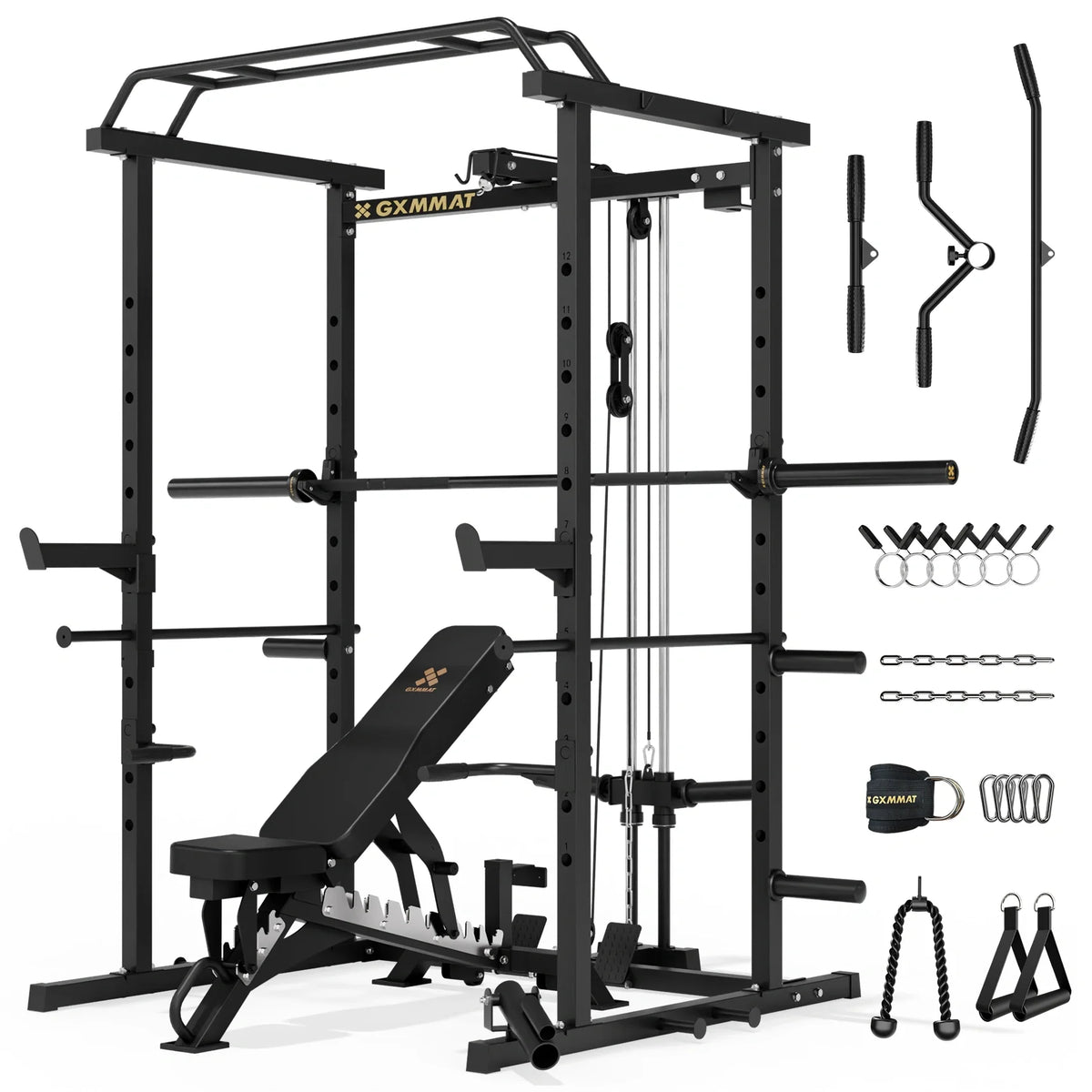
Power Rack Maintenance: Cleaning, Bolts, Cables and Rust
Quick answer: Good power rack maintenance takes a few minutes a week: wipe down the frame, J-hooks and safety bars after use; check and re-tighten bolts monthly; inspect cables for fraying and pulleys for smooth movement; and keep plates and bars off the floor on storage pegs or a plate rack. In garages, control humidity and watch for rust. Regular care keeps your rack safe, quiet and looking new for years.
Key takeaways
- Wipe sweat and chalk after each session.
- Check bolts monthly, especially in the first few weeks.
- Replace frayed cables immediately.
- Store plates and bars properly.
- Fight rust in damp garages and basements.
Power rack maintenance checklist
| How often | Task |
|---|---|
| After each workout | Wipe down uprights, J-hooks, safety bars, bench and handles |
| Weekly | Check J-hook and safety pins seat fully; clear plates and clutter |
| Monthly | Re-tighten bolts; inspect cables, pulleys and carabiners |
| Every few months | Clean the barbell sleeves and knurling; check for rust; check flooring under the rack |
| Yearly | Full inspection of welds, hardware and attachments |
Cleaning the frame
- Use a damp cloth with mild soap; dry thoroughly.
- Avoid harsh solvents that can damage powder coat.
- Touch up chips in the paint to prevent rust.
- Clean J-hook and safety bar liners so they protect the bar.
Bolts and hardware
- Re-tighten after the first week, then monthly.
- Listen for creaks or rattles; they often mean a loose bolt.
- Check the rack is still level and not rocking.
Still setting up? See power rack assembly tips and do you need to bolt down a power rack.
Cable and pulley care
| Check | What to look for |
|---|---|
| Cable | Fraying, kinks, cracked coating; replace if damaged |
| Pulleys | Smooth, quiet rotation; cable seated in the groove |
| Carabiners and snap hooks | Gates close fully |
| Trolley or carriage | Slides smoothly; wipe the guide clean |
Never use a cable system with a frayed cable. See the cable attachments guide.
Barbell and plate care
- Brush the knurling and wipe the sleeves; see how to clean a barbell.
- Store the bar on J-hooks or a bar holder, not on the floor.
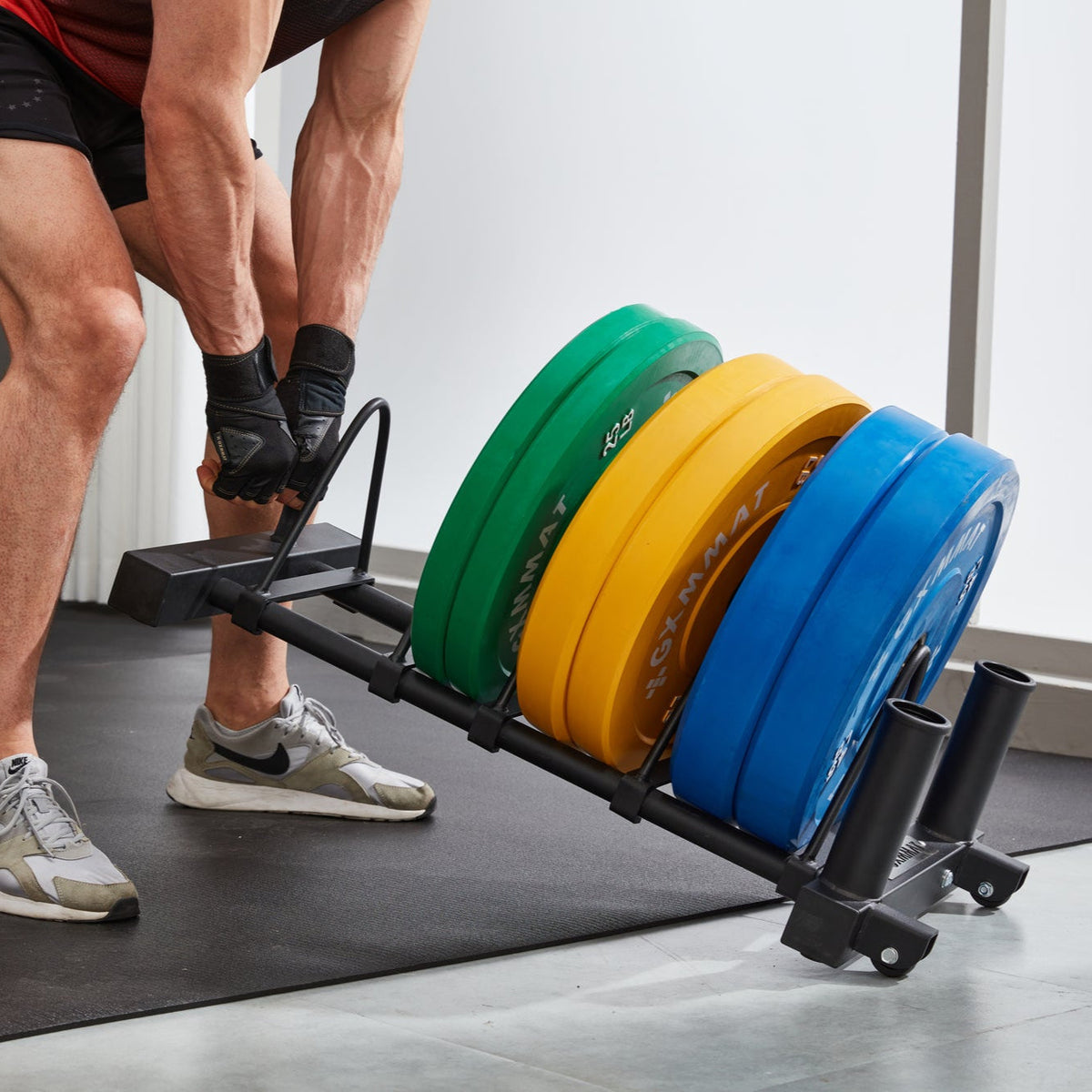
- Keep plates on storage pegs or a horizontal plate rack.
- Don't drop iron plates on the floor; bumper plates handle drops better. See bumper vs iron plates.
Preventing rust
- Use a dehumidifier in damp basements and garages.
- Wipe sweat off immediately.
- Keep the rack off bare concrete with a mat.
- Winter garage tips: cold garage gym guide.
Flooring care
A mat under the rack protects your floor and reduces vibration. A GXMMAT large exercise mat is easy to clean with a damp cloth; see how to clean an exercise mat. Check periodically that the rack feet haven't pressed through or shifted.
Safety checks before heavy lifts
- J-hooks and safety bars fully seated at the right height.
- Collars on the bar.
- No plates or objects on the floor inside the rack.
- Rack stable, no rocking.
Upgrading your setup
If your current rack is wobbly or missing safety features, GXMMAT's G5, V6 and X6 include safety bars, J-hooks and cable systems. See the power rack attachments guide and the rack and bench packages.
FAQ
How often should I tighten my power rack bolts?
After the first week, then about once a month.
How do I clean a power rack?
Wipe it with a damp cloth and mild soap, then dry it.
How do I stop my rack from rusting?
Control humidity, wipe off sweat, touch up paint chips and keep it on a mat.
When should I replace a cable?
As soon as you see fraying, kinks or damaged coating.
Should I lubricate the pulleys?
Follow your manual; most just need to be kept clean and checked for smooth rotation.
Written by Yuvien Royer for GXMMAT. This article is general fitness information, not medical advice.