How to Clean a Barbell and Prevent Rust: Care Guide
Quick answer: To keep a barbell clean and rust-free, brush the knurling with a stiff nylon brush after sessions where chalk or sweat builds up, wipe the shaft with a dry cloth, and apply a few drops of light machine oil to bare or lightly coated areas every few weeks, wiping off the excess. Store the bar horizontally on J-hooks or a bar holder in a dry space, and use a dehumidifier in damp garages and basements. Check that the sleeves spin freely and that end caps or snap rings are secure.
Key takeaways
- Brush, wipe, oil: the simple three-step routine.
- Moisture is the enemy: sweat, humidity and condensation cause rust.
- Use a nylon brush for regular cleaning; save brass or steel brushes for stubborn rust.
- Store it off the floor and away from damp walls.
- Coated bars need less oil, but still need cleaning.
Barbell finishes and how much care they need
| Finish | Rust resistance | Care |
|---|---|---|
| Bare steel | Low | Brush and oil often |
| Black oxide | Low to moderate | Oil regularly |
| Zinc | Moderate | Brush and occasional oil |
| Hard chrome | High | Brush and wipe; light oil occasionally |
| Cerakote / ceramic coating | High | Brush and wipe; avoid harsh solvents |
| Stainless steel | Very high | Brush and wipe |
How to clean a barbell: step by step
- Brush the knurling with a stiff nylon brush along the grooves, both directions, to remove chalk and skin.
- Wipe the whole bar with a dry microfiber cloth.
- Oil lightly: put a few drops of light machine oil (such as 3-in-1 oil) on a cloth and wipe the shaft. Brush it into the knurling.
- Wipe off the excess so the bar isn't slippery.
- Clean the sleeves with a dry cloth; wipe with a lightly oiled cloth if they're bare metal.
How often: brush after chalky sessions, a full clean and oil every 2–4 weeks for bare or oxide bars, and every 1–3 months for chrome, cerakote or stainless.
How to remove light rust
- Apply light oil to the rusty area.
- Scrub with a brass or nylon brush in the direction of the knurling.
- Wipe away the residue and repeat until the surface is clean.
- Finish with a thin coat of oil.
Avoid steel wool and harsh abrasives on coated bars; they can damage the finish. Deep pitting is usually cosmetic, but if a bar is bent or the sleeves no longer spin, stop using it.
Sleeve and bearing care
- Spin test: load a plate and spin the sleeve. It should turn smoothly and quietly.
- Check end caps or snap rings every few months.
- Don't oil inside sealed sleeves unless the manufacturer says so.
- Don't drop an empty bar; it's hard on the sleeves and bearings.
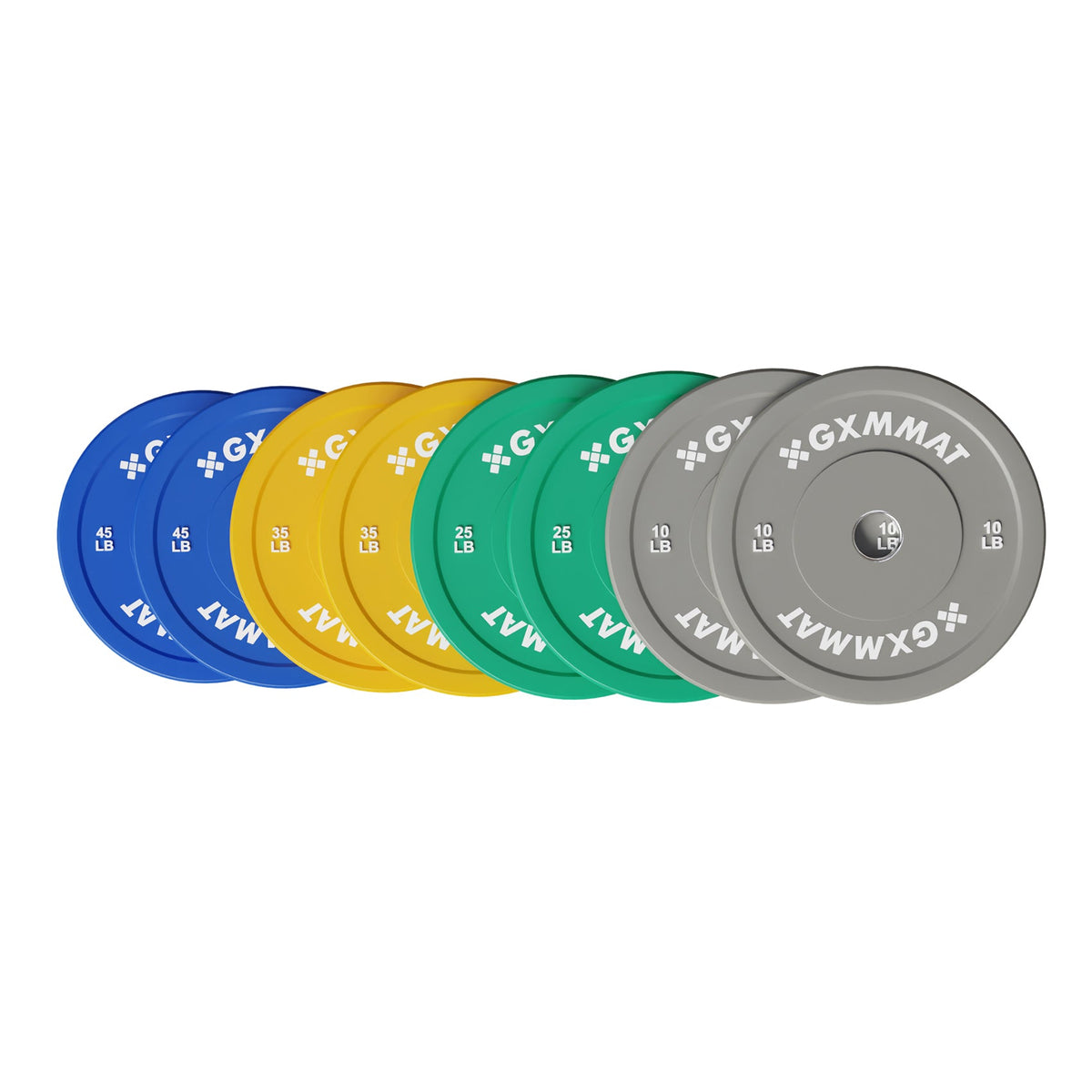
- Use bumper plates for lifts that might be dropped. See bumper vs iron plates.
How to store a barbell
| Storage | Pros | Notes |
|---|---|---|
| J-hooks on your rack | Free, always ready | Unload plates after training |
| Rack bar holder | Saves space | Many racks include one |
| Wall-mounted gun rack | Holds several bars | Mount into studs |
| Vertical holder | Smallest footprint | Store with the sleeve end down |
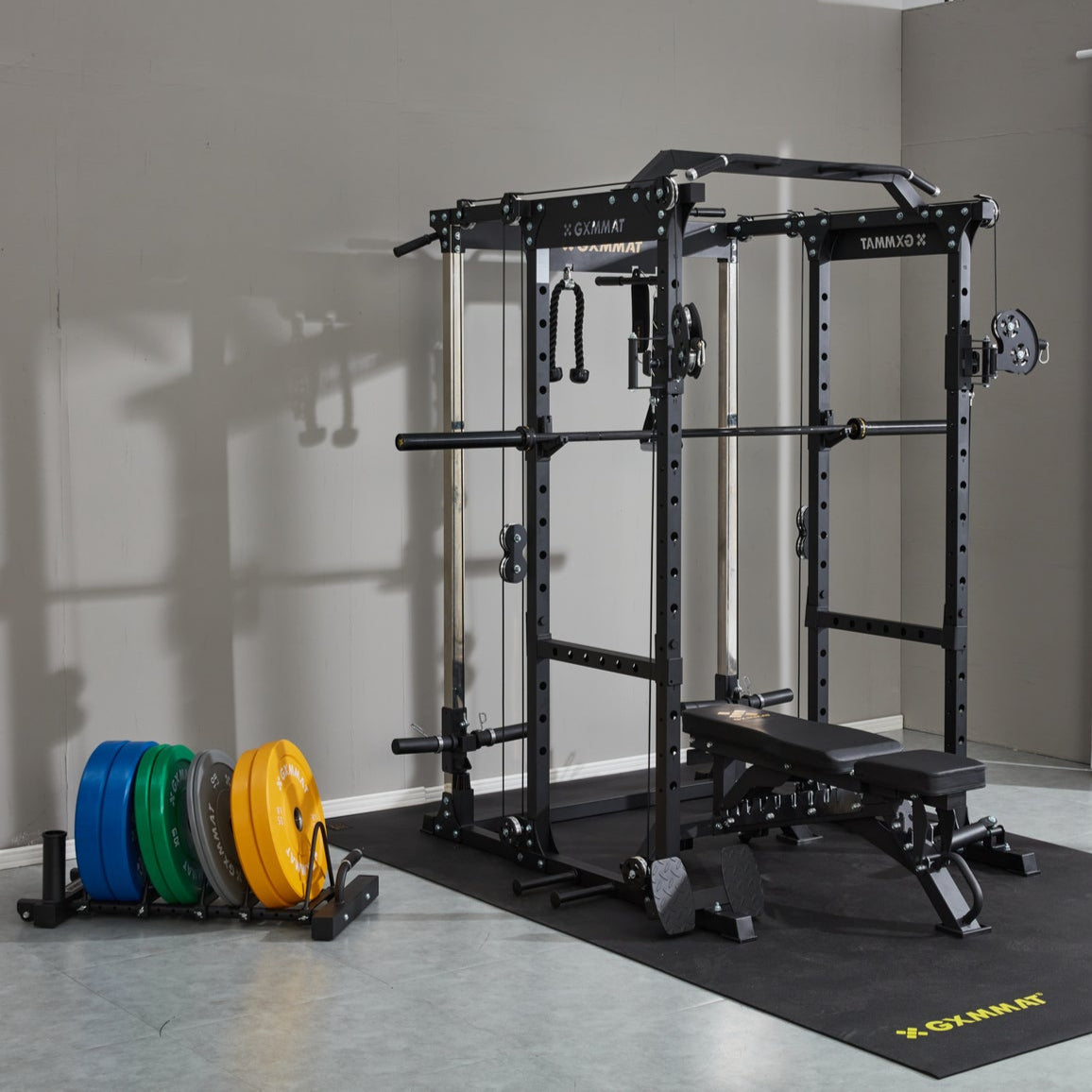
Unloading plates after each session prevents the bar from taking a permanent bend over time. Keep plates organized on a horizontal plate rack (holds up to 330 lb).
Stop rust in garages and basements
- Run a dehumidifier, aiming for roughly 40–50% humidity.
- Avoid big temperature swings that cause condensation; see our cold garage gym guide.
- Wipe sweat off right after training.
- Keep the bar off concrete and away from exterior walls.
- Put mats down to cut moisture from the slab: large exercise mats.
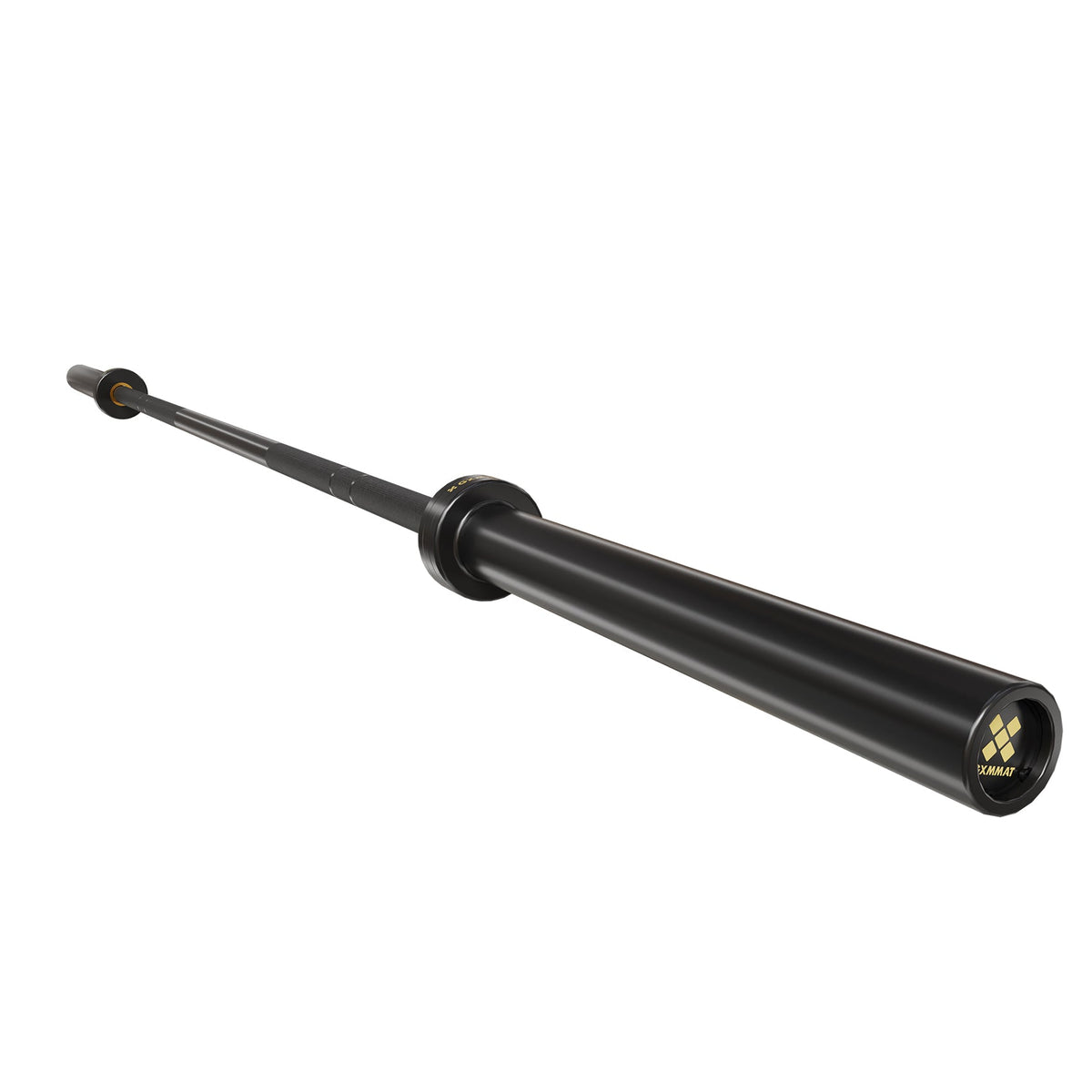
GXMMAT Olympic bar: built for low maintenance
The GXMMAT Olympic bar has a hard chrome shaft and black cerakote sleeves, both chosen for rust and wear resistance. Other specs:
- 20 kg (44.1 lb), 86.6" long, 28 mm shaft, 50 mm (2") sleeves
- 1,500 lb capacity, 190K PSI tensile strength
- 0.3 mm medium knurl, no center knurl, dual IWF and IPF knurl marks
- 4 needle bearings plus a brass bushing per sleeve, snap-ring end caps
A quick brush and wipe after training and a light oil every month or two is all it needs. Lock plates on with magnetic collars, and use a plate math chart to load it.
FAQ
How often should I clean my barbell?
Brush it after chalky or sweaty sessions, and give it a full clean and light oil every 2–4 weeks for bare bars or every 1–3 months for chrome, cerakote or stainless finishes.
What oil should I use on a barbell?
A light machine oil such as 3-in-1 oil works well. Apply a small amount and wipe off the excess.
Can I use WD-40 on a barbell?
It can help loosen rust and grime, but it isn't a long-lasting protective oil. Follow up with a light machine oil.
How do I get rust off a barbell?
Apply oil and scrub with a brass or nylon brush, then wipe clean and oil. Avoid harsh abrasives on coated bars.
Is it OK to store a barbell in a garage?
Yes, if you control moisture: use a dehumidifier, store it on a rack and wipe it down after training.
Written by Yuvien Royer for GXMMAT. This article is general information. Follow your barbell's care instructions.