Do You Need to Bolt Down a Power Rack? Stability Guide
Quick answer: Many home lifters don't need to bolt down a full power rack. A four- or six-post rack with a wide base, gusset plates and loaded plate storage is usually stable for squats, bench press and strict pull-ups. Bolting (or building a platform) makes sense if you do kipping or explosive pull-ups, muscle-ups, heavy band work, or use a lighter two-post rack, or if your rack rocks on an uneven floor. Always follow your rack's manual, and start by making sure it sits flat, is fully tightened and has weight on its storage posts.
Key takeaways
- Full power racks are often stable without bolts for standard lifting.
- Dynamic movements (kipping, swinging) are the main reason to anchor.
- Plate storage adds stability: load the posts on the rack.
- A flat floor and firm mat stop rocking and sliding.
- Re-tighten bolts after the first few weeks and every few months.
When you probably don't need to bolt down
- Your rack has four or six posts and a deep, wide base.
- You do squats, bench, presses, rack pulls and strict pull-ups.
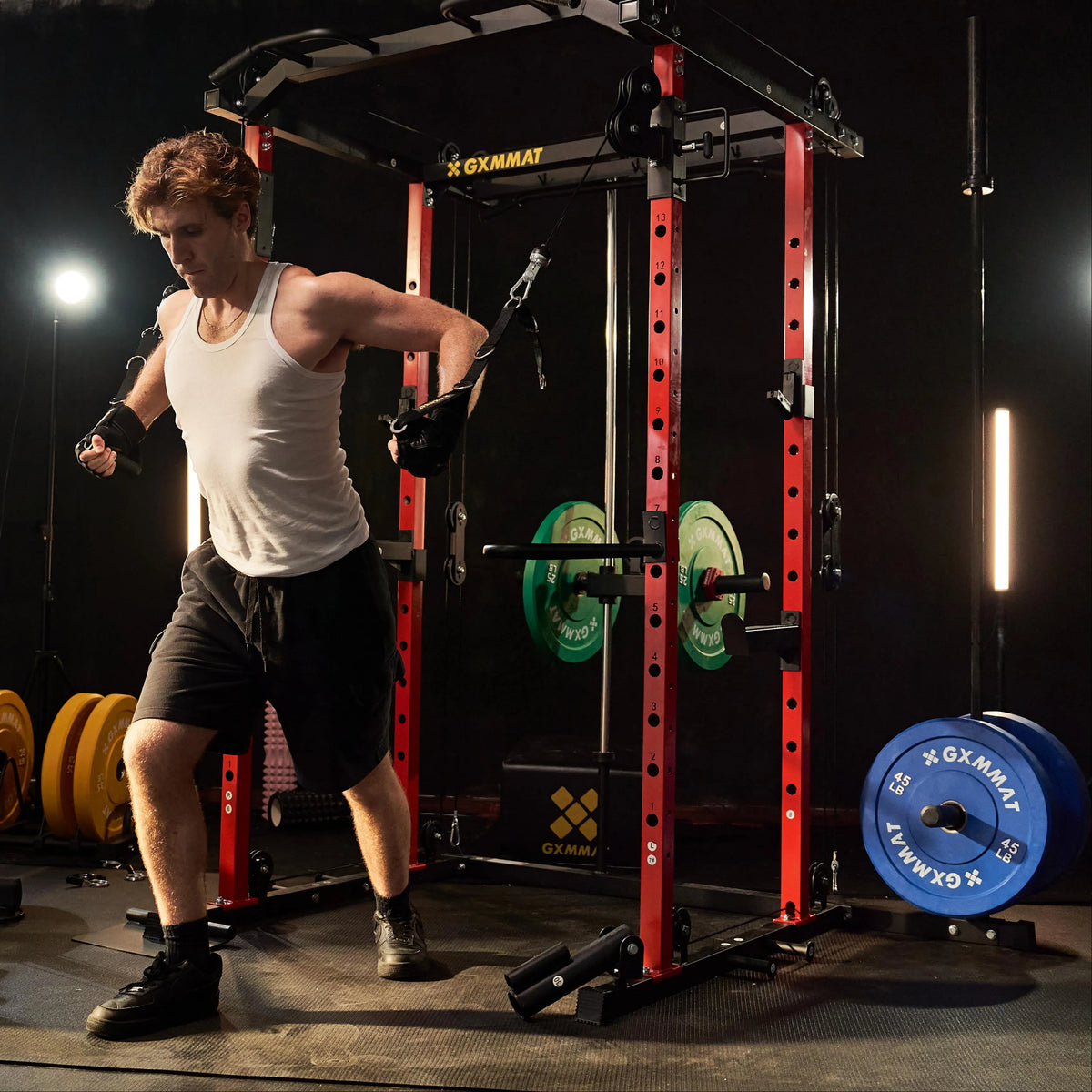
- You keep plates loaded on the rack's storage posts.
- The rack doesn't move or rock when you test it.
When bolting down (or a platform) makes sense
| Situation | Why |
|---|---|
| Kipping pull-ups, muscle-ups, gymnastics work | Swinging creates sideways and lifting forces |
| Heavy bands attached to band pegs | Bands can pull the base up off the floor |
| Two-post squat stands or half racks | Less base to resist tipping |
| Uneven or sloped garage floor | Rocking can loosen bolts and feels unsafe |
| Manufacturer's manual recommends it | Always follow the manual |
How a power rack stays stable
- Wide, heavy base: lowers the center of gravity and resists tipping.
- Thick steel that doesn't flex under load.
- Crossmembers and gusset plates that tie the posts together and spread the load.
- Firm floor contact: rubber feet or mats reduce sliding and protect the floor.
- Weight on the rack: plates on storage posts act like ballast.
Stability checklist (no drilling required)
- Level it: check with a level; shim low corners with thin rubber or composite shims.
- Tighten in stages: snug every bolt first, square the frame, then fully tighten.
- Re-check bolts after 2–4 weeks of training, then every few months.
- Load the storage posts with your heaviest plates, spread evenly.
- Use a dense mat, not soft foam that lets the rack sink and rock.
- Test it: push and pull the top of the rack firmly in each direction before training.
Bolting options if you need them
| Floor | Option | Notes |
|---|---|---|
| Concrete (garage, basement) | Concrete wedge or sleeve anchors through the rack's base holes | Check the slab for heating pipes or cables; use the hardware size your manual specifies |
| Wood subfloor (upstairs) | Bolt the rack to a heavy plywood platform instead of the floor | Spreads load; see can your floor hold a home gym |
| Renting | Platform or extra weight on storage posts | No holes in the landlord's floor |
Not sure? A licensed contractor can confirm anchor types and slab thickness.
Platform vs bolting
- Platform: two layers of plywood topped with rubber, with the rack bolted to it. More stable, protects the floor, movable later.
- Direct bolting: the most rigid, but permanent and needs concrete.
- Neither: fine for most full racks used for standard lifting.
GXMMAT racks: stability features
| G5 | V6 | X6 | |
|---|---|---|---|
| Design | Squat rack + lat pulldown | 4-post rack + dual cables | 6-post rack + dual cables |
| Footprint | 12 sq ft | 14.7 sq ft | 28.77 sq ft |
| Steel | 2"×2" | 2"×2" | 2"×2" with 5 mm gusset plates |
| Weight | — | 82.5 kg (net) | 261 lb (net) |
| Capacity | Safety hooks rated for impacts up to 1,000 lb | Safety hooks rated for impacts up to 1,000 lb | 2,200 lb |
The X6 is the most stable of the three thanks to its six-post design and heavy frame. The V6 and G5 have built-in storage, so keeping your plates on the rack adds weight low down. Check each rack's assembly manual for floor and anchoring guidance. Full comparison: X6 vs V6 vs G5.
Flooring under your rack
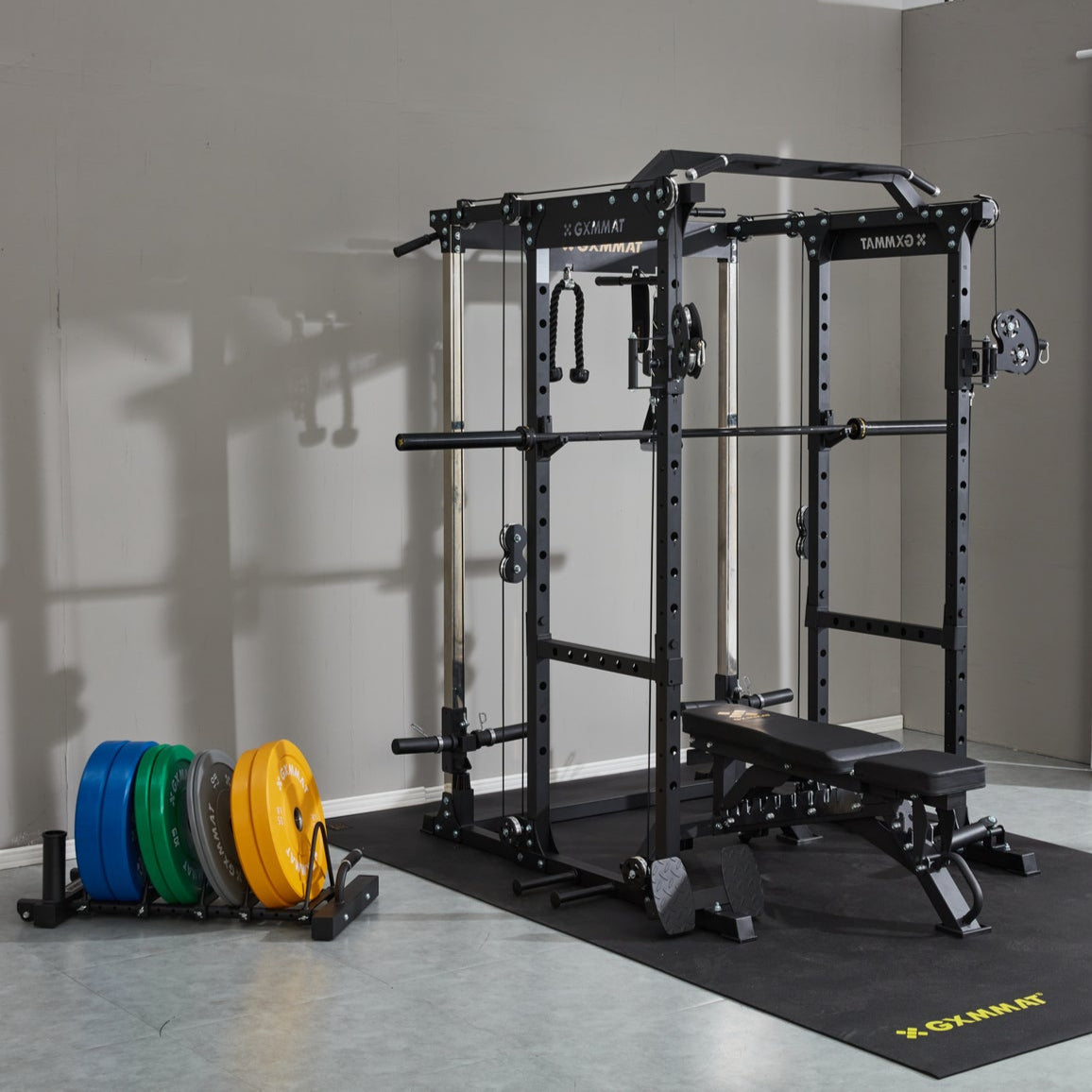
A firm, non-slip mat keeps the rack from sliding and protects your floor. GXMMAT large exercise mats are 7 mm thick, non-slip on both sides and can be cut to fit; the 6×8 ft and larger sizes cover a rack and bench area, and the 7'-wide mats fit bigger racks like the X6. Each large mat ships with Velcro storage straps, a carry bag and a free pair of workout gloves. Plan your space with our space and ceiling height guide.
FAQ
Do I need to bolt down my power rack?
Usually not for a full four- or six-post rack used for standard lifting. Bolt down or use a platform for kipping, heavy band work or lighter two-post racks, and follow your manual.
Can a power rack tip over?
A full power rack is very unlikely to tip during normal lifting. Risk rises with swinging movements, re-racking far outside the uprights, or very light racks.
How do I stop my power rack from wobbling?
Level it, tighten all bolts in stages, square the frame, load the storage posts and use a dense mat. Re-tighten after a few weeks.
Can I bolt a power rack to a wooden floor?
It's better to bolt it to a plywood platform on top of the floor, which spreads the load and avoids damaging floorboards and joists.
Does putting weight plates on the rack make it more stable?
Yes. Plates on storage posts lower the center of gravity and add mass that resists movement.
Written by Yuvien Royer for GXMMAT. This article is general information. Always follow your rack's assembly manual and consult a qualified contractor before drilling into floors.