Padded Exercise Mats: Thickness Selection, Density Dynamics, and Joint-Friendly Floor Staging
Setting up a versatile fitness space at home involves far more than merely unrolling an old pad in a spare bedroom. The surface beneath your body controls how comfortably you execute repetitive floor exercises, conditioning sessions, and daily physical activity. When selecting between standard yoga mats and substantial padded exercise mats, it is vital to assess structural firmness, core thickness, and subfloor mechanics so you secure a comfortable mat that supports long-term durability without squandering stability.
Understanding Padded Exercise Mats: Cushioning vs. Structural Density
A frequent error among fitness enthusiasts is confusing soft, pillowy cushioning with true protective performance. When foam mats are excessively soft, isolated points like an elbow during a plank or a kneecap during stretching press straight through the material. This collapse negates the value of the padding, leaving bones resting directly against the unyielding foundation below.
By contrast, a high density foam exercise mat relies on compact, closed cell foam architecture to push back against point pressure. Instead of collapsing under weight, dense cell structures transfer downward energy laterally across neighboring cells. For those outfitting a home gym, evaluating density alongside vertical thickness across a large exercise mat collection guarantees that your training surface provides genuine support instead of transient plushness.
Mat Thickness Profiles and the Cushioned Mat: Finding the Best Exercise Mats for Joint Relief
The overall thickness of exercise mats directly shapes how your body moves and recovers. While thin exercise mats excel at upright balance and portable convenience, dedicated cushioned gym mats deliver the elevated clearance necessary for therapeutic floor exercises, pilates sessions, and high-volume fitness routines.
- Slim profiles: Suited for practicing yoga, barefoot balance work, and standing exercises where close tactile connection to the subfloor is helpful.
- Mid-range profiles: Deliver a versatile mat layout for home gym spaces, balancing standing foot stability with sufficient relief for abdominal work and floor exercise routines.
- Thick padded workout mat designs: Built as a top pick for intense floor conditioning, deep stretching, and targeted physical therapy where continuous pressure demands generous cushioning.
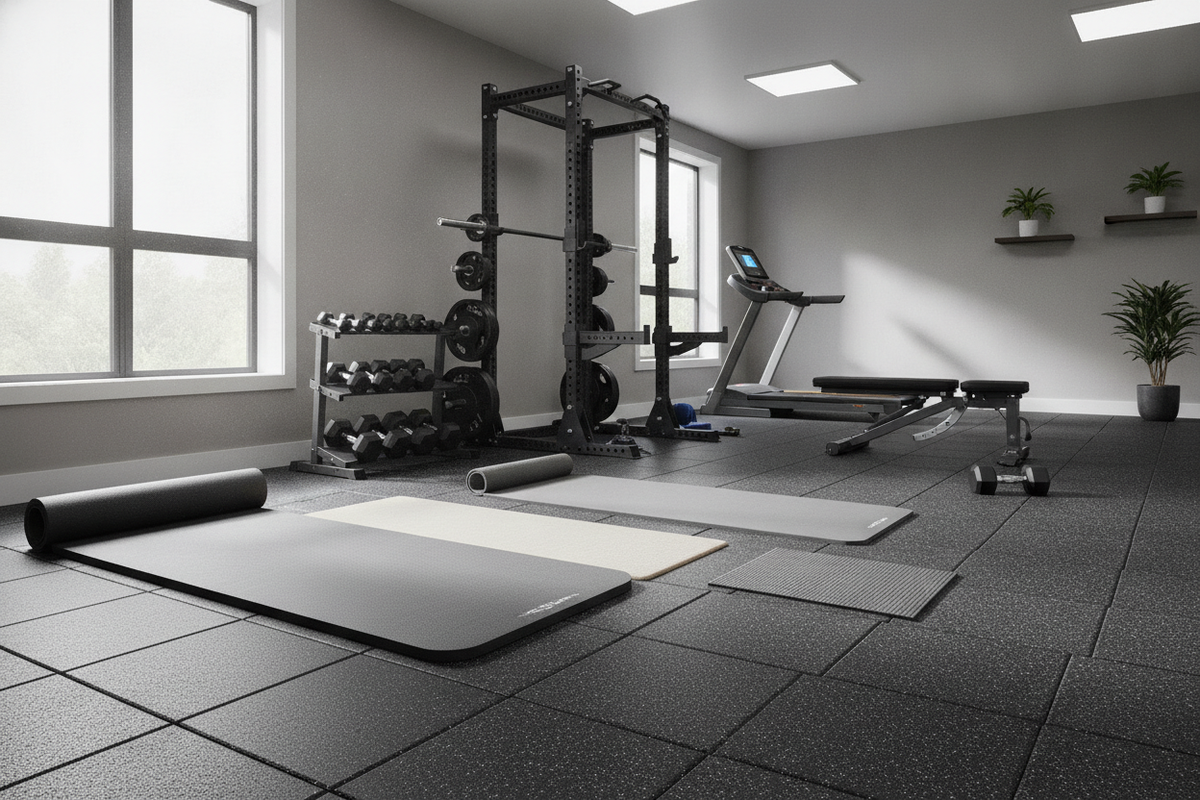
Matching mat profile to your movement style is essential. A multi-use exercise area benefits from a spacious, supportive surface such as a spacious multi-purpose workout mat, which provides ample square footage to cover dynamic floor transitions without leaving your limbs exposed to hard boards.
Targeted Protection: Knees, Wrists, and the Lumbar Spine
Why do knees and wrists regularly ache on an ordinary yoga mat? In kneeling lunges or tabletop drills, body weight rests on a tiny contact patch over the patella. Without resilient material beneath you, localized force causes discomfort. Similarly, wrists holding planks endure high compressive strain across fragile joints.
A thick joint friendly exercise mat prevents delicate bones from bottoming out against the subfloor. For the spine during core training, dense foam buffers the sacrum and vertebrae against jarring contact. Training programs such as our home workout plan and floor staging guide demonstrate how pairing structured routines with high density floor staging shields contact points during demanding training sessions.
Balancing Cushioning with Foot Stability for Standing Drills
While thick cushioning brings welcome ease to kneeling postures, standing drills introduce different criteria. If a thick mat is overly squishy, your ankles tilt unevenly during lunges, squats, or lateral bounds. The foot must continually search for balance, which can disrupt smooth kinetic movement through your lower body.
A comfortable mat designed for both standing exercise and ground drills utilizes a dense core paired with an anti-tear cover skin. This balance yields stable foot planting while staying forgiving during quick drops to the floor. In my editorial experience reviewing fitness gear, home trainees maintain far greater consistency when their exercise mat feels dependable underfoot rather than unstable like an air mattress.
Comparing Material Formulations: Foam Mats, Closed Cell Foam, and Dense Rubber Hybrids
The engineering of padded floor mats for exercise dictates their wear patterns, traction, and rebound over repeated use. Modern home gyms typically feature three distinct types of construction:
- Closed cell foam: Inherently waterproof and hygienic, closed cell foam prevents perspiration from seeping into internal air chambers, allowing users to quickly wipe clean the surface after sweat-heavy workouts.
- EVA foam variants: Highly shock-absorbing, lightweight, and affordable, EVA offers good traction for casual exercise, though low-density formulations may show wear or indentations under heavy equipment.
- Dense rubber hybrids: A great choice for footwear-friendly exercise mats, dense rubber resists abrasion from athletic shoes and heavy movement while providing exceptional grip on hard flooring.
For an active home gym that hosts both footwear drills and floor routines, investing in an expansive surface like the full-coverage home exercise floor mat yields reliable resilience against moisture while providing the versatility to support varied training disciplines.
Subfloor Dynamics: Installing Padded Mats Over Concrete, Hardwood, and Carpet
A padded mat interacts continuously with the flooring beneath it. Rigid surfaces like garage concrete or ceramic tile offer no give, transferring full impact energy directly back toward your body. Installing high density foam mats over concrete creates vital thermal insulation against cold ground while buffering mechanical pushback during supine core work and floor exercises.
Polished hardwood or vinyl requires good traction on the mat underside to prevent slipping during active transitions. When a mat lacks a grippy bottom cover, lateral moves can cause the mat to creep across the room. Carpet introduces the inverse issue: deep carpet fibers compress under your mat, producing added softness that can destabilize standing postures. Structuring your space with layouts highlighted in our floor mat staging and strength blueprint helps you establish an adaptable, stable training zone regardless of subfloor type.
Observing Wear Patterns, Care Guidelines, and Practical Test Results
Understanding how padded exercise mats respond under continuous strain is vital for long-term satisfaction. Field test results and real-world gym observations show that mat durability depends heavily on appropriate care and sensible load distribution. When equipment sits permanently on soft foam, deep depressions compress the inner air cells, eventually degrading the mat's rebound capacity.
To preserve your exercise surface, avoid parking heavy iron dumbbells, kettlebells, or weight benches on padded foam. Clean the mat regularly using a damp towel with mild soap and warm water, avoiding harsh abrasive solvents that could compromise the waterproof protective skin. When storing a portable mat, roll it loosely with the top textured side facing outward and secure it with a carry strap rather than applying tight fold lines that might crease the material. These straightforward care habits will keep your cushioned mat hygienic, resilient, and ready for years of floor workouts.