Workout Equipment for Home: Starter Essentials, Spatial Layout, and Floor Protection Strategies
Building a Sustainable Home Gym: Core Principles and Space Allocation
Assembling the right workout equipment for home training requires balancing training goals, structural room constraints, and long-term durability. Many first-time buyers fill available space with specialized machines that offer narrow exercise variety, only to find their living space overwhelmed by bulky gear. A balanced home gym focuses on high-utility items that support multiple movement patterns without dominating the room.
Before acquiring any gear, evaluate your physical space. A dedicated garage gym offers structural freedom for heavy loads, whereas a spare bedroom or living room alcove demands modularity, compact footprints, and acoustic dampening. Planning equipment around your training frequency and floor dimensions prevents overcrowding and ensures consistent access to every piece of gear.
Best Home Gym Equipment by Training Modality
Selecting home gym equipment works best when categorized by functional demand: resistance training, cardiovascular conditioning, and movement control. Structuring equipment choices around foundational movement patterns—pushing, pulling, hinging, squatting, and carrying—delivers comprehensive workouts across a compact footprint.
Free Weights and Resistance Anchors
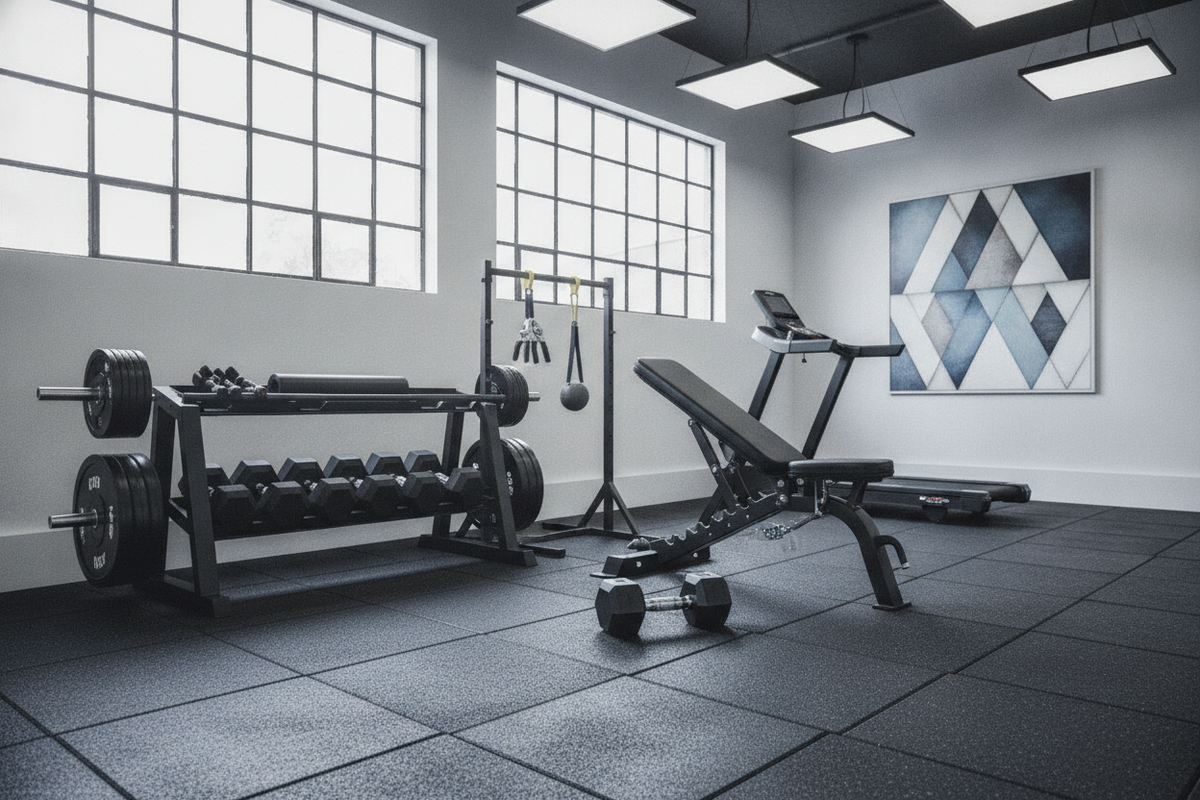
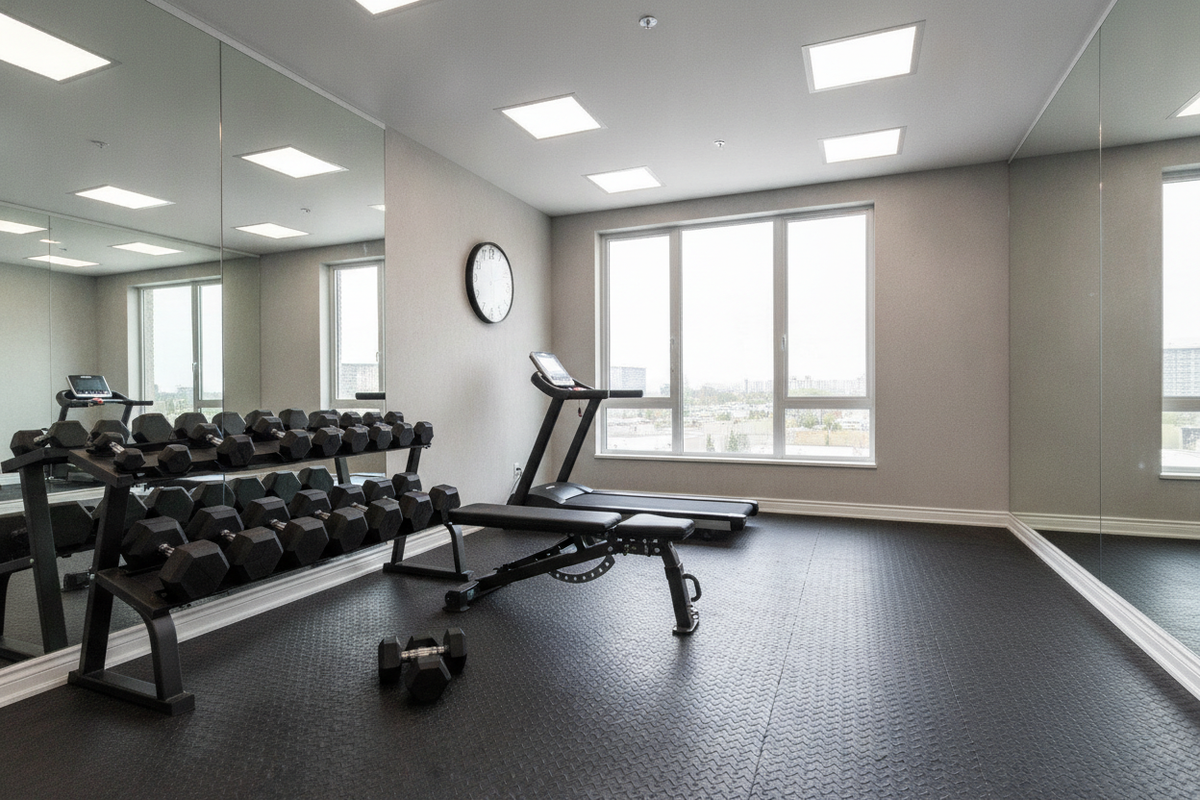
Free weights form the backbone of strength development. For compact spaces, a pair of quality adjustable dumbbells provides a versatile loading range for presses, rows, and lunges while occupying minimal floor space. Paired with an adjustable bench that transitions between flat, incline, and upright positions, lifters can perform dozens of functional movements without requiring commercial dumbbell racks.
For lifters with dedicated garage or basement space, a versatile barbell set with resilient weight plates unlocks compound lifts such as deadlifts and back squats. When space or budget is restricted, heavy-duty resistance bands serve as lightweight resistance tools that supplement free weights, facilitate mobility work, and enable variable resistance curves without adding physical clutter.
Conditioning Tools and Exercise Bikes
Conditioning equipment must justify its floor footprint through training versatility and low maintenance. Among cardio modalities, upright or stationary exercise bikes remain popular for home environments because they present a noticeably smaller footprint than treadmills while offering quiet operation during early-morning or late-night workouts.
For minimalist setups, non-motorized conditioning tools—such as jump ropes, kettlebells, and agility cones—provide intense cardiovascular stimulus without permanent installation. If you are developing a holistic training plan, consult our training blueprints and staging guide to see how functional conditioning integrates with progressive overload.
Bodyweight Anchors and Functional Trainer Systems
Bodyweight training tools offer exceptional exercise options relative to their size. Wall-mounted or doorway pull-up bars, push up bars, and suspension trainers use body leverage to develop upper-body and core stability. Incorporating dedicated body weight exercises into weekly programming allows athletes to maintain high training volume while minimizing equipment wear.
When spatial footprints and budgets expand, a compact functional trainer or dual-pulley cable station provides continuous tension across isolated and compound movements. Cable systems deliver smooth resistance paths for rotational core work, chest flies, and lateral raises, making them a centerpiece in a multi-purpose home training setup.
Spatial Tiering: Home Fitness Equipment Layout Across Available Space
Efficient movement requires intentional spacing. Equipment must be arranged not just to fit within a room's static dimensions, but to accommodate dynamic body clearance during active lifting, stretching, and loading. Dividing home gyms into clear spatial tiers simplifies equipment selection and layout planning.
- Compact Nook or Studio Corner: Focus on stackable and storable equipment. Adjustable dumbbells, resistance bands, and a foldable bench pair well with a rollable mat foundation. Keep walls clear for vertical storage hooks.
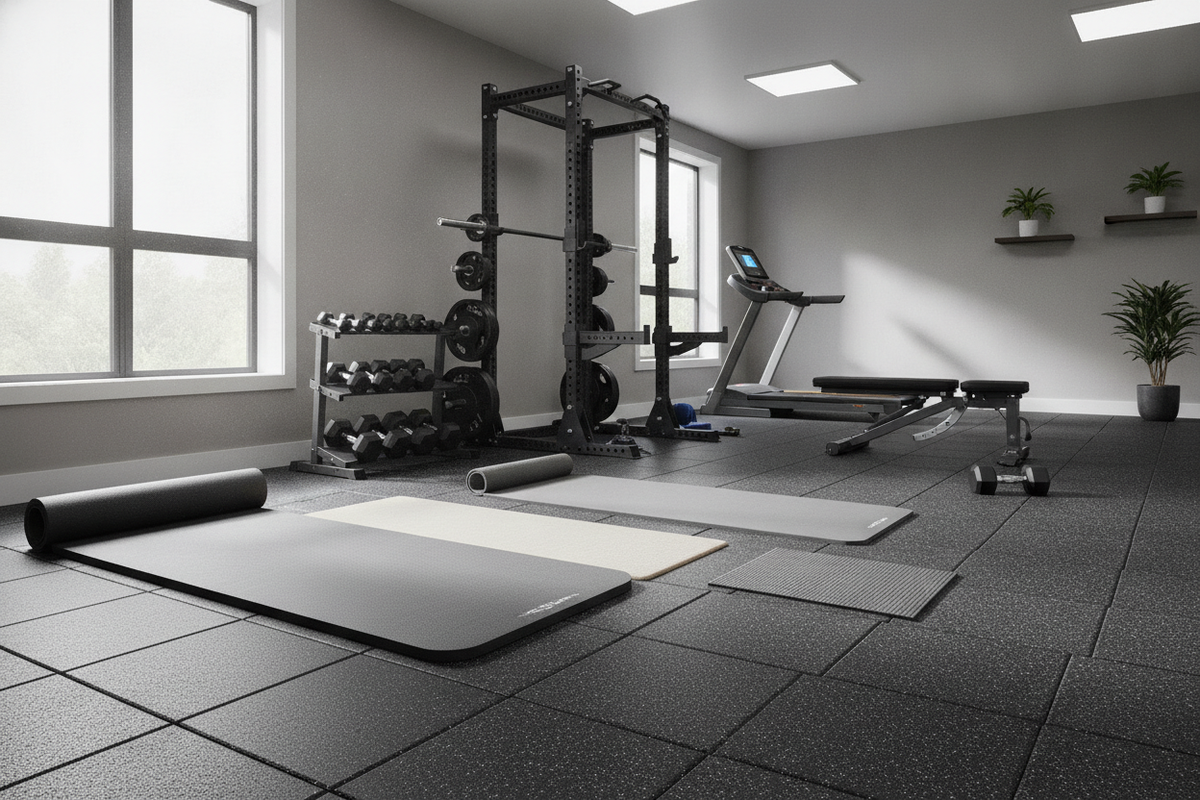
- Dedicated Spare Bedroom: Accommodates stationary items such as an upright exercise bike, a fixed utility bench, and a compact half-rack. Maintain an unobstructed center perimeter for unencumbered movement during floor routines.
- Full Garage or Basement Facility: Allows for foundational strength installations, including four-post squat racks or an enclosed power rack, full barbell setups, and dedicated plate trees. Allocate wide margins around lifting platforms for safe plate loading and unloading.
Regardless of room scale, preserve at least a wide arm-span perimeter around central lifting stations. Crowded training areas increase tripping hazards, restrict range of motion, and heighten the risk of accidental wall or furniture impacts.
The 3-3-3 Setup Framework: Structuring Habits and Consistent Training
A common hurdle during any fitness journey is avoiding purchase paralysis. Beginners often ask how to balance gear acquisition with routine building. The 3-3-3 framework simplifies this onboarding phase by aligning physical tools directly with behavioral adherence:
- Three Movement Categories: Select gear supporting one pushing movement, one pulling movement, and one lower-body compound movement.
- Three Training Sessions Weekly: Commit to three focused, structured weekly workouts before expanding equipment inventory.
- Three Foundational Tools: Launch the space using three core items—such as an adjustable dumbbell set, a stable exercise bench, and a protective high-density floor mat.
Adhering to this framework ensures that equipment purchases directly serve established workout habits rather than sitting idle. For practical programming structures that leverage minimal gear efficiently, explore our 30-minute full body gym guide for compound staging concepts.
Home Gym Floor Protection: Preserving Subfloors and Exercise Equipment
Floor protection is frequently overlooked during the initial home gym build, yet subfloor repair often exceeds the cost of gym equipment itself. Heavy weights, repetitive foot strike impacts, and stationary equipment feet exert concentrated point loads that crack concrete, indent hardwood, and tear carpet fibers.
Deploying resilient surface shielding, such as a large-format exercise mat, provides structural distribution against dropped dumbbells and vibration transfer. High-density composite rubber and PVC mats shield subsurfaces while establishing a stable, slip-resistant foundation for dynamic footwork.
Subfloor Vulnerabilities: Concrete, Hardwood, and Carpet
Every residential subfloor presents distinct mechanical vulnerabilities when exposed to fitness equipment:
- Hardwood and Engineered Flooring: Highly susceptible to finish scratching from equipment feet, moisture pooling from perspiration, and point-load compression dents. Protective mats prevent direct friction and disperse concentrated bench loads.
- Concrete Slabs: While structurally rigid, bare concrete lacks shock absorption. Dropping iron or urethane plates onto unprotected concrete causes micro-fractures in the slab and degrades barbell collars. Mats cushion impact zones and reduce masonry dust generation.
- Carpet and Underlayment: Heavy equipment compresses carpet pile permanently. Furthermore, dynamic movements on plush carpet introduce balance instability. High-density mats create a firm plane that safeguards pile fibers against tearing.
Moisture Management and Under-Mat Care
A critical consideration when placing protective barriers over residential floors is under-mat moisture accumulation. High-humidity environments, concrete vapor emissions, and intense training sessions can trap moisture between the subfloor and gym mats, creating an environment ripe for mold or mildew growth.
To protect both your flooring and indoor air quality, inspect subfloors periodically by peeling back mat corners. Clean workout surfaces regularly using neutral cleaners, and allow the perimeter to ventilate completely after deep sanitizing. Maintaining moderate room humidity and airflow helps preserve subfloor integrity over years of intense workouts.
Curating Your Starter Layout: Phased Home Gym Equipment Strategy
Building an effective training facility is a phased progression rather than a single shopping trip. Rushing into comprehensive setups often results in redundant equipment that cramps usable floor space. A deliberate rollout ensures that every addition delivers practical training utility.
- Phase 1 (The Foundation): Install protective high-density flooring and acquire baseline resistance gear, such as adjustable dumbbells and heavy-duty resistance bands.
- Phase 2 (Structural Versatility): Introduce an adjustable incline bench, suspension anchors, and dedicated conditioning tools like an exercise bike or jump rope.
- Phase 3 (Strength Expansion): As strength adaptations require heavier loading, invest in a barbell assembly, bumper plates, and a sturdy half-rack or power rack equipped with safety spotters.
Reviewing curated home gym equipment deals can help align equipment purchases with planned budget milestones. Prioritizing modular gear and structural floor safety establishes a sustainable home gym environment built for decades of reliable training.