Mind-Muscle Connection: How to Feel the Right Muscles
Quick answer: The mind-muscle connection is consciously focusing on the muscle you're training and feeling it contract during each rep. To build it, use a moderate weight, slow down the lowering phase, pause and squeeze at peak contraction, and think about the target muscle doing the work, for example "pull with the elbows" in a row so you feel your back, not your arms. Research suggests an internal focus like this can increase muscle activation in isolation exercises, which may help muscle growth when combined with hard training.
Key takeaways
- Focus on the target muscle during each rep.
- Lighter to moderate weights make it easier to feel.
- Slow the lowering and squeeze at the top.
- Most useful for isolation work; heavy compound lifts often benefit from simple external cues instead.
- It's a skill that improves with practice.
Why the mind-muscle connection matters
When you focus on a specific muscle, studies show its activation (measured by EMG) often increases, especially with lighter loads. Some research also suggests better muscle growth over time when people focus on the target muscle in exercises like curls. For heavy lifts where performance matters most, an external focus (like "push the floor away") is often better. Both have a place.
How to build the mind-muscle connection
- Warm up the muscle with a light set.
- Touch or tap the muscle before a set to bring attention to it.
- Use a moderate weight you can control for 10–15 reps.
- Slow down: 2–3 seconds lowering; see time under tension.
- Pause and squeeze for 1–2 seconds at peak contraction.
- Use a cue for each exercise (see table below).
- Remove distractions: no phone between reps.
Cues for common exercises
| Exercise | Target | Cue |
|---|---|---|
| Lat pulldown / pull up | Lats | "Pull the elbows down to the back pockets" |
| Rows | Upper back | "Squeeze a pencil between the shoulder blades" |
| Glute bridge / hip thrust | Glutes | "Squeeze the glutes, ribs down" |
| Cable fly | Chest | "Hug a tree, bring the biceps together" |
| Lateral raise | Side delts | "Push the hands out to the walls" |
| Biceps curl | Biceps | "Curl the pinky up, squeeze hard" |
| Tricep pushdown | Triceps | "Elbows pinned, push the floor" |
Activation drills to try
- Glutes: 15 glute bridges with a 2-second squeeze before leg day.
- Back: 10 scapular pull ups before pulling.
- Upper back: face pulls or reverse flys before pressing.
- Isometric holds: hold the peak position for 10 seconds.
Mind-muscle connection vs external focus
| Internal focus (mind-muscle) | External focus | |
|---|---|---|
| Example cue | "Feel your glutes" | "Push the floor away" |
| Best for | Isolation, muscle growth | Heavy compound lifts, power |
| Load | Light to moderate | Moderate to heavy |
Common mistakes
| Mistake | Fix |
|---|---|
| Too heavy to feel the muscle | Lower the weight |
| Rushing reps | Slow the lowering and pause |
| Using it on max lifts | Use simple external cues for heavy sets |
| Giving up quickly | Practice for a few weeks |
Train it at home
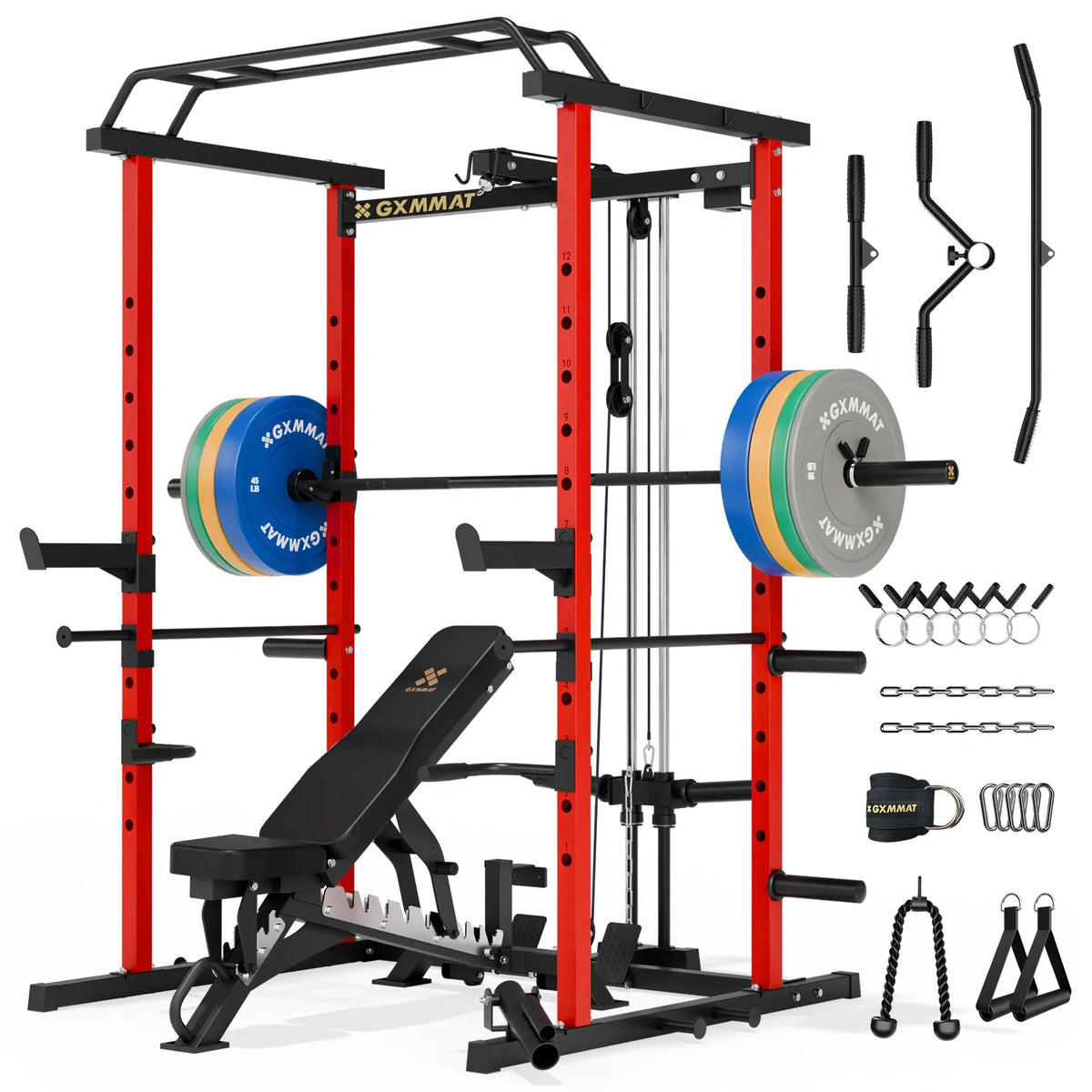
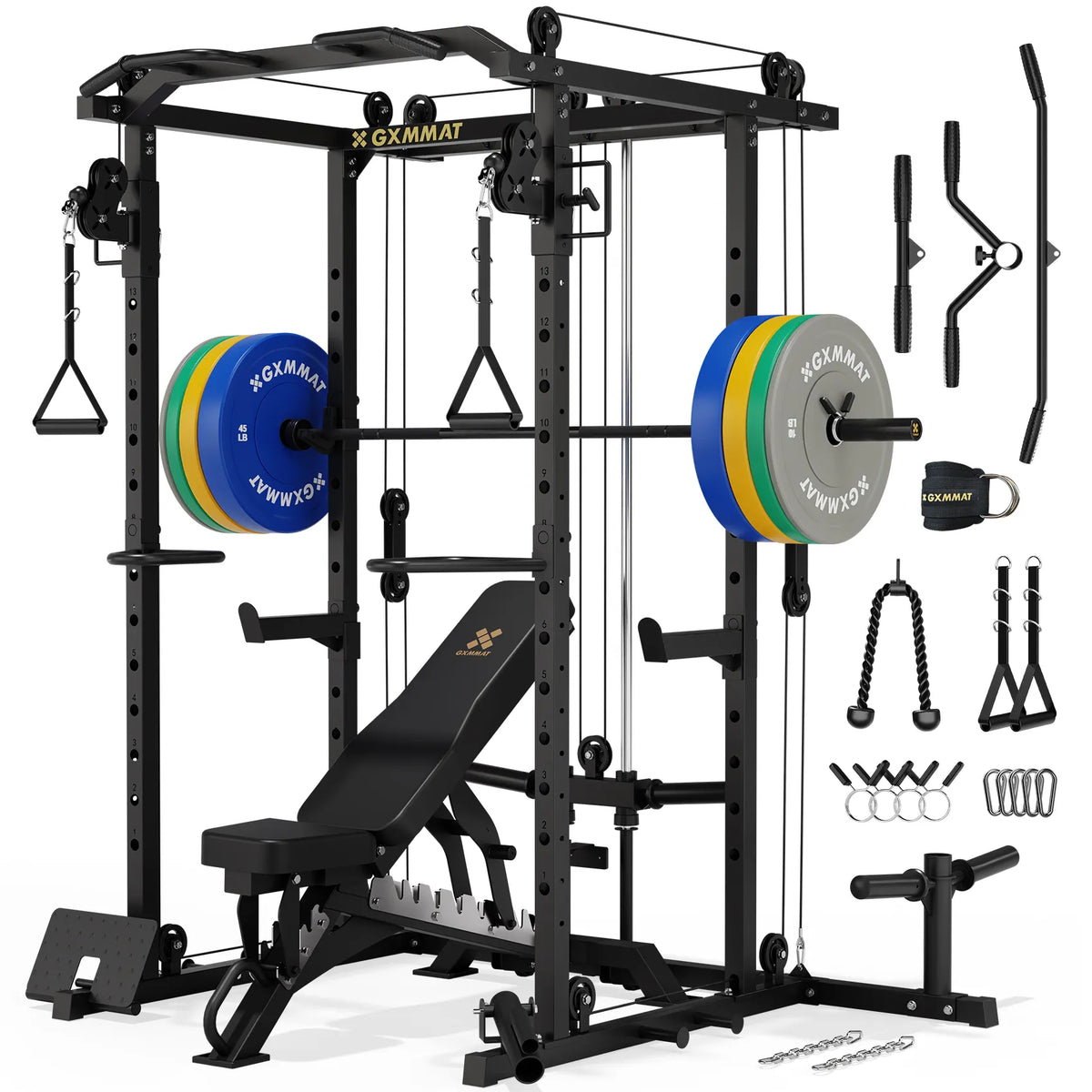
Cable exercises are ideal for the mind-muscle connection because they keep tension on the muscle through the whole rep. GXMMAT's G5, V6 and X6 power racks have built-in cable systems for pulldowns, rows, flys and curls. A soft kettlebell and a large exercise mat cover glute bridges and floor work. See power rack exercises.
FAQ
Is the mind-muscle connection real?
Yes. Studies show focusing on a muscle can increase its activation, especially with lighter loads.
Does it help build muscle?
Some evidence suggests it can, particularly for isolation exercises, alongside hard sets and good volume.
Should I use it for squats and deadlifts?
For heavy sets, external cues usually work better. Use internal focus on lighter accessory work.
Why can't I feel my lats or glutes?
Lower the weight, slow down, use a cue and try an activation drill first.
How long does it take to develop?
Many people notice a difference within a few weeks of consistent practice.
Written by Yuvien Royer for GXMMAT. This article is general fitness information, not medical advice.