Meal Planner Bodybuilding Blueprint: Nutrition Architecture, Meal Plan Templates, and Training Integration
Executing a successful physique transformation requires deliberate alignment between dietary intake and physical output. While training drives the mechanical stimulus for muscular adaptation, a structured meal planner bodybuilding framework provides the necessary building blocks and energy substrates. Without an organized system, lifters often face nutritional inconsistency, leading to plateaus in lean mass accrual or stalled body recomposition.
Foundational Architecture of a Bodybuilding Meal Planner
A functional bodybuilding meal planner goes beyond arbitrary calorie counting. It establishes an adaptable system that balances macronutrient distribution, energy balance, and digestion efficiency across the training week. At its core, the nutrition strategy rests on three primary operational pillars:
- Protein Distribution: Supplying steady amino acid availability throughout the day to support continuous muscle protein synthesis and recovery.
- Carbohydrate Timing: Allocating complex and fast-digesting carbohydrates around training sessions to optimize glycogen replenishment and muscular work capacity.
- Essential Fat Allocation: Maintaining adequate dietary lipid levels to support endocrine health, cellular integrity, and micronutrient absorption.
By framing daily intake around consistent macronutrient allocations, lifters can build a reliable bodybuilding meal planner template that adapts seamlessly across mass-gain, maintenance, or contest-preparation phases.
Designing a Modular Bodybuilding Meal Plan Template
Rigid meal plans often fail because life demands flexibility. A modular meal plan template bodybuilding framework divides the day into structured feeding slots while allowing interchangeable food choices within each macronutrient category.
To build a modular framework, divide daily nutrition into four to six distinct meals depending on schedule and appetite. Each meal slot should feature:
- Primary Protein Source: Lean poultry, lean cuts of beef, white or fatty fish, whole eggs and egg whites, or high-grade dairy and plant protein isolates.
- Primary Carbohydrate Source: Jasmine rice, oats, sweet potatoes, cream of rice, or whole grains.
- Nutrient-Dense Micronutrients: Fibrous vegetables such as spinach, broccoli, asparagus, or green beans to promote gut motility.
- Calculated Fats: Extra virgin olive oil, avocado, nut butters, or naturally occurring fats from animal sources.
Using this template approach ensures that if a specific whole food is unavailable, a comparable alternative can be substituted without altering total daily energy balance.
Sample Meal Plan Architecture: Structuring Daily Fuel Across Phases
A practical sample meal plan bodybuilding framework must differentiate between heavy training days and active recovery days. High-demand sessions, such as dedicated lower-body workouts outlined in our bodybuilding leg development guide, require elevated carbohydrate availability to sustain high-volume output and systemic recovery.
High-Volume Training Day Structure
- Meal 1 (Morning Fuel): Whole eggs paired with egg whites, rolled oats, and a portion of berries for antioxidants and sustained energy release.
- Meal 2 (Mid-Day Sustenance): Lean chicken breast, steamed jasmine rice, and mixed green vegetables.
- Meal 3 (Pre-Training): Cream of rice or baked sweet potato with lean ground turkey, consumed roughly two hours prior to the lifting session.
- Meal 4 (Post-Training Recovery): Whey isolate or fast-digesting protein paired with white rice or ripe bananas to initiate rapid recovery.
- Meal 5 (Evening Nutrition): Salmon or lean sirloin, roasted potatoes, and steamed asparagus providing sustained overnight amino acid and lipid release.
Rest and Active Recovery Day Structure
On non-lifting days, overall energy expenditure decreases. Carbohydrate intake can be moderated while keeping protein intake constant and slightly increasing healthy dietary fats. This supports tissue repair while preventing unnecessary fat accumulation during prolonged mass-gaining cycles.
Peri-Workout Nutrient Timing and Recovery Staging
Peri-workout nutrition encompasses the meals consumed immediately before, during, and after resistance training. Maximizing mechanical tension on isolation and compound movements, as detailed in our bodybuilding machines guide, creates micro-trauma that demands immediate nutritional support.
- Pre-Workout Staging: Prioritize low-fat, low-fiber carbohydrate and protein sources 60 to 120 minutes prior to training. This ensures rapid gastric emptying and minimizes gastrointestinal discomfort during intense lifts.
- Intra-Workout Support: For sessions extending beyond seventy-five minutes, electrolytes and fast-assimilating carbohydrates can help maintain hydration and sustained muscular contractions.
- Post-Workout Staging: Consume high-quality, bioavailable protein alongside moderate carbohydrates within one to two hours following training to optimize recovery pathways.
Synergizing Nutrition with Home Gym Floor Staging and Equipment Zones
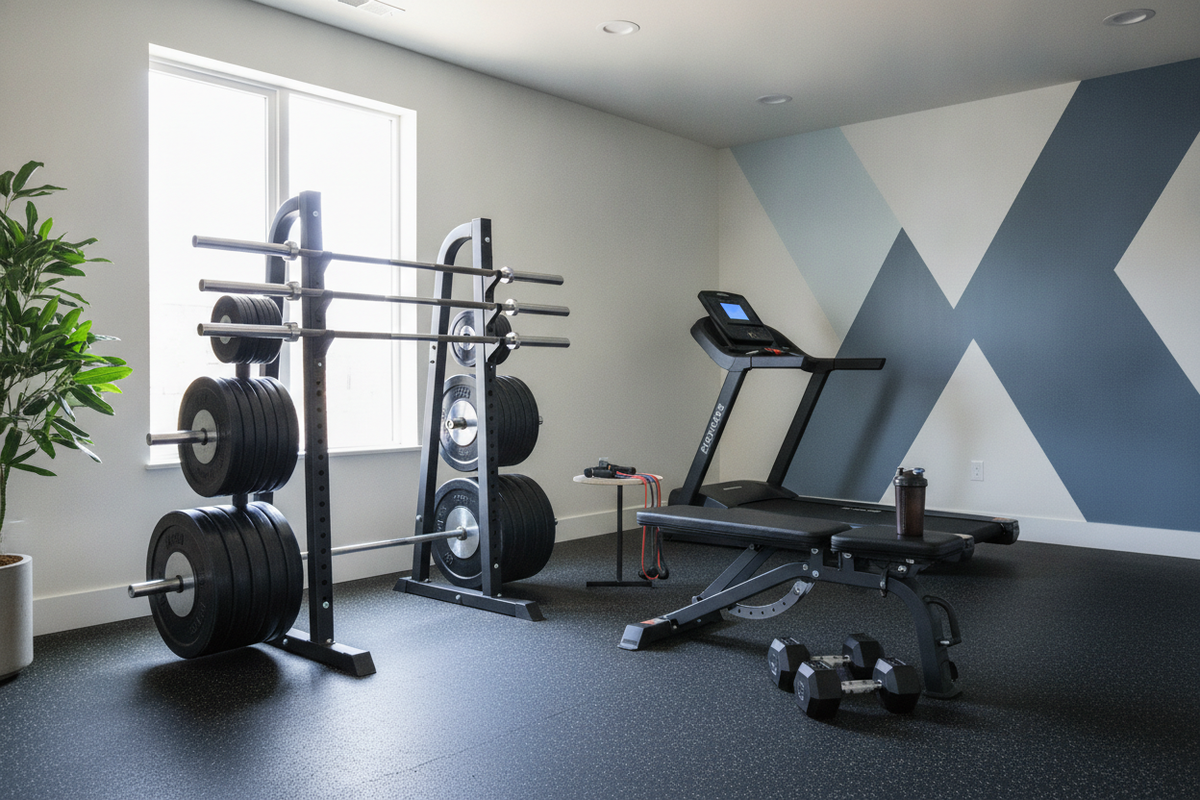
Hypertrophy-focused nutrition cannot perform in isolation; it functions as fuel for dedicated physical exertion. Bodybuilders training in private spaces require an environment that supports intense, heavy lifts without safety compromises or structural wear. Proper layout planning, as covered in our bodybuilding home gym setup guide, provides the foundation for progressive overload.
Heavy compound lifts like deadlifts, squats, and bent-over rows place high localized impact and compressive force onto residential subfloors. Installing high-density rubber gym flooring and large-format exercise mats creates a stable, non-slip base for maximal force transfer while protecting underlying tile or concrete from dropping weights. Dedicated equipment zones keep walkways clear, allowing lifters to transition smoothly between compound free-weight stations and specialized hypertrophy equipment.
Practical Execution: Weekly Batch Preparation and Consistency Protocols
Even the most comprehensive bodybuilding meal plan template is only as effective as its weekly execution. Adopting efficient batch-cooking routines removes decision fatigue during busy weekdays.
- Designate Preparation Windows: Set aside two weekly windows (such as Sunday afternoon and Wednesday evening) to cook staple carbohydrates and proteins in bulk.
- Utilize Digital Food Scales: Measure ingredients in raw or cooked weights consistently to ensure accurate macro tracking across weekly cycles.
- Invest in Airtight Storage: Glass or BPA-free meal prep containers keep prepared meals fresh and make daily transportation effortless.
- Monitor and Adjust: Track biofeedback markers—including morning bodyweight trends, training energy, sleep quality, and digestion—and adjust macronutrient allocations gradually over time.
By treating nutrition with the same architectural precision as training program design and gym layout staging, lifters can sustain progressive hypertrophy gains year-round.