How to Gain Mass in Bodybuilding: Hypertrophy Frameworks, Nutrition Architecture, and Training Space Setup
Understanding What Gains Mean in Bodybuilding
In physical training contexts, newcomers frequently ask, what does gains mean in bodybuilding? At its core, the term refers to the intentional accumulation of skeletal muscle mass and structural density rather than general body mass alone. Successful bodybuilding gains involve a deliberate process where muscular tissue undergoes progressive hypertrophy while managing non-functional fat accumulation. Building functional mass demands a disciplined balance between progressive mechanical loading, structured dietary intake, and complete physiological recovery.
Achieving meaningful progress requires understanding that muscle accrual is an adaptive response to sustained mechanical work. Rather than chasing transient scale weight increases, a dedicated lifter prioritizes muscle fiber recruitment, tissue remodeling, and symmetrical muscular development. Structuring your training environment with appropriate apparatus, as detailed in our gains bodybuilding guide, provides the baseline foundation required to execute this long-term physical progression.
Core Hypertrophy Principles to Gain Mass in Bodybuilding
To successfully gain mass bodybuilding routines must center around core biomechanical stimuli that drive muscular adaptation. Muscular hypertrophy primarily relies on mechanical tension applied through full ranges of motion, accompanied by structured progressive overload over successive training blocks.
- Mechanical Tension: Generating tension across target muscle groups by moving moderate-to-heavy loads through controlled concentric and eccentric phases.
- Progressive Overload: Methodically advancing training demand over time by increasing load, refining movement execution, or adding volume increments across microcycles.
- Stimulus-to-Fatigue Management: Selecting exercises that provide high muscular disruption with manageable systemic and joint fatigue.
Optimizing these variables requires selecting compound and targeted isolation movements tailored to your structural leverage. In-depth resources like our bodybuilding gains guide highlight how targeting specific muscle compartments through intentional angle selection fosters comprehensive muscle expansion across both upper and lower body muscle groups.
Nutritional Architecture for Sustained Muscle Mass Accrual
Training provides the stimulus for hypertrophy, but nutritional architecture provides the substrates necessary to rebuild tissue. To reliably gain mass bodybuilding practitioners maintain a continuous, modest caloric surplus. This sustained energy surplus ensures that cellular repair processes have sufficient fuel without encouraging excessive adipose tissue storage.
A well-rounded nutritional blueprint balances macronutrient allocation across regular daily feeding intervals:
- Dietary Protein: Serves as the structural building block for muscle repair and continuous protein synthesis across the day.
- Complex Carbohydrates: Supplies muscle glycogen to sustain rigorous resistance training sessions and support cellular hydration.
- Fats: Supports endocrine balance and provides dense caloric energy necessary to maintain positive energy balance.
- Hydration Architecture: Maintains cellular volume, intra-muscular electrolyte balance, and nutrient transport during intense lifting bouts.
Aligning your dietary intake with high-demand training blocks helps avoid recovery deficits. For targeted lower-body development and dietary scaling, exploring our gain mass guide offers actionable dietary perspectives that complement rigorous lifting schedules.
Weekly Split Design for Full-Body Hypertrophy
Organizing training volume throughout the week determines how effectively muscle tissue can recover and grow. A well-constructed split balances frequency, volume, and recovery intervals, preventing systemic exhaustion while maximizing weekly stimulus per muscle group.
The Push-Pull-Legs (PPL) Framework
The Push-Pull-Legs format organizes training by functional movement patterns. Push sessions target the chest, shoulders, and triceps; pull days focus on the upper back, latissimus dorsi, and biceps; leg days emphasize the quadriceps, hamstrings, and calves. This division minimizes movement interference and ensures overlapping muscle groups receive dedicated rest periods between exposures.
The Upper-Lower Split Model
For individuals balancing compact schedules, the Upper-Lower split distributes total body volume across alternating upper and lower body sessions. This model allows lifters to train major muscle groups multiple times per week with adequate rest days interspersed. For lifters prioritizing lower-body development, reviewing our comprehensive bodybuilding mass guide provides practical loading parameters to maximize structural growth.
Floor Staging and Equipment Safety for Heavy Mass Training
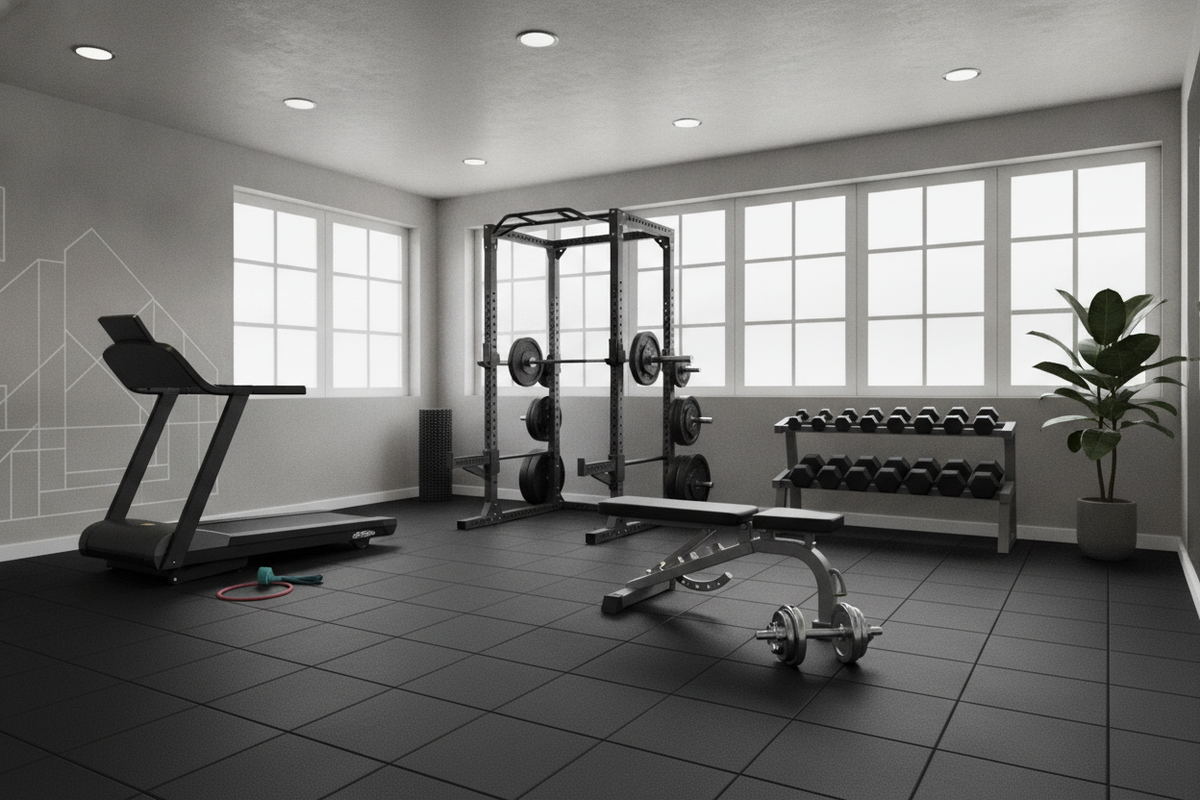
Pursuing progressive mass accrual requires handling substantial barbell, dumbbell, and machine loads. In a home or semi-commercial training space, staging the environment with heavy-duty protective flooring is essential for structural stability, equipment protection, and noise reduction.
- High-Density Rubber Matting: Placing dense, non-slip rubber flooring across the lifting area establishes a rigid, stable footing foundation for heavy squats, deadlifts, and overhead presses.
- Subfloor and Joint Protection: Thick vulcanized rubber mats disperse point-load pressure from heavy iron plates and rack uprights, protecting concrete or wood subflooring from structural cracking.
- Equipment Anchoring and Alignment: Stable flooring prevents power racks, adjustable benches, and weight trees from shifting during high-intensity sets.
- Traction and Moisture Resistance: Textured matting surfaces maintain traction underfoot, minimizing slipping during dynamic or heavy concentric efforts.
Best Practices for Sustaining Long-Term Muscle Growth
Building significant mass is a cumulative process developed over months and years of consistent effort. To sustain momentum and navigate plateaus, implement these organizational practices:
- Log Every Session: Maintain precise records of sets, repetitions, loads, and perceived exertion to ensure verifiable progressive overload.
- Incorporate Planned Deloads: Schedule periodic reductions in training volume or intensity to allow connective tissues and the nervous system to recover.
- Maintain Form Integrity: Prioritize biomechanical execution and active muscle control over arbitrary increases in bar weight.
- Preserve Your Training Space: Routinely inspect flooring tiles, barbell collars, and bench mechanisms to ensure your lifting environment remains stable and reliable.
By unifying progressive overload mechanics, systematic nutrition, deliberate split scheduling, and a secure floor setup, you establish an environment primed to achieve sustainable bodybuilding mass.