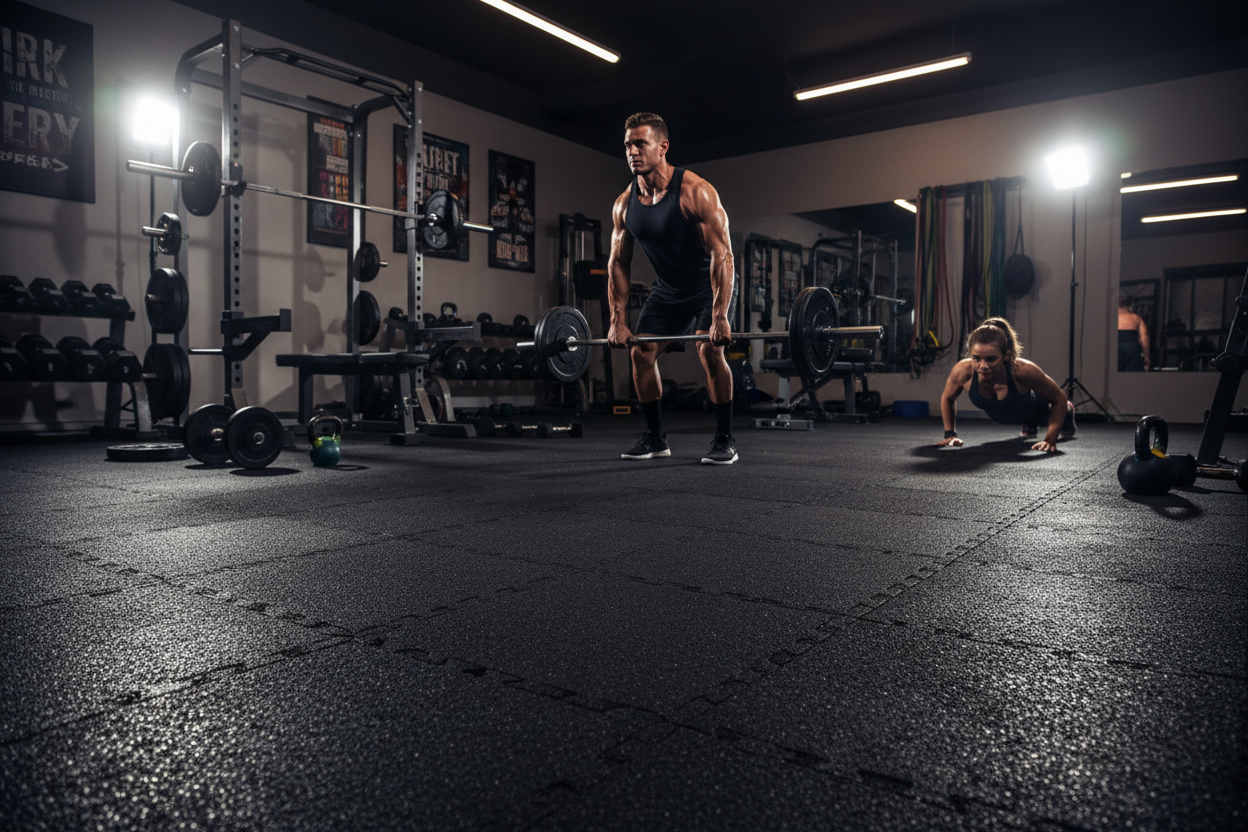
Bodybuilding for Legs: The Definitive Mass Guide
You can always tell who takes their physique seriously by looking at their lower half. While chest and arms get the glory, a thick, sweeping set of wheels is the true mark of dedication. Bodybuilding for legs isn't just about moving weight from point A to point B; it is a psychological battle against your own pain threshold.
Too many lifters spin their wheels doing quarter-rep squats or skipping the rack entirely. If you want legs that demand attention—the kind that stretch the fabric of your jeans—you need to stop training for comfort and start training for hypertrophy. Let’s break down the mechanics, the mindset, and the movements required to build a lower body that matches your upper body.
Key Takeaways: The Leg Growth Blueprint
- Compound First: Always start your bodybuilding leg workout with a heavy compound movement (Squats, Hack Squats, or Leg Press) while your nervous system is fresh.
- Volume is King: Unlike smaller muscle groups, legs often respond best to higher volume. Don't be afraid of the 12-20 rep range for hypertrophy.
- Full Range of Motion (ROM): Partial reps yield partial results. Deep stretches under load stimulate the most muscle fibers.
- Posterior Chain Focus: A complete bodybuilder leg day must prioritize hamstrings and glutes, not just the quadriceps.
- Time Under Tension: Control the eccentric (lowering) phase. Bouncing the weight off your chest or the stops kills your gains.
Understanding the Anatomy of a Bodybuilder
Before we get under the bar, you need to understand what you are building. A complete set of bodybuilding thighs isn't just one muscle; it's a complex system.
Your quads give you that outer sweep and front thickness. Your hamstrings (the "bodybuilder legs back" view) provide the side thickness and the hanging appearance from the rear. The adductors fill out the inner thigh, preventing that gap between your legs. Neglecting any of these results in an unbalanced physique that looks amateurish on stage or at the beach.
The Core Bodybuilding Leg Exercises
There are hundreds of movements, but only a handful are essential for a brutal leg workout bodybuilding style. Here is where you should spend 80% of your energy.
1. The Squat (and its Variations)
Whether it is high-bar, low-bar, or front squats, this is the cornerstone. Squats recruit the most muscle mass and trigger the greatest hormonal response. However, for pure hypertrophy, you don't need to powerlift. Focus on a controlled descent and driving up through the heels. If back issues plague you, the Hack Squat is an incredible alternative that isolates the quads without compressing the spine as heavily.
2. The Leg Press
This is your volume driver. The leg press allows you to load up heavy weight safely without worrying about balancing a bar. It is arguably the best bodybuilding leg workout tool for overloading the quads after your stabilizers are fatigued from squats. Foot placement matters here: place feet lower to target quads, higher to hit glutes and hams.
3. Stiff-Legged Deadlifts (RDLs)
You cannot build a complete leg routine bodybuilding program without RDLs. They target the hamstrings in the lengthened position. The key here is the hinge—push your hips back until you feel a deep stretch in the hamstrings, then squeeze your glutes to return to the start. Do not round your back.
Structuring Your Bodybuilding Leg Routine
A haphazard approach won't work. You need a plan that manages fatigue while maximizing stimulus. Here is a structure used by pros to separate the boys from the men.
The "Sweeping" Routine
This leg workout for bodybuilders focuses on aesthetics and the "X-frame" look.
- Squats: 3 sets of 8-10 reps (Pyramid up in weight).
- Leg Press: 4 sets of 12-15 reps (Focus on constant tension).
- Walking Lunges: 3 sets of 12 steps per leg (Destroys the glutes and quads).
- Leg Extensions: 3 sets of 20 reps (Burnout finisher).
- Lying Leg Curls: 4 sets of 12-15 reps (Strict form, hips down).
Intensity Techniques for Leg Day
If you want thigh exercises bodybuilding pros use to force growth, you have to embrace intensity techniques. Straight sets are fine for beginners, but advanced growth requires trauma.
Try Drop Sets on the leg extension machine: hit failure, drop the weight by 30%, and hit failure again. Or, utilize Rest-Pause training on the leg press: do 15 reps, rack it for 10 seconds, do 5 more, rack for 10, do 5 more. This is often called a "widowmaker" for a reason—it tests your will to live.
My Training Log: Real Talk
I want to be honest about what a truly effective leg day feels like because the textbooks don't cover the grit. I remember a specific session doing high-volume Hack Squats. It wasn't just the muscle burn; it was the specific, metallic taste of iron that developed in the back of my throat around rep 15.
The worst part isn't even the set itself—it's the immediate aftermath. I recall unlatching the safety handles and feeling that distinct, terrifying wobble in my vastus medialis (the teardrop muscle) when I tried to stand up. It feels like your knee is made of jelly. And there's a very specific nausea that hits when your weight belt is ratcheted one notch too tight during a heavy leg press—that moment where you have to decide between finishing the rep or grabbing the trash can. If you aren't flirting with that sensation occasionally, you probably aren't pushing hard enough to force new growth.
Conclusion
Building massive legs is a slow, often painful process. It requires you to limp out of the gym knowing you gave everything you had. Don't chase heavy numbers at the expense of form; chase the pump, the stretch, and the fatigue. Stick to the basics, eat enough to recover, and do not skip the hard movements. The results will speak for themselves.
Frequently Asked Questions
How often should I train legs for bodybuilding?
For most natural lifters, training legs once every 5 to 7 days is standard. However, if legs are a lagging body part, splitting them into two days (one Quad-focused, one Hamstring-focused) or training them twice a week with varied intensity can accelerate growth.
Are squats absolutely necessary for big legs?
While squats are the "king" of exercises, they aren't strictly mandatory if you have injuries. You can build massive legs using Hack Squats, Leg Presses, and Bulgarian Split Squats. The key is progressive overload, not just the specific tool you use.
Why won't my calves grow?
Calves are stubborn because they are used to carrying your body weight all day. To make them grow, you need to treat them with high priority. Stop doing them at the end of the workout when you are tired. Train them first with heavy weight, full stretches at the bottom, and a hard squeeze at the top.