Leg Anatomy Bodybuilding: The Science of Bigger Lower Body Gains
You can’t sculpt a masterpiece if you don’t know the clay you’re working with. Too many lifters walk into the gym, load up the leg press, and push until they pass out, yet their legs lack that detailed, sweeping look. The missing link isn't effort; it's a fundamental misunderstanding of leg anatomy bodybuilding.
If you don't understand origin and insertion points, you are just moving weight, not building muscle. This guide strips away the bro-science and looks at the biomechanics required to turn stick legs into tree trunks.
Key Takeaways
- Quadriceps Dominance: Composed of four heads; require both heavy compounds (squats) and isolation (extensions) to hit the rectus femoris and vastus muscles.
- Hamstring Complexity: These are dual-function muscles responsible for knee flexion and hip extension. You must curl and hinge (RDLs) to build them fully.
- Glute & Adductor Importance: Often neglected by male bodybuilders, the adductors provide inner thigh thickness, while glutes drive heavy compound power.
- Calf Architecture: The gastrocnemius works best with straight legs; the soleus takes over when the knee is bent.
The Quadriceps: The Frontal Sweep
When we talk about leg muscles anatomy bodybuilding, the quads usually get the glory. They are the large muscles on the front of the thigh, but treating them as one big slab of meat is a mistake.
Rectus Femoris vs. The Vasts
The quadriceps are made of four muscles. Three of them (the vastus lateralis, medialis, and intermedius) originate on the femur and only cross the knee joint. Their sole job is to straighten your leg.
However, the fourth muscle, the Rectus Femoris, crosses the hip joint. This is why leg extensions hurt so much more when you lean back slightly—you are stretching the muscle at the hip while contracting it at the knee. If you only squat, your rectus femoris often doesn't get fully stimulated because extending the hip (standing up) shortens the muscle at the top, reducing tension.
The Hamstrings: More Than Just Leg Curls
If your side poses look flat, it’s a hamstring issue. Many bodybuilders have quad-dominant legs because they treat the hamstrings as an afterthought.
The Hip Hinge Factor
Anatomy dictates training style here. The hamstrings cross the knee and the hip. If you are only doing lying leg curls, you are missing half the function: hip extension.
To build the "hanging" look of the hamstrings, you must incorporate stiff-legged deadlifts or Romanian Deadlifts (RDLs). These movements stretch the hamstring at the hip origin. A complete routine requires one movement where you bend at the waist, and one where you bend at the knee.
The Adductors and Glutes: The Hidden Mass
You might think adductors are just for those machines people avoid making eye contact on. You'd be wrong. A massive squat requires massive adductors.
Anatomically, the adductor magnus is a massive muscle that assists in hip extension out of the bottom of a squat. If you have a "thigh gap," your legs will look small on stage. Deep squats and leg presses with a wider stance recruit this muscle group heavily, adding circumference to the upper thigh that quads alone cannot provide.
My Training Log: Real Talk
I want to share a specific realization I had regarding leg anatomy bodybuilding that changed my physique. For years, I thought I had "bad genetics" for calves. I was hammering seated calf raises three times a week with zero growth.
Once I actually opened an anatomy book, I realized the seated raise almost exclusively targets the soleus (the muscle under the main calf) because bending the knee puts the gastrocnemius (the diamond shape) on slack. I was effectively turning off the muscle I wanted to grow.
I switched to heavy, standing donkey calf raises. The difference in sensation was immediate. It wasn't just a burn; it was a tearing sensation behind the knee pit that felt sketchy at first. I also stopped bouncing. The real growth happened when I held the stretch at the bottom until my foot felt like it was sliding out of the shoe. That specific, uncomfortable stretch under load is the only thing that woke my calves up.
Conclusion
Building massive legs is an engineering problem. Once you understand the levers and pulleys of your lower body, you stop guessing. Don't just squat because you were told to. Squat because you understand how it stretches the glutes and loads the quads. Apply this anatomy logic to your next session, and the hypertrophy will follow.
Frequently Asked Questions
What is the best exercise for overall leg mass?
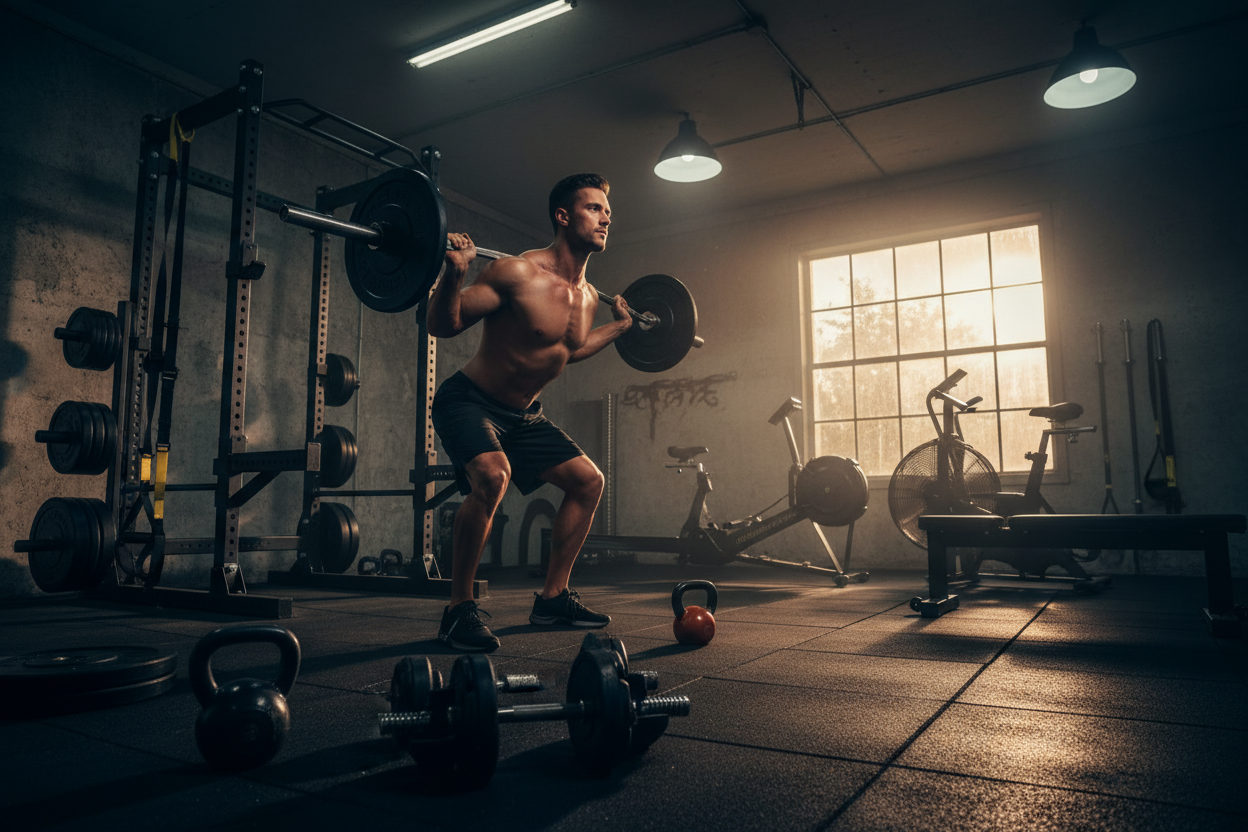
The barbell back squat remains the king of leg anatomy bodybuilding. It recruits the quads, glutes, adductors, and hamstrings (as stabilizers) simultaneously, allowing for the heaviest mechanical load.
Why are my hamstrings not growing?
You are likely neglecting the hip-hinge movement pattern. If you only do leg curls, you aren't training the hamstrings in their lengthened position. Add Romanian Deadlifts to your routine.
Can I isolate the 'teardrop' muscle (Vastus Medialis)?
While you cannot completely isolate a single quad muscle, you can emphasize the Vastus Medialis (VMO) by performing exercises that focus on the last 15-30 degrees of knee extension, such as terminal knee extensions or leg extensions with a peak contraction.