Leg Day Basics: What It Means and How to Train
Among gym goers and home lifters alike, few training sessions spark as much conversation, humor, and dread as leg day. Whether you have just started exploring resistance training or you are retooling your weekly calendar, dedicating dedicated training time to your lower body forms the bedrock of balanced physical development.
Understanding what goes into a solid lower body session helps you build lower body strength, protect your joints, and create a functional home or commercial workout routine that delivers long-term results.
What Is Leg Day?
In fitness culture, the term describes a training session in a workout routine where you focus almost entirely on the muscles of your lower half rather than your upper body. In common training splits—such as a push-pull-legs format or an upper and lower body split—lifters organize their week so that specific major muscle groups can recover while others are working.
You may also wonder what the phrase means in casual conversation or fitness slang. When someone online or in the gym jokes about it, they are usually referencing the physical fatigue and lingering soreness that follows intense lower body training. The famous gym mantra, “never skip leg day,” serves as a lighthearted warning against focusing purely on mirror muscles like the chest, shoulders, and arms. Lifters who neglect their lower half risk developing an unbalanced physique often nicknamed “chicken legs,” where an overdeveloped upper torso sits atop slender lower limbs.
Major Leg Muscles Targeted in Lower Body Workouts
An effective lower body session targets multiple muscle groups that work in coordination during daily movements, sports, and heavy lifting. Rather than isolating a single muscle, most basic exercises recruit several areas at once.
- Quadriceps: Located on the front of the thigh, these four muscles extend the knee joint and help stabilize your stance during squats and lunges.
- Hamstrings: Running along the back of the thigh, the hamstrings flex the knee and extend the hip, providing balance against the quads.
- Glutes: The gluteus maximus, medius, and minimus drive hip extension, rotation, and lateral stability. Strong glutes help counteract the postural stress caused by a constant sitting position during workday desk hours.
- Calves: Composed primarily of the gastrocnemius and soleus, the calves support ankle flexion, balance, and force transfer from the ground up.
- Adductors and Abductors: The inner and outer hip and thigh muscles steady the pelvis during walking, running, and single leg exercises.
Targeting all the muscles across your hips, thighs, and calves encourages balanced muscle growth and supports functional mobility throughout the entire body.
Essential Leg Exercises for Gym and Home Workouts
Whether you train in a fully equipped commercial gym or an efficient home gym space, compound movements form the core of effective leg workouts. You can consult a detailed gym leg day guide to explore expanded lifting techniques, machine setups, and progression strategies.
Squats and Variations
Squats are often called the cornerstone of lower body training because they challenge the quads, glutes, hamstrings, and core simultaneously. Stand tall with feet shoulder width or feet hip width apart, keep your chest upright, and lower your hips by bending your knees until your thighs approach parallel to the floor. Return smoothly to the starting position. Lifters without access to standard barbells can explore does leg guide like goblet squats, landmine squats, or Smith machine setups.
The Leg Press Machine
In commercial facilities, the leg press machine offers an effective way to load the quads and glutes without placing heavy spinal loads on the upper back. To perform a leg press, sit firmly against the back pad, place your feet flat against the sled platform, release the safety handles, and lower the weight carriage until your knees are bent at roughly a ninety-degree angle before pressing back up without locking your knees.
Hinges and Deadlifts
Hip hinge movements emphasize the posterior chain—specifically the hamstrings and glutes. Romanian deadlifts with dumbbells or a barbell require you to push your hips backward while maintaining a soft bend in the knees and a neutral spine, stretching the hamstrings before driving your hips forward back to the start.
Leg Curls and Isolation
While compound lifts build the base, isolation movements round out muscle mass development. Using a seated or lying leg curl machine allows you to isolate the hamstrings directly through knee flexion. At home, you can substitute stability ball hamstring curls or resistance band curls to challenge the same muscles.
Unilateral and Single Leg Work
Walking lunges, split squats, and step-ups challenge balance and address strength imbalances between your right and left leg. Dynamic warm-up drills like leg swings prepare the hip capsule before you load these unilateral movement patterns.
Why People Avoid Leg Day (and Why You Shouldn't)
It is common to hear gym newcomers ask why people avoid leg day or even claim that it feels unpleasant. Lower body muscles represent some of the largest muscle tissue volumes in the body. When you perform heavy multi-joint lifts, your cardiovascular and central nervous systems work significantly harder than they do during arm or shoulder workouts.
Furthermore, post-workout soreness in the quads and glutes makes everyday activities like walking down stairs, sitting down, and standing up immediately noticeable. However, skipping these sessions limits overall athletic development. Building strong legs enhances posture, supports knee and hip joint health, and contributes to full-body strength that carries over into everyday life.
Structuring Your Leg Day Workout
You do not need dozens of movements to build an effective session. In fact, many lifters wonder: is 4 exercises enough for leg day? Yes, four well-chosen exercises executed with progressive resistance and solid technique can fully stimulate the lower body. For example, pairing a squat variation, a hinge movement, a single-leg lunge, and a calf raise covers every major movement pattern efficiently.
Lifters often reference structural frameworks like the 3-3-3 gym rule, which generally suggests selecting three exercises, performing three working sets per exercise, and aiming for a balanced rep target across three sessions a week. Beginners can review a dedicated home leg workout plan to see how minimal equipment and bodyweight progressions can be organized across a weekly calendar without complex machinery.
Flooring and Equipment Setup for Heavy Leg Training
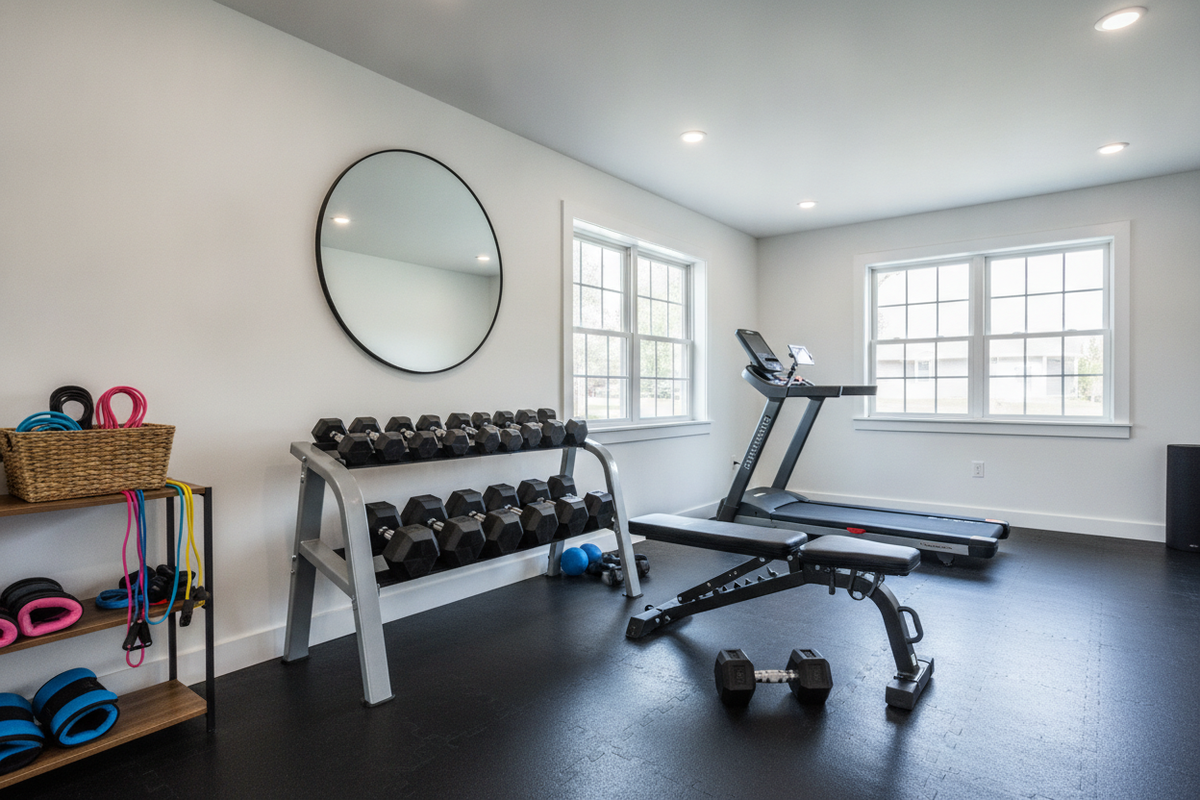
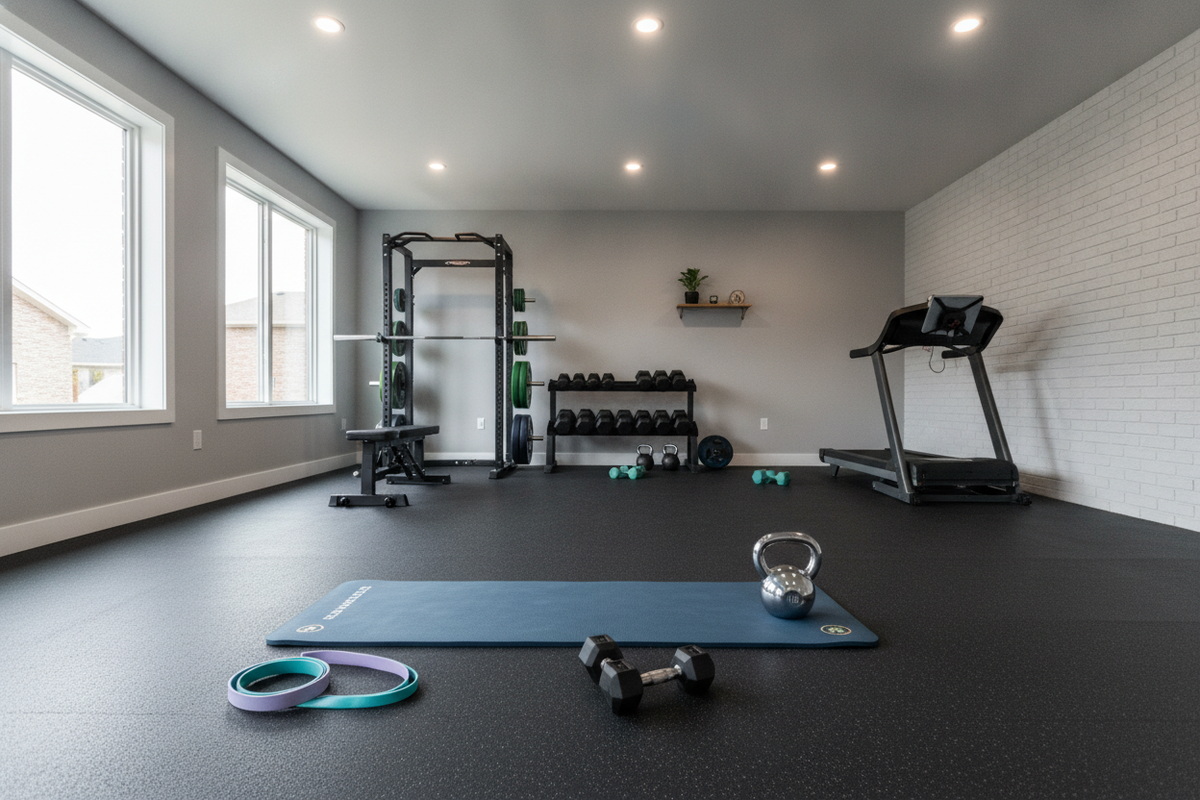
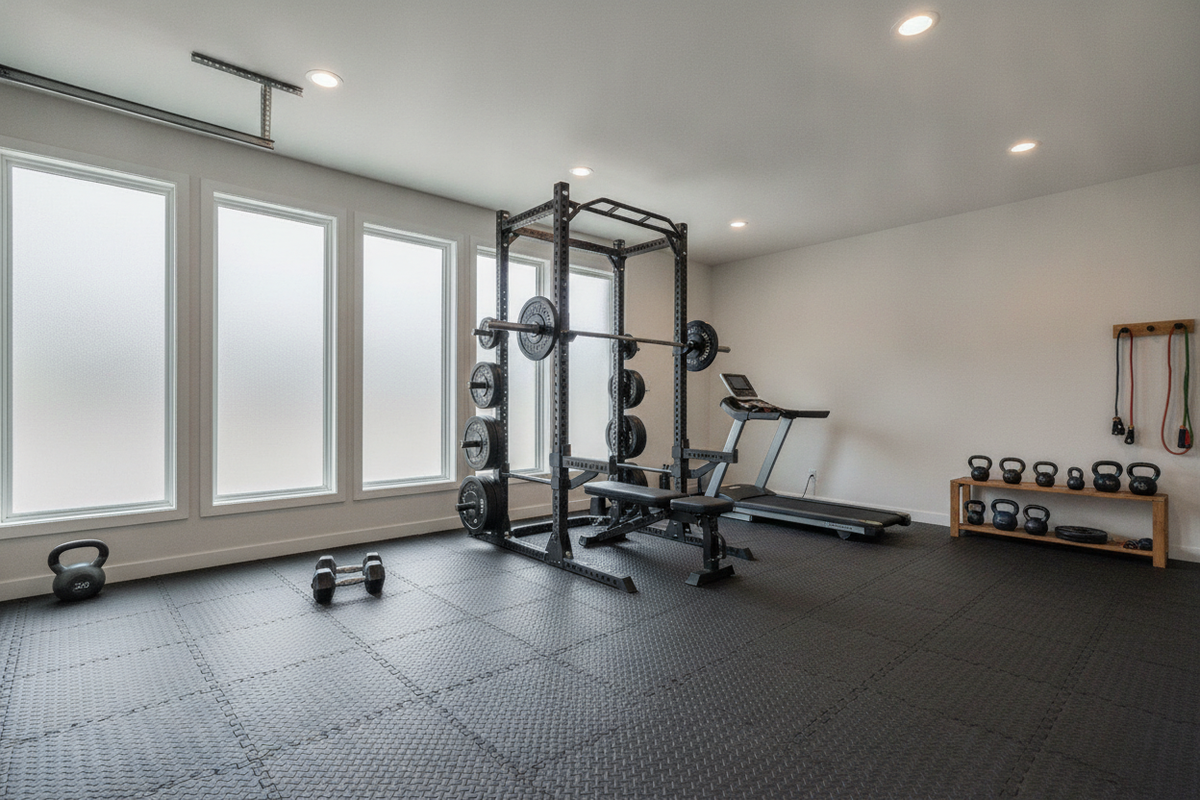
Performing heavy lower body movements requires stable footing and appropriate subfloor protection. When executing squats, lunges, and deadlifts, your feet must remain firmly planted without slipping, squishing, or shifting under load.
In home training spaces, dense rubber workout mats provide essential benefits:
- Non-slip traction: High-traction rubber surfaces prevent shoes or bare feet from sliding during wide-stance squats or dynamic lunges.
- Subfloor preservation: Dropping heavy dumbbells or resting a loaded barbell on bare concrete, tile, or hardwood can crack finishes and structural surfaces. High-density mats absorb ground shock.
- Equipment stability: Heavy items such as adjustable benches, squat stands, or compact leg press units stay firmly anchored when placed on dense gym flooring rather than slick carpet or bare flooring.
- Firm foundation: Soft foam mats compress unevenly under heavy loads, which can compromise ankle and knee alignment. Dense rubber maintains a stable, level surface underfoot.
By pairing thoughtful exercise selection with a secure, stable lifting surface, you can approach every leg session with confidence, building lower body strength safely and consistently over time.