At Home Booty Exercises: Effective Floor Routines
Foundational Mechanics of At Home Booty Exercises
Executing an effective training regimen without access to dedicated gym machinery requires an understanding of functional anatomy and movement planes. Many people attempting at home workouts for buttocks default to repetitive squats, only to discover their quadriceps fatigue long before their glutes feel engaged. The gluteal complex consists of the gluteus maximus, gluteus medius, and gluteus minimus, which collectively govern hip extension, external rotation, and abduction across multiple movement directions.
A balanced curriculum of buttock exercises at home requires loading across three functional planes:
- Sagittal plane: Forward and backward actions, including bilateral hinges, glute bridges, and lunges that demand pure hip extension.
- Frontal plane: Side-to-side displacement, such as lateral band steps and abduction holds, which directly engage the upper lateral hip stabilizers.
- Transverse plane: Rotational mechanics, including external hip rotation and multi-angle split stances that demand rotational control through the pelvis.
A critical technical concept when developing lower body programs is hip-knee decoupling. When an exercise permits excessive forward knee travel, the knee extensor muscles absorb the bulk of the mechanical load. By deliberately anchoring the shins into a more vertical orientation and hinging primarily at the acetabulofemoral joint, the leverage shifts directly toward the posterior chain. Trainees looking to explore detailed movement mechanics can review our glutes bum exercise guide for deeper movement analysis.
Horizontal Hip Extension: Floor-Based Glute Activations
Floor-based horizontal loading patterns provide direct tension at full hip extension without placing vertical axial compression onto the spine. For many trainees, finding the best bum exercise at home begins with supine bridges, where ground feedback reinforces proper pelvic alignment.
When performing the supine glute bridge, foot placement alters muscular recruitment. Positioning the heels closer to the pelvis increases quadriceps involvement, whereas setting the heels farther forward shifts tension toward the hamstrings. An intermediate stance—where the shins remain approximately vertical at top lockout—optimizes gluteal contraction. Trainees should establish a neutral pelvis via slight posterior pelvic tilt prior to liftoff, preventing lumbar hyperextension at the apex of the movement.
Transitioning into quadruped kickbacks and fire hydrants introduces an anti-rotational stability demand. Maintaining a stable torso requires the core musculature to prevent the pelvis from twisting as one leg lifts into extension or abduction. However, executing an exercise at home for buttocks in a quadruped position creates substantial point pressure on the knees, palms, and wrists. Utilizing dedicated supportive surfacing from an exercise collection prevents sustained discomfort against unyielding subfloors during extended floor contact drills, ensuring the focus remains entirely on deliberate muscular contractions rather than joint irritation.
Unilateral and Upright Movement Patterns at Home
While floor-based activations establish movement awareness, upright unilateral movements provide the intensity necessary to stimulate muscle adaptations. Trainees searching for bigger booty exercises at home often benefit from single-leg variations, which double the relative bodyweight load on the working hip while challenging balance.
Bulgarian split squats place intense mechanical tension on the forward glute when performed with an intentional forward torso lean. Positioning the torso roughly parallel to the back shin maintains glute loading, while an upright torso tends to bias the quadriceps. Reverse lunges and single-leg Romanian deadlifts offer similar unilateral stimulus while allowing controlled deceleration of bodyweight.
Incorporating diverse bum exercises to do at home also requires lateral movements. Banded lateral walks and curtsy lunges challenge the hip abductors to maintain pelvic stability under shifting center-of-mass conditions. As you step across different vectors, shearing friction between your footwear and the flooring becomes a key consideration. Slippery residential hardwood or loose throw rugs compromise foot grip, disrupting proper force transfer through the heel and lateral foot arch. Trainees can explore additional progression structures in our glutes exercise buttocks guide.
Home Training Floor Staging: Stability, Cushioning, and Subfloor Care
The physical environment where you conduct an exercise for your buttocks at home directly influences your movement quality, balance, and floor longevity. Residential flooring is typically optimized for walking comfort or visual appeal rather than dynamic athletic loading.
Consider the practical trade-offs between standard household surfaces:
- Bare hardwood or tile: Delivers excellent structural firmness for balance, but provides zero impact absorption and presents slip risks when performing dynamic lateral lunges or sweaty bridge work.
- Plush domestic carpet: Cushions joints during kneeling, but compresses unpredictably underfoot, destabilizing the ankles and arches during heavy single-leg upright work.
- Dedicated fitness surfaces: Provides a dense, non-yielding base that protects knees during quadruped drills while ensuring secure traction during split-stance exercises.
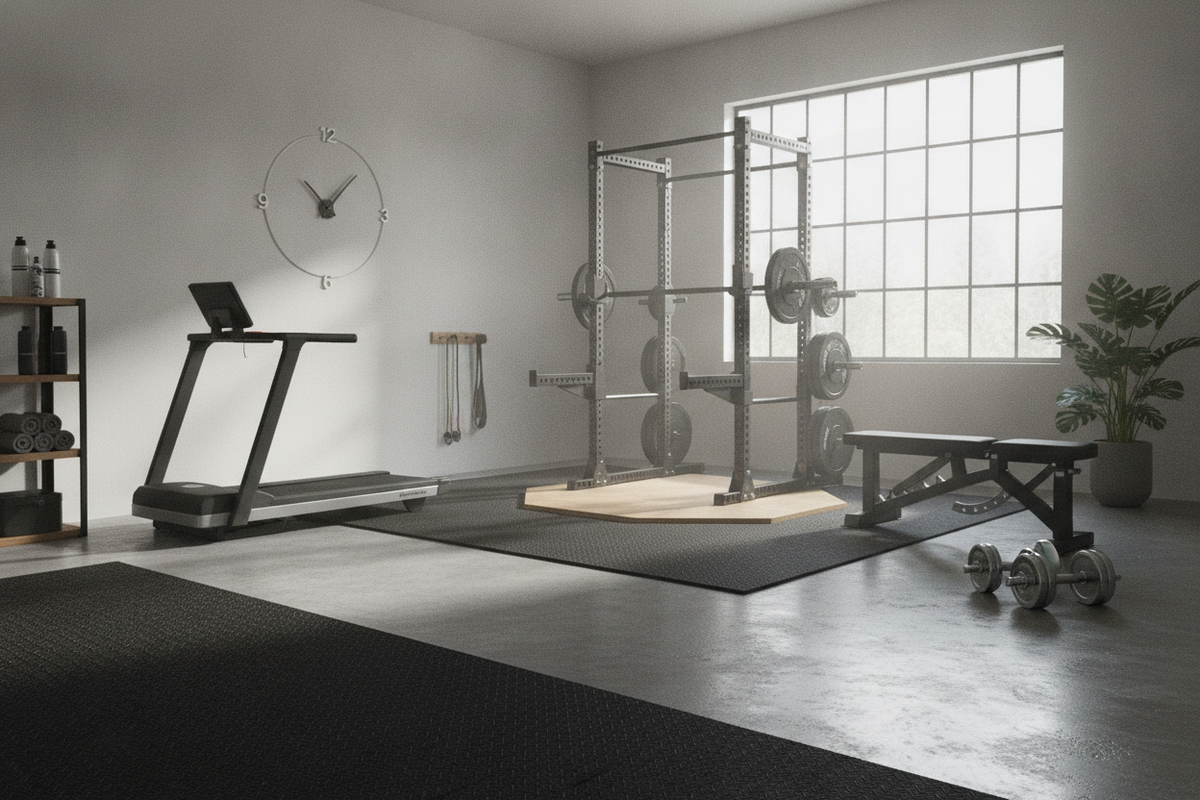
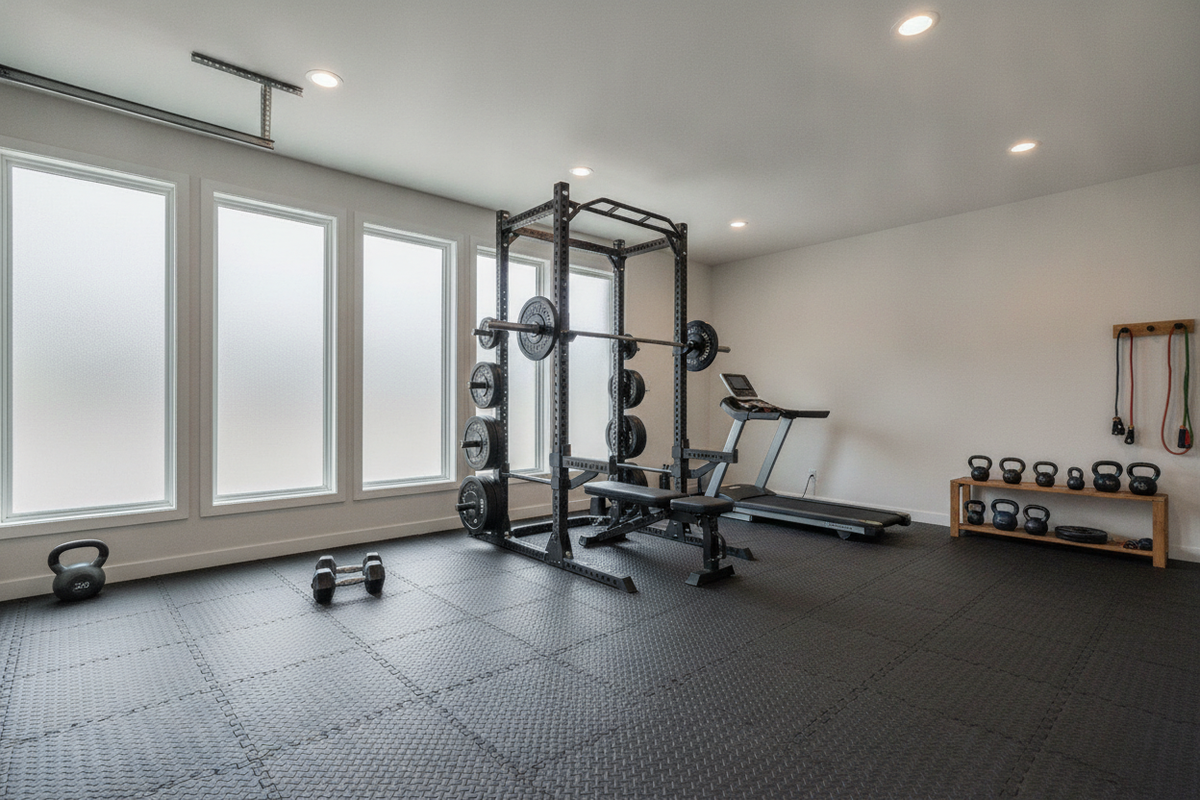
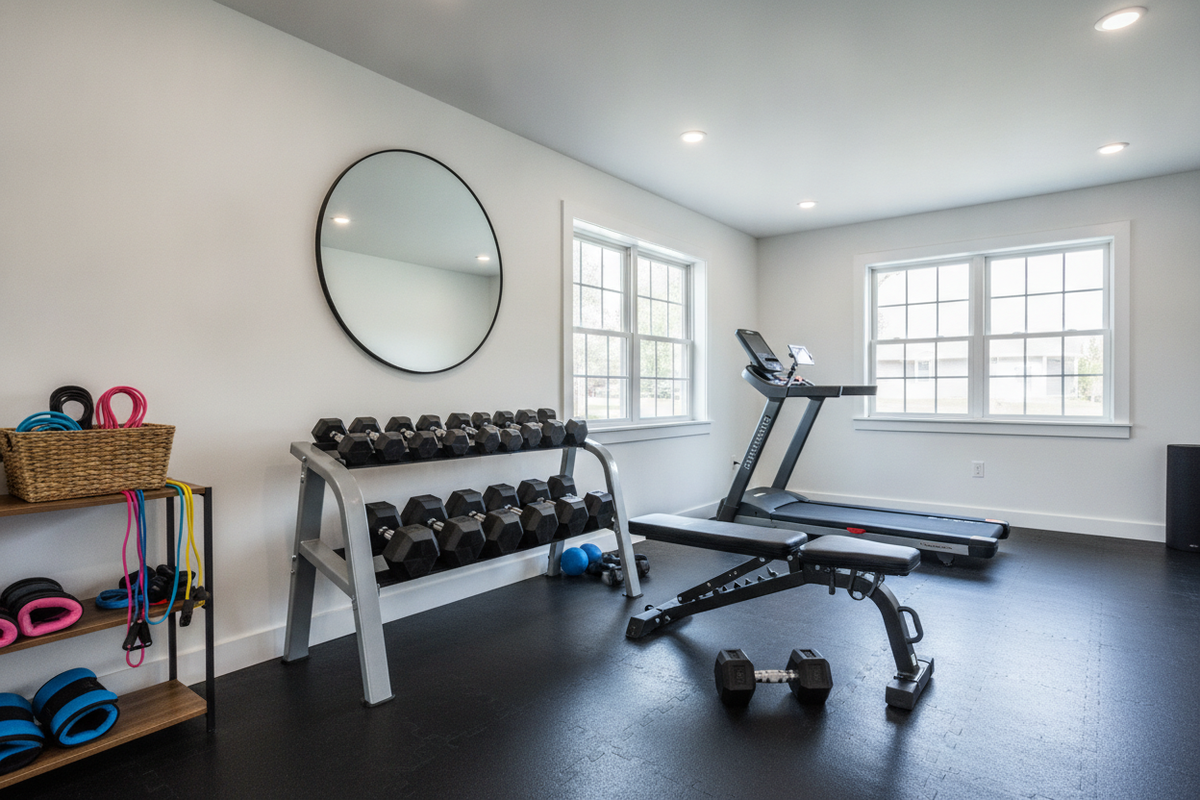
For those establishing a dedicated training zone, setting up an exercise workout product provides continuous, high-density coverage across the entire movement perimeter. A broad, high-traction mat surface eliminates the hazard of slipping during wide lateral steps, prevents equipment like dumbbells or resistance bands from marring decorative floor finishes, and protects sensitive contact points like the sacrum and patella during floor sequences.
Structuring a Progressive Home Glute Routine
Understanding how to workout your buttocks at home involves organizing movements into a structured progression rather than executing random exercises to exhaustion. An effective home glutes workout relies on smart sequencing, progressive overload via tempo control, and disciplined recovery intervals.
A well-rounded framework for an at home butt workout follows a logical hierarchy:
- Activation phase: Low-intensity floor work, such as bodyweight bridges and quadruped abductions, waking up neural pathways and establishing mind-muscle connection.
- Compound unilateral loading: Dynamic upright movements, such as Bulgarian split squats or deficit reverse lunges, where mechanical tension is highest.
- Frontal plane accessory work: Band-resisted lateral steps or curtsy lunges to address pelvic stabilizers and abductor capacity.
- Metabolic isometric burn: Prolonged isometric holds at the peak contraction of a glute bridge or wall sit to accumulate metabolic stress.
When external loads such as heavy barbells are absent during at home booty exercises, trainees can induce progressive overload by manipulating tempo. Incorporating a three-second eccentric lowering phase, a two-second pause in the stretched position, and an explosive concentric return significantly increases total time under tension. Pairing strict exercise form with an expansive, slip-resistant workout perimeter ensures every training session remains productive, comfortable, and sustainable within your home environment.