Buttocks Exercise for Men: Workouts and Home Setup
Dedicated lower-body posterior training is frequently overlooked in conventional male fitness programs. While chest, shoulder, and arm regimens routinely occupy primary workout blocks, targeted hip-extension movements are often relegated to incidental sets within generic leg sessions. However, focusing intentionally on a buttocks exercise men routine provides the foundation for posterior chain balance, hip-hinge mechanics, and balanced physical development.
Why Glute Training Matters for Men: Mechanics, Posture, and Posterior Power
The gluteal complex consists of the gluteus maximus, gluteus medius, and gluteus minimus. Together, these muscles function as the primary drivers of hip extension, external rotation, and pelvic stabilization. In many everyday contexts and seated desk routines, hip flexors remain in a shortened position while posterior structures experience minimal tension. Over time, this passive posture can lead to altered movement mechanics during compound lower-body lifts.
When men prioritize direct glute training, they develop the muscular leverage necessary to stabilize the pelvis during heavy axial loading. Whether performing traditional deadlifts, power cleans, or sprinting movements, the hips generate the horizontal and vertical force vectors required to propel the body forward. Training the glutes directly ensures that force distribution remains centered through the hips rather than excessively straining the lower lumbar segments or quadriceps tendons.
Essential Movement Patterns for Male Glute Development
An effective posterior training strategy for men requires training across distinct planes of motion and force vectors. Relying solely on vertical squatting patterns often fails to provide sufficient tension across the entire gluteal musculature.
- Horizontal Hip Extension: Movements where peak tension occurs at full hip extension with the torso perpendicular to the resistance vector, such as hip thrusts and glute bridges.
- Vertical and Angled Hinges: Exercises like Romanian deadlifts and good mornings that load the glutes and hamstrings through deep eccentric lengthening.
- Unilateral Split Stances: Lunges, step-ups, and split squats that demand dynamic stabilization while challenging each hip independently.
- Abduction and External Rotation: Movements targeting the gluteus medius and minimus to reinforce lateral hip stability and knee tracking under load.
Top Floor-Based and Free-Weight Buttocks Exercises for Men
Integrating structured compound and isolation movements creates a well-rounded male glutes workout. These primary exercises form the core of an effective routine:
1. Barbell and Dumbbell Hip Thrusts
The hip thrust places peak mechanical tension at terminal hip extension. Position your upper back across a stable flat bench with your feet flat on the floor at roughly shoulder width. Drive through the heels, extending the hips until your thighs and torso form a straight horizontal line. Avoid arching your lower back at the top; instead, focus on posterior pelvic tilt and a deliberate contraction. When transitioning to heavier resistance, referencing our build mass booty guide can help you organize progressive overload protocols systematically.
2. Romanian Deadlifts (RDLs)
The Romanian deadlift emphasizes hip flexion while keeping the shins relatively vertical. Soften your knees and push your hips rearward as if trying to touch an imaginary wall behind you. Keep the barbell or dumbbells tracking tight against your thighs and shins. Stop the descent once your hips can no longer travel backward, then drive the hips forward to return to the standing position.
3. Bulgarian Split Squats
Elevate your rear foot on a bench or stable platform while placing your lead foot forward. To bias the gluteus maximus rather than the quadriceps, hinge forward slightly at the torso and maintain a relatively vertical front shin as you descend. Drive through the front heel to rise.
4. Floor Glute Bridges
As a fundamental floor movement, glute bridges require minimal equipment while offering direct horizontal hip engagement. Lie supine on a dense mat, bend your knees, and plant your feet flat on the floor. Squeeze the glutes to lift your pelvis upward, creating a straight path from your knees to your shoulders before slowly lowering under control.
Quad Dominance vs. Glute Engagement: Troubleshooting Common Technique Pitfalls
Many lifters struggle to feel their glutes working during lower-body sessions due to quad dominance. When knees drift excessively forward during lunges or split squats, the anterior thigh musculature absorbs the majority of the training stress. To re-center the stimulus onto the posterior chain, practice the following technical adjustments:
- Check Shin Angles: A more vertical shin angle generally places greater mechanical demand on the hip extensors, whereas forward knee translation shifts tension into the patellar tendon and quadriceps.
- Mind Your Foot Distance: In hip thrusts, placing the feet too close to the bench can overemphasize the quads, while placing them too far out shifts the load onto the hamstrings. Aim for an angle close to ninety degrees at the knee joint when hips are fully extended.
- Control Pelvic Alignment: Resist the urge to hyperextend the lumbar spine to achieve perceived lockout. True hip lockout finishes with a neutral or slightly tucked pelvis and firm abdominal bracing.
Structuring an At-Home Male Glutes Workout Routine
Home training requires thoughtful arrangement of exercise order, density, and equipment staging. Depending on whether you use bodyweight resistance, resistance bands, or free weights, you can incorporate glute-specific work twice per week alongside your broader strength schedule.
A balanced session begins with activation movements such as floor bridges or lateral band walks, followed by your primary horizontal or vertical movement, and concludes with unilateral split-stance work. Exploring our detailed build glutes bum guide provides helpful biomechanical context on balancing training frequency, recovery, and tension management across weekly splits.
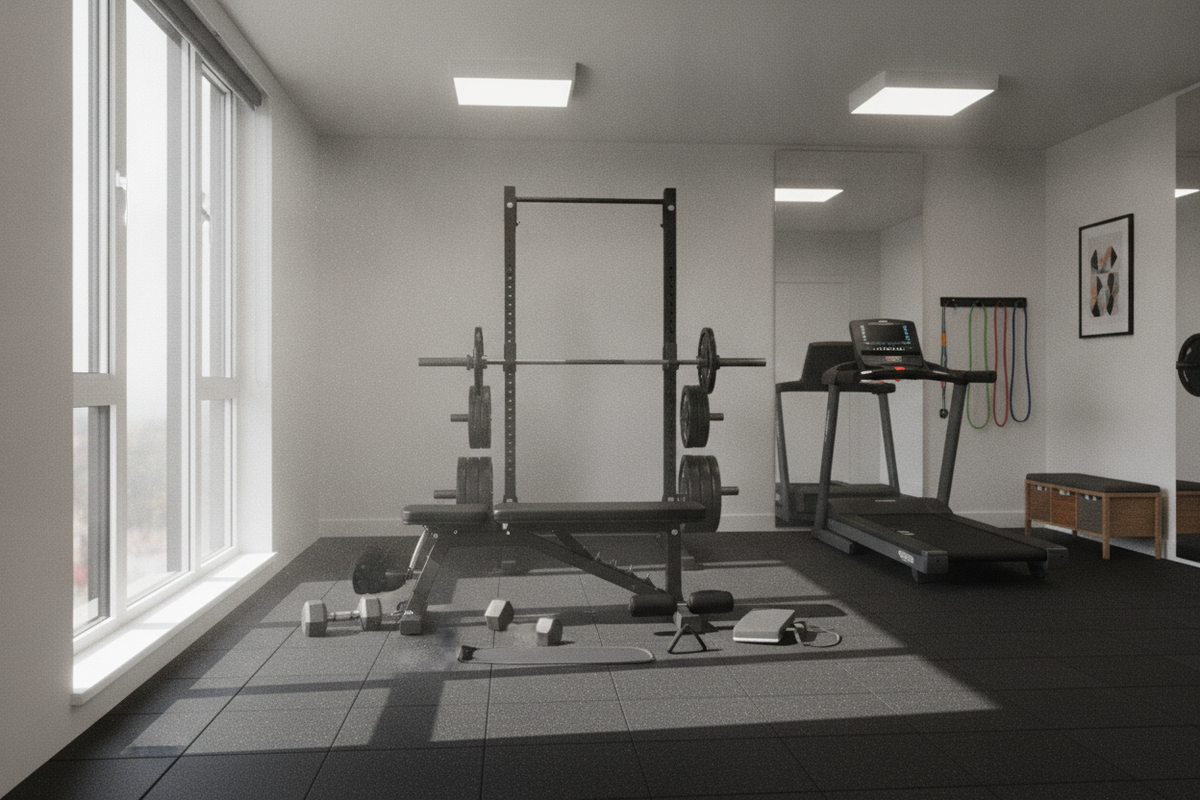
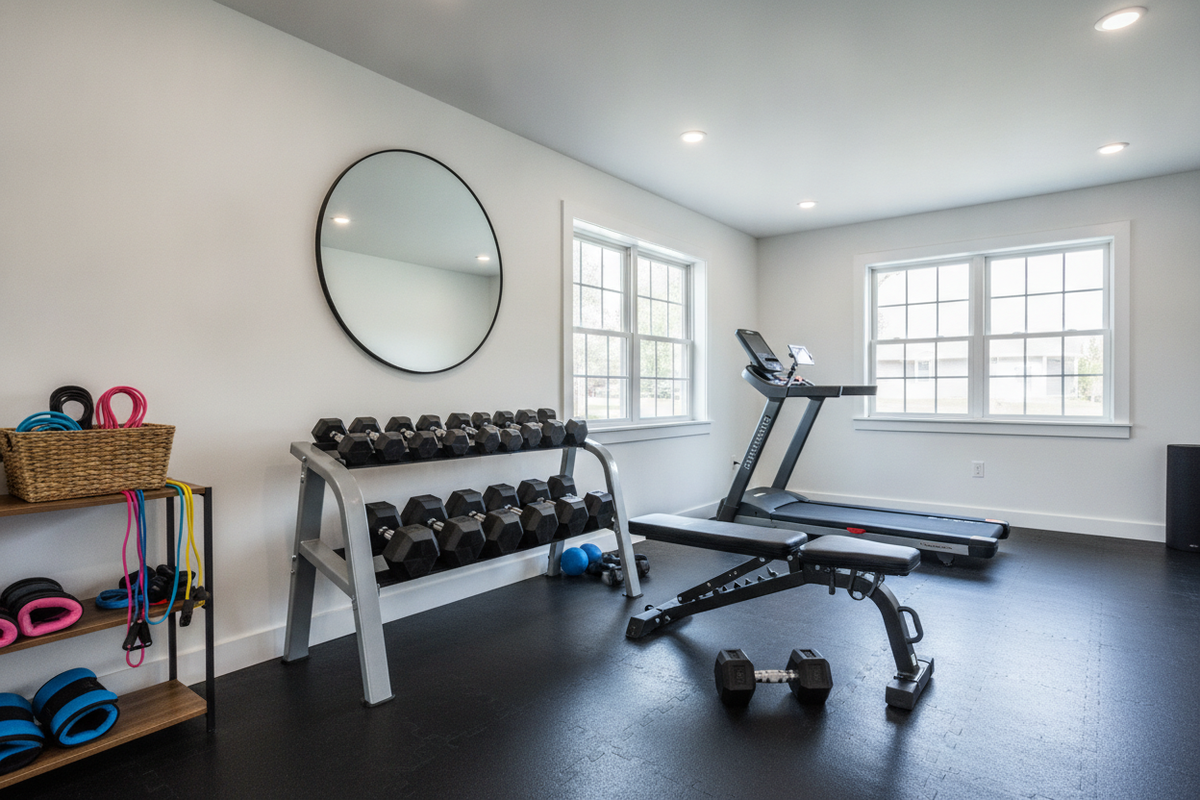
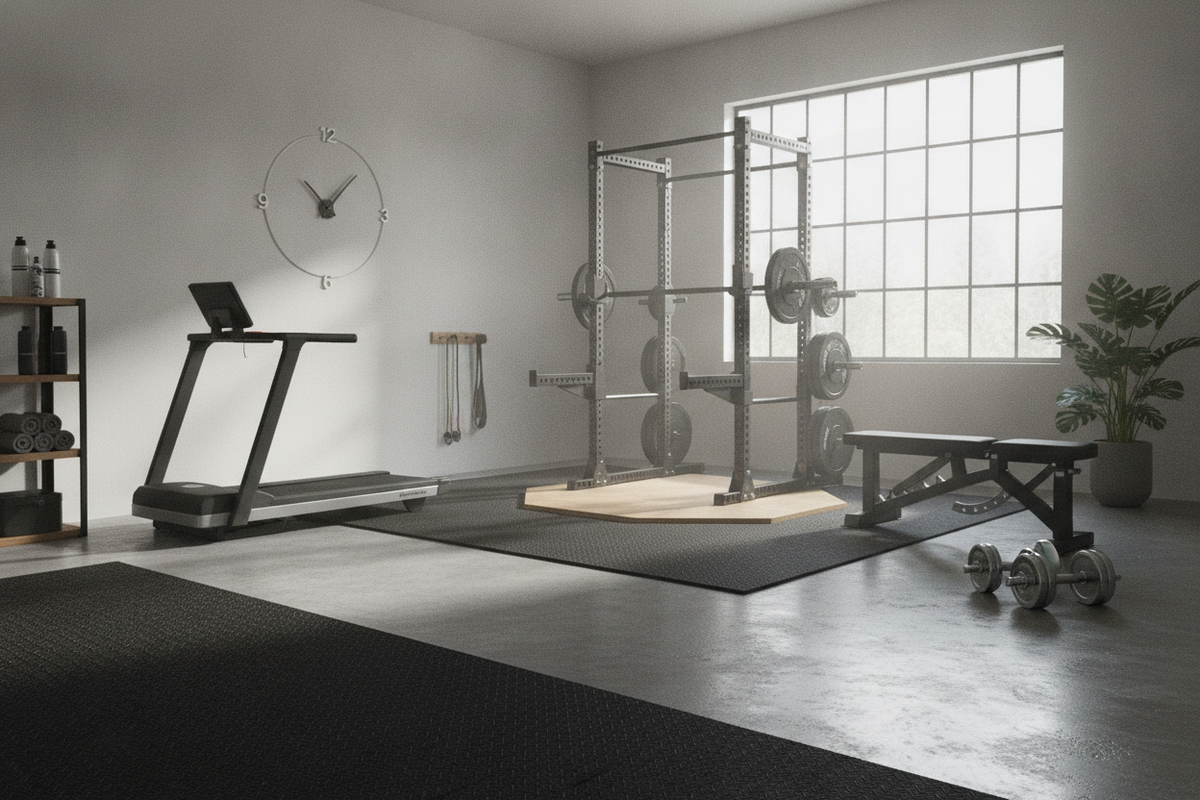
Home Gym Floor Staging and Equipment Foundation for Glute Training
Executing heavy floor-based glute exercises at home introduces specific physical demands on your flooring setup. When performing hip thrusts, your bench must remain firmly anchored to prevent backward slipping during explosive hip drive. Similarly, your feet require an unyielding, high-friction surface so that driving force transfers cleanly into hip extension rather than sliding across slick hardwood or tile.
In our experience testing home gym layouts, an unstable surface quickly compromises lifting form and breaks focus during intense sets. Establishing an expansive base using a dedicated exercise workout product offers ample surface area to position your bench, foot drive zone, and weight plates simultaneously. A large, dense mat surface protects residential subfloors from point loading caused by bench feet and dumbbell drops while creating dependable grip for your footwear.
Selecting and Maintaining the Right Mat Setup for Lower-Body Workouts
Choosing proper gym flooring for lower-body work requires balancing firmness, surface grip, and durability. Overly soft foam pads collapse under bodyweight and loaded barbells, creating an unstable foundation that dissipates energy. Instead, look for dense, resilient materials that provide firm footing without shifting under horizontal shearing forces.
Browsing a specialized exercise collection allows lifters to find mat dimensions that accommodate broad split-squat stances and floor bridging setups. To maintain your training area over time, wipe down high-traction surfaces periodically with mild soap and water to eliminate dust and sweat buildup. Keeping the mat surface clean ensures reliable footwear traction across every heavy repetition.