Beginner Buttocks Workouts: Floor Moves and Mat Tips
Introduction: Why Grounded Mechanics Matter for Beginners
Starting an exercise program focused on lower-body development often presents an overwhelming array of complex, upright exercises. For those exploring beginner buttocks workouts, shifting initial training down to floor level offers a stable, low-impact environment. Ground-based exercises reduce balance demands, allowing you to isolate targeted muscle groups without placing unnecessary stress on the knees, ankles, or spine.
When executing a booty workout beginner routine from the floor, horizontal positioning removes the compressive forces associated with standing loading. This setup allows you to focus purely on muscular activation and deliberate hip extension. By establishing this foundational movement pattern early, you can develop reliable neuromuscular coordination before advancing to upright or externally loaded routines.
Core Foundational Movements for Entry-Level Glute Training
A reliable beginner butt workout prioritizes controlled, deliberate bodyweight mechanics rather than speed or momentum. By focusing on alignment and full muscular engagement throughout each repetition, you build familiarity with basic hip hinging and extension mechanics.
- The Supine Glute Bridge: Lying face-up with knees bent and feet anchored flat against the mat, press through your heels to raise your hips until your thighs and torso form an unbroken line. Avoid overextending the lower back at the top of the motion; instead, focus on contracting the glutes firmly before lowering under control.
- Quadruped Hip Extension: Positioned on hands and knees, maintain a neutral spine while pressing one heel upward toward the ceiling with the knee bent at a right angle. This pattern targets hip extension while requiring the core to resist torso twisting.
- Side-Lying Clamshell: Resting on your side with hips and knees stacked at comfortable angles, keep your feet touching while elevating the top knee. This movement isolates the lateral hip musculature, which plays a central role in pelvic stability.
Integrating these targeted buttock exercises for beginners ensures that both hip extension and hip abduction receive balanced attention. Practicing these bum exercises for beginners with slow, deliberate contractions establishes a strong mind-muscle connection without requiring supplemental weights.
Integrating Breath Control and Movement Pacing
Deliberate tempo and synchronized breathing turn basic positions into highly effective training tools. In any routine centered on booty workouts for beginners, coordinating inhalation during the lowering phase and exhalation during the active contraction phase reinforces abdominal support. Pairing movement with established breath rhythm techniques for beginners keeps the ribcage anchored and prevents compensatory arching in the lumbar spine during bridge or kickback movements.
Home Floor Staging: Protecting Sensitive Contact Points
Executing ground-based movements requires careful preparation of your physical environment. Hardwood, tile, or concrete subfloors can create uncomfortable pressure points against the kneecaps, hip bones, wrists, and elbows. Setting up a dedicated workout surface is essential for consistent, irritation-free training during a booty workout for beginners.
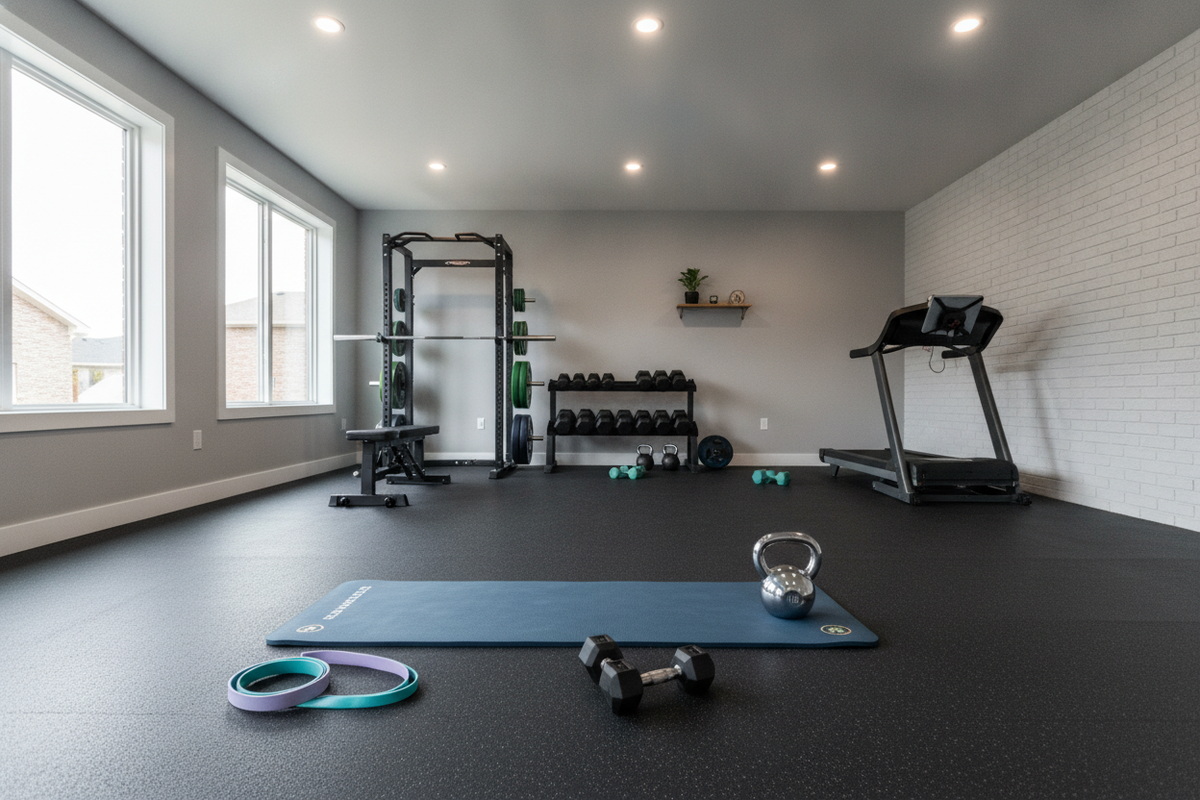
A supportive, dense workout mat provides the baseline cushioning needed to keep horizontal training comfortable. Rolling out a large supportive exercise mat creates a designated perimeter that accommodates dynamic position changes—such as transitioning from supine bridges to side-lying clamshells—without requiring you to shift or readjust your base between sets. In my own home setup, having a broad, non-shifting floor boundary makes fluid movement transitions far more intuitive.
Beyond cushioning, surface texture is critical. During hip bridges, your feet must anchor firmly against the floor without sliding forward. Mats with textured, high-traction surfaces provide reliable grip for bare feet or training shoes, allowing you to exert upward force cleanly through the heels.
Structuring a Sustainable Beginner Booty Workout at Home
Consistency is built on realistic pacing rather than exhausting routines. Organizing a sustainable beginner booty workout at home involves three distinct phases: mobility preparation, focused working sets, and cool-down positioning.
- Preparation: Begin with gentle floor-based pelvic tilts, cat-cow spine movements, and ankle rotations to lubricate the joints and prepare the hips for movement.
- Focused Activation: Move methodically through your selected floor exercises. Perform repetitions at a tempo where you pause briefly at the peak of muscular contraction, resting whenever form begins to falter rather than chasing fatigue.
- Recovery: Conclude with restorative positions, such as a child's pose or a gentle supine knee-to-chest stretch, to allow the lower body musculature to relax.
If you are designing a broader routine, exploring an adaptable beginner home workout routine can help integrate these lower-body mechanics into a well-rounded weekly regimen. You can also review our comprehensive workout training hub for additional movement templates and staging layouts suited to home environments.
Mat Care, Grip Maintenance, and Equipment Placement
To preserve surface grip and personal hygiene, your training mat requires regular care. Over time, dust, skin oils, and ambient debris can settle on textured surfaces, reducing the traction required for stable foot planting during bridges.
Wipe down your mat periodically using a soft cloth dampened with mild soapy water, avoiding harsh chemical cleaners that might degrade the mat's material or leave a slick residue. Ensure the surface dries completely before rolling or storing it. When placing your mat over carpet or polished hardwood, confirm that the underside grips the underlying flooring securely to eliminate sliding during lateral leg lifts or transitional movements.