A Good Beginners Workout Starts With Your Breath Rhythm
I recently watched a new client try to do push-ups in her cramped living room. She dropped to the floor, squeezed her eyes shut, and banged out six rapid-fire reps while completely holding her breath. By the time she stood up, she was gasping for air, her face was flushed, and she immediately told me she was horribly out of shape. But her muscles weren't failing—her lungs were just empty.
When I design home gym programs, the first thing I teach isn't how to squat or deadlift. It is how to breathe. A good beginners workout shouldn't leave you feeling dizzy or defeated. Instead of focusing on hitting an arbitrary number of repetitions, the secret to building lasting strength is letting your natural breathing rhythm dictate the speed and intensity of your movements.
Quick Takeaways
- Breath-pacing prevents the rapid heart rate spikes that cause premature fatigue.
- A deep, three-second inhale acts as your braking system during the lowering phase of an exercise.
- A forceful exhale powers the lifting phase and naturally braces your core.
- Counting breaths instead of reps helps you maintain a safe, slow tempo.
- You need an uncrowded, dedicated floor space to focus internally on your diaphragm.
Why Most First Time Workouts Fail Before They Start
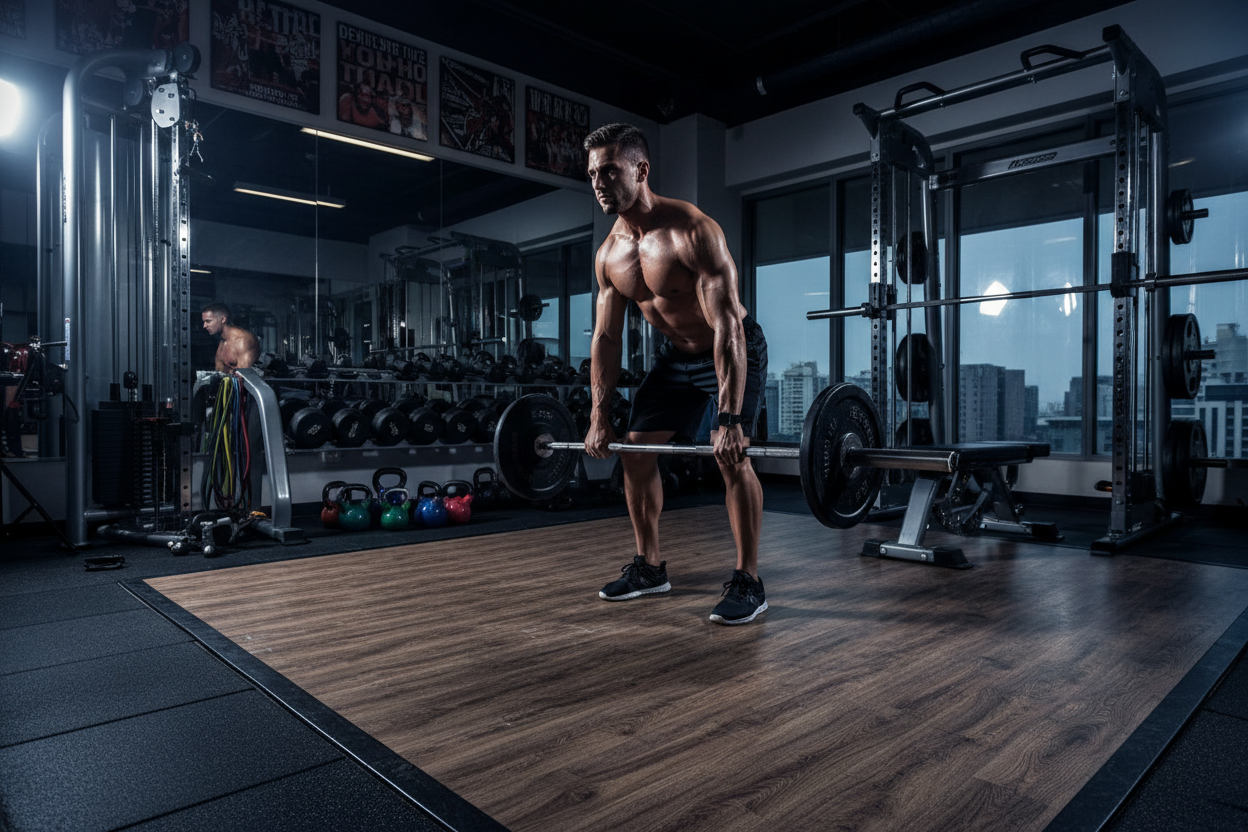
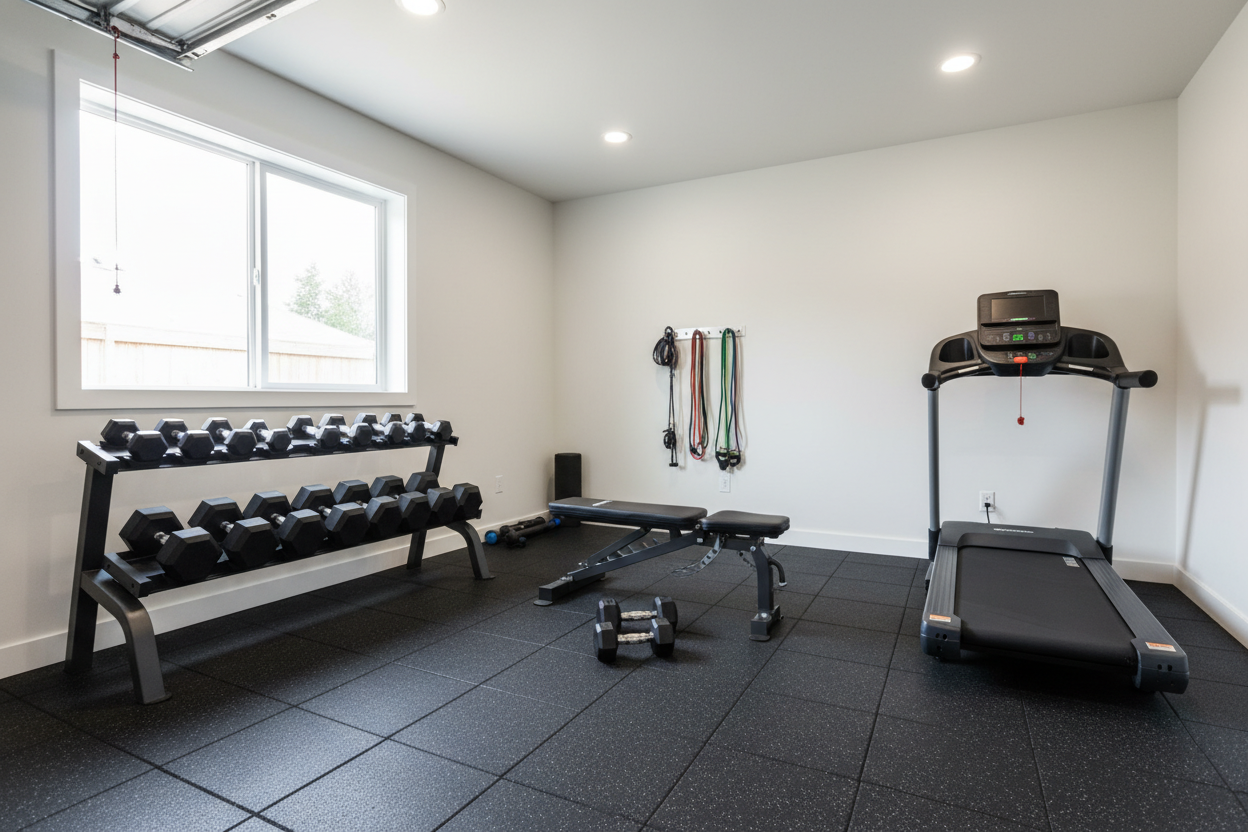
As a trainer, I've watched countless clients attempt their first session in their newly built garage gym. They grab a 10-pound dumbbell, drop into a lunge, and hold their breath like they are diving underwater. First time workouts shouldn't feel like a sprint to the finish line.
When you hold your breath under exertion, your blood pressure spikes and oxygen delivery plummets. This is known as the Valsalva maneuver. While powerlifters use it intentionally for massive lifts, it spells disaster for a novice. Your body hits the panic button, causing rapid fatigue that has nothing to do with muscular weakness. You end up feeling lightheaded and assume you just lack the fitness to continue.
The reality is you just suffocated your muscles. I always tell my clients that a successful routine is just as much about pacing your effort and scheduling rest first as it is about moving weights. If you rush through the movement, you rob yourself of the actual benefit and set yourself up for early burnout.
The Breath-Paced Strategy Explained
The breath-paced strategy is simple: your lungs dictate your tempo. Instead of trying to hit 15 reps, you let the physical act of breathing in and out cap how fast you can move. It forces you to slow down, turning a frantic exercise session into a mindful, self-regulating practice.
When you sync your movement to a deep diaphragmatic breath, it takes about three to four seconds to complete a single repetition. This slow tempo increases your muscles' time under tension, which is exactly what builds strength safely. You cannot rush a rep if you are forcing yourself to breathe through the entire range of motion.
Furthermore, proper breathing mechanics naturally brace your midsection. When you draw air deep into your belly rather than shallowly into your chest, you create intra-abdominal pressure. This pressure stabilizes your spine. It perfectly complements a core-first approach to home workouts, ensuring your lower back stays protected whether you are doing a bodyweight squat or a glute bridge. By forcing your body to adhere to the speed of your lungs, you keep your heart rate in a manageable zone.
The Inhale: Controlling the Stretch
The inhale is your braking system. Every exercise has a lowering phase, known as the eccentric portion of the movement. Think of lowering your body into a squat or bringing a dumbbell back down from a bicep curl. Most beginners just let gravity do the work, dropping down in a fraction of a second.
Instead, use a slow, three-second inhale through the nose to control that descent. As you breathe in, actively resist gravity. If your lungs are still filling with air, your body should still be moving downward. This controlled stretch is actually where muscle fibers experience the most micro-tearing, which is necessary for growth. Taking three full seconds to lower yourself guarantees you maintain tension and keep your joints safe.
The Exhale: Powering the Effort
The exhale is your engine. This corresponds to the lifting or pushing phase, known as the concentric portion. When you stand back up from that squat or press a weight overhead, you need to push the air out through your mouth like you are blowing out a thick birthday candle.
A forceful, controlled exhale naturally contracts your abdominal wall, giving you a solid base of support right when the exercise is at its hardest. I usually recommend a one-to-two second exhale for this phase. Pushing the air out prevents you from holding your breath under strain, which stabilizes your blood pressure. Let the outward flow of air carry the weight.
Setting Up a Distraction-Free Breathing Zone
You cannot focus on the subtle rhythm of your diaphragm if you are sliding around on a hardwood floor or kicking the coffee table. To properly execute breath-paced training, you need a dedicated physical space that allows you to lay out completely flat without feeling cramped.
I have built dozens of home setups, and the biggest mistake people make is trying to exercise in a 3x3 foot corner. You need room to extend your arms and legs fully. When I test home gym flooring for my clients, I always start with a comfortable 6x4ft exercise mat. This specific footprint provides exactly 24 square feet, which is the sweet spot for a beginner to practice diaphragmatic breathing exercises and full-body stretches safely.
The slight cushioning protects your spine during floor work, while the grip stops your hands from slipping when you exhale into a plank position. From personal experience, one honest downside of larger mats is they can be bulky to roll up daily, so I advise clients to treat it as a semi-permanent fixture in their room. Once your zone is set, turn off the TV, silence your phone, and focus entirely on the sound of your own breath.
A Breath-Paced Workout for First Timers
Let's put this into practice. This is a highly effective workout for first timers that requires zero equipment—just your floor space and your lungs. Instead of aiming for 10 or 15 reps, you are going to perform each movement for exactly 8 deep breaths.
Movement 1: Glute Bridges
Lie on your back with your knees bent. Inhale for 3 seconds as your hips hover just above the floor. Exhale for 2 seconds as you drive your heels down and squeeze your glutes upward.
Movement 2: Wall Push-Ups
Stand an arm's length from a sturdy wall. Inhale deeply for 3 seconds as you slowly bend your elbows and bring your chest to the wall. Exhale sharply for 2 seconds to press back to the start.
Movement 3: Bodyweight Box Squats
Sit on the edge of a chair. Exhale to stand up tall. Inhale for 3 slow seconds as you sit your hips back down until you gently touch the chair.
Movement 4: Dead Bugs
Lie flat, arms reaching up, knees bent at 90 degrees. Inhale as you slowly extend your right arm and left leg toward the floor. Exhale as you pull them back to the center. Alternate sides with each breath.
Complete this circuit two times. Because you match every single inch of movement to a breath, your muscles will burn, but your heart rate will remain completely under control.
How to Progress When You Catch Your Breath
After a few weeks of consistent practice, you will notice a shift. The three-second inhales and forceful exhales will happen automatically without you having to think about them. You won't feel dizzy, and your core will brace naturally before every movement. This is the green light that you have successfully built your foundation.
Once your breathing is on autopilot, you can start tracking numerical repetitions and introducing external resistance, like a 10-pound kettlebell or a set of resistance bands. When you feel ready to take that next step and challenge your newly mastered control, explore our workout hub for routines that incorporate heavier weights and varied rep schemes.
FAQ
Should I breathe through my nose or mouth?
Inhale deeply through your nose to filter the air and engage your diaphragm. Exhale forcefully through your mouth to generate core tension during the hardest part of the lift.
What if I run out of breath before the movement ends?
This means you are moving too slowly for your current lung capacity. Speed up the movement slightly to match your natural breath duration, or shorten your range of motion until your lung capacity improves.
Is it normal to feel a slight burn in my stomach?
Yes. Proper forceful exhales actively engage your transverse abdominis. You are essentially getting a core workout just from breathing correctly.