Stop Buying Laminate Flooring for Gym Use Before Reading This
Building a home gym often starts from the ground up, and finding the perfect balance between aesthetic appeal and rugged durability is a common struggle. Nobody wants their basement or garage to look like a dungeon, which is why wood-look flooring has become a massive trend. But before you rip out your carpet, we need to talk about whether this material can actually survive your workouts.
If you are considering laminate flooring for gym spaces, you are likely drawn to its sleek finish, easy cleaning, and affordable price point. However, this flooring choice comes with specific caveats that can make or break your training environment. This guide will walk you through exactly what to look for, where it works, and where it fails, so you can build a gym that looks great and performs even better.
Key Takeaways
- Laminate is excellent for cardio, yoga, and machine-based workouts, but requires protective rubber mats for heavy free-weight zones.
- Always choose a laminate with an AC4 or AC5 commercial durability rating to resist scratches from equipment.
- Moisture resistance is critical if installing in a basement or garage gym prone to humidity or excessive sweat.
- A high-quality foam or cork underlayment is non-negotiable for noise reduction and joint impact absorption.
The Reality of Laminate Gym Flooring
Aesthetic Appeal vs. Heavy Impact
There is no denying that laminate gym flooring instantly elevates a room. It transforms a cold, concrete garage or an unfinished basement into a premium, studio-quality workout space. It is highly resistant to the scuffs of running shoes and the rolling wheels of stationary bikes. However, laminate is a rigid, multi-layer synthetic product. Unlike thick rubber, it lacks the shock absorption necessary to handle dropped dumbbells, kettlebells, or loaded barbells.
The Durability Factor: Understanding AC Ratings
If you are set on laminate, you must pay attention to the Abrasion Class (AC) rating. Standard residential laminate (AC1-AC3) will get destroyed by sliding benches and dropped plates. You need an AC4 or AC5 rating. These commercial-grade options feature a much tougher wear layer that resists the scratches and dents associated with moving heavy fitness equipment.
Space Planning and Installation
Protecting Your Subfloor
Whether you are setting up in a spare bedroom or a basement, laminate requires a perfectly level subfloor. Any dips or bumps will cause the locking mechanisms to snap under the weight of a power rack or treadmill. Furthermore, you must install a premium underlayment. A dense cork or specialized acoustic foam underlayment will muffle the hollow sound laminate often produces and provide a slight, much-needed cushion for plyometric exercises.
Strategic Zoning in Your Home Gym
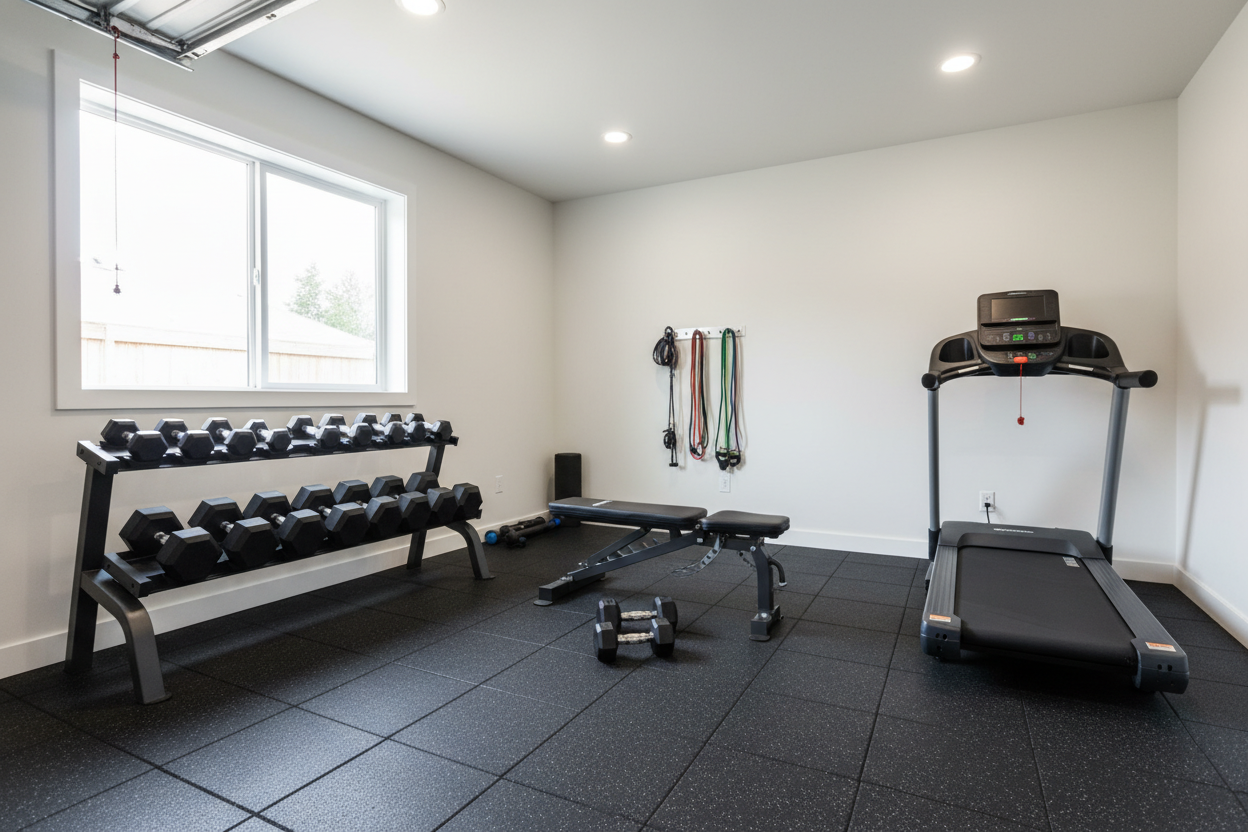
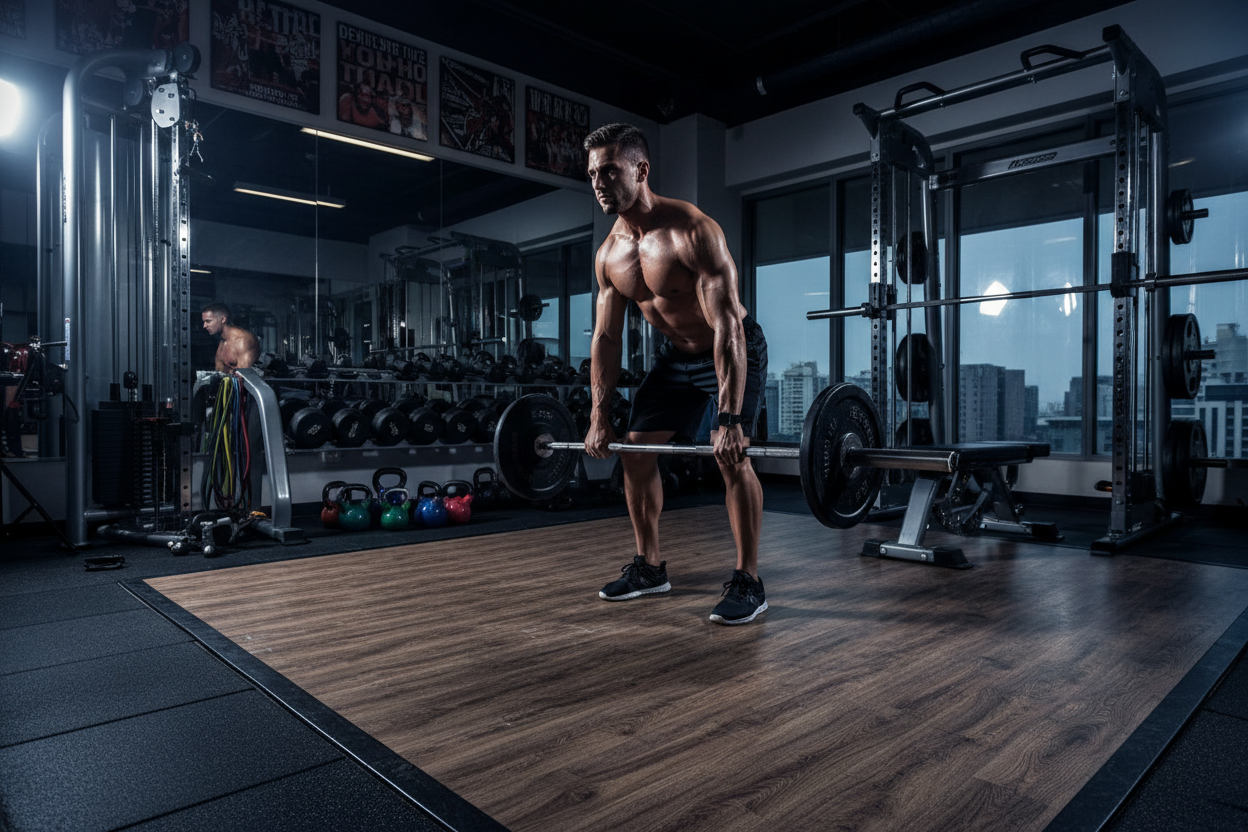
The smartest way to use laminate in a home gym is through strategic zoning. Use laminate for the majority of the room where you stretch, do yoga, or use cardio machines. Then, lay down 3/4-inch vulcanized rubber mats specifically in your heavy lifting areas. This gives you the high-end look of wood flooring without sacrificing the structural integrity of your home.
From Our Gym: Honest Take
When we tested a 12mm AC4 laminate in our facility's secondary cardio room, the aesthetic upgrade was undeniable. It looked like a high-end boutique studio. However, we learned a hard lesson early on. During a sweaty HIIT session, the surface became noticeably slick. The wear layer that makes it so durable also makes it completely non-porous. Sweat just pools on top. Additionally, after just three weeks of testing, I noticed micro-cracks forming where a 45-pound dumbbell was accidentally dropped from knee height. We quickly realized that while laminate looks incredible, you absolutely must layer high-density rubber stall mats over your dedicated lifting zones to prevent catastrophic damage and improve traction.
Frequently Asked Questions
Can I drop heavy weights on laminate flooring?
No. Laminate is rigid and will crack, dent, or shatter under the impact of heavy free weights. You must use thick rubber crash mats or lifting platforms over the laminate in areas where weights might be dropped.
Is laminate gym flooring slippery?
Yes, it can be. Because laminate has a smooth, non-porous wear layer, it becomes quite slippery when exposed to sweat or spilled water. It is recommended to use a textured laminate or keep a towel handy during intense cardio sessions.
What thickness is best for a home gym?
Aim for a minimum thickness of 12mm. Thicker laminate provides better acoustic insulation, feels more solid underfoot, and offers slightly better resistance to the heavy static loads of power racks and functional trainers.