Buttock Shape Types and How to Train at Home
Anatomical Foundations of Buttock Shape
Individual buttock shape is primarily determined by pelvic skeletal framework, muscular attachment points, and natural fat distribution patterns across the posterior chain. The width of the iliac crests relative to the greater trochanters of the femurs creates the fundamental bone scaffold that defines the hip line. A broader pelvis naturally produces a wider base, whereas narrower skeletal architecture yields a straighter lateral contour.
Muscular contours rely on the development and proportions of three primary structures: the gluteus maximus, the gluteus medius, and the gluteus minimus. The gluteus maximus provides central fullness and posterior depth, while the gluteus medius and minimus support pelvic stability and lend lateral projection to the upper contour. The tension within the deep fascia and the positioning of tendon insertions relative to the hip socket influence how these muscular bellies sit at rest and under load. For a broader perspective on progressive lower-body training foundations, the glutes bum guide provides helpful biomechanical context.
Surface appearance also reflects individual adipose distribution, which varies due to genetics and hormonal influences. Some individuals naturally store adipose tissue higher along the pelvic rim, while others store it around the lower gluteal fold or outer thighs. Understanding that bone framework and natural tissue disposition establish the baseline helps athletes approach movement selection with realistic biomechanical expectations rather than unrealistic aesthetic ideals.
The Four Primary Buttock Shape Archetypes
Movement practitioners and biomechanists often group hip and pelvic silhouettes into four broad archetypes. These profiles highlight how bone structure and muscular mass interact across the posterior hip complex:
- Square or H-Shape: Characterized by hip bones and outer thighs that run parallel to one another. The upper hip shelf and lower hip joint share similar widths, creating a boxy lateral line. Targeted work on the gluteus medius and deep rotators can help encourage balanced stability around the pelvis.
- Round or O-Shape: Marked by balanced lateral and posterior projection, where the iliac crest curves smoothly down toward the lower gluteal fold. Muscular massing in the central gluteus maximus often complements this profile naturally.
- A-Shape or Heart Shape: Features a narrower upper pelvic structure that widens gradually toward the lower gluteal shelf and upper thighs. This profile frequently displays substantial lower posterior massing and wide trochanteric spacing.
- Inverted or V-Shape: Notable for a broader upper pelvic span that angles inward toward the pelvic floor. It is commonly observed when skeletal hip breadth is wider than the lower gluteal shelf, requiring deliberate attention to hip extension to develop lower glute fullness.
Recognizing your primary profile helps determine which movement lines may feel most natural. For additional discussion on how structural variation intersects with training goals, refer to the glutes buttocks guide.
Tailoring Movement Planes to Structural Profiles
A balanced lower-body routine incorporates movements across all three planes: sagittal, frontal, and transverse. Depending on your structural silhouette, emphasizing specific vectors can optimize stability, comfort, and balanced muscular development.
Sagittal Plane Hinges and Deep Hip Flexion
Sagittal exercises, such as conventional deadlifts, Romanian hinges, and deep squats, heavily recruit the gluteus maximus through full hip extension. Lifters with an inverted V-shape or square archetype often benefit from prioritizing deep hip flexion angles, as loaded stretch positions promote balanced tension along the lower gluteal shelf. Careful attention to pelvic tilt during bottom-position transitions ensures the lumbar spine remains neutral. To avoid common setup errors during these patterns, reviewing the glute women like guide can clarify proper form cues.
Frontal and Transverse Vector Loading for Lateral Stability
Lateral movements—including side-lying abductions, lateral band walks, and curtsy variations—engage the gluteus medius and minimus in the frontal and transverse planes. These movement patterns are particularly useful for square and A-shape silhouettes, where developing the upper and lateral margins of the hip promotes balanced hip abduction and pelvic leveling. For detailed insights on multi-vector exercise planning, consult the glute women guide.
Floor Staging, Joint Cushioning, and Equipment Layout
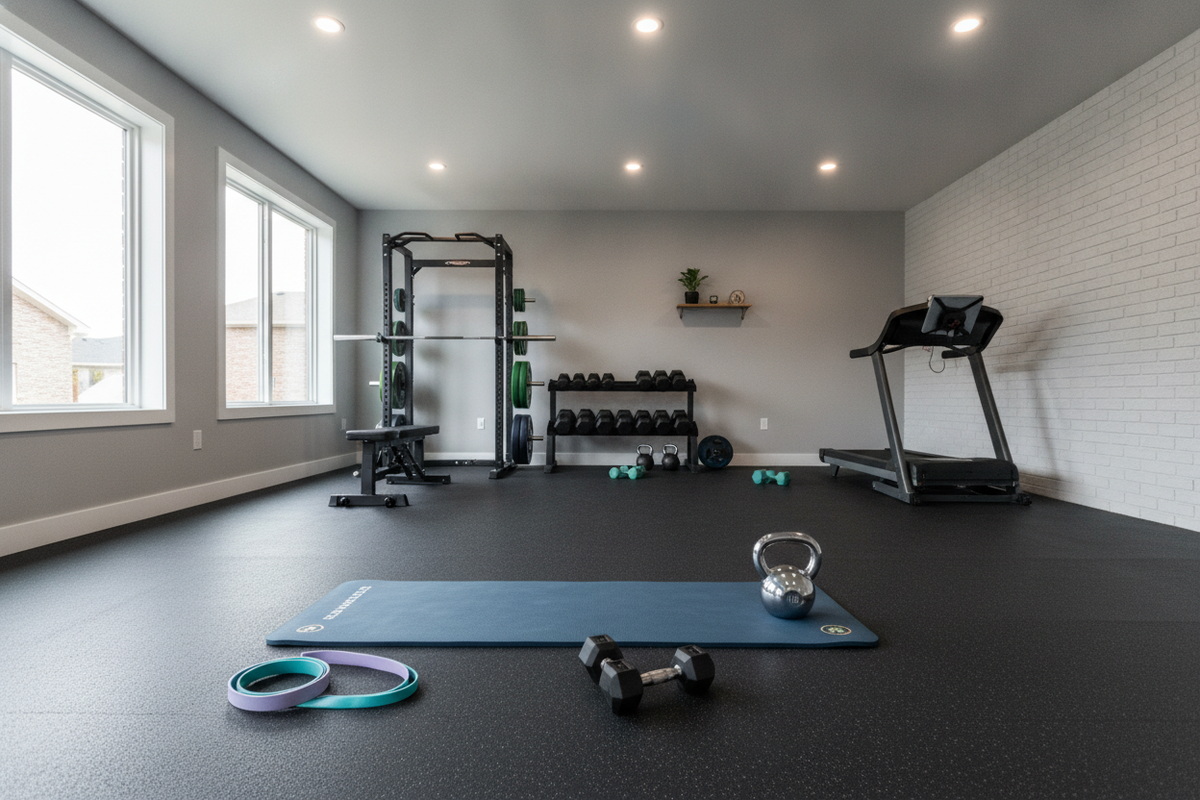
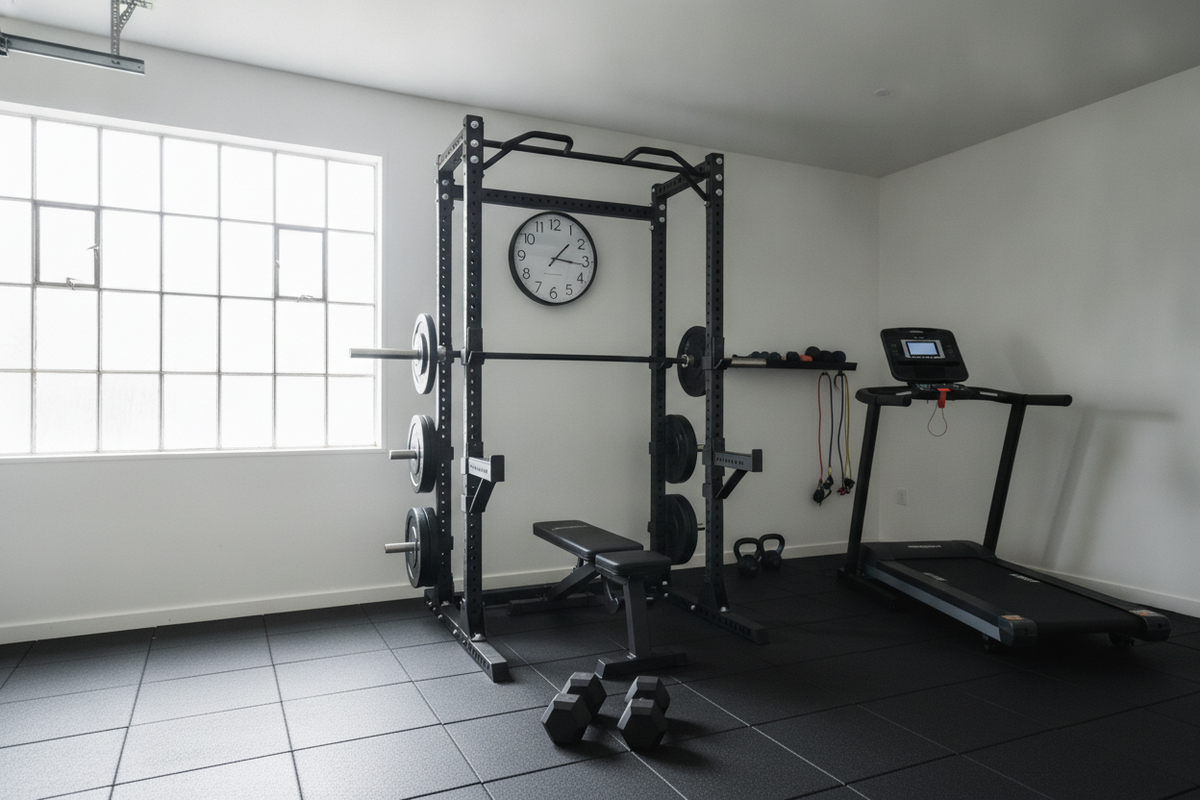
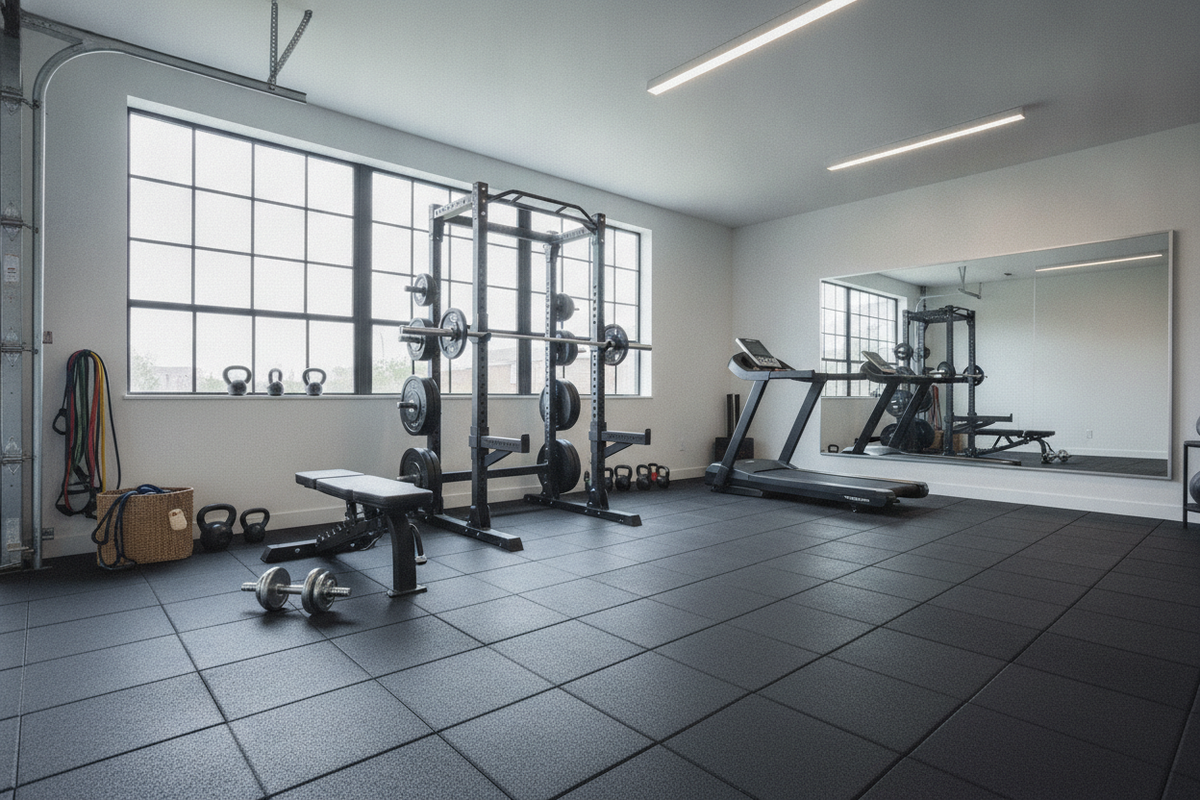
Many effective posterior chain exercises—such as quadruple kickbacks, floor bridges, frog pumps, and side planks—require extensive contact with the ground. Training on unpadded hard surfaces can cause discomfort on the knees, wrists, and sacrum, which may compromise exercise technique. High-density home gym flooring creates a supportive, stable training zone that protects both the body and the subfloor.
Mat Density and Pelvic Support
When performing supine floor bridges or hip thrusts against a bench, the sacrum and lower back endure significant compressive pressure. Thin yoga mats tend to bottom out under bodyweight, whereas overly plush foam pads destabilize balance during unilateral work. A high-density rubber or dense composite mat strikes the ideal balance, providing firm cushioning that protects bony prominences without sacrificing ground feedback.
Traction and Surface Stability
Dynamic movements like split squats, reverse lunges, and banded lateral steps demand reliable floor traction. Slippery hardwood or slick tiles can cause foot drift during loaded sets, shifting stress toward the adductors and knee ligaments. Textured mat surfaces ensure dependable shoe grip and barefoot stability, allowing lifters to direct force downward through the heel and midfoot without slipping.
Subfloor Protection and Hygiene
Frequent dumbbell drops, kettlebell resting, and repeated bodyweight impacts can scratch hardwood finishes or crack ceramic tiles. Installing durable, shock-absorbing exercise mats shields residential flooring from accidental drops and heavy wear. Furthermore, non-porous mats that resist moisture make cleaning perspiration simple, supporting long-term hygiene in shared living spaces.
Integrating Structured Training Routines into Home Spaces
Building an effective home training environment involves arranging equipment to allow uninhibited movement across multiple directions. Glute routines require both linear space for lunges and lateral clearance for resistance band drills.
Managing Floor Real Estate for Multi-Planar Mobility
Ensure that your primary mat surface spans ample floor area so you can transition between standing hinges and floor-based bridge variations without stepping off the padded boundary. In my experience, designating a dedicated square mat zone keeps floor transitions fluid and prevents gear clutter from encroaching on your active stance.
Equipment Anchoring and Safe Staging
Pairing a dedicated exercise mat with a stable hip thrust bench, adjustable dumbbells, and cloth resistance loops provides complete programming versatility. Keep auxiliary weights stored on a perimeter rack rather than resting directly on active floor zones. For advanced perspectives on pairing equipment layouts with progressive home regimens, the glutes booty guide offers comprehensive strategies for structured training.