I Only Do 5 Muscle Stretching Exercises (And They Hit Every Major Group)
I used to spend forty-five minutes every Sunday morning following along with yoga videos that made me feel more like a tangled pretzel than an athlete. I’d finish the session with my hamstrings still tight and my patience completely gone. If you are training in a garage gym with limited time, you do not need a forty-move flow; you need muscle stretching exercises that actually move the needle.
Most lifters fail at mobility because they try to follow a massive list of stretches for every muscle. They treat their body like a collection of isolated parts rather than a system of interconnected chains. After years of testing what works after a heavy squat session versus what is just fluff, I have narrowed my routine down to five compound movements.
- Focus on compound stretches that hit multiple joints simultaneously.
- Prioritize the anterior chain (quads/hips) and posterior chain (glutes/hams).
- Use loaded stretching to improve active range of motion.
- Stop stretching on bare concrete; your nervous system will fight you.
Stop Overcomplicating Your Cool-Down
The fitness industry loves to give you a library of a hundred different stretches by muscle group. It makes for a great infographic, but it is a nightmare to execute. When you are staring at a list of thirty stretches for every muscle, you usually end up doing none of them because you just want to go inside and eat your post-workout meal.
Efficiency is the name of the game here. You do not need to hunt for how to stretch each muscle individually if you choose movements that address major movement patterns. By hitting the hips, the spine, and the shoulders with big, global movements, you automatically address those smaller, nagging tight spots without wasting twenty minutes on your calves.
Your Concrete Garage Floor Is Making You Stiff
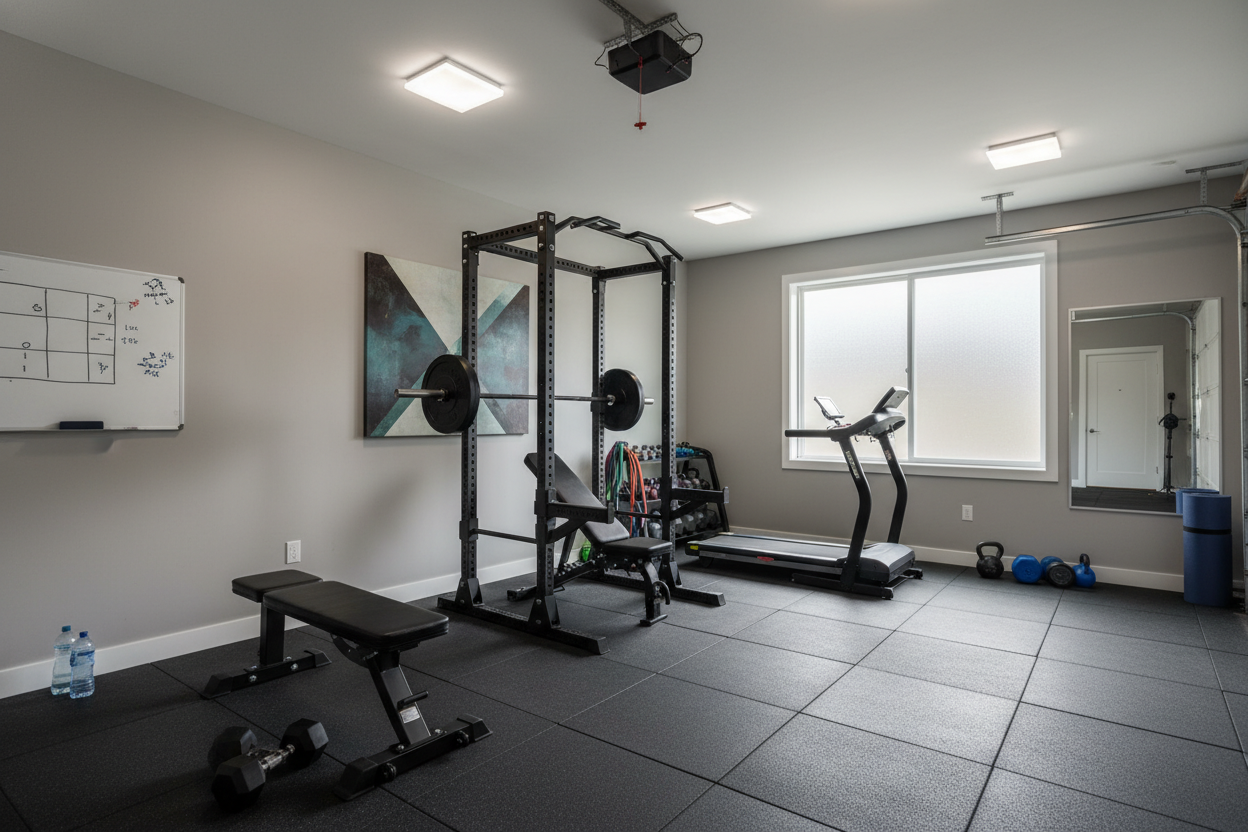
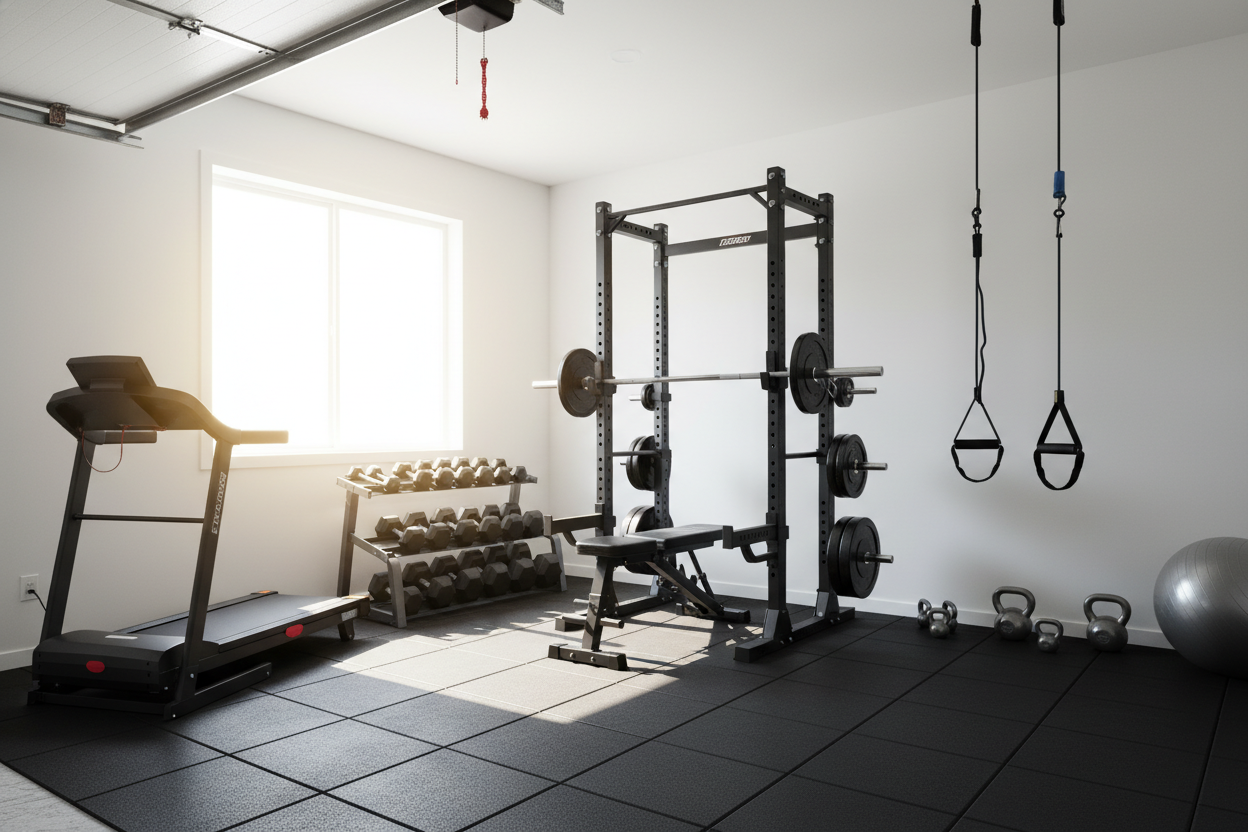
If you are trying to lengthen muscles exercises while kneeling on a cold, hard slab of concrete, you are wasting your time. Your brain is smarter than you think. If your knee cap is screaming because it is pressed against a 40-degree garage floor, your nervous system will trigger a guarding response. It tightens the muscles to protect the joint.
To actually see progress, you need to invest in a thick exercise mat. When your body feels supported and the 'threat' of pain from the hard floor is gone, your muscles can finally relax into the stretch. I noticed a massive difference in my hip mobility the moment I stopped trying to be a tough guy on the bare floor.
The 5-Move Blueprint to Stretch Every Muscle
This is the minimalist’s guide to how to stretch every muscle in your body. We are moving from the floor up, hitting the major muscle group stretches that cover the most real estate. These five moves target the areas that get the tightest from sitting at a desk or grinding under a barbell.
1. The Couch Stretch (Quads & Hip Flexors)
This is arguably the most uncomfortable stretch in existence, but it is non-negotiable. Back your knee up against a wall or the end of a weight bench, shin vertical, and try to bring your torso upright. This is the king of stretches and what muscles they stretch is basically the entire anterior chain.
Most of us spend all day sitting, which shortens the hip flexors. This move forced mine back into a normal length. If you can't get your back to the wall, don't force it—stay leaned forward until your quads stop screaming.
2. The Deep Goblet Hold (Hips, Groin & Ankles)
Grab a 24kg kettlebell, drop into the bottom of a squat, and use your elbows to pry your knees apart. This is a loaded stretch, which is far superior to passive stretching for lifters. It helps you maintain your exercises to build muscle mass by ensuring you can actually reach proper depth under load.
This is one of the best group stretching exercises if you’re training with a buddy. You can both sit in the bottom of the hole and see who has the best upright posture. It forces honesty in your hip and ankle mobility that a standing stretch just can't match.
3. The Pigeon Pose (Glutes & External Rotators)
If your lower back feels tight, your glutes are probably the culprit. The Pigeon Pose is my go-to for how to stretch every muscle in the hip complex. I prefer doing this on an elevated surface like a plyo box if my hips are feeling particularly locked up.
Opening up this area allows you to target every muscle for a stronger posterior chain activation. When your glutes aren't glued shut, your squats feel smoother and your deadlift setup becomes much more efficient.
4. The Doorway Pec Fly (Chest & Anterior Delts)
Heavy benching and hours on a laptop create a 'hunched' posture. To fix this, stand in a doorway with your arms at 90 degrees and lean through. This hits the major muscle group stretches for the upper body, opening up the chest and the front of the shoulders.
I do this between sets of rows sometimes. It’s simple, effective, and doesn't require you to get back down on the floor. It’s the fastest way to stretch muscle groups that contribute to that rounded-shoulder look.
5. The Dead Hang (Lats & Spinal Decompression)
The final move is the simplest: just hang from a pull-up bar. This is the ultimate way to stretch every muscle in your back while letting gravity decompress your spine. After a day of heavy overhead presses or squats, the relief is instant.
Aim for a full minute, but start with 20-second bursts if your grip is fried. It stretches the lats, the intercostals, and even the forearms. It’s the perfect 'reset' button for your entire upper body.
How to Program This Routine (Without Hating It)
You don’t need to do this for an hour. Spend two minutes on each of these moves after your training session. If you have a training partner, these work great as group stretches to keep each other from cutting the timer short. I’ve found that doing these three times a week is the sweet spot for maintaining mobility without it becoming a second job.
FAQ
How long should I hold each stretch?
Aim for at least 90 seconds. Anything less than a minute usually isn't enough time for the muscle fibers to actually 'creep' and lengthen. Two minutes is the gold standard for long-term change.
Should I stretch before or after my workout?
Save the static stretching for after. Before a workout, you want dynamic movement to get the blood flowing. Static stretching before heavy lifting can actually temporarily decrease your power output.
What if a stretch feels painful?
There is a difference between 'stretching discomfort' and 'joint pain.' If you feel a sharp pinch in the joint, back off. If it's just the muscle feeling like it's being pulled, you're likely in the right spot.