The Glute Blueprint: How to Target Every Muscle for a Stronger, Better Shape
Most people walk into the gym, head straight for the squat rack, and assume their lower body training is complete. While squats are fundamental, relying on them exclusively is often why physique goals stall. Building a strong, balanced posterior chain isn't just about moving heavy weight; it requires a strategic approach that addresses anatomy. If you want results, you have to understand that the glutes are not one single slab of meat. They are a complex group of three distinct muscles, and they each require different movement patterns to grow.
I learned this the hard way. Early in my training, I spent nearly two years obsessed with heavy compound lifts. My quads grew significantly, and my lower back got stronger, but my glutes barely changed. I was quad-dominant and wasn't engaging the right muscles. It wasn't until I started incorporating different glute muscles exercises specifically designed to isolate the upper and outer regions that I saw the shape and strength changes I was looking for. You have to attack the muscle group from multiple angles.
Understanding the Three Key Players
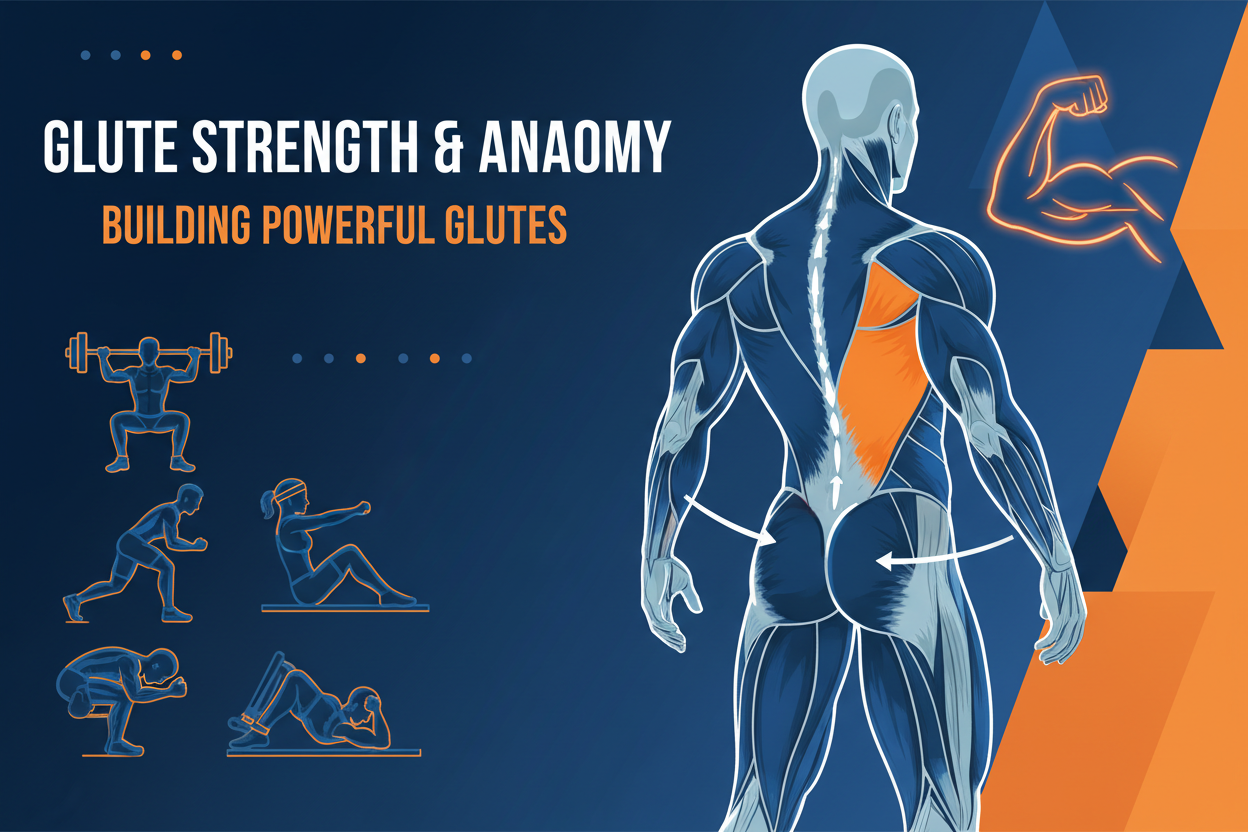
To build a complete routine, you need to know what you are working with. The gluteal group consists of the Gluteus Maximus, Gluteus Medius, and Gluteus Minimus. The Maximus is the large muscle responsible for the majority of the shape and power. The Medius sits higher and on the side, contributing to that "shelf" look and hip stability. The Minimus lies deep beneath the Medius. Finding an exercise for each glute muscle ensures you aren't leaving gains on the table or risking injury due to muscular imbalances.
The Gluteus Maximus: Building Size and Power
The Gluteus Maximus is the primary driver of hip extension—the act of moving your thigh backward. Since this is the largest muscle in the body, it can handle heavy loads. When selecting exercises for different glute muscles, the Maximus should usually take priority at the beginning of your workout when your energy levels are highest.
The Hip Thrust
This is arguably the king of glute isolation. Unlike squats, where the glutes are most active at the bottom of the movement, hip thrusts keep constant tension on the muscle, peaking at the top contraction. Position your upper back against a bench, keep your chin tucked, and drive through your heels. A common mistake is hyperextending the lower back; focus on posterior pelvic tilt (tucking your tailbone) at the top.
Romanian Deadlift (RDL)
While the hip thrust focuses on the shortened position (the squeeze), the RDL focuses on the lengthened position (the stretch). This movement damages muscle fibers in a way that promotes significant hypertrophy. Keep a slight bend in your knees and push your hips back as far as possible. If you don't feel a deep stretch in your hamstrings and glutes, check your form.
The Gluteus Medius: Creating Width and Stability
Neglecting the Medius is the most common error in lower body training. If you want a rounder appearance and better knee health, you need glute exercises for each muscle, but specifically ones that involve abduction (moving the leg away from the midline of the body). Weakness here often leads to knee cave during squats.
Cable Hip Abductions
Standing cable abductions are superior to many floor exercises because they provide constant tension throughout the range of motion. Stand perpendicular to a cable machine with the cuff on your outer ankle. Kick your leg out to the side, leading with your heel rather than your toe. Leading with the toe engages the hip flexors, which defeats the purpose. This is one of the most effective exercises for different parts of glutes, specifically the upper-outer region.
Lateral Band Walks
These look simple but burn intensely if done correctly. Place a resistance band around your ankles or just above your knees. Assume a quarter-squat position and step laterally. The trick is to not let your knees cave inward and to control the trailing leg. Don't let the band snap your leg back in; fight the resistance in both directions.
The Gluteus Minimus: The Deep Stabilizer
The Minimus works in tandem with the Medius to stabilize the pelvis during walking or running. It is difficult to isolate completely from the Medius, but certain movements target this deep tissue more effectively. When planning exercises for all glute muscles, incorporating single-leg stability work is the best way to hit the Minimus.
Curtsy Lunges
By stepping diagonally behind your front leg, you place the glutes in a stretched and rotated position that lights up the Minimus. Keep your weight in the front heel and ensure your front knee tracks over your toes without collapsing inward. This plane of motion hits fibers that standard lunges miss.
Clamshells
Often dismissed as a physical therapy move, the clamshell is excellent for wake-up drills or high-repetition finishers. Lie on your side with knees bent at 90 degrees. Keep your feet touching and open your top knee like a clam. To make this effective for hypertrophy, add a resistance band above the knees and slow down the eccentric (lowering) phase.
Structuring Your Routine
Knowing which exercises target which glute muscles is only half the battle; the other half is programming. You do not need to do every exercise listed here in a single session. A good rule of thumb is to pick one heavy compound movement for the Maximus (like a Hip Thrust or Squat), one stretch-focused movement (like an RDL), and two accessory movements for the Medius and Minimus (like abductions or lunges).
Volume matters. The glutes are resilient and recover relatively quickly. Training them twice a week with a mix of heavy loads (6-10 reps) for the Maximus and lighter loads (15-20 reps) for the Medius/Minimus usually yields the best results. Listen to your body. If your lower back takes over, drop the weight and re-engage your core.
Frequently Asked Questions
How often should I train my glutes for maximum growth?
For most lifters, training glutes 2 to 3 times per week is the sweet spot. This frequency allows for sufficient volume while giving the muscles 48 hours to recover and repair between sessions.
Why do I feel my lower back taking over during glute exercises?
This usually happens due to poor core engagement or lifting too heavy. If you arch your back excessively to move the weight, the load shifts from your glutes to your lumbar spine. Lighten the load and focus on tucking your pelvis.
Can I build glutes without heavy weights?
You can build shape and endurance with bodyweight and bands, but significant size (hypertrophy) generally requires progressive overload. To keep growing, you eventually need to increase the resistance via weights or stronger bands.