I Tried a Chris Heria Leg Routine and It Humbled Me: Building Explosive Power Without Weights
There is a persistent myth in the fitness industry that you cannot build impressive legs without a barbell on your back. Calisthenics athletes are often stereotyped as having massive upper bodies and spindly legs, but anyone who has actually attempted a Chris Heria leg workout knows that this stereotype falls apart the moment you try to walk the next day. The philosophy behind the Thenx method isn't just about high repetitions; it is about leverage, unilateral loading, and explosive plyometrics that tax the central nervous system just as hard as a heavy deadlift session.
If you are looking for the short answer on how to train like him: focus on single-leg movements and time under tension. You don't need a squat rack. Instead, you need to master the pistol squat, explosive switch lunges, and Bulgarian split squats, performed in a circuit fashion with minimal rest. This approach builds functional mass and athleticism simultaneously, rather than just aesthetic bulk.
The Reality of Calisthenics Leg Training
Most people underestimate bodyweight leg training because they associate it with simple air squats. You can do hundreds of air squats and only achieve cardio endurance. A proper Thenx leg workout changes the stimulus by shifting your entire body weight onto one limb. When you perform a pistol squat (a single-leg squat with the other leg extended forward), you are lifting roughly 90% of your body weight on one leg. If you weigh 180 pounds, that is surprisingly comparable to a weighted back squat, but with added demands on stability, ankle mobility, and core strength.
I remember the first time I decided to swap my traditional gym routine for a Chris Heria leg session. I was confident. I could squat nearly double my body weight with a barbell, so I assumed a bodyweight circuit would be a relaxing deload week. I was wrong. About fifteen minutes in, my glutes were cramping, my balance was shot, and my heart rate was higher than it had been during any treadmill sprint. The combination of balance and strength required to stabilize the knee during jump lunges exposed weaknesses that heavy static lifting had masked for years. I spent the next two days walking like a newborn giraffe. That experience taught me that functional strength is entirely different from static strength.
Core Components of the Heria Method
To replicate this style of training, you have to abandon the idea of "sets of 10 with 2 minutes rest." The intensity comes from density. You are packing a high volume of work into a short timeframe. The Thenx leg philosophy relies heavily on supersetting static holds with explosive movements.
The Pistol Squat Progression
This is the cornerstone. If you cannot do a pistol squat yet, you aren't ready for the full intensity of these workouts. However, Heria advocates for progressions. You start with assisted pistol squats using a pole or a resistance band for support. The goal is to control the negative (the way down) slowly. This eccentric loading tears muscle fibers effectively, stimulating growth. Once you master the movement, you aren't just pushing weight; you are controlling your body through space.
Plyometric Power
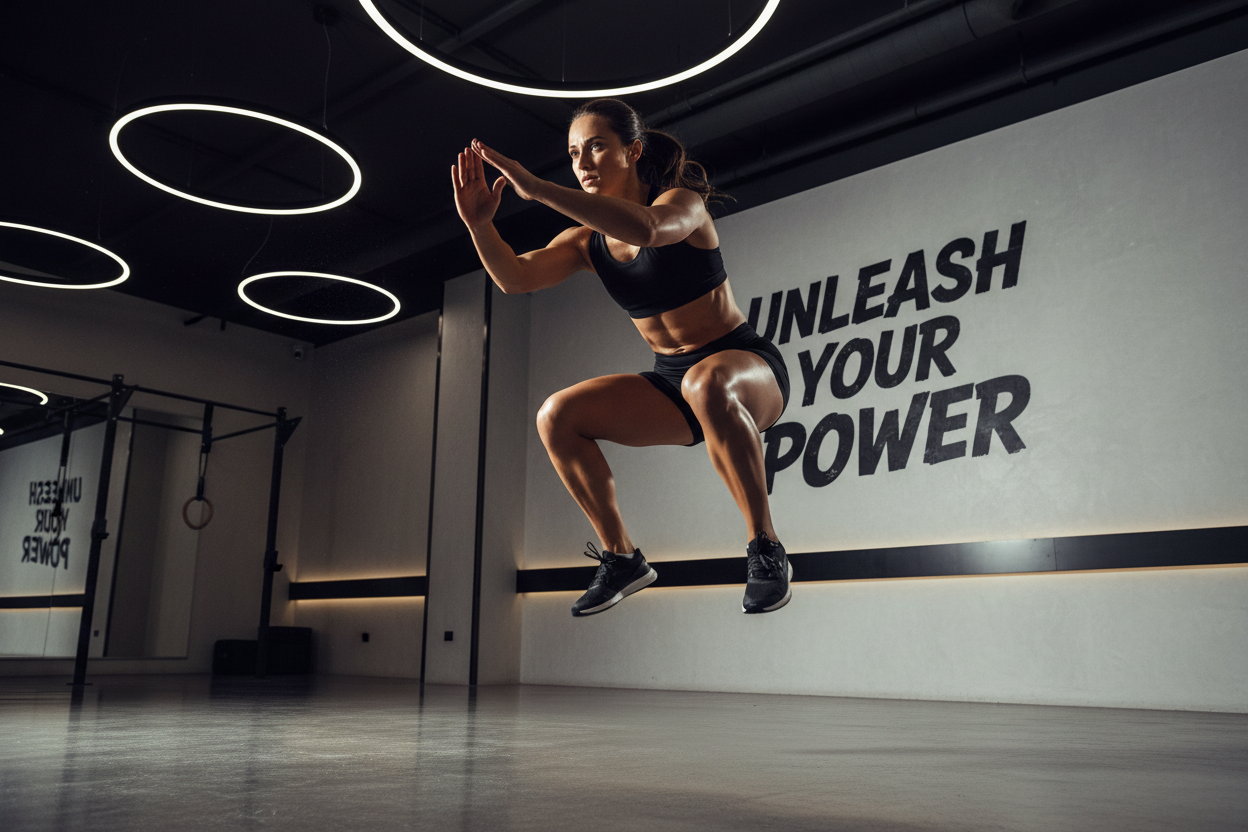
Athleticism requires speed. A standard Chris Heria leg workout almost always includes jump squats, box jumps, or jumping lunges. These movements recruit fast-twitch muscle fibers, which have the greatest potential for growth. Unlike slow, grinding rep counts, plyometrics teach your nervous system to fire rapidly. This is why calisthenics athletes often have such defined, "springy" looking legs rather than the bulky look of a powerlifter.
Structuring Your Routine
You shouldn't just do random exercises. A structured session needs to flow from high-skill movements to burnout exercises. Start with the hardest move while your nervous system is fresh.
Begin with pistol squats or assisted variations. Aim for failure or near-failure on each leg. Immediately transition into a compound movement like Bulgarian split squats. This exercise is brutal because it stretches the hip flexor of the rear leg while hammering the quad of the front leg. It fixes muscle imbalances quickly. If you have a weight vest, this is the time to wear it. Chris often utilizes a weighted vest to apply progressive overload without needing external iron.
After the strength work, move to the metabolic conditioning phase. This usually involves high-rep walking lunges or step-ups. The goal here is metabolic stress—the "burn" caused by lactate accumulation. This signals the body to release growth hormone. Finish with calf raises, but do them on a deficit (a step or ledge) to get a full stretch. Calves are stubborn; they need full range of motion.
Why Unilateral Training Matters
One distinct advantage of the Thenx leg workout approach is the focus on unilateral (single-leg) training. When you squat with a barbell, your dominant leg often takes over slightly more of the load. Over time, this creates imbalances that lead to injury. By isolating each leg, you are forced to address these discrepancies head-on. You build a bulletproof lower body because the stabilizer muscles—the abductors, adductors, and glute medius—are working overtime to keep you upright.
Adapting for Beginners vs. Advanced Athletes
If you are new to the Thenx leg style, do not try to keep up with the YouTube videos rep-for-rep immediately. Focus on form. A sloppy pistol squat will destroy your knees. Use a box behind you to limit depth until your mobility improves. Ankle mobility is often the biggest restrictor, not strength. Work on your dorsiflexion stretching daily.
For advanced athletes who think bodyweight is too easy, slow down the tempo. Try a 4-second descent on every rep. The intensity skyrockets. Alternatively, reduce the rest periods between exercises to zero. Turning the workout into a continuous circuit challenges your cardiovascular system and forces your muscles to work while fatigued, simulating the demands of sports like MMA or soccer.
The Verdict on Size and Strength
Can you get "huge" legs with just Chris Heria leg routines? There is a limit to raw size compared to a bodybuilder squatting 500 pounds, but you can build significant, athletic muscle. The legs you build will be functional, explosive, and durable. You will be able to run faster, jump higher, and move with a fluidity that heavy weightlifting rarely provides on its own. It is a different kind of strong, and for many, a more useful one.
Frequently Asked Questions
Can I build leg muscle without weights using the Thenx method?
Yes, but you must use progressive overload. Since you cannot add external weight easily, you must increase the difficulty of the exercise (e.g., moving from lunges to pistol squats), decrease rest times, or increase the time under tension to stimulate hypertrophy.
How often should I do a Chris Heria leg workout?
Due to the high intensity and volume of plyometrics, twice a week is usually sufficient for most people. This allows enough time for your muscles and, more importantly, your joints and connective tissues to recover from the explosive movements.
Is the pistol squat bad for your knees?
The pistol squat is safe if performed with proper mobility and control, but it can be dangerous if you force the movement with tight ankles or hips. It is crucial to progress slowly, using assistance like a pole or box, to ensure your knee tracks in line with your toes before attempting the full movement.