Finding the Best Dumbbells: Home Gym and Garage Gym Buyer’s Guide
A well-chosen set of free weights forms the cornerstone of effective weight training. Whether you want to complete a demanding bench press session, build arm strength with bicep curls, or perform overhead press variations, dumbbells offer unmatched versatility across home workouts. Yet finding the best dumbbells is rarely straightforward. With choices ranging from compact selectorized mechanisms to traditional commercial-grade iron, the right pick depends on your available space, lifting style, and daily routine.
Instead of chasing flashy marketing, serious lifters evaluate build quality, footprint, and grip ergonomics. This buyer’s guide breaks down the essential factors so you can invest in the ideal gear without cluttering your floor or overcomplicating your training setup.
Choosing the Best Dumbbells for Your Fitness Goals
Every home lifter starts with unique parameters. Some need a compact system that slides neatly under a bed, while others are designing an expansive garage gym with dedicated equipment racks. Before selecting a set, consider how your daily movements interact with the gear.
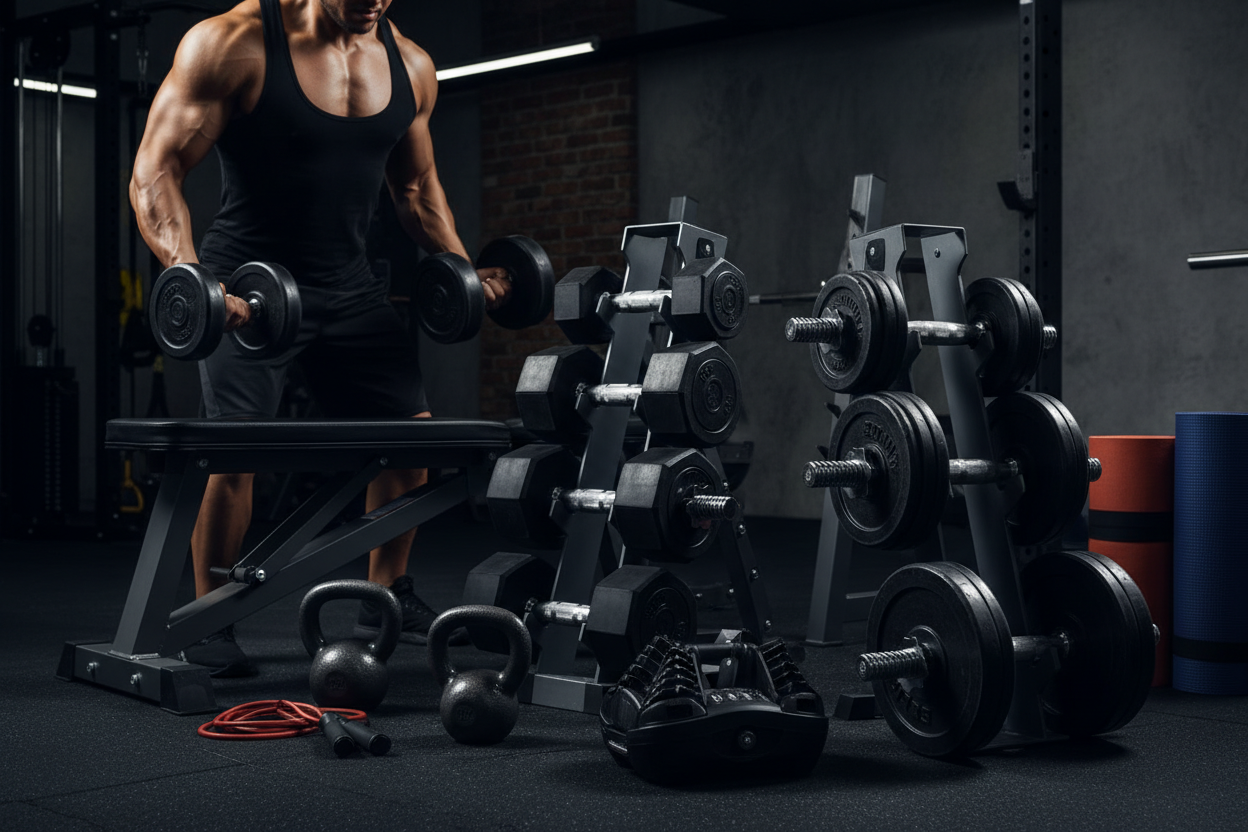
- Footprint and Storage: A collection of multiple dumbbells requires substantial floor room and a dedicated storage rack. Conversely, an adjustable set provides numerous weight options within the footprint of two individual units.
- Exercise Selection: High-tempo circuits and floor movements like push ups benefit from flat-sided hex heads that will not roll away on a gym floor. Explosive lifts often perform better with solid, welded construction rather than intricate mechanical parts.
- Progression Needs: Strength development demands progressive resistance. Having an adaptable weight range ensures you can smoothly move from light accessories to heavy compound movements without stalling.
Comparing Adjustable Dumbbells and Fixed Weights
The central debate for most home fitness enthusiasts centers on whether to invest in modular units or fixed pairs. Both approaches have distinct advantages depending on your setup.
Why the Best Adjustable Dumbbells Fit Compact Home Workouts
For small apartments and multi-purpose spare rooms, the best adjustable dumbbells save immense amounts of space. Instead of stocking dozens of regular dumbbells, a single pair allows you to switch between different weights using a dial, pin, or handle twist.
When shopping for the best adjustable models, inspect the inner components closely. Designs that rely on durable steel gears rather than fragile plastic components offer far greater peace of mind during heavy sets. However, even the highest-rated adjustable dumbbells require mindful handling; dropping them onto hard surfaces can damage the delicate locking mechanism or misalign the selector tabs. If you are shopping on a budget, you might consider reading about evaluating seasonal adjustable dumbbell sales before making a major financial commitment.
Selecting an Adjustable Set Versus Multiple Dumbbells
While an adjustable set consolidates your workout station, lifters performing rapid supersets or drop sets may find fixed pairs more convenient. With fixed gear, changing resistance takes only seconds: you simply set down one pair and pick up another. If two people train together, having multiple dumbbells also lets both individuals lift simultaneously without waiting for plate adjustments.
Hex Dumbbells and Fixed Free Weights for a Dedicated Garage Gym
For lifters with dedicated floor space, a full run of fixed weights remains the gold standard. In a high-traffic garage gym, fixed pairs deliver unbeatable peace of mind because they feature no moving parts to rattle, slip, or jam.
Rubber Hex Dumbbells vs Urethane Dumbbells
Among fixed options, rubber hex dumbbells are widely favored for home settings. The hexagonal shape prevents the heads from rolling across uneven garage floors, making exercises like push ups or renegade rows far more stable. Furthermore, the rubber coating cushions minor impacts and shields both the dumbbell heads and your gym floor from scratches.
For those seeking commercial-grade endurance, urethane dumbbells represent an exceptional step up. While standard rubber can wear down over years of heavy use or emit an initial odor, urethane provides a dense, shock-absorbent shell that resists scuffing and sunlight degradation. In contrast to a full rubber coating that may soften in humid environments, urethane maintains its smooth finish and structural integrity across decades of intense training.
Evaluating Dumbbell Materials and Construction Quality
Understanding dumbbell materials ensures that your purchase survives years of regular use without deteriorating.
Cast Iron Dumbbells, Loadable Dumbbells, and Weight Plates
Traditional cast iron dumbbells offer a rugged aesthetic and a compact profile. Iron heads are generally more compact than thick rubber coatings, allowing for a tighter range of motion on exercises like bench press and rows. However, bare iron can chip, and in humid basements, it may develop surface rust over time if not properly maintained. lifters interested in traditional options can explore our breakdown on comparing cast iron against rubber weights to weigh the pros and cons.
Another versatile alternative is loadable dumbbells. These mini barbells use independent collars and accept standard weight plates, olympic plates, or small bumper plates. Loadable handles allow lifters to expand their available weight incrementally using existing plates from their barbell collection. While changing spin-lock collars takes more time between sets than using selector dials, loadable handles provide high weight capacity at a fraction of the cost of outfitting a full rack of fixed weights.
Ergonomics, Grip, and Training Flow
Even the most durable free weights become frustrating if the handle feels awkward in your palm. Grip design fundamentally alters how heavy weights feel during high-rep training.
Most fixed dumbbells feature either straight or contoured handles. Contoured handles flare outward in the center to match the natural curve of a closed palm, providing a comfortable grip during bicep curls and overhead presses. Straight handles, often preferred by powerlifters, offer uniform diameter across the entire grip area, ensuring consistent hand placement regardless of hand width.
Pay attention to the knurling pattern on the steel. Aggressive diamond knurling bites deeply into skin to stop slippage without chalk, but it can cause abrasion during high-volume sessions. Moderate cross-hatch knurling provides sufficient traction while keeping the palms comfortable through prolonged workouts.
From an editor's viewpoint, the perfect dumbbell is rarely the most complex device on the market; it is simply the one that feels balanced in your palm and lets you concentrate fully on your lifting technique.
Practical Buying Guide: Weight Range and Weight Options
Choosing the right weight range prevents buyers from quickly outgrowing their gear or purchasing weights that sit untouched on a rack.
- Beginner and General Conditioning: A collection offering increments starting light and moving gradually higher allows for steady development across both upper-body isolation movements and lower-body compound lifts. If you run into plateaus or find your current setup lacking, take a look at our guide on dumbbells guide to maintain progress with higher volume and slower tempos.
- Intermediate to Advanced Strength Work: Lifters who regularly perform heavy pressing, lunges, and rows will need substantial top-end resistance. Reviewing our analysis on dumbbells guide can help guide your target range so you invest in increments you will genuinely use.
- Expanding Over Time: If budget or space limits your initial purchase, start with a core pair suited to your primary pressing lifts, then add lighter and heavier pairs as your training demands dictate.
Frequently Asked Questions About Dumbbell Sets
What's the best type of dumbbell?
The ideal type depends on your training space and preferences. For compact apartments, adjustable dumbbells provide the best space efficiency by combining multiple weights into one footprint. For dedicated garage gyms with plenty of floor area, fixed rubber hex dumbbells offer superior durability, stability on the floor, and quick transitions between exercises.
What are the best dumbbells to buy?
The best free weights balance solid construction, comfortable handle knurling, and reliable weight options. Look for solid steel or cast cores paired with protective rubber or urethane coatings. If choosing adjustable models, select designs with metal internal mechanisms rather than weak plastic parts.
What are the best dumbbell weights for home use?
A versatile home weight range typically spans from lighter increments suited for lateral raises and bicep curls up to heavier weights appropriate for chest presses, goblet squats, and rows. Having access to modular weight options or pairs in graduated increments gives you the flexibility to train both large compound muscle groups and smaller stabilizing muscles.
Should I get 20 or 25 lb dumbbells?
Choosing between 20 lb and 25 lb dumbbells comes down to the primary exercises you intend to perform. If your primary focus is strict shoulder pressing or arm work where controlled form is essential, 20 lb pairs often offer a safer starting point. If you plan to prioritize chest pressing, rows, or single-arm carries, the 25 lb option provides more progressive challenge. Whenever possible, an adjustable set or a modular loadable handle eliminates this dilemma by providing both resistances in one package.