Warning: Popular Gym Exercises That Are Secretly Bad for Shoulders
You walk into the gym, ready to crush a push day, but there is that familiar, nagging pinch in your front delt. We often ignore it, blaming it on sleeping wrong or not warming up enough. But the culprit is usually your exercise selection. Many traditional movements taught in old-school bodybuilding magazines are actually exercises bad for shoulders, placing unnecessary torque on the rotator cuff and grinding away at your longevity.
Understanding which movements compromise your joint health is the first step to lifting pain-free for decades, not just years. Let's break down the biomechanics of why certain lifts fail the risk-to-reward ratio and how you can swap them out.
Key Takeaways: The Worst Offenders
- Behind-the-Neck Presses: These force extreme external rotation and abduction, placing the shoulder in its most vulnerable position.
- Upright Rows: Pulling a bar to your chin creates immediate shoulder impingement by internally rotating the arm while elevating it.
- Kipping Pull-Ups: Without a strict strength base, the violent dynamic motion places massive traction force on the labrum.
- Tricep Dips (Bench Version): Placing hands behind you on a bench forces the shoulder capsule forward, stretching the anterior ligaments dangerously.
Understanding the Mechanism of Injury
To understand why these are the worst shoulder exercises, you have to understand the joint itself. The shoulder is a ball-and-socket joint, but the socket is shallow—more like a golf ball on a tee than a ball in a cup. This allows for incredible range of motion but sacrifices stability.
Most injuries occur due to impingement. This happens when the space between your arm bone (humerus) and the top of your shoulder blade (acromion) narrows, pinching the tendons of the rotator cuff. The exercises listed below force your anatomy into this exact impingement zone.
The "Big Three" Shoulder Destroyers
1. The Upright Row
This is arguably the king of the worst exercises for shoulders. The movement requires you to internally rotate your shoulders (thumbs pointing toward each other) while elevating your arms. This is the exact clinical test doctors use to diagnose shoulder impingement.
Every time you pull that barbell to your chin, you are grinding your supraspinatus tendon against the acromion bone. Over time, this acts like a rope fraying against a sharp rock.
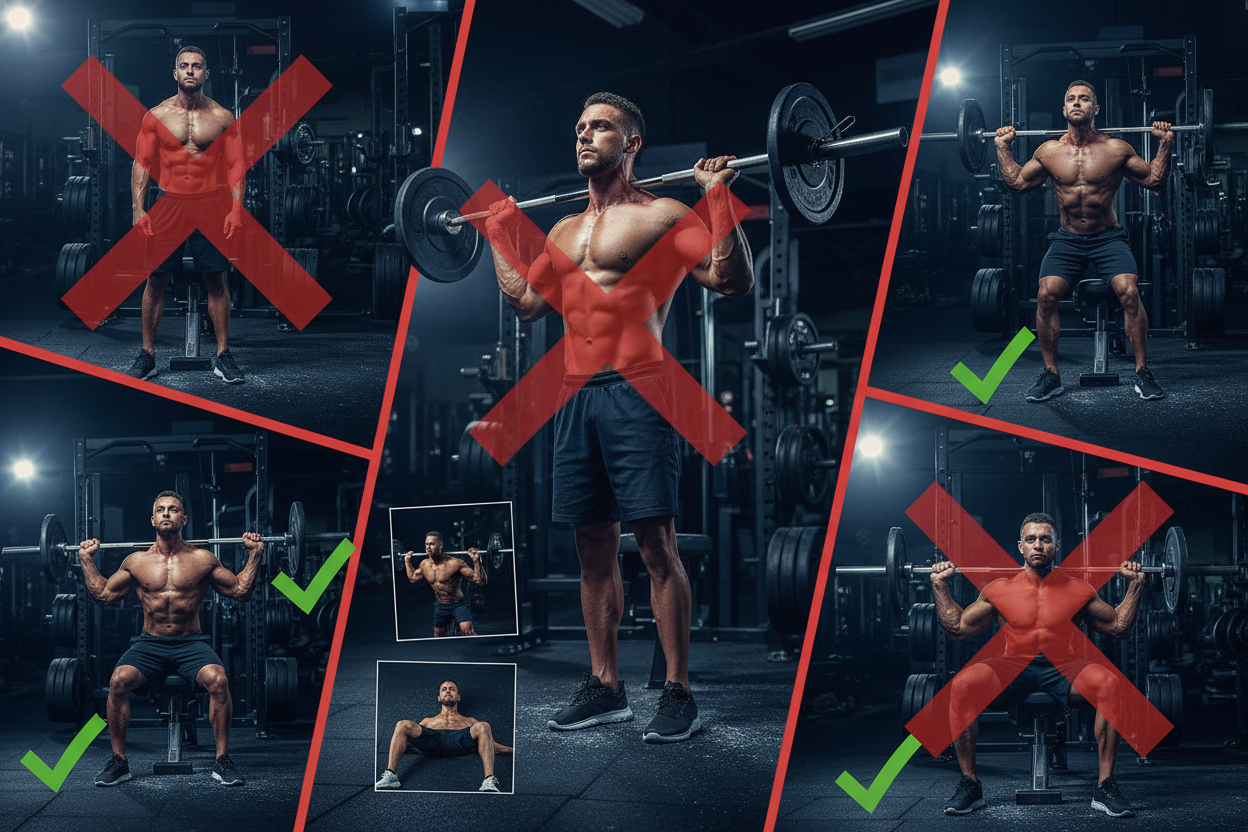
2. Behind-the-Neck Press
For decades, bodybuilders swore by this for total delt development. The problem? It requires a degree of shoulder mobility that 95% of the population lacks. To get the bar behind your head, you must maximally externally rotate the shoulder while abducting it.
When you press up from this position, the head of the humerus jams forward into the anterior capsule. Unless you have the mobility of an Olympic gymnast, this lift is a ticking time bomb for instability issues.
3. The Bench Dip
You see this in every commercial gym: feet on the floor, hands behind the back on a bench. It seems innocent enough, but it places the shoulder in extreme extension and internal rotation. As you lower your hips, the head of your arm bone shears forward.
This places immense stress on the front of the shoulder capsule. If you add weight plates to your lap, you are essentially prying your shoulder joint open with leverage.
My Training Log: Real Talk
I learned this the hard way back in my mid-20s. I was obsessed with the "Golden Era" physiques and thought if Arnold did behind-the-neck presses, I had to do them too. I didn't have a coach, just a worn-out magazine cutout.
I remember the specific session where things went south. I was grinding out my last rep on a seated military press behind the neck. I didn't feel a snap, but I felt a distinct, hot friction deep inside the joint—like two pieces of dry Velcro rubbing together. I ignored it and finished the set.
The next morning, I couldn't reach behind me to tuck in my shirt. The worst part wasn't the gym pain; it was the dull, toothache-like throb that appeared every night when I tried to sleep on my side. It took six months of rehab and a lot of face pulls to fix what I broke in six seconds of ego lifting. The knurling on the bar feels great, but not when it's tearing your labrum apart. Trust me, the pump isn't worth the insomnia.
Smart Alternatives for Growth
Identifying the exercises bad for shoulders doesn't mean you stop training. You just need to change the angle.
- Instead of Upright Rows: Do Dumbbell Lateral Raises. Keep your pinkies slightly higher than your thumbs to engage the side delt without the impingement.
- Instead of Behind-the-Neck Press: Do Standard Overhead Press (Bar in front). Keep your elbows slightly tucked. This allows the shoulder blade to move naturally.
- Instead of Bench Dips: Do Parallel Bar Dips or Close-Grip Bench Press. These hit the triceps hard without shearing the shoulder capsule.
Conclusion
Your shoulders are involved in almost every upper body movement you do. Protecting them isn't about training "soft"; it's about training smart. By eliminating the worst shoulder exercises from your rotation, you ensure that you can keep pressing heavy weights well into your 40s and 50s. Swap out the risky movements for the biomechanically sound alternatives, and your joints will thank you.
Frequently Asked Questions
Are dips bad for your shoulders?
Not all dips are bad. Parallel bar dips (torso leaning forward) are generally safe if you have good mobility and don't go too deep. However, bench dips (hands behind the back) are notoriously risky because they force the shoulder into an unnatural, loaded internal rotation.
Is the overhead press bad for shoulders?
The overhead press is generally safe and effective if performed with the bar in front of the head. It becomes dangerous when performed behind the neck or if the lifter lacks the thoracic mobility to get the arms overhead without arching the lower back excessively.
How do I know if an exercise is hurting my shoulder?
Differentiate between muscle burn and joint pain. Muscle burn feels hot and is generally spread out in the muscle belly. Joint pain is often sharp, stabbing, or feels like a deep ache right in the socket. If you feel a pinching sensation at the top of a movement, stop immediately.