Exercises for Hips and Back: 6 Strength Blueprints, Lumbo-Pelvic Cues, and Home Floor Staging
Understanding the Lumbo-Pelvic Connection in Lower Body Strength
The lumbar spine, pelvis, and hip joints function as an integrated kinetic structure during functional movement. When executing standing hinges, grounded bridges, or rotational patterns, force transfers directly through the pelvis to the spinal erectors and abdominal wall. Maintaining dynamic pelvic control allows the gluteal muscles and deep core stabilizers to share mechanical workloads rather than placing disproportionate stress on the lower back.
When hip mobility or lateral hip stability is limited, the lumbar region often compensates with excessive flexion or rotation during daily tasks and resistance training. Integrating dedicated core support patterns alongside hip movements creates balanced trunk stiffness, a topic explored in depth in our exercise back guide.
Essential Exercises for Hips and Back
A well-rounded routine emphasizes multi-planar movement, targeting the gluteus maximus, gluteus medius, hamstrings, and spinal erectors without placing excessive compressive stress on the spine.
Glute Bridge and Hip Thrust Variations
The standard supine glute bridge serves as a foundational baseline for horizontal hip extension. Lying on a supportive surface with knees bent and feet planted hip-width apart, you press through the mid-foot and heels to elevate the hips until thighs and torso form a straight line. Maintaining an active abdominal brace throughout the movement prevents the lower back from hyperextending at the top of the lift.
Progression variations include single-leg glute bridges, banded bridge holds, and elevated hip thrusts using an exercise bench. These variations increase unilateral demands, challenging the pelvic rotators and stabilizing musculature to maintain level hips throughout the set.
Quadruped Bird-Dog and Fire Hydrant Holds
Floor-based quadruped movements reinforce cross-body tension and anti-rotation stability. The bird-dog begins on hands and knees, extending the opposite arm and leg simultaneously while keeping the pelvis level and the spine in neutral alignment. This pattern trains the gluteal muscles, hamstrings, and contralateral spinal stabilizers while placing minimal axial load on the vertebrae.
Pairing the bird-dog with fire hydrant holds and quadruped hip circles challenges the gluteus medius and deep hip rotators. To explore how horizontal stability patterns complement upper-body and scapular integrity, review our exercise strengthen guide.
Romanian Deadlifts and Hinge Progressions
The hip hinge is an essential movement pattern for posterior chain conditioning. Executing a Romanian deadlift (RDL) with dumbbells, kettlebells, or a barbell requires driving the hips backward while maintaining a soft knee bend and a rigid, neutral spine. The primary work is handled by the hamstrings and glutes, with the erector spinae acting as isometric stabilizers to maintain spinal position.
Balancing posterior hip hinge strength with anterior quadriceps work creates balanced lower-body force production; you can learn more about complementary leg movements in our exercise strengthening guide.
Side Plank with Hip Abduction
Lateral stability is critical for preventing pelvic drop during gait and single-leg loading. Side planks engage the quadratus lumborum and obliques, while adding a top-leg abduction lift directly targets the gluteus medius. For athletes looking to isolate these mechanics with specialized home gym equipment, our hips hip guide covers focused abduction loading strategies.
How to Strengthen Hips and Lower Back Without Overloading the Spine
Building resilient hips and lower back structures requires deliberate tempo control and calculated loading rather than rushing into heavy resistance. Prioritize these core principles to maximize training stimulus:
- Brace Before Initiating Movement: Establish 360-degree intra-abdominal pressure before extending or hinging at the hips.
- Control the Eccentric Phase: Lower under control for two to three seconds to reinforce tendon strength and proprioception.
- Work Within Active Mobility Ranges: Avoid forcing ranges of motion that cause the pelvis to tilt anteriorly or posteriorly under load.
- Incorporate Isometric Pauses: Pausing for two seconds at peak contraction improves muscular recruitment without increasing joint strain.
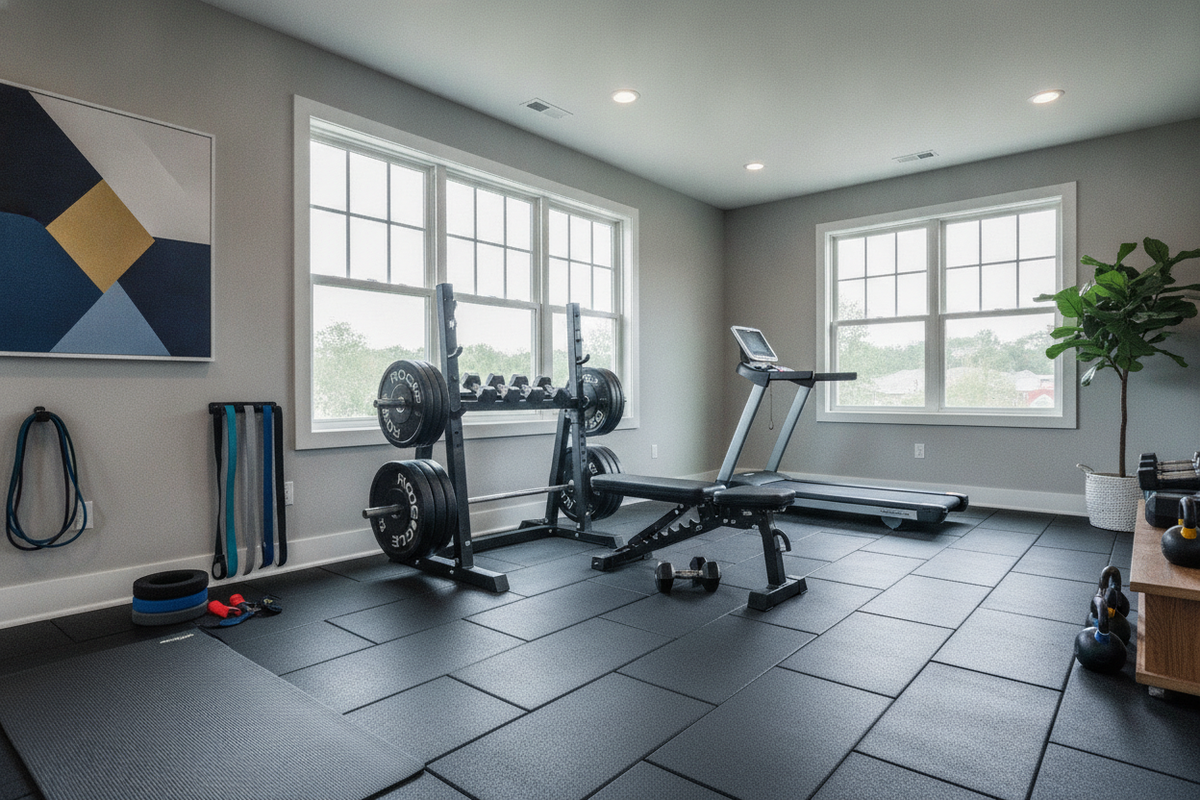
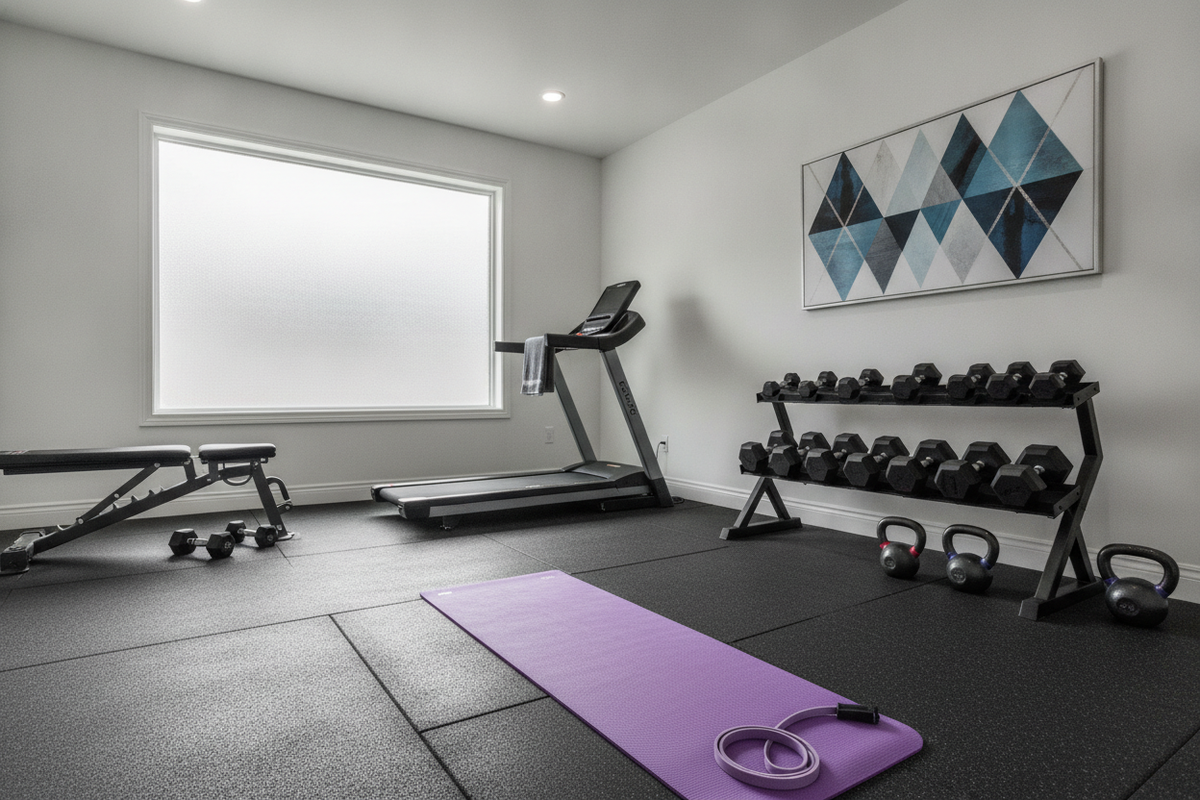
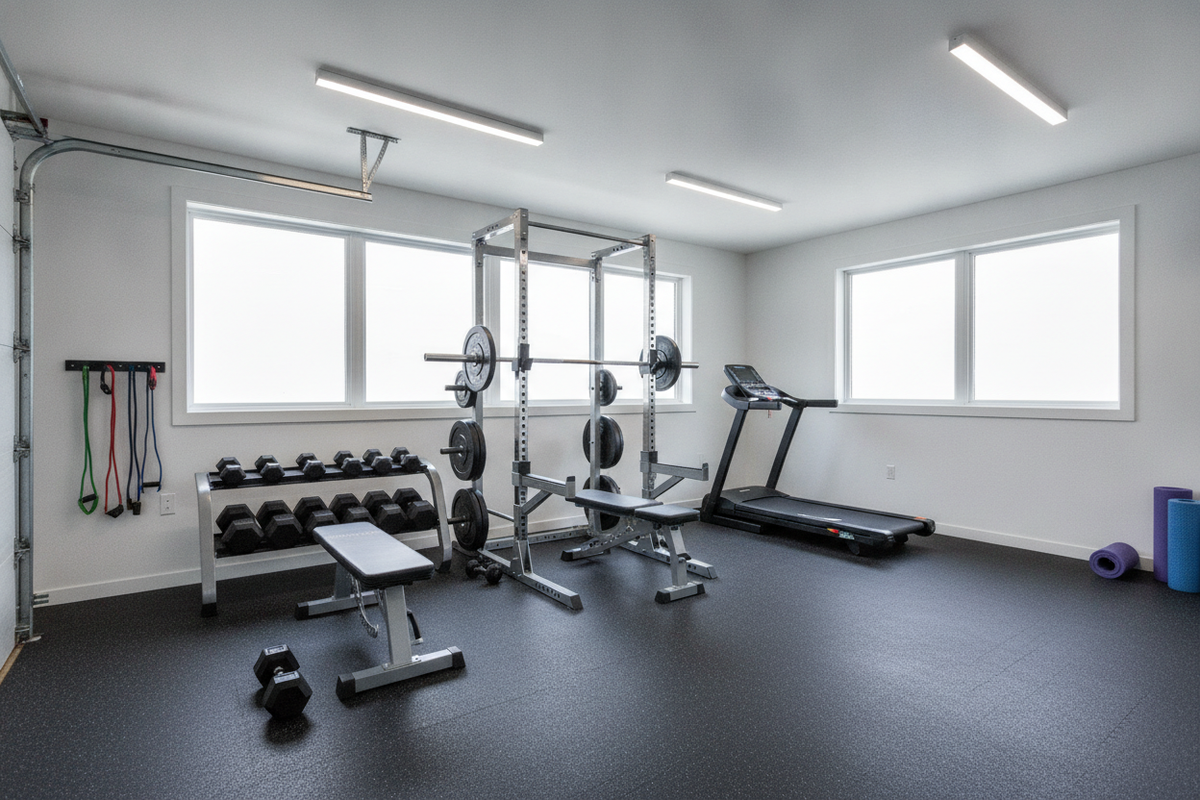
Home Gym Floor Staging and Equipment Layout for Floor-Based Training
Floor-based hip and back training requires a dedicated, supportive surface. Hard concrete subfloors or thin residential carpeting can create localized pressure on the sacrum, lumbar spine, and knees during floor drills.
Selecting Mat Density for Kneeling and Pelvic Comfort
Standard yoga mats are often too thin to cushion sensitive bony landmarks during quadruped bird-dogs or supine pelvic tilts, while overly soft foam mats can cause wrists and ankles to sink, compromising joint alignment. A high-density micro-foam or multi-layer rubber exercise mat provides firm ground feedback while absorbing localized point pressure on the knees and tailbone.
Maintaining Floor Traction and Preventing Mat Slippage
When performing glute bridges, lateral planks, or weighted hinges, surface traction is essential to maintain foot drive and prevent compensatory shifting. A non-slip textured base keeps the mat securely anchored to hardwood, tile, or laminate subfloors, preventing unwanted mat movement during explosive hip extensions or lateral transitions.
Programming Your Weekly Hip and Lower Back Routine
Structuring your routine ensures consistent progression without accumulating localized fatigue. Beginners often benefit from performing targeted hip and core sessions two to three times per week, alternating with low-impact cardiovascular work such as that outlined in our back lower guide.
- Day 1 (Posterior Chain Focus): Romanian Deadlifts, Glute Bridges, Bird-Dog holds.
- Day 2 (Lateral & Rotational Stability): Side Planks with Abduction, Fire Hydrants, Banded Lateral Walks.
- Day 3 (Full Kinetic Integration): Single-Leg Hip Thrusts, Quadruped Extension Pauses, Pallof Presses.
By pairing focused movement mechanics with a firm, high-traction training surface, you create a sustainable foundation for resilient hips and a stable lower back.