How to Build a Bigger Butt at Home: High-Tension Movement Blueprints, Rapid Sequencing, and Floor Mat Staging
Developing a firmer, more muscular lower body is one of the most common goals in home fitness. Trainees frequently seek effective strategies to develop a bigger butt through time-efficient routines that fit into busy daily schedules. However, popular fitness media often obscures the fundamental principles of muscle hypertrophy with exaggerated claims of overnight transformations or complicated novelty movements. Building muscle tissue in the gluteal complex requires the same underlying physiological stimulus as any other muscle group: mechanical tension, metabolic stress, and progressive overload applied over time.
By understanding how the gluteal muscles function biomechanically, you can design a targeted home workout routine that produces meaningful adaptation without requiring an array of commercial gym machines. Furthermore, setting up an appropriate home workout surface ensures that joint comfort, foot traction, and subfloor protection do not limit your movement execution.
The Biomechanics of Glute Growth: Beyond Quick-Fix Promises
Gluteal hypertrophy is a biological adaptation to repeated, challenging mechanical demand. When setting realistic growth expectations, reviewing a bigger butt just guide helps distinguish between structural genetics and targeted muscle hypertrophy. Skeletal framework, pelvis width, and natural fat distribution patterns influence overall hip shape, but targeted resistance training directly expands the cross-sectional area of the gluteal musculature.
Achieving meaningful glute development relies on working through full, controlled ranges of motion where the glutes are actively recruited under load. Quick-fix programs that promote hundreds of rapid, unfocused repetitions often generate systemic fatigue or lower back strain rather than true muscular stimulation. Sustainable growth occurs when exercises are performed with strict form, high internal tension, and deliberate mind-muscle connection.
Essential Glute Anatomy and Targeted Movement Vectors
The gluteal complex consists of three distinct muscles that perform overlapping but specialized functions:
- Gluteus Maximus: The largest muscle in the region, responsible primarily for hip extension (driving the thigh backward), external rotation, and transverse abduction. This muscle forms the bulk of the posterior shape.
- Gluteus Medius: Located on the upper and outer portion of the hip, this muscle stabilizes the pelvis during single-leg stance and performs hip abduction (moving the leg laterally away from the midline).
- Gluteus Minimus: Positioned beneath the gluteus medius, it works synergistically to abduct and internally rotate the hip while stabilizing the femoral head within the hip socket.
Selecting exercises based on anatomical tension vectors aligns with principles found in our bigger butt guide. A well-rounded glute routine addresses all three movement planes: horizontal hip extension (bridges and thrusts), vertical hip extension (squats, lunges, and step-ups), and lateral abduction (side-lying raises and banded walks).
Rapid High-Tension Home Glute Circuit Blueprint
For home trainees balancing tight schedules, structuring exercises into a dense, high-tension circuit maximizes local muscular fatigue while keeping workout duration manageable. Understanding mechanical tension over passive fatigue is thoroughly explored in our butt workout growth guide.
An effective bodyweight or minimal-equipment home sequence can be structured as follows:
- Glute Bridge with Isometric Peak Hold: Lie supine with knees bent and feet flat on the floor. Drive through the heels to extend the hips upward, pause at the apex for a deliberate squeeze, and lower under control.
- Single-Leg Romanian Deadlift: Hinge forward at the hips while balancing on one leg, maintaining a neutral spine and soft knee bend to challenge the glutes and hamstrings in the lengthened position.
- Quadruped Bent-Knee Kickbacks: Position yourself on hands and knees, keeping the core engaged. Drive one heel toward the ceiling while maintaining a 90-degree knee bend, avoiding lower back arching.
- Side-Lying Clamshells or Abductions: Lie on your side to isolate the gluteus medius, raising the top knee or leg smoothly against gravity or resistance band tension.
Movement Execution and Form Cues for Maximum Tension
Movement quality dictates which muscles receive the training stimulus. A common pitfall during glute training is hyperextending the lumbar spine during bridges or kickbacks, which shifts mechanical stress from the gluteus maximus to the lower back erectors. To prevent this, maintain a neutral ribcage position and brace the abdominal wall throughout each repetition.
During hip thrust and bridge movements, focus on tilting the pelvis slightly posterior at the top of the movement to achieve complete gluteal contraction. Keep your feet planted firmly, driving pressure through the midfoot and heel rather than the toes, which helps prevent over-recruitment of the quadriceps.
Progressive Overload Strategies for Bodyweight and Minimal Equipment
Progressive overload is the systematic increase of mechanical stress placed upon the muscles over time. While commercial gyms achieve this by adding weight plates to a barbell, home trainees can apply several effective overload mechanisms using bodyweight, resistance bands, or compact dumbbells:
- Manipulating Tempo: Slowing down the eccentric (lowering) phase increases time under tension without requiring heavier loads.
- Isometric Pauses: Holding the peak contraction position for several seconds eliminates momentum and forces maximum voluntary recruitment.
- Reducing Rest Intervals: Shortening transition times between exercises increases metabolic stress and local muscular endurance.
- Unilateral Progression: Shifting from bilateral movements to single-leg variations, such as single-leg glute bridges or Bulgarian split squats, immediately increases the relative load per limb.
For those introducing free weights into home training, our glutes just hips guide provides progressive loading templates.
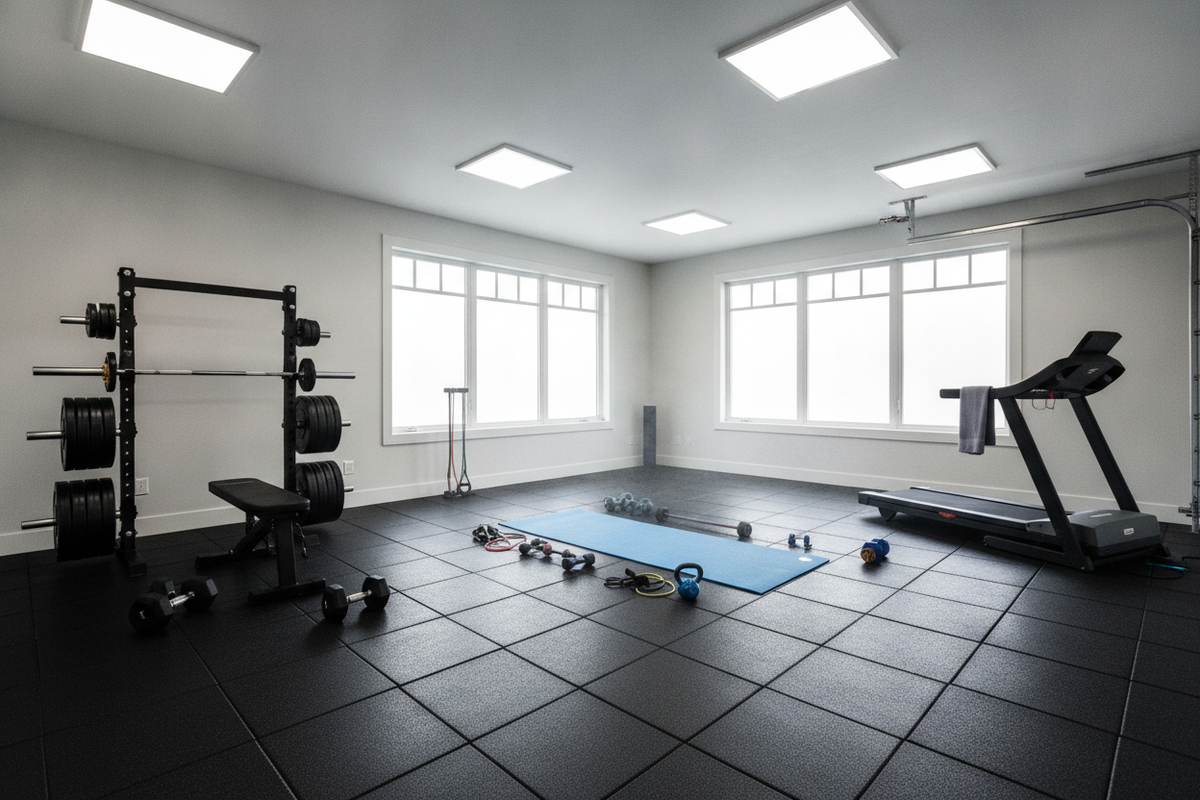
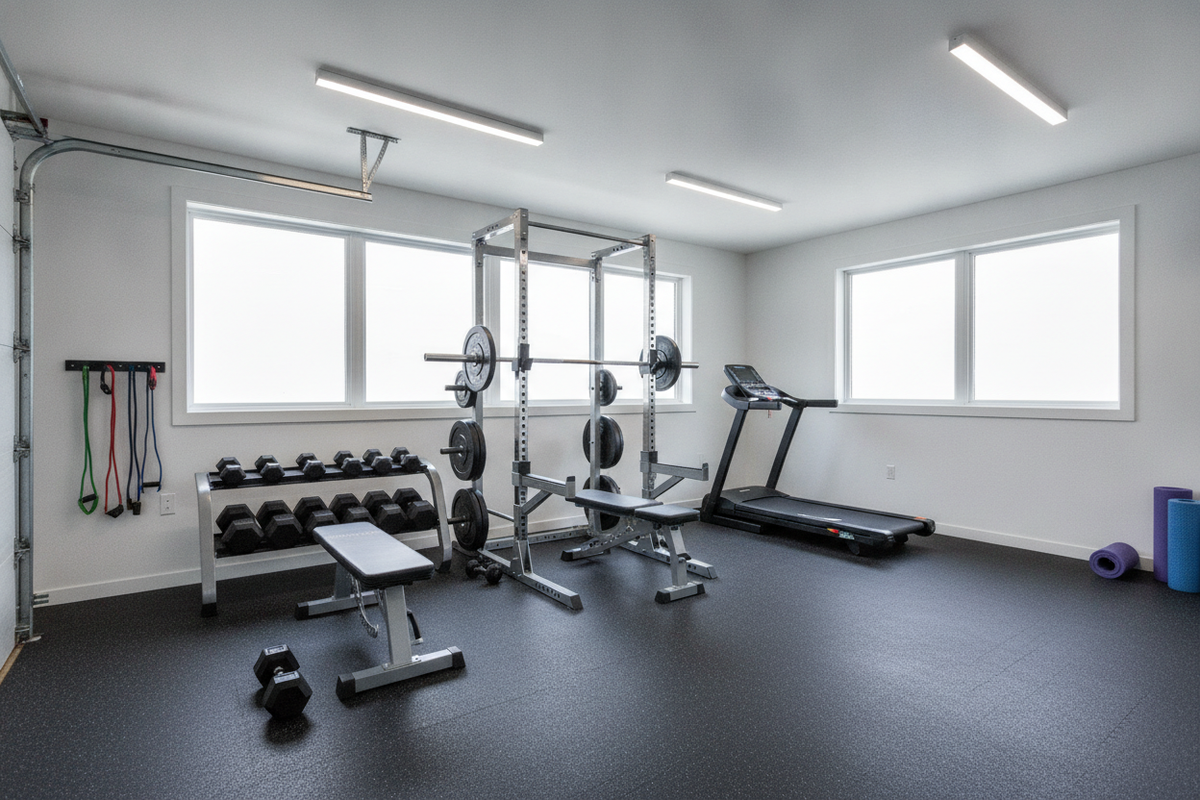
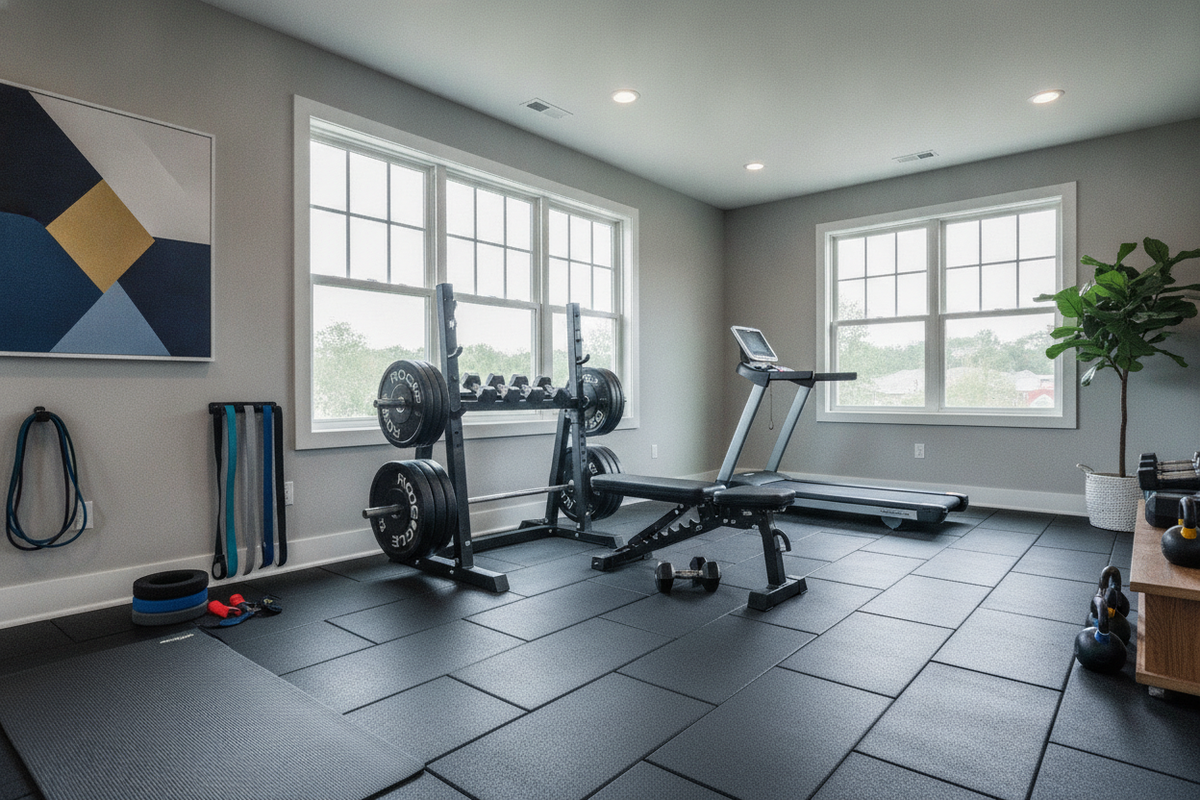
Home Gym Floor Mat Staging: Cushioning, Grip, and Room Protection
An often-overlooked component of successful home glute training is the flooring surface. In my view, having a stable, well-cushioned training area directly impacts how comfortably and consistently you can perform floor-based movements.
Floor exercises such as bridges, quadruped kickbacks, and side-lying abductions place direct pressure on the sacrum, knees, elbows, and wrists. Performing these movements on hard subfloors like tile, hardwood, or thin carpeting can cause joint discomfort that distracts from maintaining high muscular tension. A dedicated exercise mat provides the necessary cushioning to support joints during high-repetition floor drills.
Additionally, standing hip hinges, lunges, and band-resisted movements require a non-slip foundation. A textured, dense rubber or high-density foam mat prevents foot slippage when driving through the heels, ensuring stable force transfer. Mats also protect household flooring from sweat, shoe abrasion, and incidental contact from dumbbells or resistance accessories.
Long-Term Consistency and Training Split Integration
Muscle protein synthesis and tissue remodeling require adequate recovery between training sessions. Rather than performing exhaustive glute workouts daily, aim to train the lower body two to three times per week, allowing at least 48 hours of recovery between high-tension sessions.
Pairing structured resistance training with sufficient daily protein intake, adequate hydration, and restorative sleep provides the biological foundation required for tissue growth. By adhering to biomechanically sound movement patterns and maintaining a supportive home workout setup, trainees can make reliable, long-term progress toward their aesthetic and strength goals.