Easiest Way to Build Muscle Mass at Home
Finding the easiest way to build muscle mass often starts by stripping away unnecessary complexity. Many beginners assume that the best way to get muscles requires complicated daily routines, expensive gear, or strict lifestyle overhauls. In reality, building muscle is a straightforward biological response to basic physical stress and adaptation. When you apply steady resistance training, fuel your body properly, and allow time for muscle recovery, your body naturally adapts by developing stronger, denser tissue.
Understanding the easiest way to build muscle mass helps you focus on what actually moves the needle instead of wasting energy on fads. Whether you are working out in a garage or setting up a corner in your living room, the easiest way to build muscle mass comes down to consistent habits that you can maintain over months and years.
What is the easiest way to build muscle mass at home?
The easiest way to build muscle mass at home is to combine basic resistance training with steady progressive overload, adequate nutrition, and sufficient rest. You do not need dozens of different exercises to see noticeable muscle growth. Instead, concentrating on a handful of foundational movements allows you to master technique, track your strength improvements, and encourage lean muscle development week after week.
Progressive overload serves as the primary engine for progress. This simply means gradually increasing the training demand on your body over time, whether by lifting slightly heavier weight plates, completing an extra repetition, or slowing down your lifting tempo. For most lifters, the easiest way to build muscle mass involves keeping workout logs to ensure each session builds on the last. When evaluating equipment styles for your home gym setup, exploring a free weights versus machines comparison can help you decide how best to organize your weekly routine.
Another reason this approach represents the easiest way to build muscle mass is that it reduces decision fatigue. Instead of switching exercises constantly, you repeat proven patterns until they become second nature. Over time, this consistent stress signals the body to trigger muscle growth without burning you out mentally or physically.
Essential Compound Lifts for Building Muscle
Focusing on multi-joint movements is widely recognized as the best way to get muscles efficiently. Compound exercises recruit multiple joints and large muscle groups simultaneously, providing far more training stimulus in less time than isolated movements like bicep curls or calf raises.
Which compound lifts are best for gaining overall size?
The best lifts for gaining overall size are multi-joint compound exercises like squats and deadlifts, overhead presses, and rows. These core movements demand total-body stabilization and engage major muscle groups across your torso, back, and lower body. By building your weekly schedule around these lifts, you unlock some of the most reliable fast muscle building tips available to home lifters.
Key compound exercises to emphasize include:
- Squats and deadlifts: These lower-body powerhouses train your quads, hamstrings, glutes, and core while building full-body resilience.
- Dumbbell bench press: Pressing with dumbbells challenges your chest, shoulders, and triceps while promoting balanced strength on both sides of the body.
- Overhead press: Lifting weight overhead develops shoulder width, upper chest strength, and midsection stability.
- Bent-over rows: Pulling movements balance your pressing work, strengthening your upper back and posture.
Using moderate rep ranges, such as six to twelve repetitions per set, is one of the top tips for building muscle faster. This range creates an optimal balance between mechanical tension and muscular fatigue. Integrating these compound exercises is widely considered the easiest way to build muscle mass because each repetition works multiple muscle groups at the same time.
When lifters search for tips for fast muscle growth or tips to gain muscle faster, they often encounter exaggerated workout plans. Reviewing a realistic breakdown of fast muscle building workout reality can keep your expectations grounded while you pursue steady strength gains.
Why is stable gym flooring important for heavy strength training?
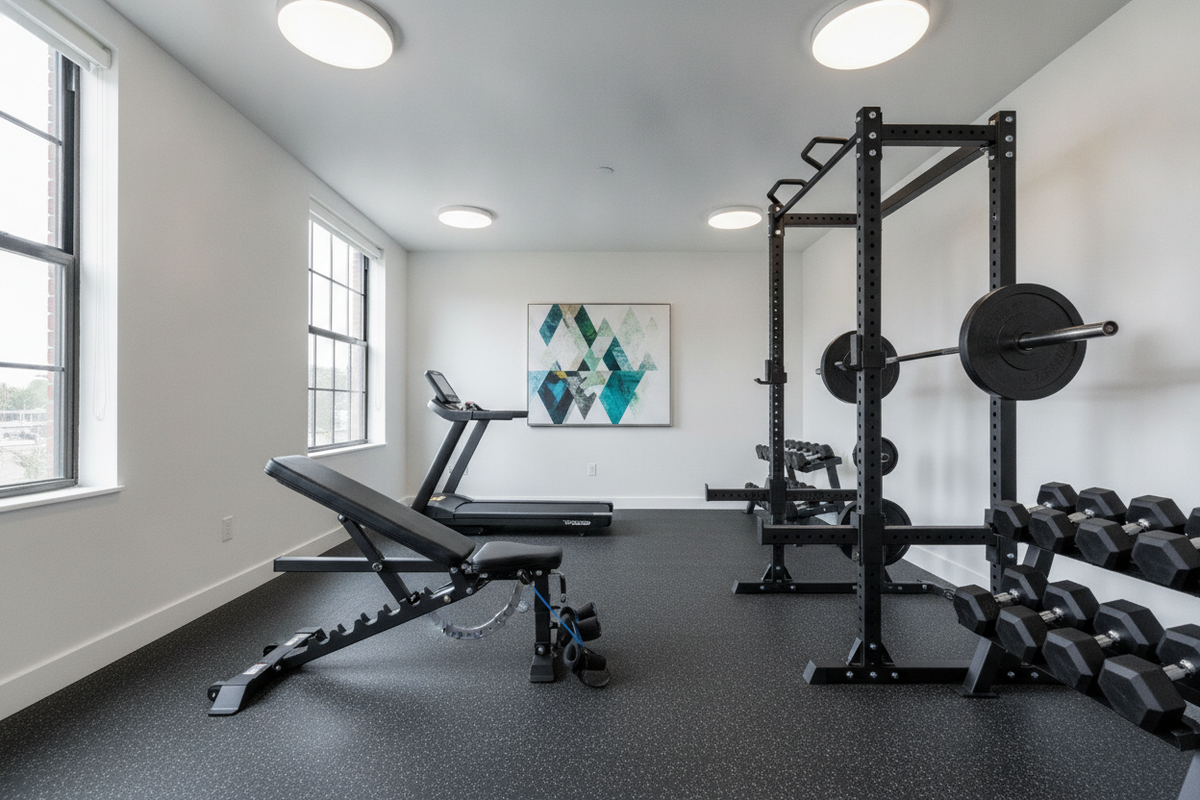
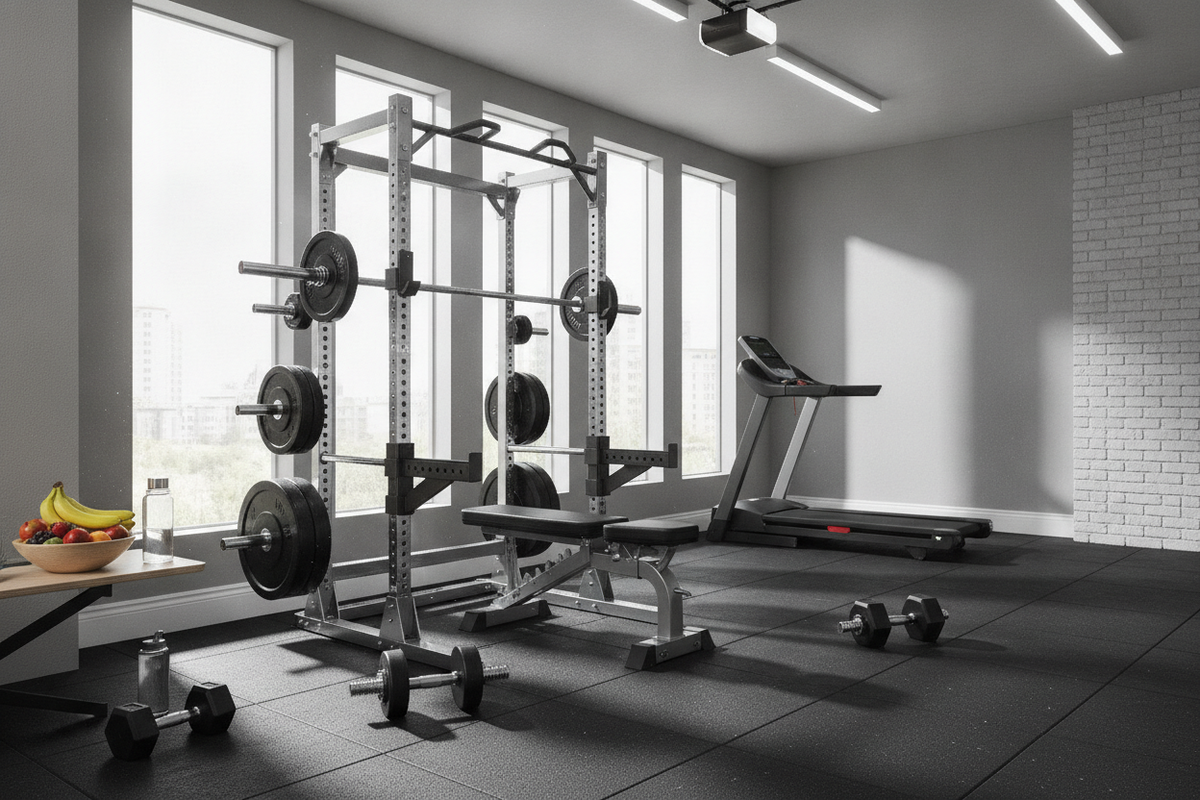
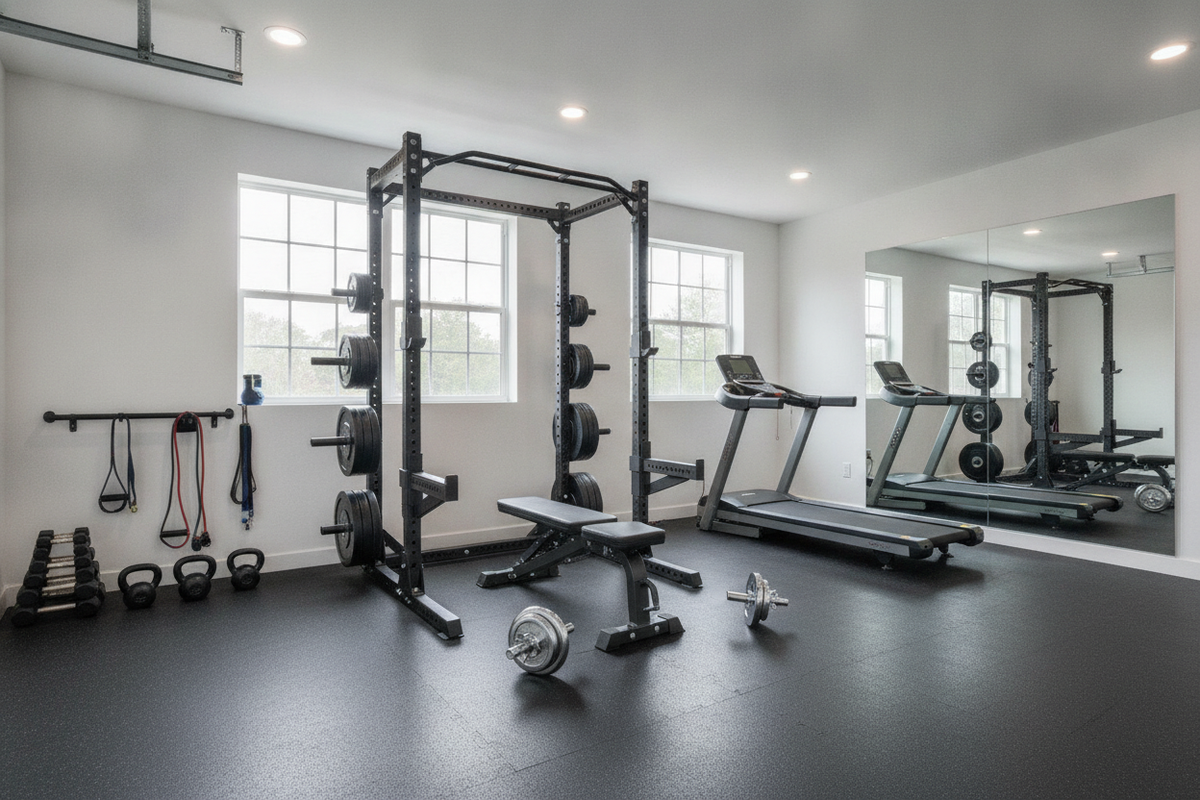
Stable gym flooring is important for heavy strength training because it provides non-slip footing, protects your living space, and creates a dependable base for heavy lifts. When executing a heavy dumbbell bench press or loading up for squats, foot stability directly affects your lifting technique and balance.
A well-planned home gym setup should prioritize floor durability just as much as weights. Laying down high-density rubber floor tiles or a large exercise mat creates reliable subfloor protection against dropped weights, scuffs, and vibration. As explored in our home gym floor setup guide, taking care of your foundation first gives you the confidence to train hard without worrying about cracked tiles or dented hardwood.
Consider these practical tips when setting up your training area:
- Ensure firm traction: Good gym flooring prevents your shoes from slipping during heavy leg drives and floor presses.
- Protect your subfloor: Using dense rubber floor tiles shields concrete and wood subfloors from heavy weight plates.
- Keep a dedicated lifting zone: Rolling out a dependable exercise mat clearly defines your workout zone and keeps walkways clear of clutter.
- Maintain balance: Uneven surfaces can throw off your form during squats and deadlifts, making a level exercise mat essential for consistent foot placement.
Creating a reliable, protected space is truly part of the easiest way to build muscle mass at home. When your training area feels secure and organized, working out becomes a frictionless part of your daily routine.
Fueling Recovery and Managing Rest Days
Lifting weights triggers the stimulus, but your body actually repairs and grows stronger during downtime. Neglecting your nutrition and recovery will stall progress, no matter how hard you train. Following sound nutrition guidance, such as our practical food tips for lean muscle, ensures your body has the building blocks necessary to gain muscle mass.
Prioritizing adequate protein intake supplies the essential amino acids required to repair tissue damaged during resistance training. Pairing sufficient protein intake with balanced daily calories creates the supportive environment needed for steady muscle growth. Lifters looking for fast muscle building tips should remember that food quality and quantity matter just as much as lifting intensity.
Equally critical are designated rest days and quality sleep. Muscle recovery happens largely during deep sleep cycles, where the body restores energy stores and rebuilds fibers. Skipping rest days to train every single day often leads to accumulated fatigue and diminished returns. If you want the easiest way to build muscle mass, schedule at least one or two rest days each week to allow your joints and nervous system to fully recharge.
Common Muscle Building Mistakes to Avoid
Even motivated lifters sometimes fall into traps that slow down their development. Learning to avoid these pitfalls is one of the most useful tips for building muscle faster:
- Program hopping: Switching exercises every week prevents you from mastering technique and applying progressive overload. Stick with a routine long enough to see measurable strength increases.
- Ignoring rep ranges: Training with weights that are either far too heavy to control or too light to challenge your muscles compromises lean muscle gains. Keep working within proven rep ranges with controlled tempo.
- Rushing the process: Searching for shortcuts rarely works. Sustainable muscle recovery and consistent gym flooring workouts outperform unsustainable crash routines every time.
- Underestimating warm-ups: Cold joints and tight muscles hinder performance during heavy compound exercises. A few minutes of mobility work prepares your body for the work ahead.
Adopting a patient mindset is the easiest way to build muscle mass without unnecessary stress. By trusting basic compound lifts, taking care of your home gym setup, and letting rest days do their work, you establish a reliable foundation to gain muscle mass, build muscle mass, and enjoy lasting fitness gains.