Buttocks Trainer Review: Do Glute Stimulators Work?
Wearable fitness technology continues to introduce novel gadgets designed to streamline physical fitness, and the electronic buttocks trainer has become one of the most prominent items in that lineup. Often sold as a butterfly-shaped pad that sticks to your hips, a buttocks trainer utilizes electrical pulses to target the hips and seat. Shoppers frequently wonder whether an electronic buttocks trainer can bypass the effort of traditional lifting, or if these devices serve merely as supplementary novelties.
Understanding the distinction between passive stimulation and active training is essential before investing in any muscle stimulator for glutes. While advertisements often suggest effortless body shaping while resting, the reality of physical conditioning requires a balanced perspective. When used with realistic expectations, an ems glute trainer can offer practical benefits for neurological awareness, yet building functional strength remains grounded in deliberate movement performed on supportive flooring.
What Is an EMS Buttocks Trainer?
An ems buttocks trainer is a wearable device engineered to send mild electrical impulses directly into the skin above your posterior musculature. These electrical impulses bypass the central nervous system to trigger a temporary muscle contraction in the underlying tissue. Rather than relying on your brain to signal the movement, the unit uses adhesive gel pads to transmit low-frequency currents that repeatedly tense and relax the area.
How an Electric Glute Stimulator Creates Muscle Contraction
An electric glute stimulator operates on the principles of electrical muscle stimulation, a modality long used in physical therapy settings to prevent muscle disuse during recovery. When you apply a butt muscle stimulator, the current stimulates motor nerves, producing a steady pulse or rhythmic twitch. This involuntary muscle contraction causes tension across the muscle belly without moving your hip joints.
Users frequently select a booty trainer ems pad because it is lightweight, wireless, and easy to position while relaxing around the house. A standard buttocks trainer features various intensity levels and rhythm cycles designed to mimic different movement patterns. However, passive stimulation delivered through an ems glute trainer addresses only superficial fibers near the pad surface, rather than recruiting the entire muscular structure through a full range of motion.
Does an EMS buttocks trainer really work for building muscle?
An EMS buttocks trainer produces involuntary contractions that can wake up dormant tissue, but it cannot deliver the mechanical tension required to build significant muscle tissue on its own. For noticeable hypertrophy, muscles require external load, stretching under tension, and progressive overload over extended training periods. While an ems buttocks trainer can make the tissue feel momentarily firm or fatigued, it lacks the resistance curve necessary to drive structural muscular development.
Many consumers examine booty trainer before and after photos hoping for dramatic changes in silhouette. In practical home workouts, an ems for glutes unit works best as a supplemental tool for neuromuscular cues rather than a primary builder. Relying solely on a buttocks trainer will not match the physical development achieved through dedicated lifting programs.
Glute Muscle Stimulator Reality vs Resistance Training
To understand what a buttocks trainer can and cannot accomplish, one must examine how the gluteus maximus actually grows. Hypertrophy requires challenging the muscle fibers against gravitational or external forces, demanding regular increases in load. A passive glute muscle stimulator produces rapid pulses, but these pulses do not impose the mechanical tension that barbell, dumbbell, or band movements create.
Glute Activation and Mind-Muscle Connection
One genuine benefit of using a glute stimulator is improving mind-muscle connection, particularly for individuals who spend long hours seated at a desk. Desk work often leads to sluggish neuromuscular pathways, a common condition where the hips struggle to fire during exercise. Applying an ems buttocks trainer for a brief session before working out can foster targeted glute activation by reminding you how a complete muscle contraction feels.
If you struggle to engage your hips during squats or lunges, pairing sensory stimulation with targeted warm-ups is valuable. Reviewing our activation exercises for glutes guide can help you re-establish active control alongside any passive electric glute stimulator you might test. Once you can consciously contract the gluteus maximus, your subsequent active training becomes substantially more productive.
Can a glute stimulator replace resistance workouts at home?
No, a glute stimulator cannot replace resistance workouts at home because developing shape and strength requires progressive overload against actual physical loads. Passive stimulation from a buttock muscle stimulator does not stimulate bone density, connective tissue adaptation, or full metabolic recruitment like resistance training does. While ems glutes devices provide a tingling squeeze, they do not stress the skeletal system or deep muscle fibers.
Real muscular growth demands consistent active training that challenges hip extension and abduction through varied angles. As detailed in our guide to glute growth workouts, compound lifts and progressive overload remain the primary drivers of lower-body development. A buttocks trainer may complement an active session, but it will never serve as a standalone replacement for weights, bands, and bodyweight exercises.
Combining a Buttocks Trainer With Floor Exercises
Rather than treating an ems buttocks trainer as a passive shortcut, many fitness enthusiasts utilize it during dynamic mobility drills or warm-up sequences. When you wear a glute muscle stimulator during unweighted movement, the device provides tactile feedback that encourages you to squeeze the target muscles at the top of every repetition.
Effective Drills: Glute Bridge and Hip Thrust Moves
If you choose to use an ems glute trainer, consider pairing it with fundamental ground movements like the glute bridge. Lying flat on the floor and elevating your hips while the buttocks trainer fires reinforces proper hip extension without arching your lower back. For detailed execution strategies and rep targets, consult our glute bridge transformation guide.
Similarly, performing an unweighted or lightly loaded hip thrust allows you to emphasize the squeeze at peak contraction. Maintaining solid torso tension throughout hip extension is critical for spinal comfort, an element explored thoroughly in our hip thrust and core workout guide. By using a butt muscle stimulator as an educational tool to feel your gluteus maximus working during bodyweight exercises, you transition from passive hoping to deliberate muscular mastery.
Creating a Stable, Non-Slip Workout Surface
Floor-based glute exercises demand stability, traction, and joint cushioning that bare hard surfaces cannot supply. When bridging, thrusting, or kicking back, your feet must remain firmly planted to prevent compensatory shifts into the lower back or knees. Spreading out a dedicated exercise mat provides the necessary cushioning for your spine and pelvis during repeated hip lifts.
A durable, non-slip workout surface keeps your heels securely locked in place, ensuring that every ounce of force drives directly through the hips. Without proper floor grip, performing bodyweight exercises or loaded bridges becomes precarious, shifting emphasis away from glute activation and compromising your movement quality.
Protective Flooring for Complete Home Workouts
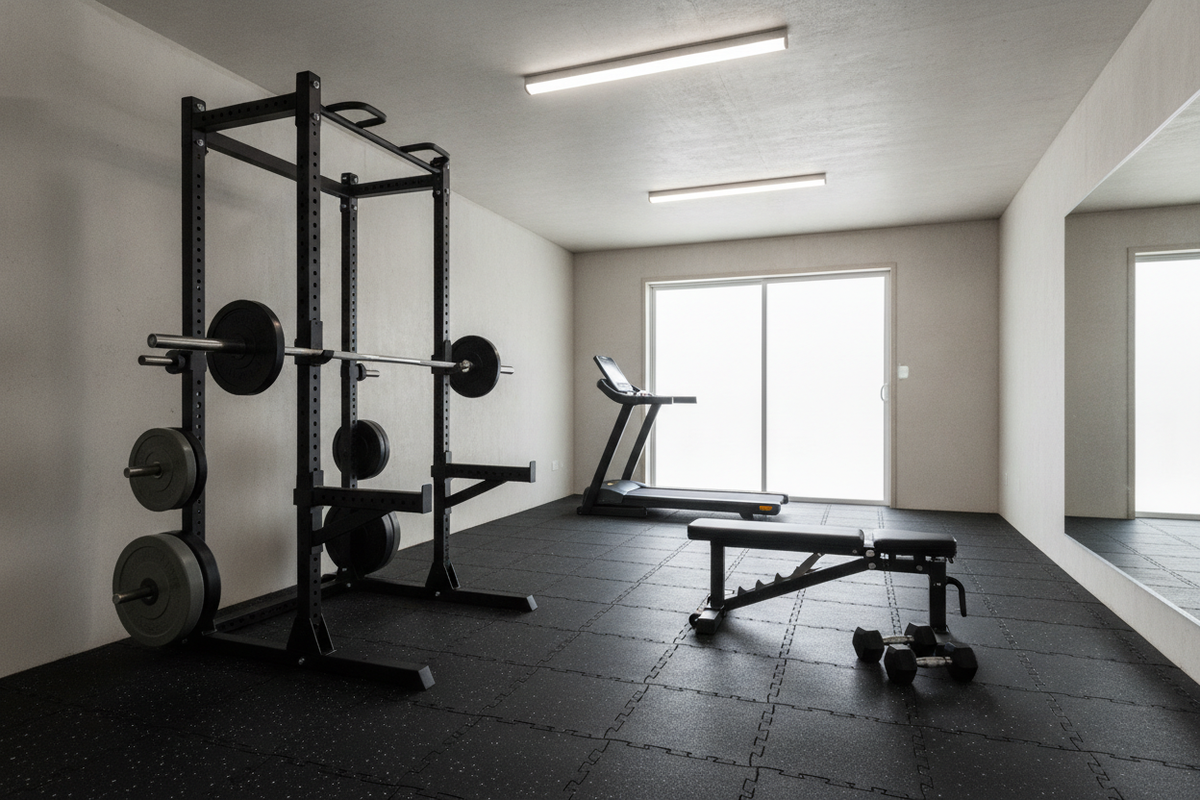
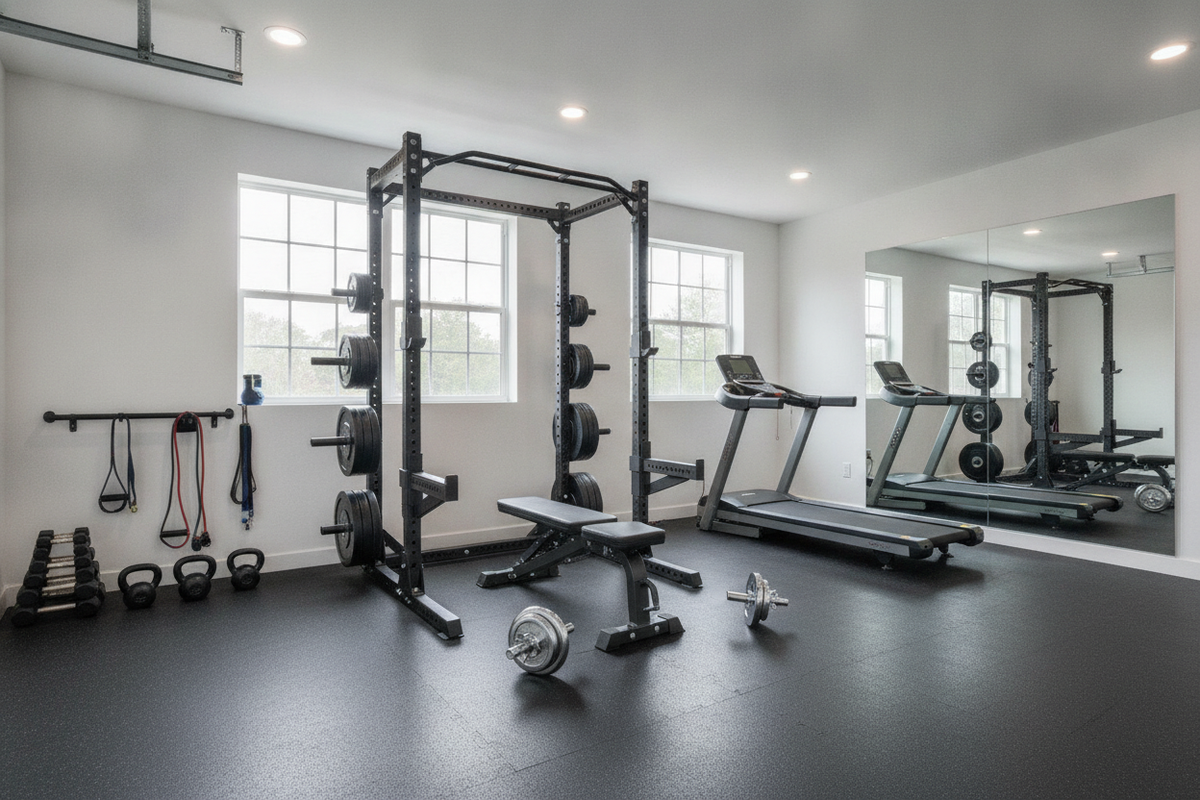
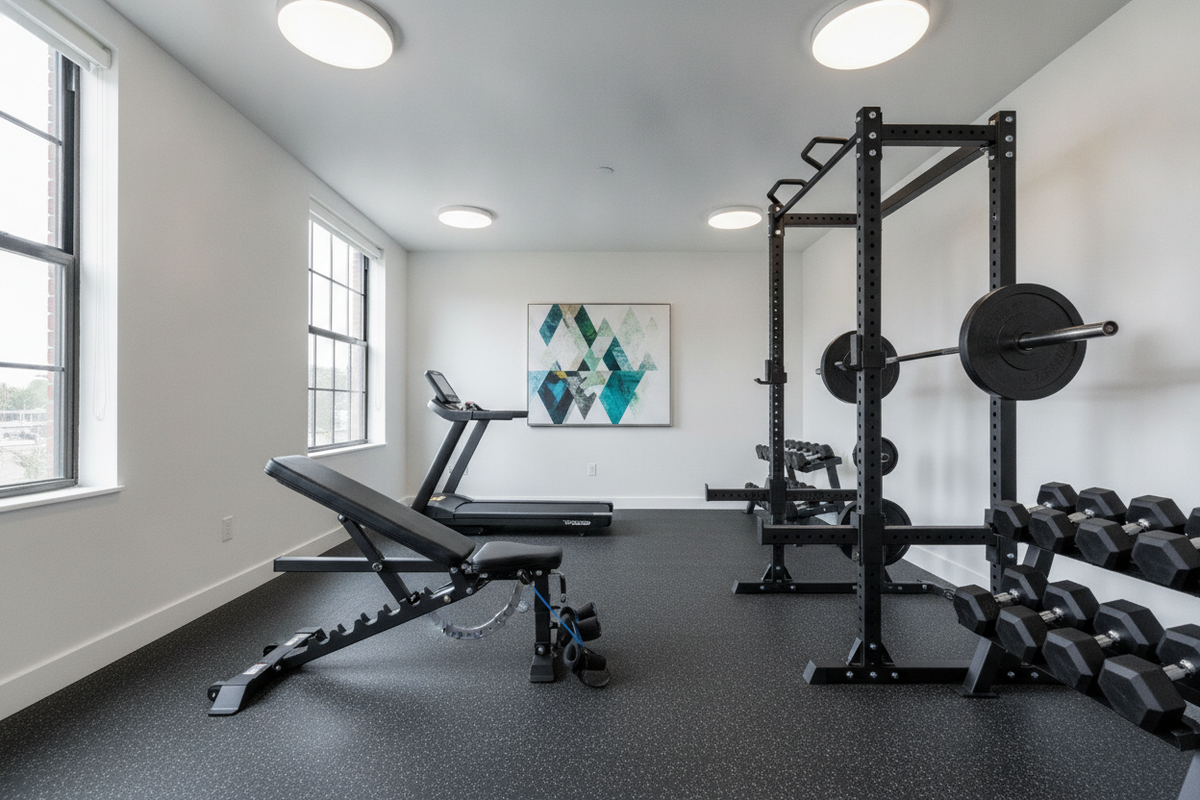
While exploring whether does ems work for glutes can be an interesting experiment, your primary fitness investment should always support active training. Wearable pads come and go, but dedicated workout flooring forms the foundation of any enduring home fitness space. High-density mats safeguard your subfloors from dropped dumbbells, support heavy kettlebell swings, and provide dependable traction for dynamic lunges.
What home flooring setup works best for active glute routines?
A firm gym floor mat combined with protective flooring offers the best base for heavy glute work by providing non-slip stability and essential impact absorption. When performing exercises like Bulgarian split squats, heavy hip thrust setups, and Romanian deadlifts, a firm gym floor mat prevents slipping while protecting your floorboards. Layering a dense exercise mat over your protective flooring ensures that both bodyweight floor sessions and weighted barbell movements remain safe and comfortable.
In home workouts focused on lower-body training, floor stability directly impacts performance. Soft, plush yoga mats tend to stretch or slide under load, robbing your hips of drive during a glute bridge or hip thrust. Choosing high-density protective flooring creates a non-slip workout surface that accommodates your weights, benches, and daily routines year after year.
Selecting the Best Glute Stimulator and Final Takeaway
When shopping for the best glute stimulator or the best ems for glutes, look for models with rechargeable batteries, adjustable intensity curves, and skin-friendly hydrogel pads. A well-constructed buttocks trainer should offer straightforward controls and comfortable adhesion so that it stays in place during light movement. Avoid cheap units that deliver sharp, stinging shocks rather than a smooth muscle contraction.
Ultimately, a muscle stimulator for glutes can be a fun, supplementary tool to enhance sensory awareness and warm up cold hips before an active session. However, the path to genuine lower-body strength and aesthetic shape requires work. By anchoring your home workouts on a dependable exercise mat, practicing progressive overload, and viewing your buttocks trainer as a secondary helper, you build lasting fitness built on real movement.