Different Workout Styles for Your Home Gym Space
Building a sustainable routine often starts with recognizing that your body thrives on variety. When you schedule a different workout across various days of the week, you stimulate different muscle groups, challenge your cardiovascular capacity, and prevent the repetitive strain that often accompanies single-discipline training. A well-designed home gym setup makes shifting between multiple routines effortless, provided your training space is properly configured to support diverse physical demands.
Core Types of Fitness Training Methods for Balanced Routines
Exploring the foundational types of fitness training methods helps you organize a balanced training calendar. The human body adapts quickly to uniform stimulus, making it helpful to introduce distinct physical fitness training methods into your regular schedule. By alternating between different movement categories, you build both force output and endurance without wearing down specific joints.
The primary categories include:
- Strength Training: Lifting free weights, using barbells, or working with kettlebells develops musculoskeletal stability. In any home gym setup, strength training requires firm ground support and sufficient space to handle loaded movements securely.
- High-Intensity Interval Training: Often abbreviated as HIIT, high-intensity interval training pairs short bursts of explosive output with structured recovery intervals. This fitness training method demands dependable traction and grip to accommodate lateral bounds, sprint stops, and rapid stance adjustments.
- Bodyweight Movements: Calisthenics, push-ups, planks, and pull-ups build relative strength and motor control. Focusing on bodyweight movements requires comfortable joint cushioning for wrists, knees, and hips during floor-based drills.
- Mobility Routines and Active Recovery: Dedicating time to mobility routines and gentle active recovery restores joint range of motion, relieves accumulated stiffness, and prepares soft tissues for the next challenging session.
Rotating through these types of fitness training methods ensures that no single physical attribute is neglected, giving you a comprehensive athletic base directly from your own space.
Why should you include a different workout style throughout the week?
You should include a different workout style throughout the week because varying your training stimulus targets multiple energy systems while giving overstressed joints and muscle groups adequate time to repair. When you commit to a different workout every other day—such as alternating heavy lifts with mobility routines—you decrease the likelihood of chronic overuse injuries while keeping mental engagement consistently high.
Monotony is one of the most common reasons home lifters lose momentum. If you repeat identical sets and repetitions continuously, progress stalls as adaptation plateaus. Reading our guide to breaking home gym plateaus offers practical insights into alternating intensity to reignite momentum. Introducing different workout methods breaks the psychological fatigue of training. One day might center on explosive power, while the subsequent session transitions into a quiet, deliberate session centered on bodyweight movements and joint restoration.
How do different workout methods affect your gym flooring choices?
Different workout methods affect your gym flooring choices because high-impact aerobic intervals demand substantial shock absorption, whereas heavy barbell lifts require an uncompromising, non-compressible foundation. Selecting the right workout surface means balancing impact absorption, traction and grip, and subfloor protection so your floor accommodates every routine smoothly.
When executing strength training with heavy barbells and weight plates, the floor protection beneath your feet must resist compression under load. If your flooring squishes too much during a heavy squat or deadlift, your balance wavers and your energy transfer drops. Conversely, high-intensity interval training involves repeated jumping and rapid direction changes. Performing these exercises on bare concrete or unyielding hardwood risks irritating ankles and knees, making joint cushioning a mandatory consideration.
To support diverse physical fitness training methods, many lifters lay down a durable 6x10ft exercise mat for home workouts as their primary activity platform. A wide, resilient exercise mat delivers crucial subfloor protection against scuffs from dropped accessories while offering enough density for stability. By investing in heavy-duty gym flooring, you safeguard your subfloors from weight plates, create a dedicated zone for daily training, and ensure every different workout has adequate ground support.
Methods of Fitness Training and Equipment Organization
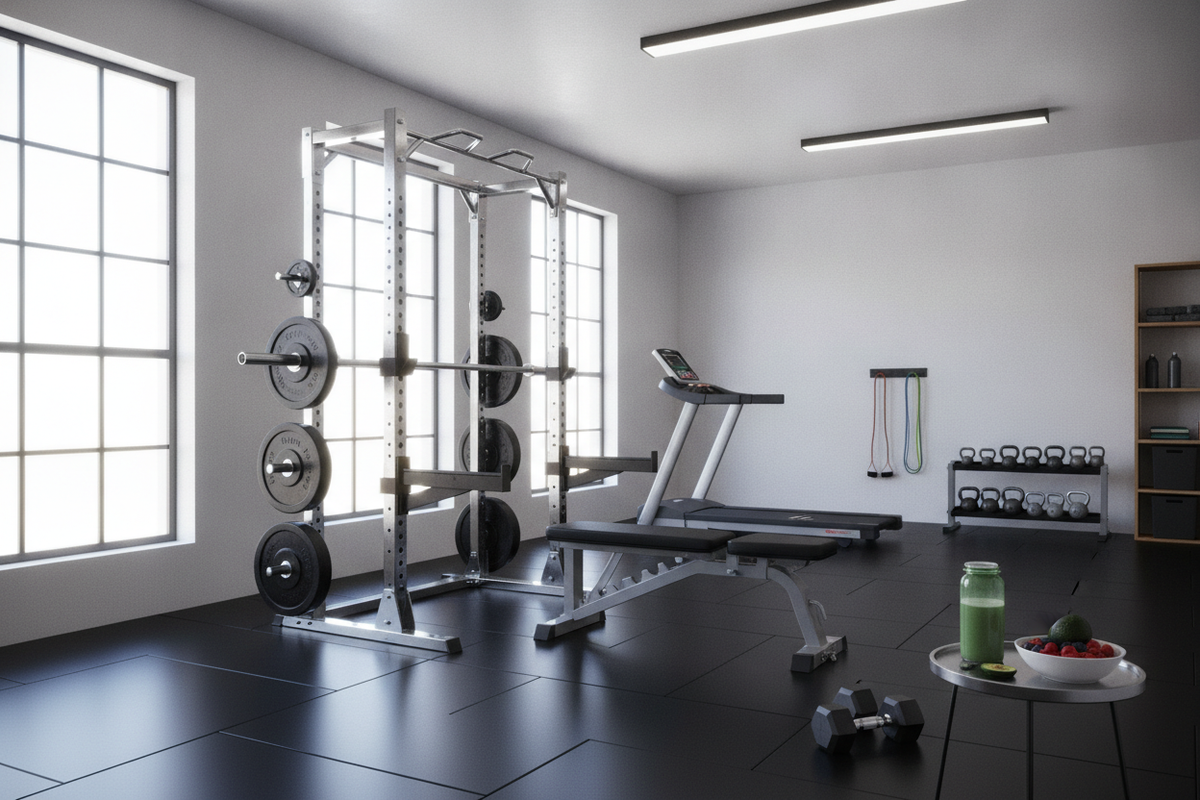
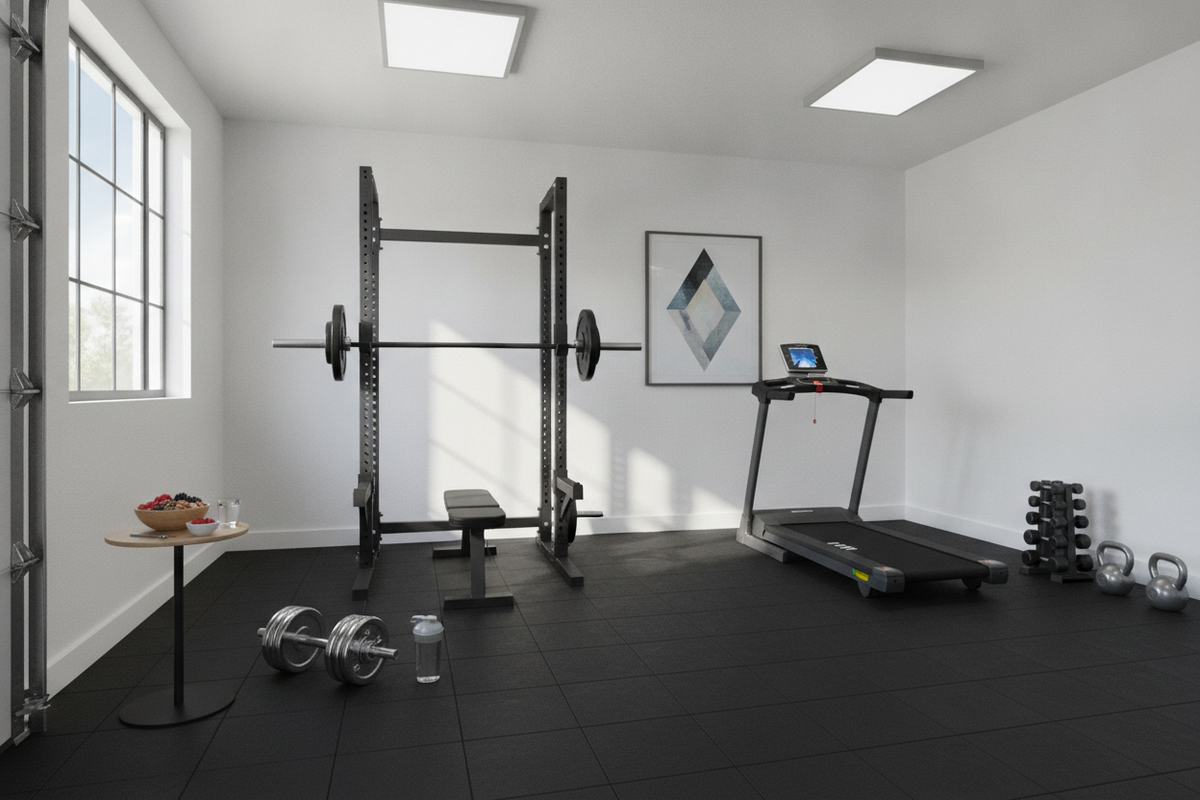
Understanding the standard methods of fitness training allows you to plan your room's layout with intention. Because each fitness training method demands distinct amounts of clearance, thoughtful equipment placement transforms an ordinary room into a flexible training facility. Placing heavy racks and storage trees against structural walls opens up central floor space for broad dynamic movement.
To support different workout methods in the same footprint, consider dividing your room into distinct functional zones:
- The Fixed Resistance Zone: Anchor your squat rack, bench, and weight plates along one perimeter wall. This keeps heavy, static loads situated over solid floor protection and out of primary walkways.
- The Dynamic Free-Movement Zone: Keep a wide open area clear of clutter, furnished with a large workout mat. This central workout surface accommodates high-intensity interval training, plyometrics, kettlebell swings, and sweeping bodyweight movements.
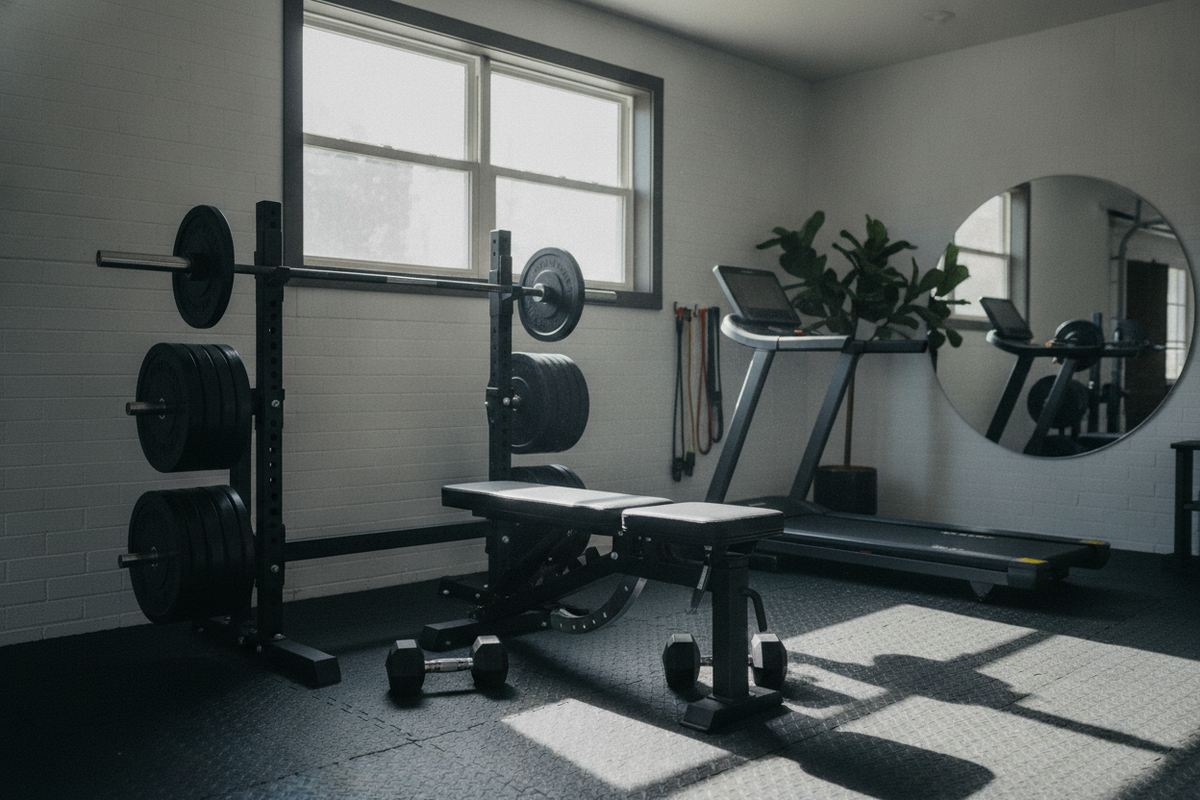
- The Accessory and Flexibility Hub: Mount wall hangers or shelving units for resistance bands, foam rollers, and yoga blocks. Having these tools organized from our strength training accessories collection makes transitioning into active recovery or mobility routines quick and effortless.
Strategic equipment placement prevents you from having to drag heavy gear around every time you want to switch to a different workout. Keeping resistance bands, jump ropes, and dumbbells neatly racked ensures your large workout mat remains unobstructed for whatever training modality is next on your calendar.
How do you organize equipment for different workout techniques in one room?
You organize equipment for different workout techniques in one room by utilizing vertical perimeter storage to keep your central floor space completely clear for dynamic movement. By hanging resistance bands, stacking dumbbells on tiered racks, and positioning large machinery against walls, you preserve an open workout surface that adapts readily to any fitness training method.
When practicing different workout techniques—such as moving rapidly from barbell complexes directly into plyometric jumps—you need seamless transitions. Cluttered floors introduce trip hazards and break the flow of high-paced circuits. High-density gym flooring laid throughout the center of the room provides a stable foundation where you can drop down for push-ups, perform high-knee drills, or set down a kettlebell without worrying about damaging the underlying floor.
Structuring a Practical Weekly Schedule Across Different Workout Styles
A successful program embraces structured rotation rather than random exertion. When planning each different workout, balance your weekly volume so that intense neuromuscular efforts alternate with restorative sessions. For example, pairing a heavy lower-body day with a subsequent session of contrast drills or active recovery allows connective tissues to recuperate. Reviewing our contrast training method workout guide can provide additional ideas for alternating between explosive and steady-state work.
A reliable four-day split might feature:
- Day 1: Upper-body strength training utilizing free weights and resistance bands on stable gym flooring.
- Day 2: High-intensity interval training and bodyweight movements focused on cardiovascular stamina and speed.
- Day 3: Active recovery centered on mobility routines, foam rolling, and joint cushioning on an exercise mat.
- Day 4: Lower-body strength training incorporating heavy weight plates and compound movements.
Between these sessions, caring for your equipment and floor protection ensures a clean, sanitary training environment. Sweeping chalk, dust, and debris off your exercise mat preserves traction and grip for future workouts. Wiping down surfaces with mild soap and water removes sweat residue, keeping your home gym setup welcoming day after day.
By embracing different workout methods and pairing them with appropriate floor protection, equipment placement, and recovery strategies, you create an adaptable home fitness space that supports consistent, lifelong athletic progress.