Diet and Workout to Gain Muscle: Your Home Guide
Balancing an effective diet and workout to gain muscle is the cornerstone of any successful physical transformation. When training at home, many lifters focus entirely on the physical effort of lifting weights while neglecting the nutritional fuel required to repair tissue. To reliably build muscle, your training stimulus and your daily eating habits must operate in total coordination. Without adequate nutrition, hard sessions produce fatigue rather than progress, while eating without structured training leads to unwanted fat storage.
A well-planned diet and workout to gain muscle ensures that every repetition you perform translates directly into new tissue. By establishing consistent habits, managing training volume, and supporting recovery through balanced meals, you create an environment where your body can continually adapt and grow.
What is the best diet and workout to gain muscle at home?
The best diet and workout to gain muscle at home pairs a slight caloric surplus and high protein with consistent compound exercises that apply progressive overload. Building a resilient physique does not require commercial machines; instead, it relies on mastering fundamental movements like presses, rows, and lower-body patterns using dumbbells and free weights. When you combine purposeful movement with proper nutrition, you create the mechanical tension needed to stimulate deep adaptations.
To support this training stimulus, your daily food choices must deliver the raw materials for repair. Establishing an intentional diet and workout to gain muscle means consuming whole foods, staying well-hydrated, and matching your intake to your training intensity. Exploring a structured workout build muscle guide can help you organize movement intervals and resistance work to maximize daily physical adaptations.
Essential Diet Tips for Gaining Muscle
Applying sound diet tips for gaining muscle begins with creating a modest calorie surplus. Eating slightly more energy than your body expends each day supplies the resources necessary to generate new muscle mass without accumulating excessive body fat. Tracking daily intake helps ensure that weight gain occurs gradually and consists primarily of dense, functioning tissue.
Key nutritional components include:
- Adequate protein intake: Distribute protein across several daily meals to keep muscle protein synthesis elevated.
- Complex carbohydrates: Fuel your sessions with oats, rice, and potatoes to sustain energy during heavy strength training.
- Beneficial fats: Support hormone balance and joint health through nuts, seeds, and oils.
- Fluid intake: Maintain optimal hydration throughout the day to support nutrient delivery and muscular contractions.
Using practical diet tips for gaining muscle removes the guesswork from daily meal preparation. Consistent eating patterns ensure that your body never enters a deficit that compromises recovery or halts muscle growth.
How much protein should you eat when lifting to build muscle?
When lifting to build muscle, you should consume moderate to high amounts of protein evenly spaced across your daily meals. Sustained protein intake supplies the essential amino acids required to repair microscopic damage caused by intense resistance training. Lean meats, eggs, dairy, legumes, and protein powders all serve as convenient staples for reaching daily targets.
Pairing reliable nutrition with a progressive lifting schedule is essential. If you want to refine your lifting schedule, following a dedicated workout gain muscle guide provides a clear framework for coordinating your weekly volume with your meal plan. Consistent nourishment allows your body to rebuild damaged fibers stronger than before.
Structuring Your Home Workout Routine for Muscle Growth
A productive diet and workout to gain muscle centers on compound movements that recruit multiple major muscle groups simultaneously. Exercises such as overhead presses, pull-ups, rows, and floor presses recruit substantial amounts of tissue, triggering greater systemic adaptation than isolated movements. As you progress, systematically applying progressive overload by increasing weight, adding repetitions, or improving tempo ensures continuous adaptation.
In a residential setting, working with free weights demands strict control. Lowering weights under control amplifies muscular tension while protecting joints. Integrating varied movements keeps training engaging while challenging stability and balance. Following a dependable diet and workout to gain muscle ensures that your energy levels remain elevated throughout tough training blocks, allowing you to hit targeted volume benchmarks without burning out.
Pre- and Post-Workout Fueling Strategies
Implementing targeted diet tips to build muscle around your training sessions improves workout performance and speeds up muscle recovery. Consuming balanced pre-workout nutrition roughly one to two hours before training provides circulating glucose to power through demanding sets. A small meal containing easily digested carbohydrates and moderate protein ensures steady energy without stomach heaviness.
Following your session, prioritizing a balanced post-workout meal kickstarts tissue repair. Combining lean protein with simple carbohydrates replenishes glycogen stores and halts catabolic breakdown. Lifters can access comprehensive movement routines and scheduling strategies via the workout resource to optimize their weekly programming. Consistent timing around lifting sessions makes your overall diet and workout to gain muscle far more effective over time.
How do you set up a home gym floor for heavy muscle building lifts?
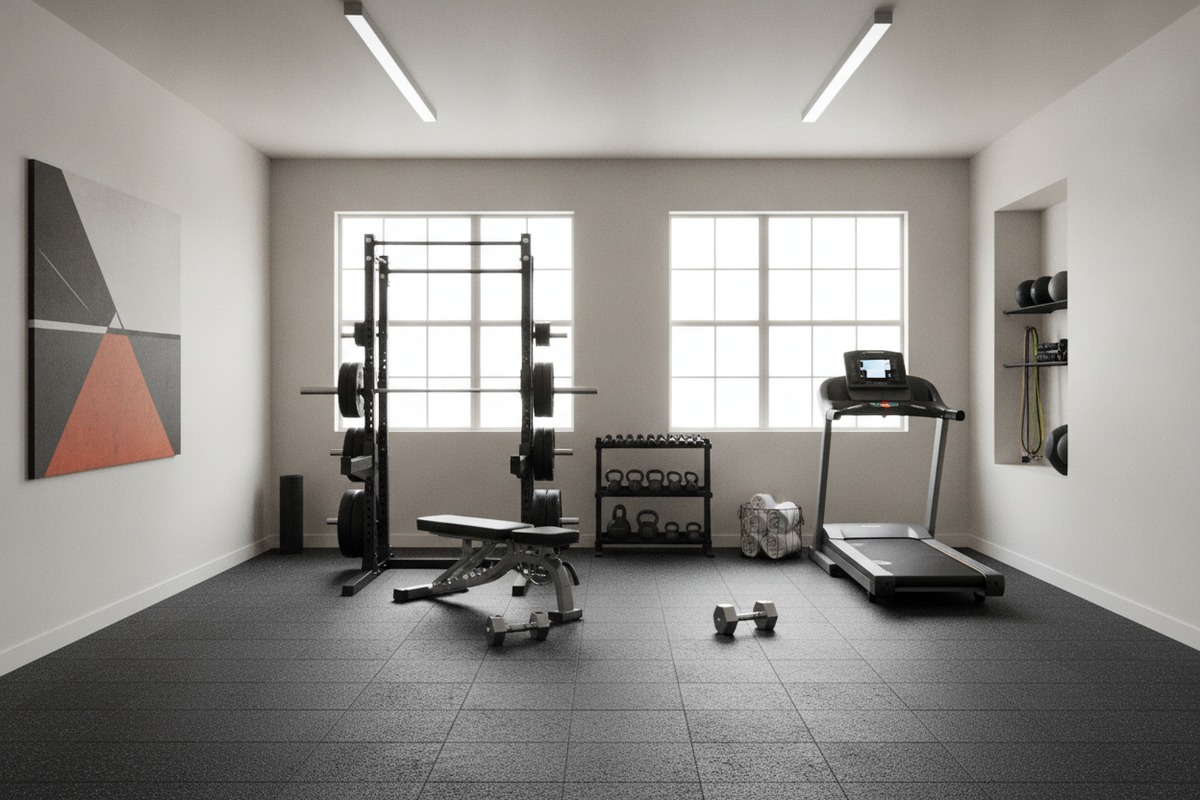
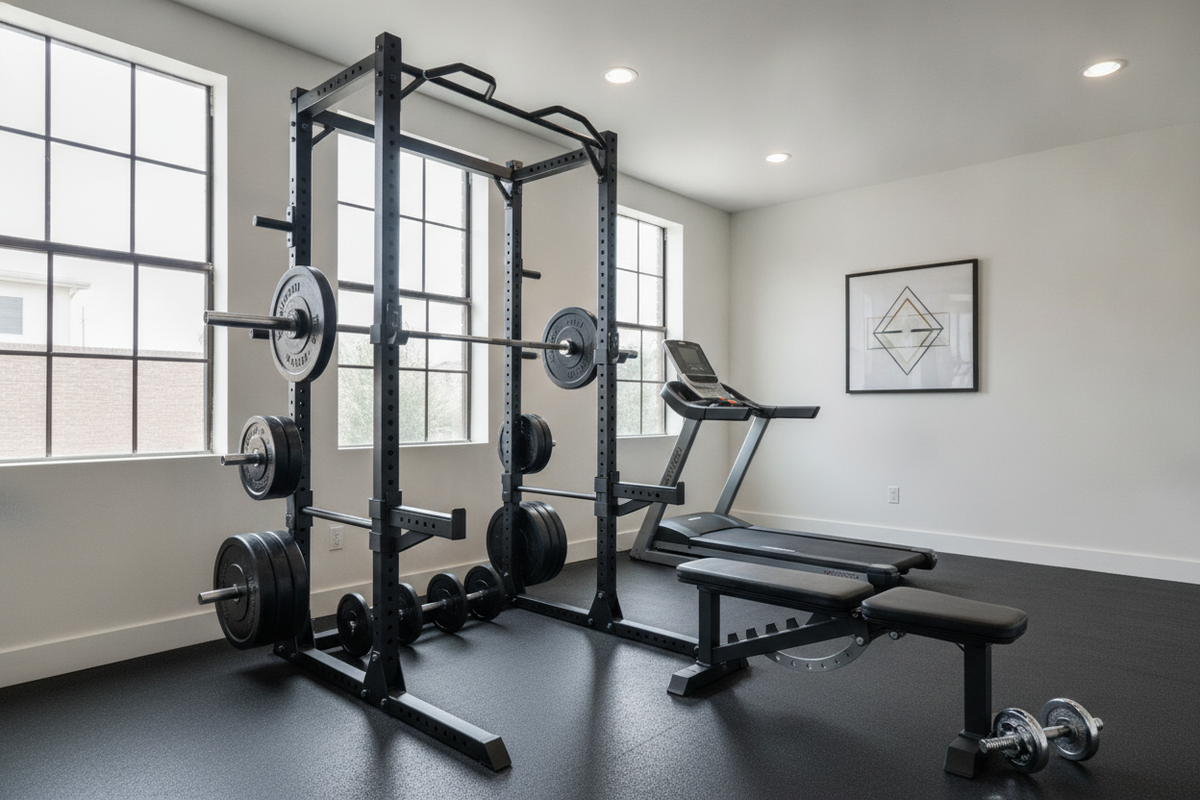
You set up a home gym floor for heavy muscle building lifts by installing a dense, non-slip surface over your base flooring to provide stability and impact absorption. Executing heavy squats and deadlifts requires a solid foundation underfoot. Unstable or overly soft surfaces can alter lifting mechanics and balance, diminishing power transfer and increasing strain on joints.
Equipping your space with a dedicated workout product like a large high-density mat creates an expansive training area. Proper gym flooring delivers critical benefits for home lifters:
- Reliable foot traction: Maintains secure footing during challenging squats and deadlifts.
- Subfloor damage prevention: Cushions your base floor against dropped weight plates and heavy dumbbells.
- Noise and vibration reduction: Absorbs mechanical shock to keep home environments quieter during vigorous strength training.
- Equipment longevity: Prevents scuffs and premature wear on both free weights and flooring surfaces.
Investing in reliable floor protection turns any spare room into a dependable training zone. When you know your floor can withstand heavy iron, you can approach every set with total focus and confidence.
Maintaining Consistency and Tracking Progress
Executing an effective diet and workout to gain muscle is an ongoing process that demands patience and regular observation. As you add lean muscle, your baseline energy requirements will shift upward. If your scale weight plateaus for several consecutive weeks, modestly increasing your calorie surplus ensures continuous muscle growth.
Keep a detailed training log to track repetitions, resistance levels, and perceived effort across all compound exercises. Maintaining accurate records verifies that you are sustaining progressive tension rather than repeating the same workload. Paired with sound diet tips to build muscle, steady training adjustments produce predictable gains in muscle mass while keeping joints healthy.
Ultimately, long-term success comes down to repeating the fundamentals day after day. A balanced diet and workout to gain muscle, supported by adequate rest, reliable gym flooring, and thoughtful nutrition, creates the framework for sustainable strength and physical development right in your own home.