Cycling and Weight Training Same Day: How to Plan
Balancing cycling and weight training same day is one of the most practical strategies for athletes looking to build aerobic stamina and maintain lean muscle. When life or work leaves limited open slots during the week, stacking a ride and a lifting routine into twenty-four hours keeps progress moving forward. However, jumping into dual workouts without an organized approach can quickly lead to heavy legs and sluggish sessions.
Understanding how your body handles both cardiovascular output and resistance loads allows you to program each workout effectively. By aligning exercise order with your main objectives and arranging your home training environment to support smooth transitions, you can enjoy the benefits of both disciplines without wearing yourself out.
Should You Do Cycling and Weight Training Same Day?
Yes, combining cycling and weight training same day is an effective way to improve full-body fitness while freeing up entire days for physical recovery. Consolidating your efforts onto designated training days gives your nervous system, joints, and tendons dedicated periods of uninterrupted rest later in the week.
The main challenge with same-day programming is managing cumulative muscle fatigue. Indoor cycling places substantial demands on your heart, lungs, and lower body musculature, while strength training creates mechanical tension that breaks down muscle fibers. If you push for maximum effort on both fronts during the same day, your technique and overall power will eventually decline. The secret is knowing which session requires peak energy and which one can serve as a supportive or lower-intensity effort.
Determining Exercise Order: Should You Ride or Lift First?
Your choice of exercise order should always reflect your primary training priority. Whichever physical adaptation matters most to you belongs at the start of your day when your energy and mental focus are at their highest.
If developing strength, building muscle tissue, or hitting personal records in your lifts is your central aim, schedule weights before cardio. Lifting with fresh muscles helps you maintain sound lifting mechanics and generate maximum force through every repetition. Fatiguing your legs on the pedals beforehand makes it harder to brace securely under a loaded barbell or dumbbell.
On the other hand, if you are preparing for a long charity ride, improving your sprint cadence, or building aerobic capacity, choose cardio before weights. Riding your stationary bike or mounting your road bike on a bike trainer while fresh allows you to hit specific wattage or cadence goals without feeling hindered by muscle tightness. Once your ride is finished, you can transition into moderate strength work or targeted dumbbell exercises. For additional tips on structuring combined fitness routines, our same-day cardio and lifting guide provides further strategies for pacing daily output.
Managing Squats and Cycling Same Day
Handling squats and cycling same day requires careful planning because both movements rely heavily on the quads and glutes. Squats generate intense mechanical tension across the hip and knee joints, whereas pedal revolutions ask those same muscle groups to produce repeated contractions over an extended duration. Stacking these two efforts without adjusting your volume can easily cause deep leg fatigue.
To manage this balance, consider treating one activity as your primary working stimulus and the other as an active recovery flush. When your schedule calls for heavy squats, keep your ride at a light, easy cadence with low resistance. This gentle spin promotes blood circulation to tired legs without adding excessive training stress. If you are still establishing baseline numbers in your lower-body routine, our beginner weight training guide offers a helpful framework for managing early resistance volume.
How Many Hours Should You Space Between Sessions?
Providing a break of roughly four to eight hours between workouts offers your body sufficient recovery time to replenish energy stores and clear local muscular tension. For many home lifters, an ideal format involves completing a strength workout in the morning and returning for a low-intensity pedal session in the late afternoon or evening.
If your daily schedule only allows for back-to-back training, you can still succeed by shortening the secondary session. Following a demanding strength circuit with a quick twenty-minute spin allows you to accumulate cardiovascular work without pushing your leg muscles past their functional threshold.
Home Gym Layout: Setting Up Your Bike and Lifting Space
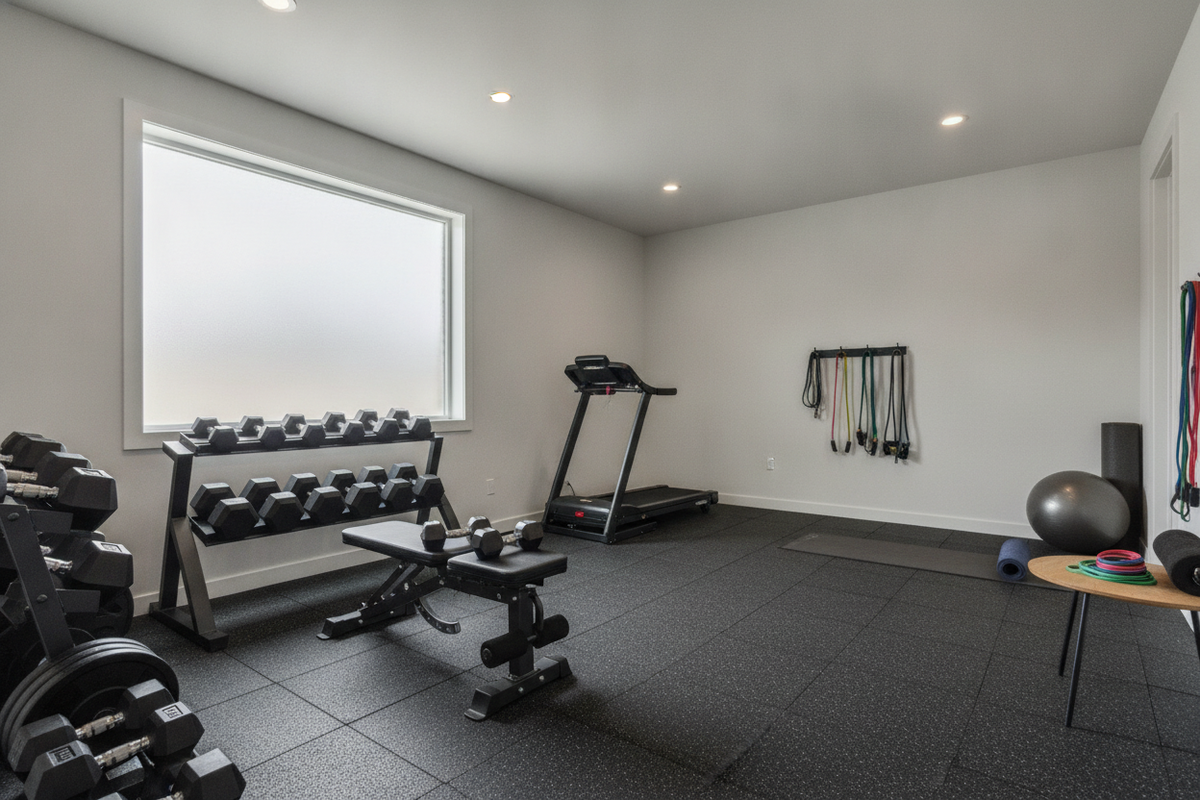
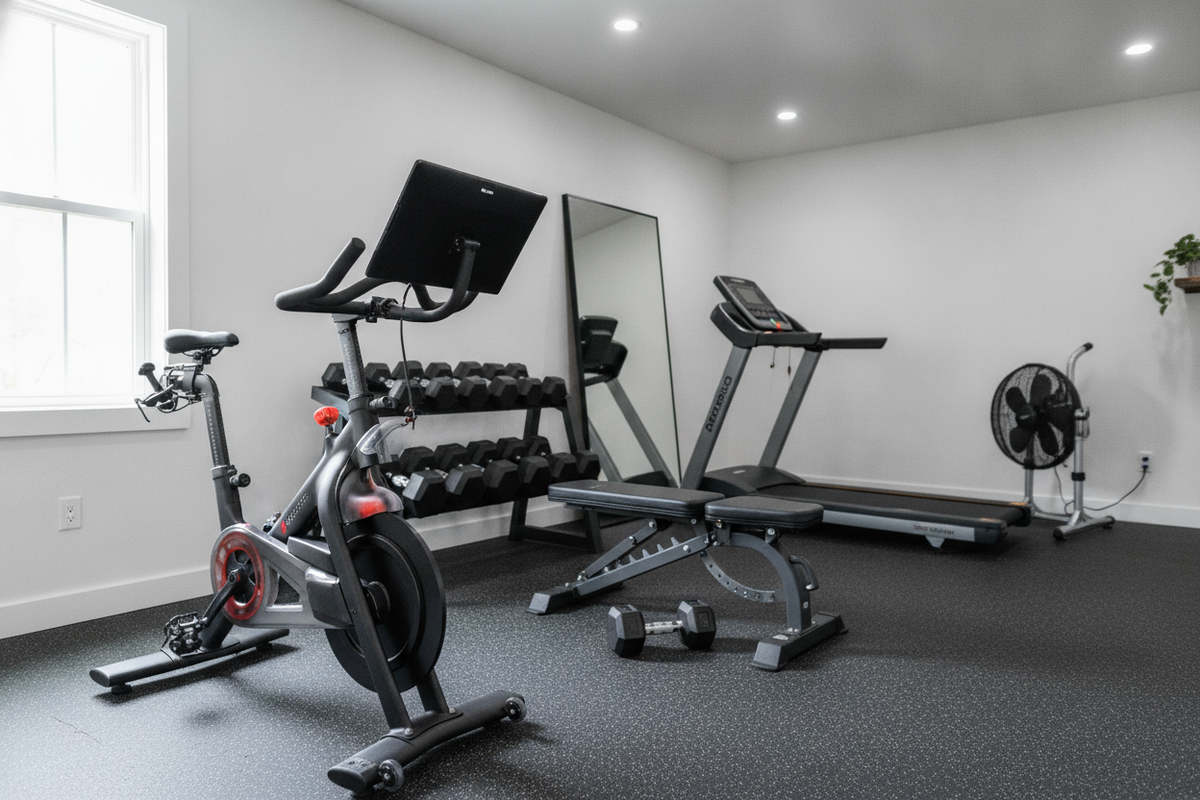
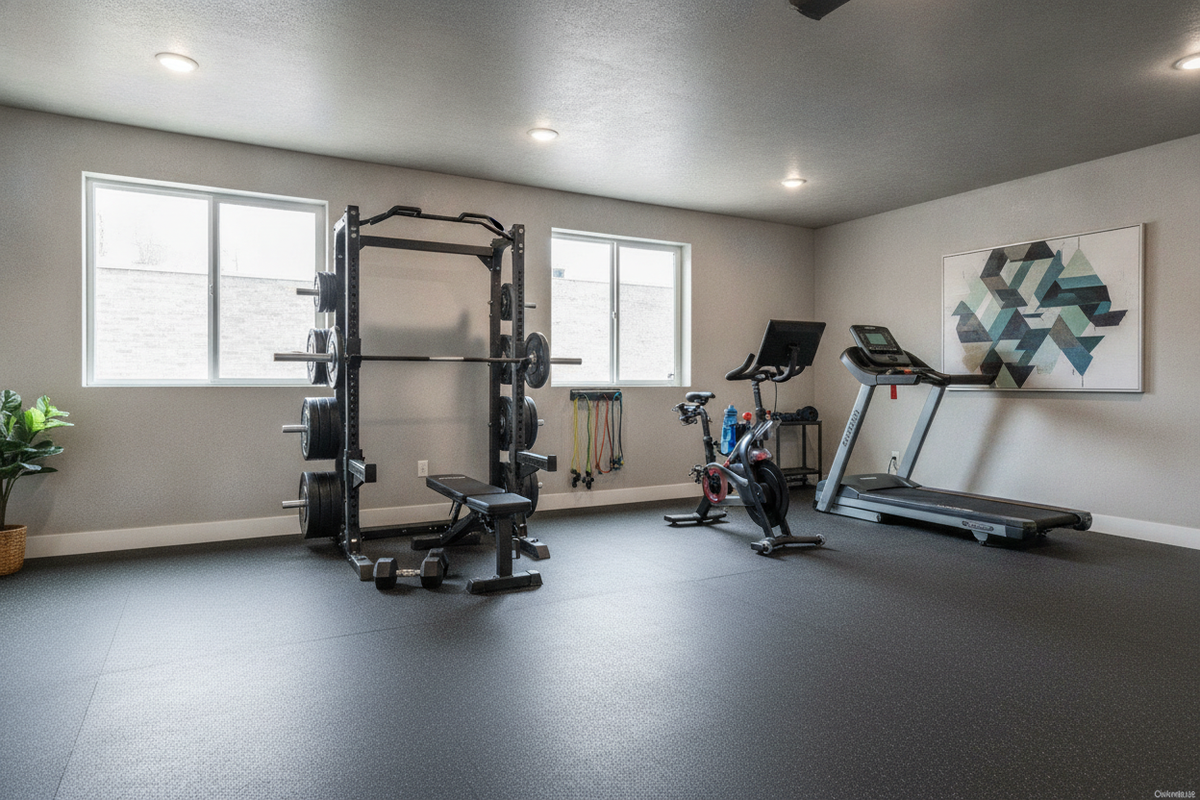
A well-organized training room makes switching between stationary cycling and resistance exercises seamless and secure. In a shared workout area, clear separation between your cardio machine and free weights prevents tripping hazards and keeps your workout flowing smoothly.
Floor quality is especially important when placing heavy fitness gear in residential areas. High-density gym flooring or a heavy-duty workout mat provides essential floor protection against dropped kettlebells or dumbbells while also delivering vibration dampening under a bike trainer. Proper vibration dampening keeps trainer hum from vibrating through home floorboards into adjacent rooms, while a sweat-resistant mat protects delicate flooring materials beneath you. Our flooring guide for combined routines details how surface thickness supports diverse training movements.
Keeping free weights, collars, and bands neatly organized away from the pedal perimeter also improves overall workout safety. Exploring organizers from our strength training accessories collection helps maintain open floor space so you can perform lunges, presses, or deadlifts without crowding your stationary bike.
Sample Weekly Schedules for Balanced Training
A balanced weekly routine distributes physical strain across different muscle groups so you can make steady fitness gains without exhausting your lower body. Alternating upper body lifting with lower-body riding sessions is a reliable way to sustain high performance throughout the week.
- Day 1: Upper Body Strength & Aerobic Ride. Perform resistance exercises focusing on the chest, back, and shoulders during your first session. Follow later in the day with a steady, moderate-pace ride on the bike. Because your legs are not fatigued from lifting, your pedal stroke remains smooth.
- Day 2: Lower Body Focus & Recovery Spin. Complete your leg day exercises, including squats and Romanian deadlifts, earlier in the day. In the evening, perform a very light, low-resistance spin focused entirely on easy motion and blood flow.
- Day 3: Full Rest. Take a dedicated recovery day away from weights and cycling to let muscles, joints, and connective tissue rebuild.
- Day 4: Full Body Resistance & Interval Ride. Start with compound movements utilizing dumbbells or barbells, followed several hours later by short, high-cadence intervals on the trainer to elevate your heart rate.
- Day 5: Upper Body & Core Mobility. Focus on core stability, posture work, and light arms, accompanied by a casual cooldown pedal.
- Days 6 and 7: Active Recovery or Outdoor Activities. Spend the weekend taking outdoor walks, completing light mobility routines, or preparing gear for the upcoming training week.
By listening to your body, honoring recovery needs, and pacing your weekly volume, you can pair cardio rides and lifting sessions into a productive, sustainable fitness lifestyle.