Strength Training and HIIT: Same-Day Routine & Flooring
Navigating Same-Day Strength and High-Intensity Training
Combining strength training and hiit within a single daily routine is a practical solution for athletes and home gym owners balancing limited schedules. Condensing resistance development and cardiovascular conditioning into one calendar day frees up subsequent days for systemic recovery. However, merging these two distinct stimuli presents distinct physiological and spatial considerations that require deliberate planning.
The Concurrent Training Conundrum
When organizing same-day training, trainees encounter the classic concurrent training dilemma: high-intensity intervals demand explosive energy and tax the central nervous system, while resistance exercises require mechanical tension and technical discipline. Attempting both modalities without a structured sequence can lead to premature exhaustion, degraded execution, and diminished returns across both training styles. Trainees referencing a foundational strength training guide often recognize that compound barbell work demands acute motor control that should not be compromised by lingering cardiovascular fatigue.
Primary Variables: Fatigue, Focus, and Flooring
Programming decisions should be guided by three main factors: accumulated fatigue, mental focus, and the physical training environment. Resistance training often requires absolute surface stability to maintain foot positioning and drive force into the floor, whereas high-intensity interval drills involve continuous, multidirectional foot strikes. Organizing a session requires not only managing energy systems but also structuring the home gym floor to handle contrasting biomechanical demands safely.
Order of Operations: Should You Lift or Do HIIT First?
The sequencing of a combined session should reflect your primary training objective. Because high-intensity efforts deplete glycogen stores and induce neuromuscular fatigue, whichever discipline occurs first will typically benefit from the highest output and technical precision.
Prioritizing Structural Strength and Heavy Loading
For most lifters seeking strength preservation, hypertrophy, or structural integrity, lifting before conditioning is the preferred approach. Executing multi-joint compound movements such as squats, deadlifts, and presses requires intact core bracing and precise balance. Entering these lifts after demanding conditioning intervals increases the tendency for technical breakdown under load. By placing the resistance portion first, you apply clean mechanical tension when motor unit recruitment is at its peak.
Scenarios Where Conditioning Precedes Resistance Work
Conversely, if an athlete's primary competitive goal is cardiovascular capacity, sprinting speed, or sport-specific interval endurance, placing interval work first may be appropriate. When hiit and lifting are arranged in this reverse sequence, the resistance volume should be adjusted downward. In these instances, relying on lighter loads, machine-based exercises, or targeted isolation work using dedicated strength training accessories helps preserve safety while muscles are pre-fatigued.
Intra-Day Splits vs. Back-to-Back Workouts
When time permits, dividing the modalities into an intra-day split—such as strength training in the morning and intervals in the late afternoon—provides a helpful buffer. An interval of several hours allows heart rate normalization, mental reset, and substrate replenishment. When sessions must occur back-to-back, transitioning directly from resistance work into a concise, non-technical interval finisher keeps total workout duration manageable while containing cardiovascular fatigue to the end of the session.
Movement Pairings and Session Structure
A frequent mistake when programming hiit with strength training is duplicating movement planes and joint loading patterns within the same session. Thoughtful pairing distributes systemic fatigue and spares joint structures.
Upper Body Lifting Paired with Lower Body Sprints
One reliable organizational framework pairs upper-body resistance movements with lower-body interval conditioning, or vice versa. For example, completing an upper-body pushing and pulling session followed by short treadmill intervals or cycling sprints minimizes competing localized muscular exhaustion. The lower-body musculature remains relatively fresh to produce high-cadence power without compromising pressing or pulling mechanics.
Low-Impact Interval Selection to Spare Joints
If high-intensity training must follow a heavy lower-body workout, selecting low-impact modalities is a prudent strategy. After challenging the knees, hips, and lower back with loaded squats or a dedicated lower body strength machine, substituting box jumps and burpees with stationary cycling, rowing intervals, or sled pushes reduces jarring impact forces on pre-loaded connective tissue.
Avoiding Overlapping Movement Fatigue
Careful programming avoids stacking identical movement vectors. Following high-repetition kettlebell swings or barbell deadlifts with high-impact plyometric broad jumps exposes posterior chain tissues to excessive cumulative stress. Distributing movement patterns across diverse planes—such as combining sagittal lifting with frontal or rotational conditioning drills—maintains movement variety while mitigating repetitive strain.
Dual-Demand Home Floor Staging: Rigidity vs. Shock Dissipation
Executing both training styles in a home gym highlights the competing demands placed on flooring. Heavy resistance training calls for rigid, non-compressible surfaces to maximize ground force transfer, while high-cadence interval training demands slip resistance and shock dissipation to protect subfloors and lower-body joints.
Managing Multidirectional Lateral Shear in Dynamic Intervals
During interval work, lateral bounds, mountain climbers, and rapid pivots introduce lateral shear forces across the floor. Standard modular tiles or lightweight foam mats can separate or slip under dynamic lateral pressure, creating unstable footing. Dense, high-traction rubber matting with sufficient surface grip prevents sliding, ensuring a secure base during rapid changes of direction.
Static Subfloor Defense Under Heavy Weights
Stationary lifting involves substantial point-loading from barbell plates, dumbbells, and equipment feet. Dropping or resting loaded implements onto standard residential flooring risks cracking concrete or indenting wooden subfloors. Dedicated lifting platforms or dense rubber tiles provide the compressive strength needed to disperse static loads without yielding underfoot. Those planning a balanced layout can consult guides on how to build a serious strength training home gym setup under 1000 to allocate their flooring budget effectively between lifting and open-floor conditioning zones.
Transition Zones and Equipment Separation
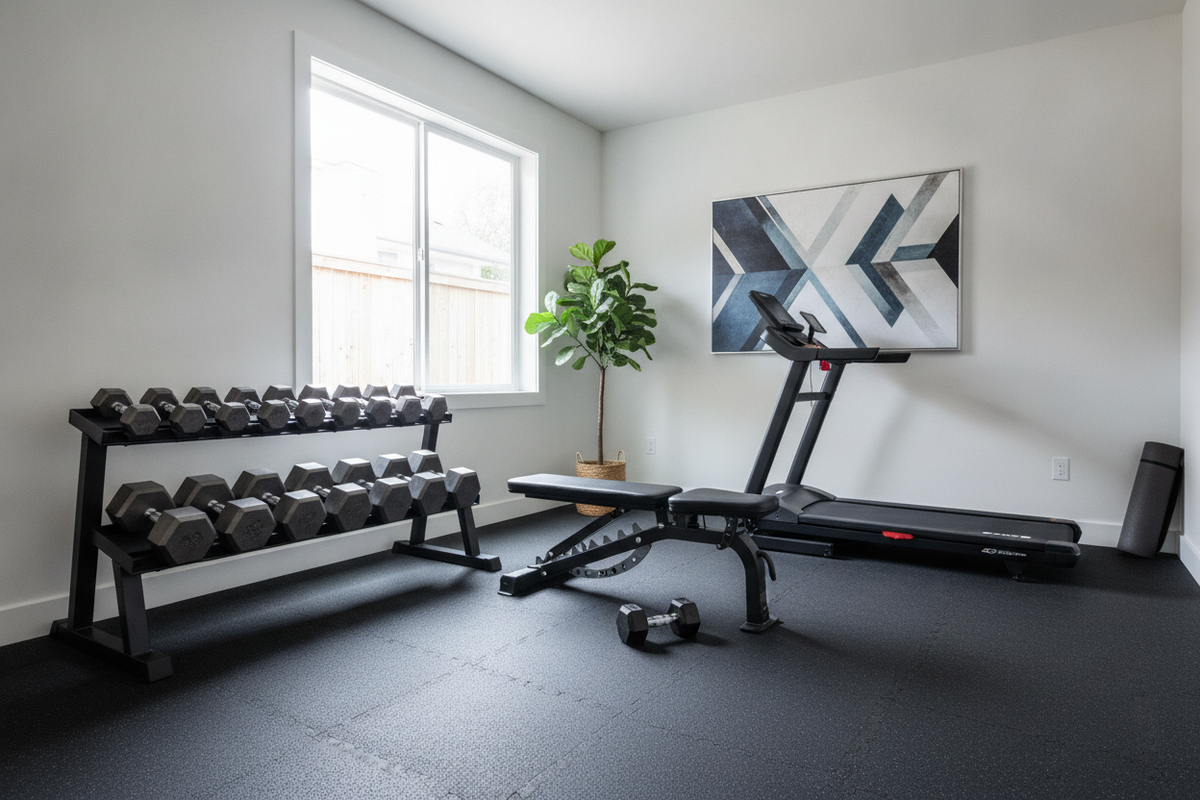
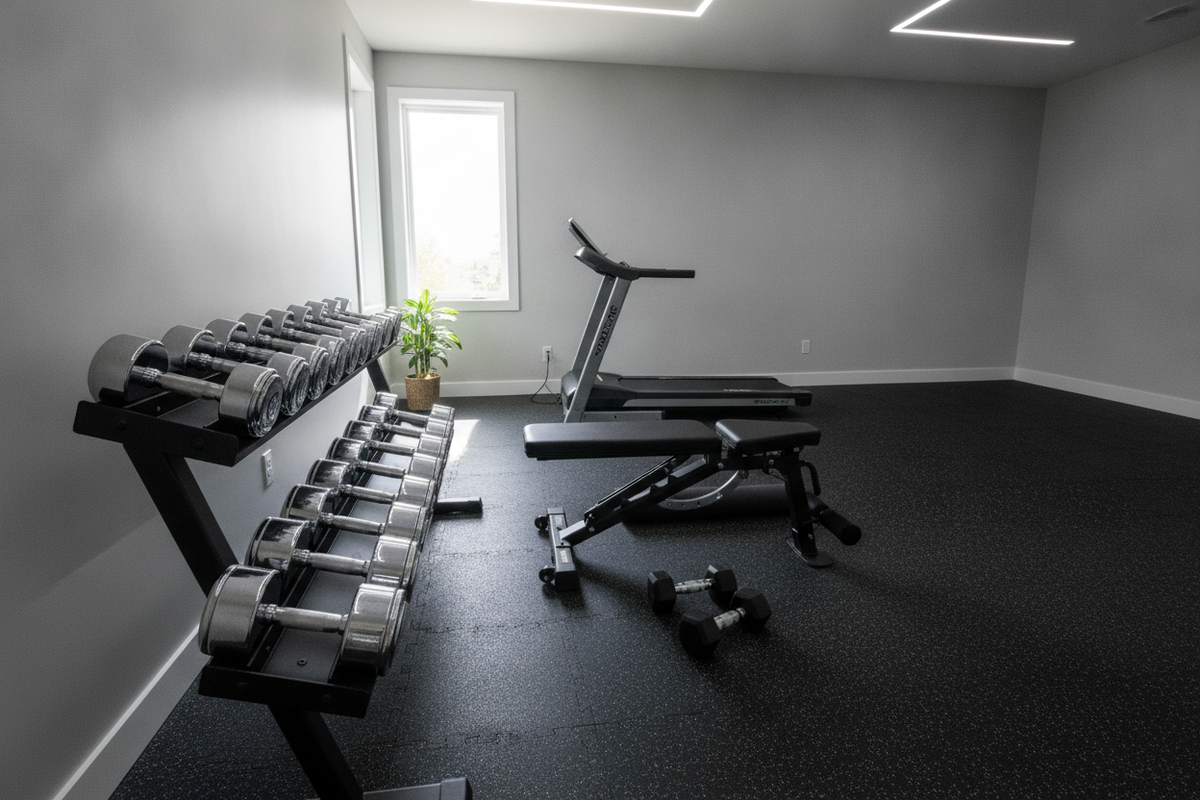
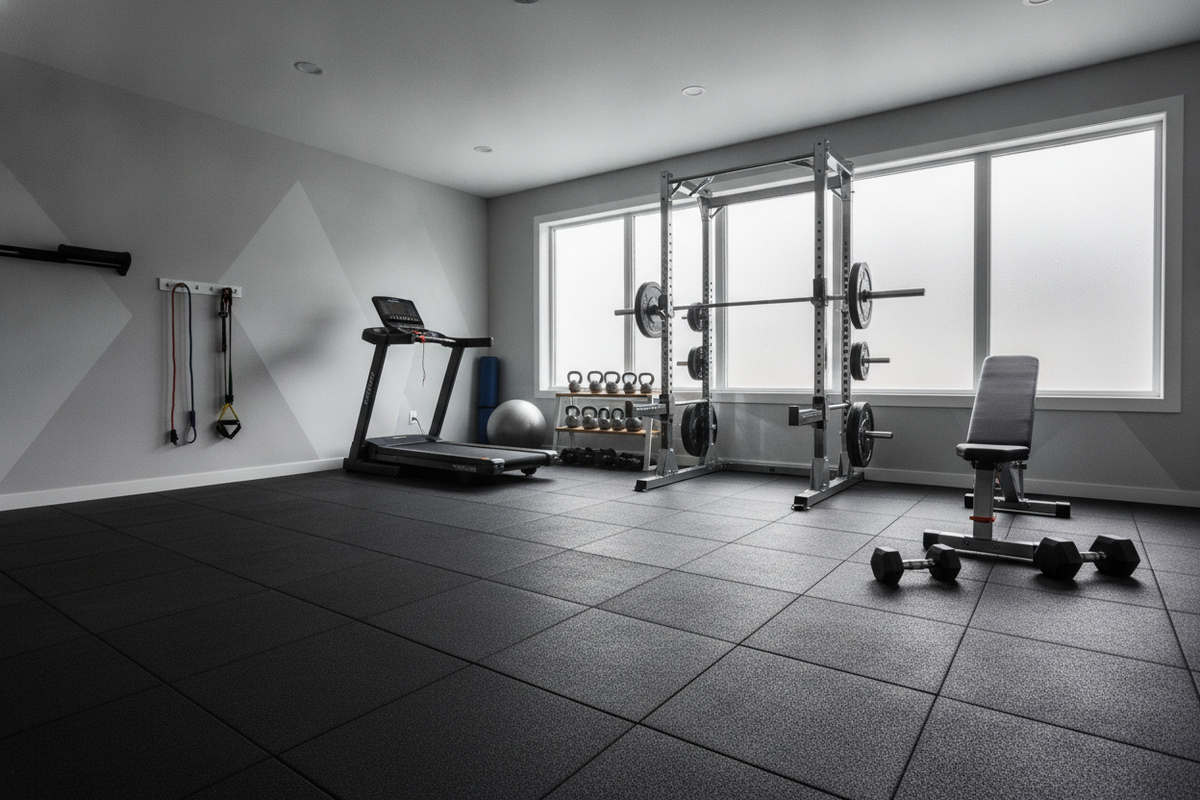
To support smooth transitions between lifting sets and interval bouts, divide the training area into distinct functional zones. The lifting station should house the rack, bar, and weight plates, while an adjacent open zone remains clear of obstructions for dynamic movement. This spatial boundary prevents lifters from tripping over collars, plates, or benches when moving at high speed during conditioning intervals.
Surface Maintenance and Practical Safety Guidelines
Same-day training combining high ventilation rates with heavy strength efforts requires consistent gym floor maintenance to ensure long-term traction and hygiene.
Sweat Management and Traction Preservation
High-intensity intervals produce rapid perspiration that can create slick patches on gym flooring. If left unmanaged, moisture reduces surface friction, creating slip hazards for subsequent footwork or heavy lifts. Using non-porous or closed-cell rubber surfaces allows sweat to remain on the surface where it can be quickly wiped dry between workout segments. Regular cleaning with neutral, residue-free detergents maintains surface grip without degrading the matting material.
Equipment Stowing and Safe Clearances
Fatigue accrued during high-intensity intervals diminishes peripheral awareness and balance. Maintaining clear pathways between equipment racks, storage trees, and active training mats is a fundamental safety precaution. By securing loose weights, bands, and collars along the room perimeter, athletes can transition between strength stations and conditioning drills confidently and without obstruction.