Can 14 Year Olds Lift Weights? Safe Training Guide
Introduction: Navigating Strength Training at Fourteen
Parents and young athletes often find themselves asking: can 14 year olds lift weights without compromising their physical development? At age fourteen, many teenagers enter high school athletics, experience growth spurts, or simply want to develop general physical fitness. Resistance exercise can provide an approachable avenue for developing physical literacy, coordination, and muscular endurance when guided with an emphasis on technique rather than heavy maximal loading.
Viewing resistance work through an educational lens helps demystify the process. Instead of treating the weight room as a place for aggressive PR attempts, beginners benefit from approaching strength training as a deliberate skill acquisition practice. When teenagers learn movement patterns on stable, predictable surfaces with thoughtful guidance, they establish positive habits that can support lifetime fitness goals.
Addressing Common Concerns: Is It Bad to Lift Weights at 14?
A recurring concern among parents centers on the question: is it bad to lift weights at 14? Historical misconceptions often painted resistance training as inherently hazardous to adolescent bone structure or growth plates. However, modern training perspectives recognize that running, jumping, and team sports routinely produce significant ground reaction forces that exceed those generated during controlled, submaximal weight training.
When addressing whether is lifting weights at a young age bad, the critical distinction lies between supervised, structured movement and unmanaged, ego-driven training. The primary risks for young lifters stem from improper form, excessive loads, lack of spotters, and poorly prepared training environments. A comprehensive weight lifting guide emphasizes that foundational motor control, steady pacing, and clear physical boundaries transform strength training into a constructive, disciplined pursuit for adolescent lifters.
How Much Weight Should a Teenager Lift? Establishing Safe Loading Principles
One of the most practical questions for any beginner is: how much weight should a teenager lift? Rather than pursuing fixed numbers, coaches and equipment planners recommend qualitative decision frameworks based on movement quality, tempo, and technical consistency.
- Technical Mastery First: A young lifter should demonstrate effortless control with bodyweight mechanics—such as bodyweight squats, push-ups, and hip hinges—before introducing external resistance.
- Submaximal Repetition Ranges: Training with moderate loads that allow for smooth sets of eight to twelve controlled repetitions encourages muscular coordination without subjecting joints to near-maximal strain.
- Repetitions in Reserve: Teenagers should finish each set with the physical capacity to complete two to three additional repetitions with clean technique. Reaching muscular failure often breaks down postural integrity.
- Consistent Movement Tempo: Emphasizing controlled lowering phases and deliberate pauses prevents bouncing, jerky transitions, and reliance on momentum.
Adhering to these criteria ensures that progression remains steady, predictable, and manageable without encouraging unnecessary competition over barbell poundages.
Selecting Training Implements: Bodyweight, Free Weights, and Machines
Choosing the right implements for a fourteen-year-old involves balancing motor skill development with equipment ergonomics. Adolescent bodies vary widely in height, limb proportions, and leverage, which influences how different tools feel in hand.
Bodyweight training and resistance bands provide natural starting points, allowing lifters to explore balance and joint positioning without the consequence of dropped loads. As movement mechanics solidify, free weights such as light dumbbells and kettlebells introduce versatile three-dimensional resistance that challenges stabilizing muscles.
For structured home or school environments, selectorized equipment and cable stations offer alternative options with defined movement paths. Those evaluating whether fixed paths match adolescent proportions can review our weight bad guide to understand how machine mechanics compare to free weights. For setups prioritizing guided, adjustable resistance paths, browsing a dedicated weight lifting collection helps identify equipment configurations suitable for shared family use.
Home Gym Room Protection: Flooring and Equipment Placement for Teen Training
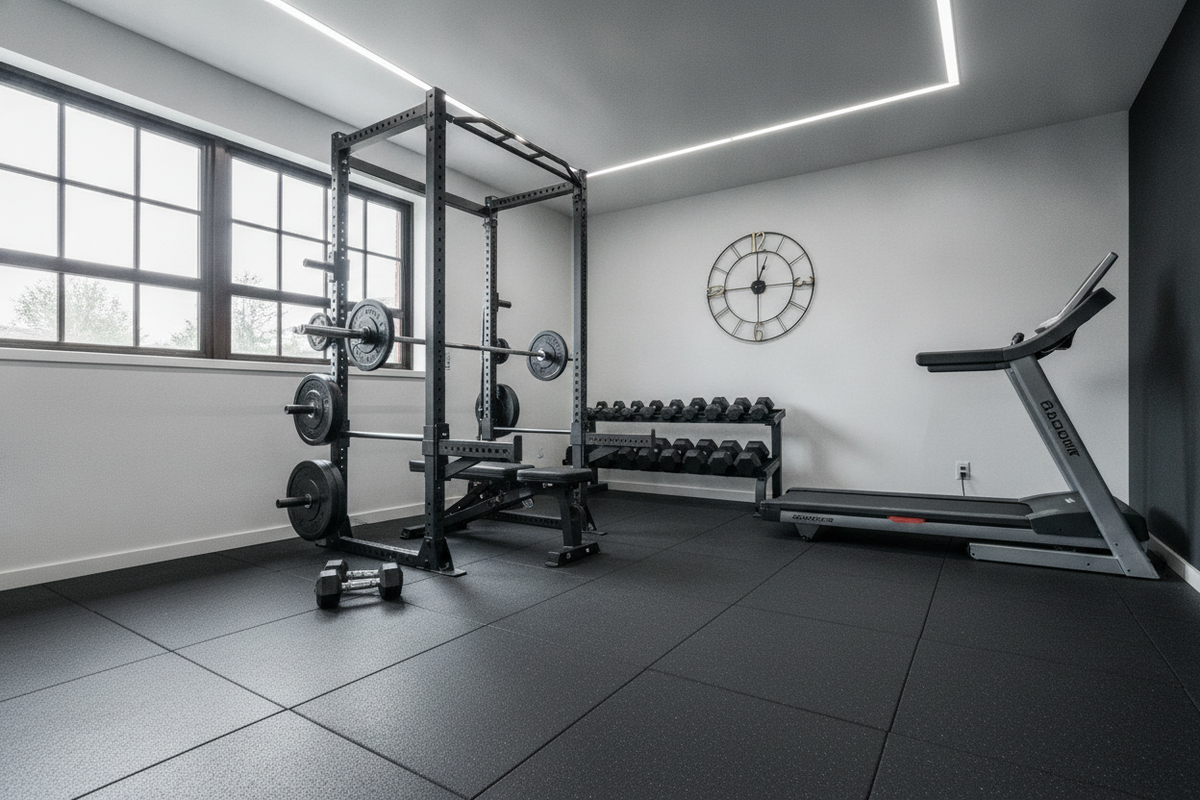
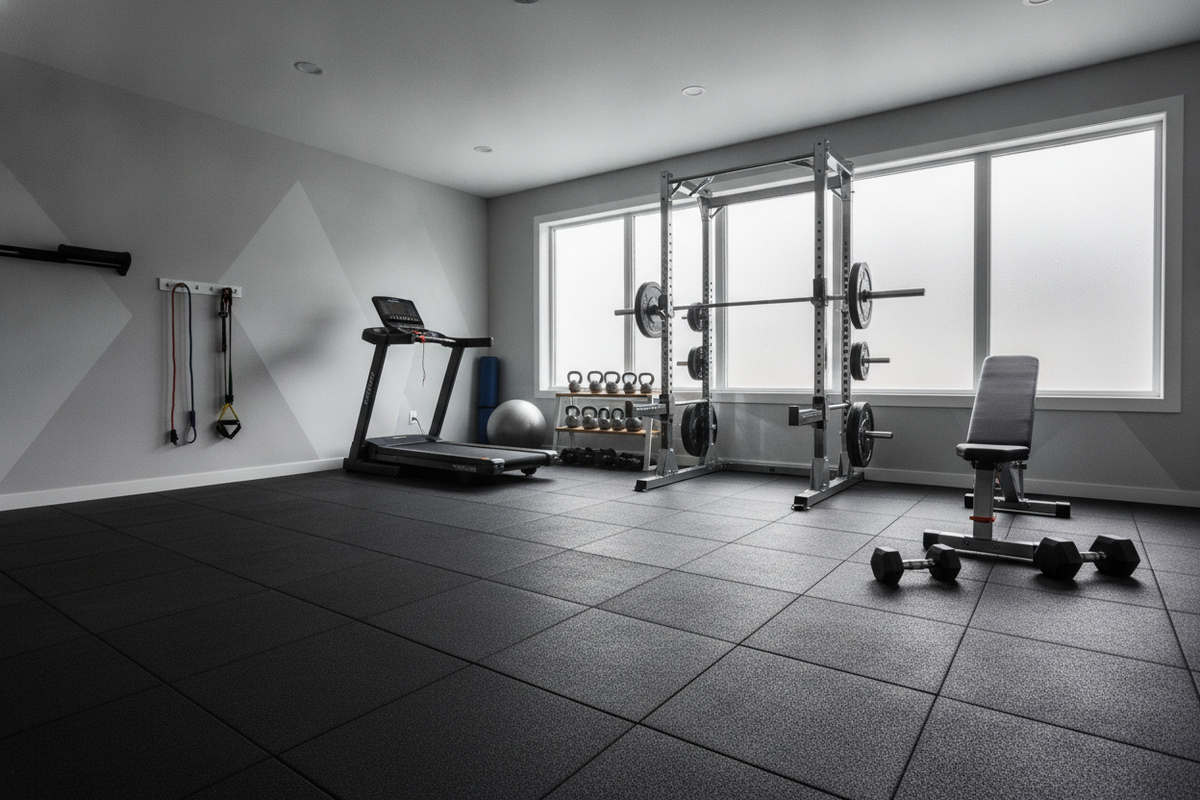
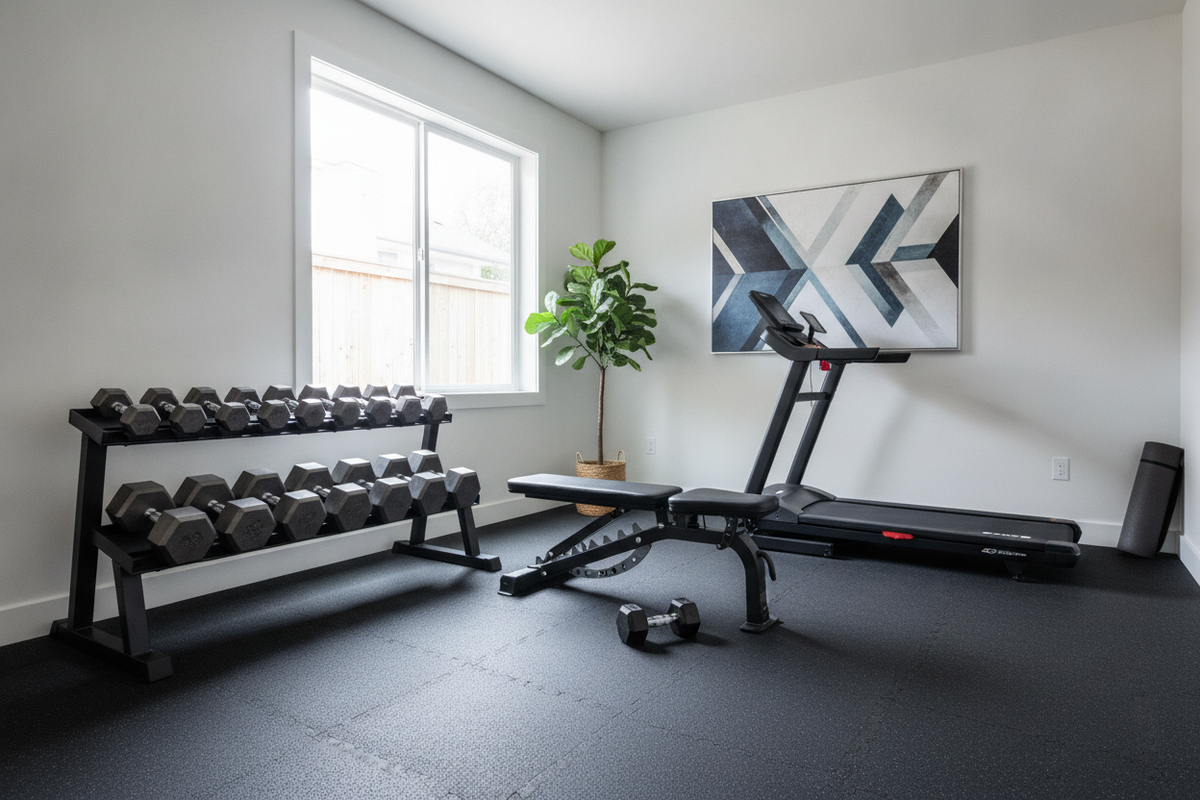
Introducing teenage lifting into a home environment requires careful staging of the physical space. Beginners inevitably experience clumsy re-racks, uneven bar descents, and accidental drops of dumbbells or plates. Without adequate surface intervention, these impacts can transmit shock directly into structural subfloors, causing concrete cracking, tile fractures, or hardwood gouging.
High-density rubber gym flooring serves as the foundational protective barrier in any youth training zone. A thick, resilient rubber surface absorbs kinetic impact, reduces noise transfer across residential living spaces, and minimizes equipment rebound when a weight contacts the floor. Furthermore, textured rubber mats provide dependable, non-slip traction that prevents foot slippage during dynamic lifts.
Before investing in residential equipment, reviewing our weight lifting weights guide provides essential insight into weight plate coatings, bar specifications, and structural room planning. Positioning racks and free-weight stations over continuous rubber matting ensures that both the teenager and the residence remain protected throughout every session.
Maintenance and Safety Protocol: Creating an Organized Youth Lifting Space
A safe training space relies on strict organizational habits and routine maintenance. Cluttered gym floors present substantial tripping hazards, especially when young lifters navigate between stations with fatigue.
- Maintain Perimeter Clearance: Ensure at least three to four feet of open space around all benches, squat stands, and dumbbell racks to allow unobstructed movement and spotting.
- Enforce Immediate Re-Racking: Instill a non-negotiable rule that every weight plate, collar, and dumbbell returns to its designated storage peg or rack immediately after use.
- Mandate Barbell Collars: Whenever barbells are loaded with weight plates, secure them with functional spring or lockjaw collars to eliminate uneven plate slippage.
- Routine Mat Care: Sweep dust and chalk buildup regularly, and wipe down rubber flooring with neutral cleaner to preserve traction and hygiene.
Summary: Building Lifelong Strength Habits on a Solid Foundation
Answering whether can 14 year olds lift weights comes down to prioritizing movement education, measured progression, and an impeccably staged training environment. When adolescent lifting focuses on controlled tempos, conservative loading, and proper floor protection, teenagers develop valuable discipline, physical literacy, and a lifelong appreciation for physical fitness.