
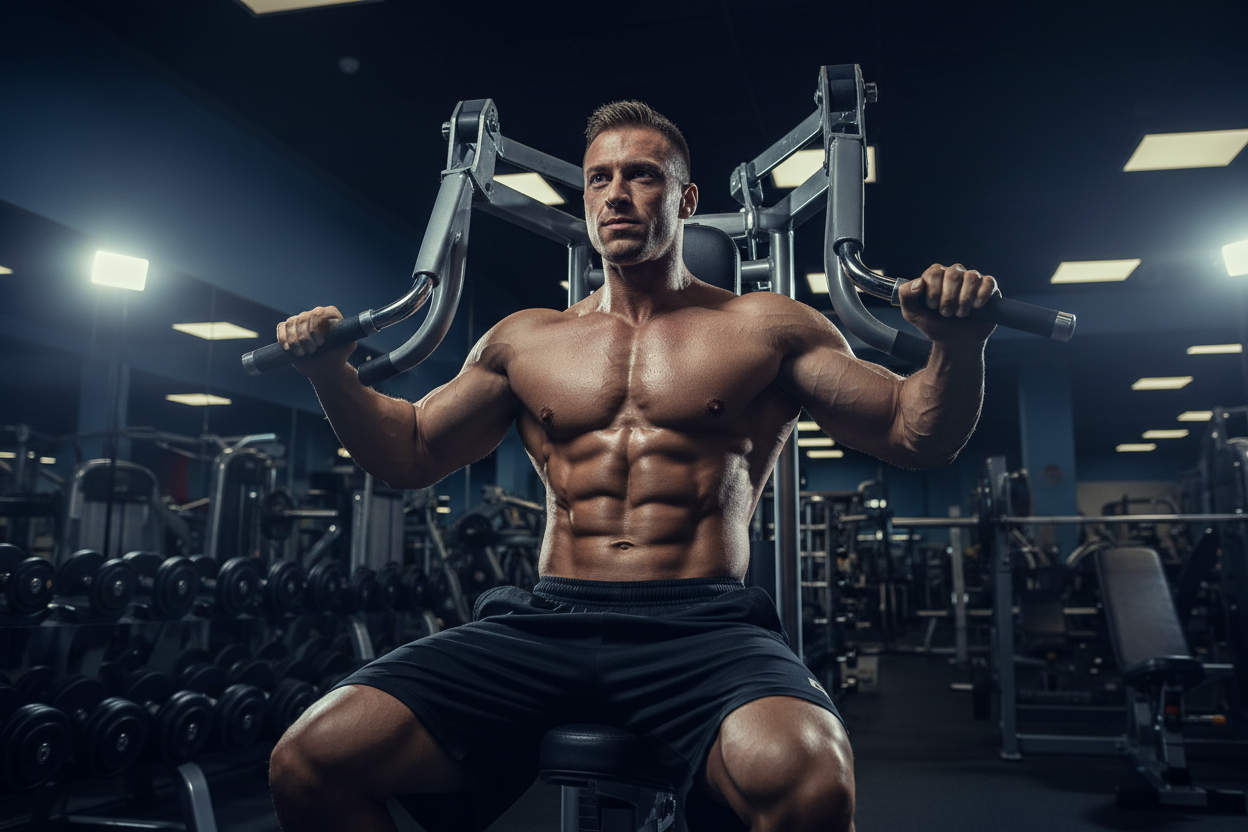
Are Weight Machines Bad? The Honest Truth for Your Gains
Walk into any hardcore gym, and you’ll likely hear the same chatter near the squat racks. There is a pervasive belief that free weights are the only path to "real" strength and that machines are strictly for beginners or the elderly. This stigma often leaves intermediate lifters wondering: are weight machines bad for serious progress?
The answer isn't a simple yes or no. The demonization of machines usually stems from a misunderstanding of biomechanics and goal setting. If you ignore machines entirely, you might be leaving significant muscle growth on the table. Let’s cut through the bro-science and look at the mechanical reality of gym equipment.
Key Takeaways
- Machines are not inherently bad: They are tools designed to stabilize the weight for you, allowing for maximum output on specific muscle groups.
- Hypertrophy benefit: Machines often provide a better resistance profile, keeping tension on the muscle throughout the entire range of motion.
- Safety factor: They allow you to train to mechanical failure safely without a spotter.
- The "Functional" trade-off: While excellent for muscle growth, machines do not train stabilizer muscles or coordination as well as free weights.
- Best approach: A hybrid program utilizing free weights for compound movement patterns and machines for metabolic stress and isolation is optimal.
The Argument Against Machines: Where It Comes From
To understand if is using machines at the gym bad for your goals, you have to understand the criticism. The primary argument is that machines lock you into a fixed path of motion. This is true.
When you squat with a barbell, your body must coordinate hundreds of muscles to keep you upright. You are training the movement, not just the muscle. Machines remove this demand for stability. Critics argue this creates "non-functional" strength that doesn't translate to the real world.
However, this argument fails when your primary goal is hypertrophy (muscle growth). If your goal is to grow your quads, the energy spent balancing a barbell is energy not spent contracting the quadriceps. Stability is the enemy of isolation.
Why Machines Are Superior for Hypertrophy
Maximum Mechanical Tension
Muscle growth is largely driven by mechanical tension. When you use free weights, the resistance curve is determined by gravity. For example, at the top of a dumbbell fly, there is almost no tension on the chest.
Well-designed machines (like a pec deck) maintain constant tension throughout the rep. This creates a consistent stimulus that free weights simply cannot replicate due to physics.
Training to Failure Safely
True muscular failure is terrifying under a heavy barbell. If you fail a bench press alone, you risk injury. This fear often causes lifters to stop two or three reps short of their actual limit.
Machines eliminate this psychological barrier. You can push a chest press machine until the handles literally won't move another inch, and if you fail, the weight stack simply settles back down. This ability to safely reach high-intensity thresholds is a massive driver for growth.
The "Fixed Path" Problem
While machines excel at isolation, they are not one-size-fits-all. A machine forces you into a specific groove. If your limb length or joint mechanics don't align with the machine's pivot points, you risk joint strain.
If you feel pinching in your shoulders during a machine press or knee pain on a leg extension, the machine isn't bad—it just doesn't fit your body mechanics. Never force a movement pattern that causes sharp joint pain.
My Training Log: Real Talk
I used to be a "free weights only" purist. I thought the leg press was a cop-out. That changed the day I decided to truly test my quad endurance.
I remember loading up the hack squat machine for a high-volume set. With a barbell, my lower back always fatigued before my legs did. But locked into that machine, I could ignore stability.
The specific detail that sticks with me isn't the weight—it was the sound. The rhythmic clack-whoosh of the sled on the guide rails as I ground out the last five reps. I recall the distinct feeling of the shoulder pads digging into my traps, which was uncomfortable, but it allowed me to push until my legs physically gave out. When I finally racked the safety handles, my legs were shaking so violently I couldn't stand up for two minutes. I never achieved that level of isolated quad exhaustion with a barbell because my core always gave out first. That session taught me that machines aren't a crutch; they are a sniper rifle for muscle tissue.
Conclusion
So, are weight machines bad? Absolutely not. They are simply tools with a specific purpose. If you want to improve your balance and total body coordination, prioritize free weights. But if you want to safely take a specific muscle group to the absolute limit of its capability, machines are unmatched.
Stop worrying about what looks "hardcore." Start worrying about what stimulates growth. For most lifters, the smartest approach is doing both.
Frequently Asked Questions
Can I build muscle using only machines?
Yes, you can build significant muscle mass using only machines. Since machines provide high stability, you can generate immense force output. However, you may lack the stabilizer strength found in lifters who use free weights, which matters if you plan to transition to barbell lifting later.
Are machines safer than free weights for beginners?
Generally, yes. Machines guide your movement, reducing the risk of dropping weights or moving in a way that causes acute injury. However, beginners should still learn free weight mechanics early on to develop coordination and body awareness.
Do machines count as functional training?
It depends on your definition of function. If "function" means having big, strong muscles that can produce force, then yes. If "function" means the ability to stabilize a heavy load while moving through space (like carrying groceries or playing sports), machines are less effective than free weights.


