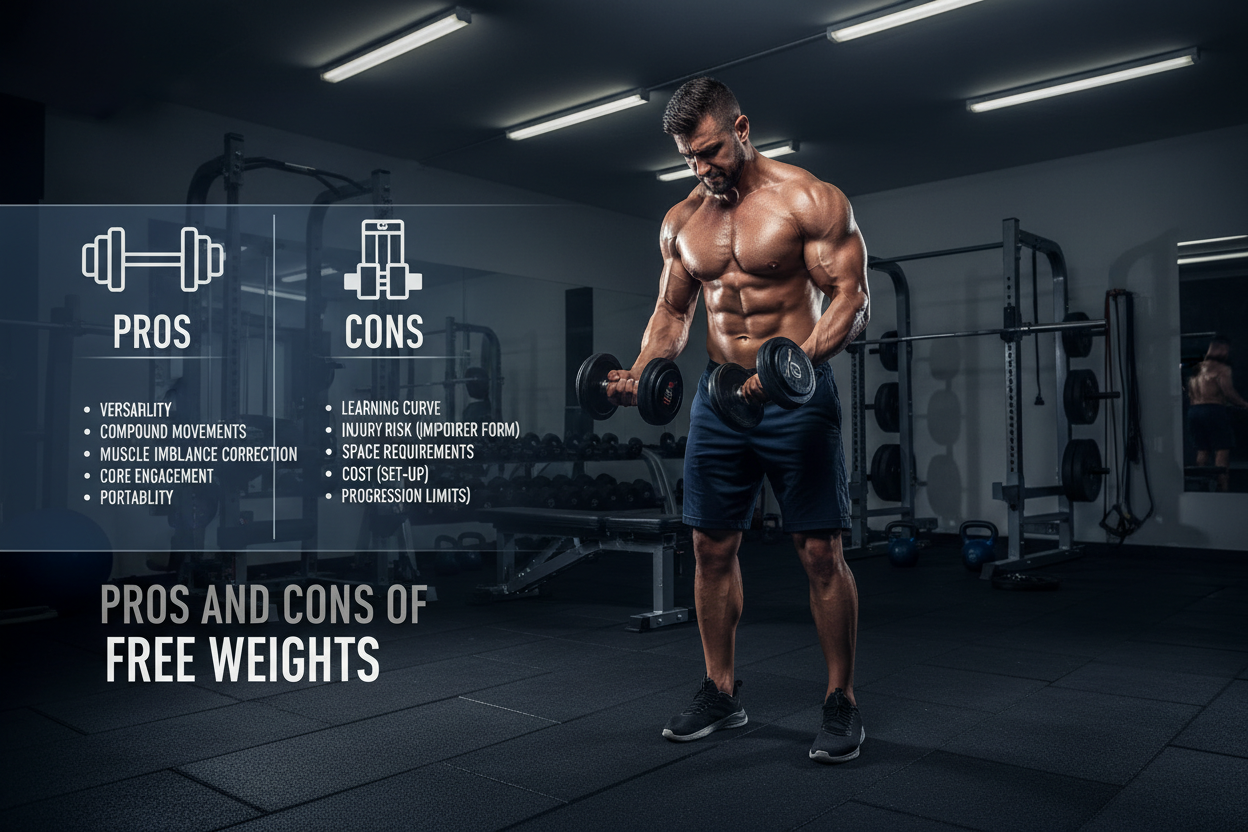
Build a Serious Strength Training Home Gym Setup Under 1000
Let’s be honest: commercial gym memberships are draining. Between the commute, the waiting for equipment, and the monthly fees, the appeal of training at home is undeniable. But there is a massive misconception that you need five figures to build a respectable iron paradise. That is simply false.
You can build a professional-grade training environment on a budget if you prioritize function over aesthetics. The goal isn't to replicate a Planet Fitness; it's to create a space where you can squat, press, and pull heavy weight safely. We are going to break down the best home gym setup under 1000 that prioritizes longevity and performance over shiny gadgets.
Key Takeaways: The $1000 Blueprint
- The Barbell is King: Allocate at least 25% of your budget here. A bad bar ruins the lift; a good bar lasts a lifetime.
- Squat Stand over Power Rack: To stay under budget, opt for a heavy-duty squat stand with spotter arms rather than a full four-post cage.
- Iron over Bumpers: Unless you are doing Olympic lifting, cast iron plates are cheaper and thinner, allowing you to load more weight.
- Flooring Matters: Skip the expensive puzzle tiles. Horse stall mats are the gold standard for a garage gym under 1000.
- The Flat Bench Rule: Adjustable benches at this price point are often unstable. A sturdy flat bench is safer and cheaper.
The Philosophy of Allocation
When building a home gym for 1000, you cannot afford to buy "nice-to-haves." You are building a Minimum Viable Gym (MVG). The mistake most people make is buying an all-in-one machine from a department store. These are usually cable-driven nightmares with low weight limits and poor biomechanics.
Your budget needs to follow the "Big Three" hierarchy: Safety (Rack), Contact (Barbell/Bench), and Resistance (Weights). If you spend $400 on fancy bumper plates, you will be left with a barbell that bends under 300lbs. That is a poor investment.
The Core Components
1. The Squat Stand (Approx. $250-$300)
For a garage gym under 1000, a full power rack often eats up too much cash and floor space. The solution is a robust squat stand with a pull-up bar.
Look for 2x2 or 3x3 inch steel uprights. Crucially, ensure it includes spotter arms. If you train alone, these arms are your insurance policy. They allow you to bench and squat to failure without the risk of getting pinned. Do not compromise on weight capacity; look for a rating of at least 700lbs.
2. The Barbell (Approx. $200-$250)
This is the heartbeat of your gym. Do not buy a cheap bar that comes with a weight set (often called a "beater bar"). These usually have a thick 30mm-32mm diameter which makes grip difficult, and they use bolts instead of snap rings, meaning the sleeves will eventually loosen and slide off.
Invest in a 28mm or 28.5mm multi-purpose bar with bushings. You want a tensile strength of around 190,000 PSI. This ensures the bar has the right amount of "whip" but won't permanently bend when you drop it.
3. The Weight Plates (Approx. $300-$350)
Here is where you save money. Gravity feels the same whether the plate is urethane-coated or rusty iron. For a home gym 1000 budget, check the used market (Facebook Marketplace or Craigslist) first.
If buying new, purchase basic cast iron plates. If you plan on deadlifting, buy one pair of bumper plates (usually 45lbs) to protect your floor and reduce noise. The rest can be iron. This hybrid approach saves roughly $1-2 per pound compared to a full bumper set.
4. The Flat Bench (Approx. $100-$150)
Avoid the cheap adjustable benches found on Amazon that promise 7 different angles. At this price point, the hinges are weak, and the gap between pads is uncomfortable. A solid, welded flat bench with a tripod foot design (so your feet don't hit the legs) is superior. It provides a stable platform for heavy pressing.
5. Flooring (Approx. $100)
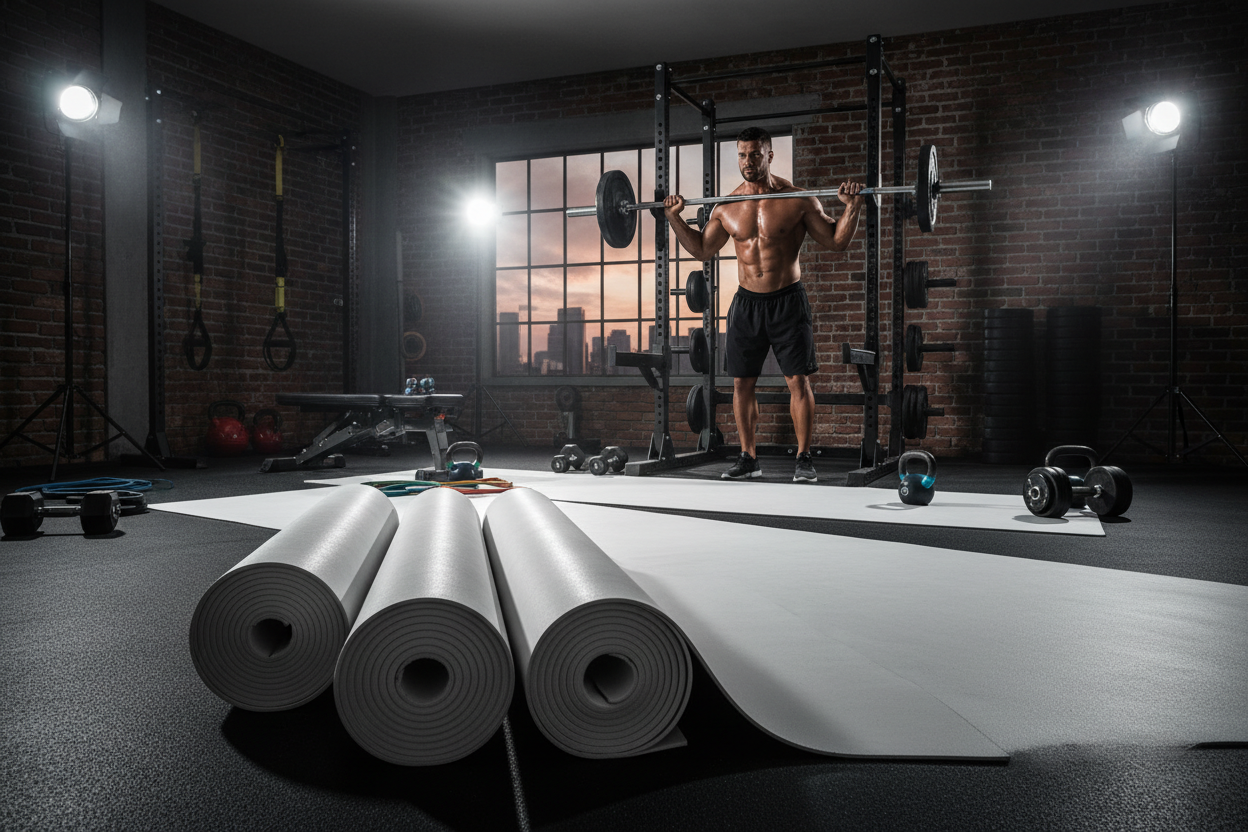
Do not skip this. Protect your concrete and your equipment. Go to a farm supply store and buy two 4x6 foot horse stall mats (3/4 inch thick). They are virtually indestructible and far cheaper than "gym specific" flooring.
My Training Log: Real Talk
I want to be transparent about what lifting in a budget setup actually feels like because the product photos never tell you the whole story. When I built my first home gym for 1000, the first thing I noticed wasn't the convenience—it was the temperature.
Grabbing a barbell that has been sitting in a 35-degree garage all night is a shock to the system. The knurling on the budget bar I bought (a mid-range Ohio bar clone) was aggressive. Without chalk, it felt like it was tearing my calluses off, but it stuck to my hands perfectly during heavy deadlifts.
One specific detail you should prepare for: the wobble. When I bought my squat stand to save money, it was lighter than a commercial rack. When I re-racked a heavy squat (anything over 315 lbs), the whole unit would shake for a second. It was safe—the steel held fine—but that metallic rattle and vibration is something you don't get in a bolted-down commercial rig. You learn to rack the weight with finesse rather than slamming it.
Also, horse stall mats smell. For the first three weeks, my garage smelled like a tire shop. But unlike the cheap foam puzzle tiles I tried first, the mats didn't compress or slide apart when I was doing wide-stance squats. It’s a raw, gritty experience, but it’s yours.
Conclusion
Building the best home gym setup under 1000 is about making hard choices. You are trading luxury for utility. By focusing on a quality barbell and a safe rack, you are building a foundation that can be expanded later. Start with the essentials, get strong, and worry about the fancy accessories next year.
Frequently Asked Questions
Is a $1000 home gym actually safe for heavy lifting?
Yes, provided you allocate your budget correctly. Prioritizing a rack or stand with safety spotter arms and a barbell with a high tensile strength rating ensures safety. The danger comes from buying cheap, low-capacity equipment just to get "more" items.
Should I buy a package deal or individual pieces?
Generally, buying individual pieces allows for higher quality. Many "home gym for 1000" packages include low-quality bars and filler items you don't need. Curating your own setup ensures every dollar goes toward gear that will last.
Can I do bodybuilding with just a barbell and rack?
Absolutely. While machines are convenient for isolation, you can target every muscle group with a barbell. Barbell rows, skull crushers, overhead presses, and lunges can build a complete physique without cables.