White Rubber Flooring Rolls: The Truth Before You Buy
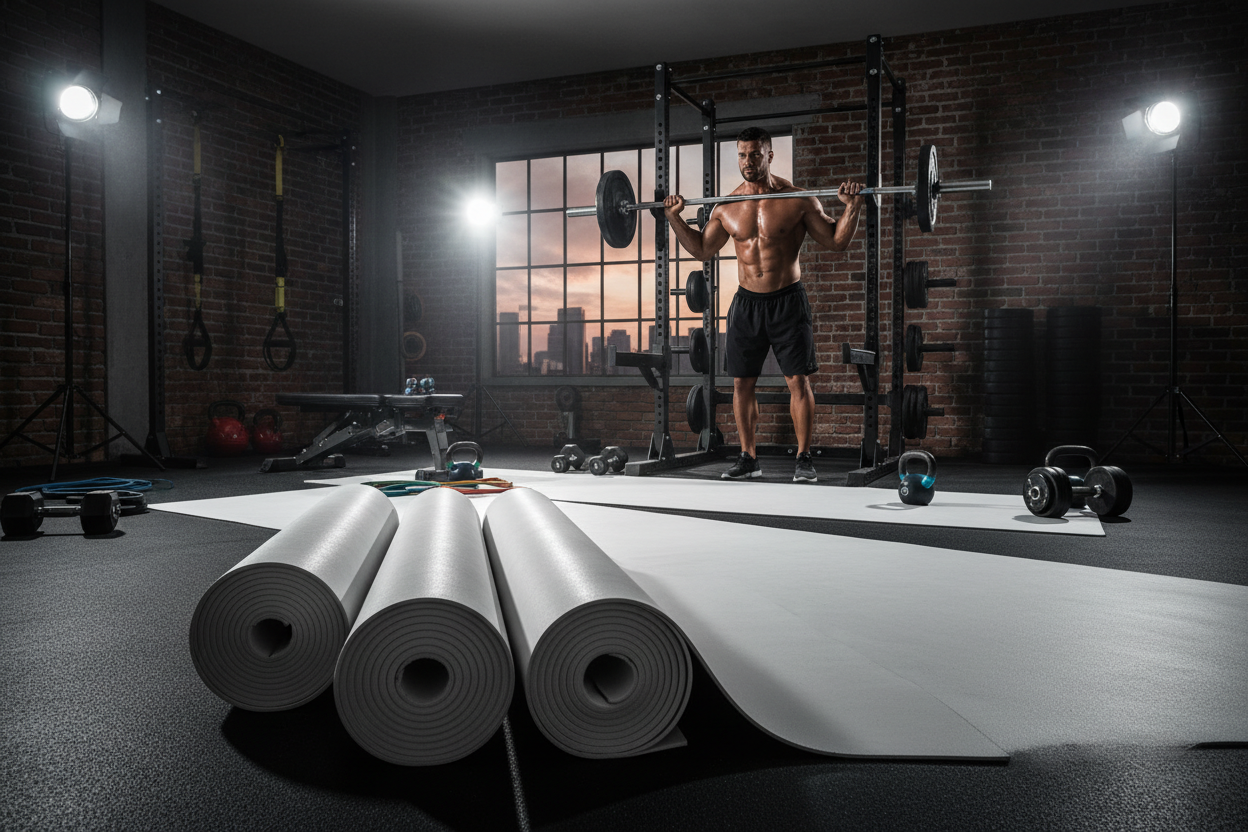
Most home gyms end up looking like dark, intimidating caves. Traditional black stall mats absorb all the ambient light, making your basement or garage feel significantly smaller and less inviting. If you are looking to brighten up your training space without sacrificing heavy-duty protection, white rubber flooring rolls might be exactly what you need.
But before you make the switch, there is a massive elephant in the room: are they a nightmare to keep clean? In this guide, we will break down the aesthetics, durability, and practical reality of lighter gym floors so you can decide if it is the right investment for your home setup.
Key Takeaways
- Lighting transformation: Lighter floors reflect overhead lighting, making low-ceiling basements and garages feel much more spacious.
- Commercial durability: They offer the exact same impact protection and sound deadening as traditional black commercial gym flooring.
- Maintenance reality: Hides lifting chalk and dust far better than black rubber, but shows dark shoe scuffs and tire marks more easily.
- Seamless installation: Heavy rolls create a professional look with fewer seams and tripping hazards compared to interlocking tiles.
Aesthetics vs. Practicality: The Great Debate
Why Choose White Rubber Gym Flooring?
The primary reason to invest in white rubber gym flooring is the visual impact. In North American homes, garage and basement gyms usually suffer from poor natural light. A bright floor acts like a massive reflector, bouncing light around the room and giving your space a premium, boutique studio feel. It instantly elevates the room from a 'sweaty garage' to a professional training environment that you actually want to spend time in.
The Cleaning Reality
Let us address the biggest concern: dirt. Pure white rubber is extremely rare and nearly impossible to keep pristine in a gym setting. Instead, most high-end rolls feature a high-density white or light-grey EPDM fleck over a lighter binder. This speckled design is surprisingly forgiving. While it shows dark dirt and black shoe scuffs faster than a black floor, it completely hides white lifting chalk, dead skin, and dust—which are the most common culprits that make black mats look perpetually filthy.
Key Specs to Compare Before Buying
Thickness and Impact Rating
Not all rolls are created equal. For a standard home gym where you are using dumbbells, kettlebells, and machines, an 8mm (about 5/16 inch) thickness is the sweet spot. It provides excellent joint support and protects your concrete subfloor. If you are dropping heavy barbells or doing Olympic weightlifting, you will want to step up to a 3/8-inch or even 1/2-inch thickness for maximum shock absorption.
Material and Odor
Look for virgin rubber or high-quality recycled vulcanized rubber. Cheaper rolls often off-gas a strong 'tire shop' smell that can linger in a closed basement for months. Premium rolls with a high percentage of color fleck usually have a significantly milder odor right out of the box, making them safer and more pleasant for indoor home use.
Space Planning and Installation Tips
Sizing Your Rolls
Most commercial-grade rolls come in standard 4-foot widths. When mapping out your room, calculate your square footage and plan your seams so they do not sit directly under your heavy traffic areas, like the center of your power rack. Leaving a slight gap (about 1/8 inch) at the walls allows for natural expansion and contraction during seasonal temperature changes.
Tape vs. Glue Down
For 90% of home gyms, double-sided carpet tape is the best installation method. Gluing down your floor is a permanent, messy process that makes moving or replacing damaged sections a nightmare. High-quality double-sided tape keeps the heavy rolls firmly in place without ruining your concrete or hardwood subfloor.
From Our Gym: Honest Take
We recently installed a 4x15 foot section of 8mm high-density white fleck rubber under our primary functional training rig. The immediate difference in lighting was staggering—it genuinely felt like we had added two extra overhead LED bays. The space looks incredibly clean and inviting.
However, I will be completely honest about the drawbacks. While my chalked grip and sweaty workouts did not ruin the aesthetic, black bumper plates will leave faint black scuff marks if you drop them aggressively and they slide on the surface. I found that a quick pass with a damp mop and a pH-neutral cleaner once a week keeps it looking pristine. If you absolutely hate cleaning and do heavy, messy deadlift sessions daily, stick to black. But for a clean, aesthetic functional training space, I absolutely love the lighter vibe.
Frequently Asked Questions
Do white rubber flooring rolls turn yellow over time?
If exposed to direct sunlight, lower-quality rubber binders can undergo 'ambering' or yellowing due to UV rays. If your gym has large windows, look for flooring made with a UV-stable aliphatic polyurethane binder to prevent discoloration.
How much space do I need to unroll them?
Because these rolls are dense and heavy (often weighing over 1.5 lbs per square foot), you need enough clearance to lay them flat and let them acclimatize to the room temperature for 24-48 hours before making any cuts. This prevents curling at the edges.
Are rolls better than interlocking tiles?
Yes, especially for long-term durability. Rolls have fewer seams, which means fewer places for sweat, water, and dirt to seep down to your subfloor. They also will not pull apart during heavy sled pushes or dynamic lateral movements.