Plate Abduction: The Glute Builder You’re Probably Ignoring
You know the scenario. It’s peak hour at the gym. You want to hit your glute medius, but the abduction machine is occupied by someone scrolling through Instagram between sets. You don't have to wait. There is a raw, functional alternative that often delivers a better burn than the machine: plate abduction.
This isn't just a backup exercise. It's a stability powerhouse that forces your core and standing leg to work overtime while isolating the outer hip. Let's break down how to execute this move correctly and why it deserves a permanent spot in your leg day rotation.
Key Takeaways: Mastering the Move
- Primary Muscle: Gluteus Medius (upper/side glutes).
- Equipment Needed: A standard weight plate (start with 10-25 lbs).
- Key Benefit: Improves unilateral stability and corrects muscle imbalances.
- Form Cue: Keep your torso upright; do not lean excessively away from the working leg.
- Placement: Hold the plate on the side of the leg, resting on the outer thigh, not the knee joint.
Why Ditch the Machine for a Plate?
The standard abduction machine is great for isolation, but it locks you into a fixed path of motion. When you switch to a standing hip abduction with plate, you introduce an element of instability.
Because you are standing on one leg, your stabilizer muscles firing sequence changes completely. The non-working leg (the one planted on the ground) actually takes a beating because it has to prevent your pelvis from tipping. This creates a functional crossover that improves your squat and deadlift stability.
How to Execute the Perfect Plate Hip Abduction
Getting the setup right is tricky because you are manually holding the load. Here is the step-by-step breakdown.
1. The Setup
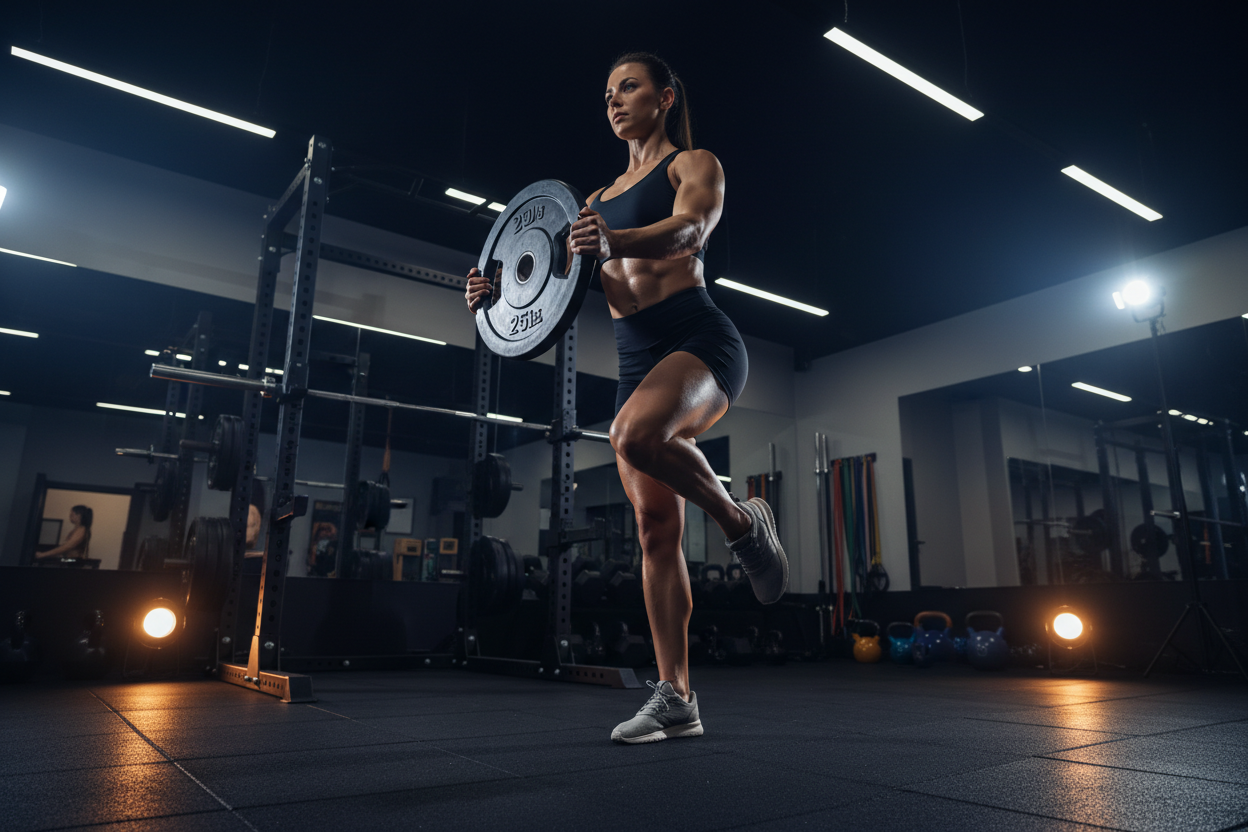
Stand with your feet shoulder-width apart. Grab a weight plate—I recommend starting light (10lbs or 5kg) to get the feel of it. Hold the plate on side of leg hip abduction style, pressing it firmly against your outer thigh.
2. The Brace
Shift your weight to your standing leg. Keep a slight bend in that knee; locking it out puts unnecessary stress on the joint. Engage your core. If you don't brace your abs, you will inevitably lean sideways, which kills the effectiveness of the lift.
3. The Movement
Drive your working leg out to the side. The range of motion will be shorter than what you are used to on a cable machine. That is normal. Lift until you feel a hard contraction in the upper glute, hold for a split second, and lower slowly.
The Science: Why It Burns So Much
Hip abduction with plate resistance changes the resistance curve. On a cable machine, the tension is constant. With a plate, gravity is the enemy.
As you lift your leg, the lever arm gets longer, making the weight feel heavier at the top of the movement. This matches the strength curve of the glute medius, providing peak tension exactly where the muscle is fully shortened. This is crucial for hypertrophy (muscle growth).
Common Mistakes to Avoid
The "Teapot" Lean: The biggest error is leaning your torso away from the lifting leg to counterbalance the weight. This uses momentum and lower back strength rather than glute strength. Stay as upright as possible. If you have to lean, drop the weight.
Placing the Plate Too Low: Don't let the plate slide down to your knee or shin. This puts dangerous torque on the knee joint (valgus stress). Keep the load on the meaty part of the thigh.
My Training Log: Real Talk on Plate Abduction
I want to be honest about the user experience here because it’s not as comfortable as a padded machine. The first time I seriously incorporated plate hip abduction into a hypertrophy block, I noticed two distinct things that most tutorials skip over.
First, the grip fatigue. Holding a 45lb plate against your leg for 15 reps is awkward. My forearm actually pumped out before my glutes did on the first set. I had to learn to cup the bottom of the plate rather than gripping the rim to save my grip strength.
Second, the bruising. If you use metal plates (the old-school iron ones), the ridges can dig into your vastus lateralis (quad muscle) as you press it against your leg. It’s annoying. I found that wearing sweatpants or placing a small towel between the plate and my leg made a massive difference. It allows you to focus on the contraction rather than the sharp edge of the iron digging into your skin.
Conclusion
Plate abduction isn't just a substitute for when the gym is busy; it's a legitimate accessory movement for building hip width and stability. It requires zero setup time and forces you to own your body mechanics. Grab a plate, find a mirror to check your posture, and get to work.
Frequently Asked Questions
Can I do lying plate abduction instead of standing?
Yes. You can lie on your side and place the plate on your outer thigh. This removes the balance component but allows for stricter isolation of the glute medius since you can't cheat by swinging your body as easily.
How heavy should I go with plate abductions?
Start light. Because of the leverage, a 25lb plate feels much heavier on your hip than it does in your hand. Focus on high reps (15-20 range) rather than heavy load to avoid straining the hip joint.
Is plate abduction better than cable abduction?
Not necessarily better, just different. Cables provide constant tension throughout the rep, while plates provide peak tension at the top. Using both in your weekly routine ensures you are hitting the muscle fibers from all angles.