How to Master Home Cardio With Just an Exercise Dance Mat
Let’s be honest: most home cardio equipment ends up as an expensive clothes rack. The treadmill is loud, the stationary bike is monotonous, and motivation usually evaporates by week three. If you are looking for a workout that actually holds your attention, the exercise dance mat might be the most underrated tool in your arsenal.
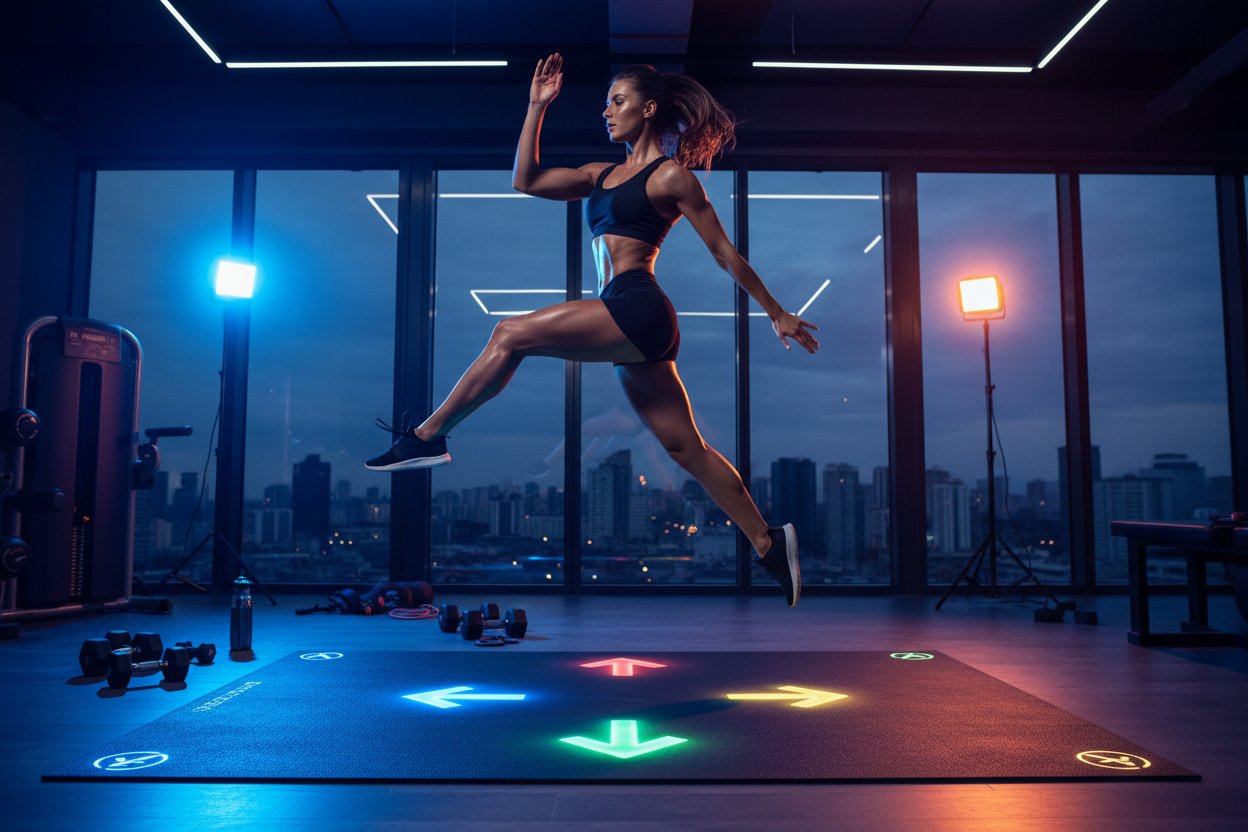
It sounds like a relic from the arcade era, but modern electronic dance mats have evolved into legitimate fitness devices. They combine high-intensity interval training (HIIT) with gamification, tricking your brain into enjoying the burn. Here is why you should consider swapping your running shoes for a sensor pad.
Key Takeaways
- Gamified HIIT: Dance mats force you into interval training patterns without the mental fatigue of watching a clock.
- Proprioception Boost: Rapid footwork improves balance, coordination, and reactive agility.
- Joint Impact: Look for high-density foam mats (at least 10mm) to protect ankles and knees during jumps.
- Space Efficiency: Unlike a treadmill, these roll up and fit under a bed in seconds.
Why Gamification Beats Willpower
The biggest hurdle in fitness isn't physical capability; it's adherence. Willpower is a finite resource. When you use a treadmill, you are relying entirely on discipline. When you use a dance mat, you rely on dopamine.
This is the science of gamification. By synchronizing movement with visual cues and music, your brain shifts focus from the physical exertion to the objective (hitting the arrows). You are essentially performing plyometrics—jump training—but because you are chasing a high score, you push past the fatigue threshold that usually stops you.
Choosing the Right Mat: It’s Not Just a Toy
Not all mats are built for adult fitness. If you buy a flimsy vinyl sheet meant for a five-year-old, you will regret it. Here is what to look for.
The Non-Slip Factor
This is non-negotiable. If you are playing on hardwood or laminate floors, a standard mat will slide the moment you do a lateral jump. Look for a mat with a heavy, textured rubber backing. If you already have one that slides, you must layer a high-grip yoga mat underneath it to prevent injury.
Sensitivity and Latency
For a workout to be effective, the feedback loop must be instant. Wireless mats are convenient, but cheap Bluetooth connections often suffer from latency (lag). When you step, the signal needs to hit the screen instantly. For serious training, a wired USB or HDMI connection is often more reliable than wireless options to ensure your timing remains perfect.
Common Mistakes to Avoid
Don't treat this exactly like arcade dancing. In an arcade, you often hold the bar behind you to support your weight, moving only your legs. This is cheating the workout.
To get the full metabolic effect, you must support your own body weight. Keep your core engaged and stay on the balls of your feet. Flat-footed stomping leads to shin splints and knee pain. Treat the arrows like hot coals—light touches, quick retractions.
My Personal Experience with exercise dance mat
I want to give you the unpolished truth about adding this to a routine. I tested a mid-range foam dance mat connected to my PC for a month of cardio. The marketing photos show people smiling effortlessly, but the reality is sweatier and grittier.
The first thing I noticed was the "plastic snap" sound. It’s loud. If you live in a second-floor apartment, your neighbors will absolutely hate you unless you put down puzzle mats underneath. But the real issue I found was the texture of the buttons after 20 minutes.
Once you start sweating, that vinyl surface gets incredibly slick. I was doing a crossover step during a high-BPM song and nearly twisted an ankle because my foot slid right off the 'Up' arrow. I learned the hard way that you cannot play in socks. You need distinct indoor court shoes with serious grip, or you need to wipe the mat down every three songs. Also, be prepared for the distinct smell of warm rubber filling your living room—it's the scent of a good workout, but it definitely lingers.
Conclusion
An exercise dance mat isn't a magic pill, but it is a cure for boredom. It turns cardio from a chore into a challenge. If you are struggling to stick to a routine because you dread the monotony of repetitive motion, this is your solution. Clear the living room floor, lace up your grippiest sneakers, and sweat it out.
Frequently Asked Questions
Can you actually lose weight with a dance mat?
Yes. A vigorous session on a dance mat is comparable to jogging or aerobics. Depending on the difficulty level and your body weight, you can burn between 300 to 600 calories per hour. The key is playing on difficulties that force you to jump, not just step.
Should I wear shoes or go barefoot?
Wear shoes. While barefoot feels natural, the repetitive impact on the plastic sensors can bruise the arches of your feet. Additionally, athletic shoes provide necessary ankle support for the lateral movements required in higher-difficulty songs.
Does it work on carpet?
Yes, and it is often better on carpet. The carpet fibers provide friction that prevents the mat from sliding around, which is a common issue on hardwood floors. However, make sure the carpet isn't too plush, or the mat might bunch up under your feet.