How to Survive Cardio and Weights Same Day Weight Loss Routines
I spent years thinking I had to choose between being strong or being lean. I’d spend one month grinding out heavy triples and the next month practically living on a treadmill, only to end up back where I started—frustrated and slightly soft around the middle. If you are chasing cardio and weights same day weight loss, you know the struggle of trying to balance the two without burning out by Tuesday.
Why I Stopped Fearing the 'Interference Effect'
For a long time, the 'interference effect' was the monster under every lifter’s bed. The theory was that doing cardio would magically switch off your muscle-building signals. I’m here to tell you that for 90% of us training in a garage or a local box, that’s just not the reality. When people ask me should i do weights and cardio on the same day, my answer is almost always a resounding yes. Unless you are an elite athlete trying to squeeze out the final 1% of performance, the metabolic spike you get from combining these modalities is a massive win.
Doing both in one session keeps your heart rate elevated and forces your body to become more efficient at recovery. I stopped worrying about 'losing my gains' when I realized that being able to walk up a flight of stairs without wheezing actually made my heavy sets feel more manageable. The metabolic benefits of a hybrid session far outweigh the minor risks of interference for anyone just trying to look better naked and move better in real life.
The Golden Rule: Which One Actually Goes First?
If you want to maximize your results, the sequence is non-negotiable. The best time to do cardio when lifting is after you’ve moved the heavy iron. Your body relies on glycogen—stored carbohydrates—for explosive, high-intensity movements like heavy squats or presses. If you spend 45 minutes on a rower before hitting the rack, you’re going into your lifts with an empty tank. That’s a recipe for bad form and missed PRs.
I always make sure my central nervous system is fresh when I step up to my weight set and bench. I want every bit of focus and energy dedicated to that first heavy set. Once the technical, heavy lifting is done, then I transition into the sweat-fest. Doing cardio second ensures you’ve already checked the strength box for the day, and any fatigue you feel during the conditioning won’t compromise your safety under a loaded barbell.
The Clock is Ticking: Spacing Out Your Workouts
Life gets in the way. Not everyone has two hours to kill in the gym. If you’re doing cardio and weights in the same day, you have two main options: the back-to-back grind or the AM/PM split. The back-to-back method is what most of us do—lift for 45, cardio for 20, go home. It’s efficient and gets the job done without requiring two showers a day.
However, if you have the luxury of time, the question of how long to wait between cardio and weights becomes relevant. Research generally suggests a gap of at least 6 hours to allow your body to recover. Personally, I’ve found that an AM cardio session followed by a PM lifting session works wonders for my energy levels. But if you’re a busy parent or working 50 hours a week, don’t overthink it. A 20-minute walk after your lifts is infinitely better than skipping your workout because you couldn’t find a 6-hour window.
Two Brutally Effective Ways to Combine Them
When I’m short on time but need to hit both, I use one of two templates. The first is the 'LISS Finisher.' After a heavy upper body day, I’ll hop on a bike or treadmill for 20-30 minutes of Low-Intensity Steady State. Keep your heart rate around 120-130 BPM. It’s boring, but it burns fat without adding much systemic fatigue, making it easy to recover from by the next morning.
The second option is the 'Metabolic Finisher.' This is for the days you feel like a beast. Instead of a treadmill, use a kettlebell or a sandbag. A Tabata HIIT ladder workout is a perfect example of how to redline your heart rate in under 15 minutes. It’s high-intensity, it’s fast, and it builds the kind of conditioning that makes 10-rep sets of squats feel like a breeze. It’s the most bang for your buck if you only have 60 minutes total to train.
Setting Up Your Space for Quick Transitions
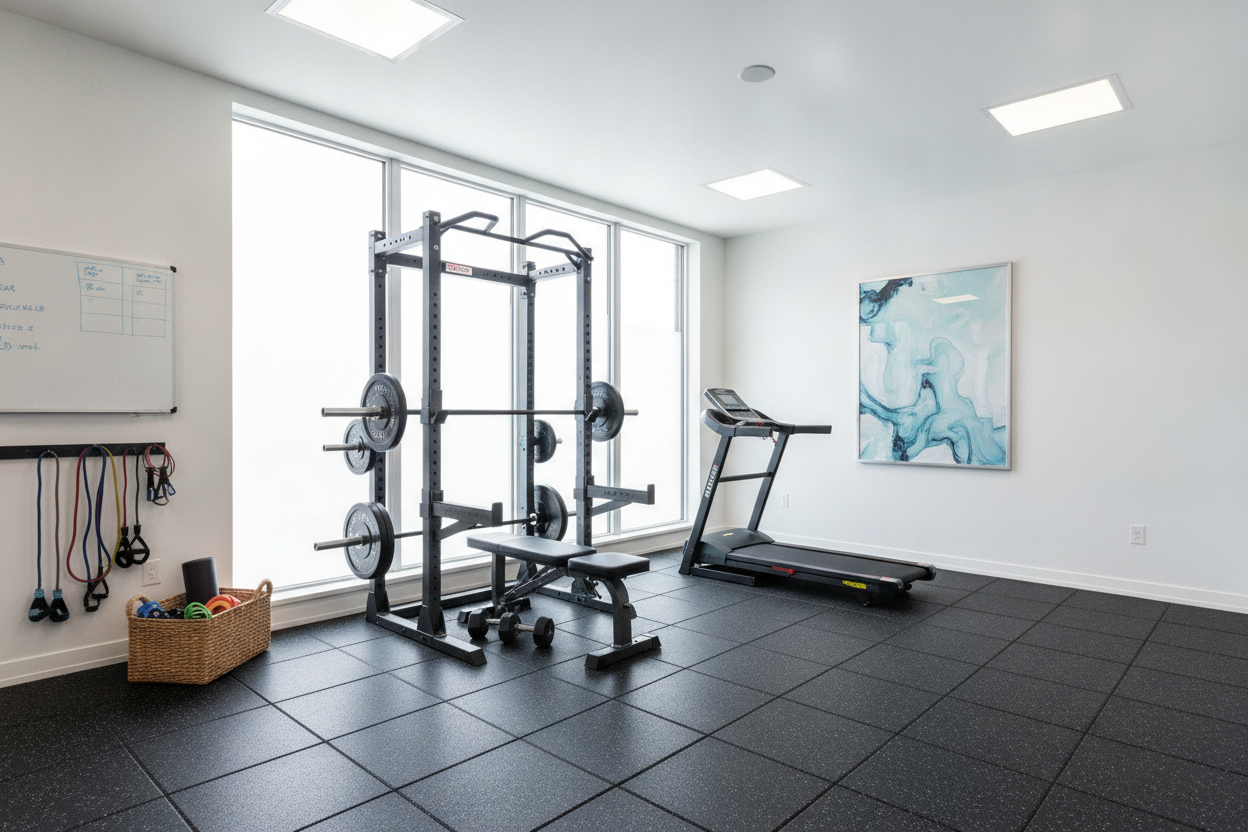
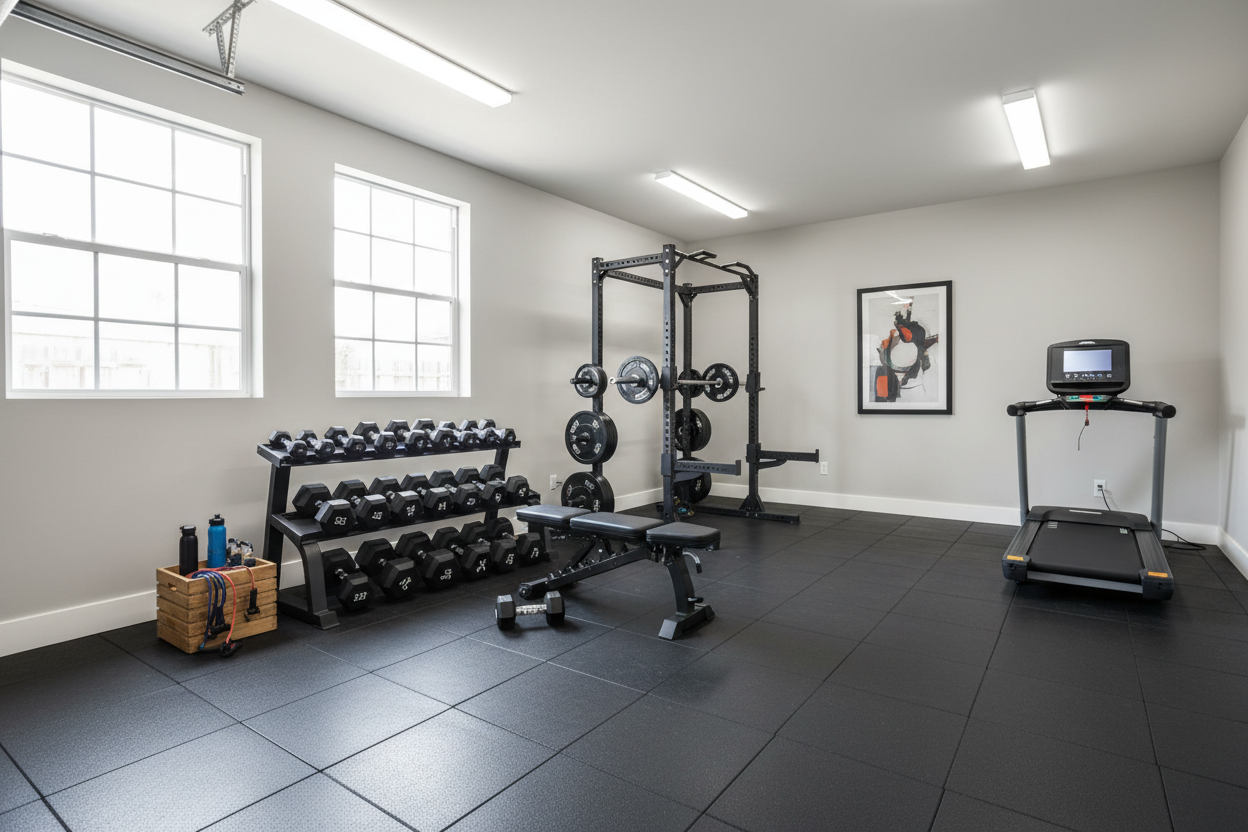
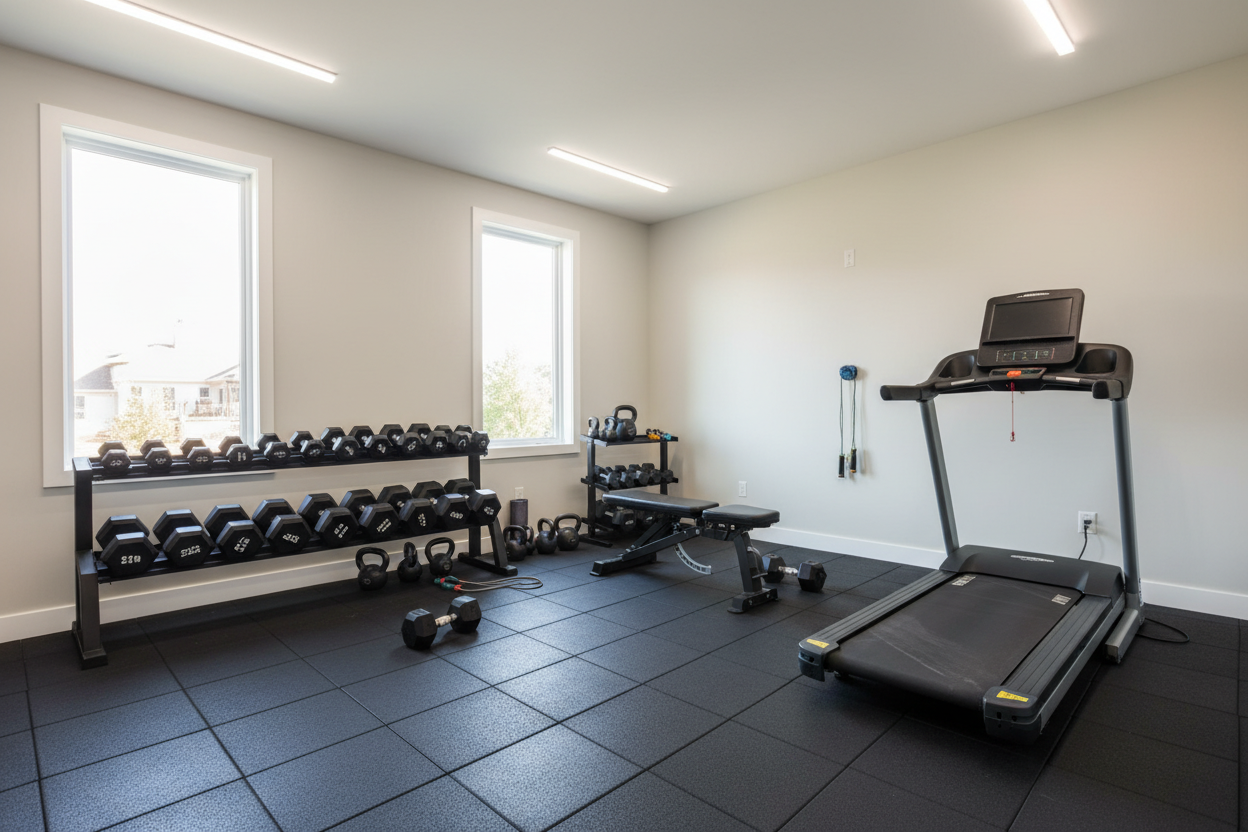
Nothing kills a workout faster than having to hunt for a jump rope or clear a path through a mountain of plates. Momentum is the secret sauce for hybrid training. If you have to spend 10 minutes reorganizing your garage to start your cardio, your heart rate will drop, and your motivation will follow. I’ve learned the hard way that a cluttered gym leads to a half-hearted workout.
I keep a dedicated large exercise mat for cardio rolled out right next to my power rack. This allows me to drop the bar after my last set and immediately transition into burpees, mountain climbers, or skipping rope. It defines the work zone and keeps the transition time to under 30 seconds. If you’re serious about this, keep your conditioning tools—ropes, bands, or light kettlebells—within arm's reach of your lifting station.
My Personal Experience
I’ll be honest: I once tried to run a 5K personal best in the morning and then hit a max-effort deadlift session in the afternoon. It was a disaster. I felt like my hamstrings were made of old rubber bands. My form was trash, and I nearly pinned myself. The lesson? You can do both, but you can’t prioritize both on the same day. Pick one to be the 'main event' and treat the other as the accessory. Since I started treating cardio as the dessert to my lifting meal, my joints feel better and the scale is actually moving.
FAQ
Is it okay to do cardio before weights?
Only if it’s a very light warm-up. If you do high-intensity cardio first, you’ll deplete the glycogen needed for heavy lifting, which increases your risk of injury and kills your strength gains. Always lift first if strength is the goal.
How many times a week should I do both?
Start with three hybrid sessions a week. Your body needs time to adapt to the increased volume. If you feel good after two weeks, you can bump it up, but watch your sleep and hunger levels closely.
Will I lose muscle doing this?
Not if you eat enough protein. Muscle loss usually happens from a massive caloric deficit, not from adding 20 minutes of cardio to your lifting routine. Keep your protein at about 1 gram per pound of body weight and you'll be fine.