A Free Weight Workout Guide That Actually Fits in a Garage Gym
I remember the day I finally quit my local commercial gym. They had just added a third smoothie bar but still only had one power rack with a three-person line. I went home, dragged the lawnmower to the shed, and started building what eventually became this free weight workout guide. You don't need a 5,000-square-foot facility to get strong; you just need a few pieces of heavy iron and a plan that doesn't waste your time.
Quick Takeaways
- Big compound lifts move the needle; isolation is just the sprinkles on top.
- High-quality iron lasts longer than your car—buy it once.
- A 3-to-4-day split is the sweet spot for recovery in a home setting.
- Stop chasing 'the pump' and start chasing the numbers in your logbook.
Why Most Commercial Gym Routines Fail in a Garage
Most workout plans with free weights you find online are written for people training at a Gold's or a Lifetime Fitness. They expect you to have access to a full rack of dumbbells from 5 to 100 pounds in 5-pound increments, plus three different cable stations. In a garage gym, that's just not reality. If you're following a program that has you swapping between 15 pairs of dumbbells for a single 'giant set,' you're going to spend more time moving gear than lifting it.
A real-world free weight workout plan for home use needs to be pragmatic. It should focus on movements that allow you to stay at one station for a while. I’ve seen too many guys try to run high-volume bodybuilding splits in a one-car garage, only to get frustrated because they're constantly tripping over plates or waiting for their adjustable dumbbells to click into place. We need to strip away the fluff and focus on the 'big rocks' of training.
The goal is efficiency. You want a routine that respects your floor space and your time. That means prioritizing the barbell and using dumbbells for the accessory work that actually matters. Forget the cable crossovers and the seated leg curl machines. We're going to build muscle with the basics, using a free weight workout schedule that actually fits between your workbench and your water heater.
The Bare Minimum Gear You Actually Need
You don't need a specialized machine for every muscle group. To run effective free weight workout programs, you need three things: a barbell, a set of plates, and a way to stay off the floor. I’ve wasted plenty of money on 'innovative' gadgets that now just hold cobwebs in the corner of my gym. If you're starting out, put your money into a 20kg Olympic bar with decent knurling and a set of iron or bumper plates.
After the bar, the most critical piece is a stable surface. You cannot effectively train your chest or shoulders without an adjustable weight bench. Look for something with a 1,000-lb capacity and minimal pad gap. It gives you a platform for everything from incline presses to seated rows without eating up half your floor space. If you can't trust your bench when you're holding 80-pound dumbbells over your face, you won't lift with the intensity required to actually grow.
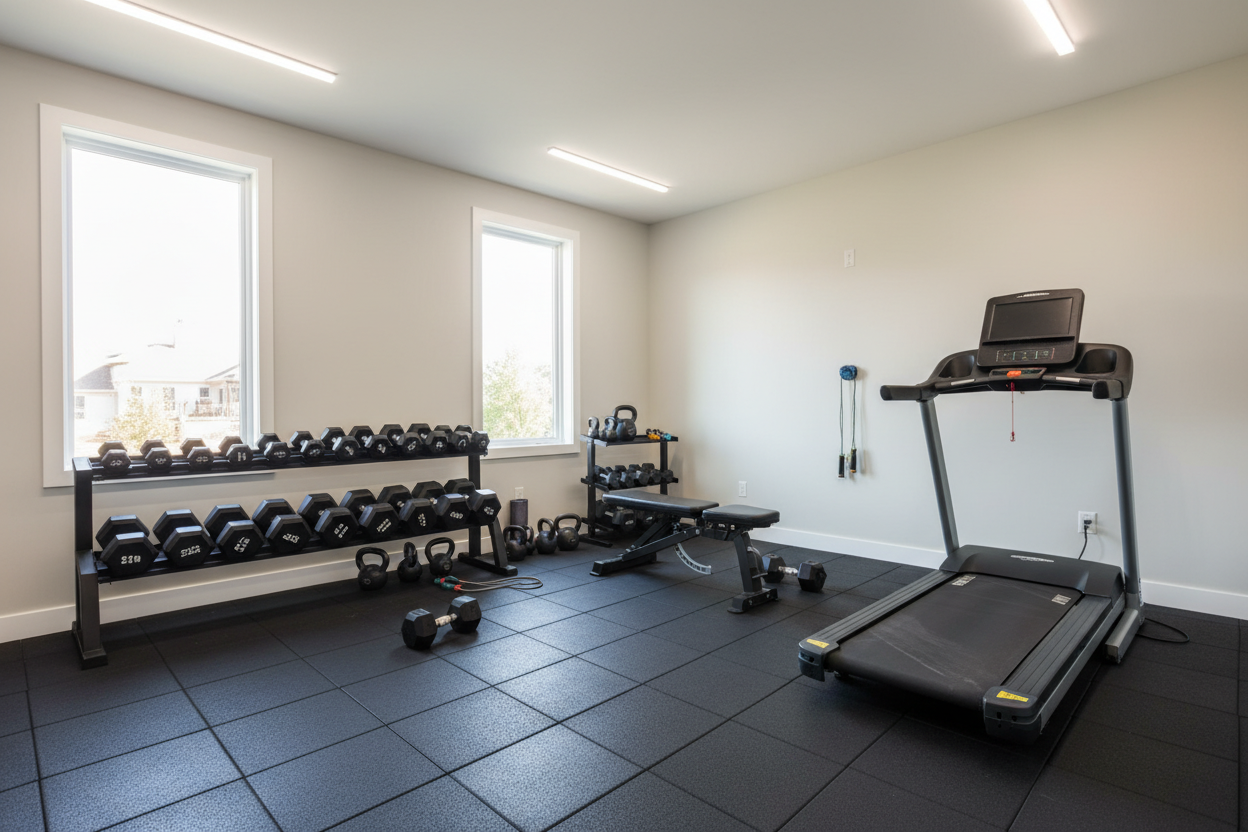
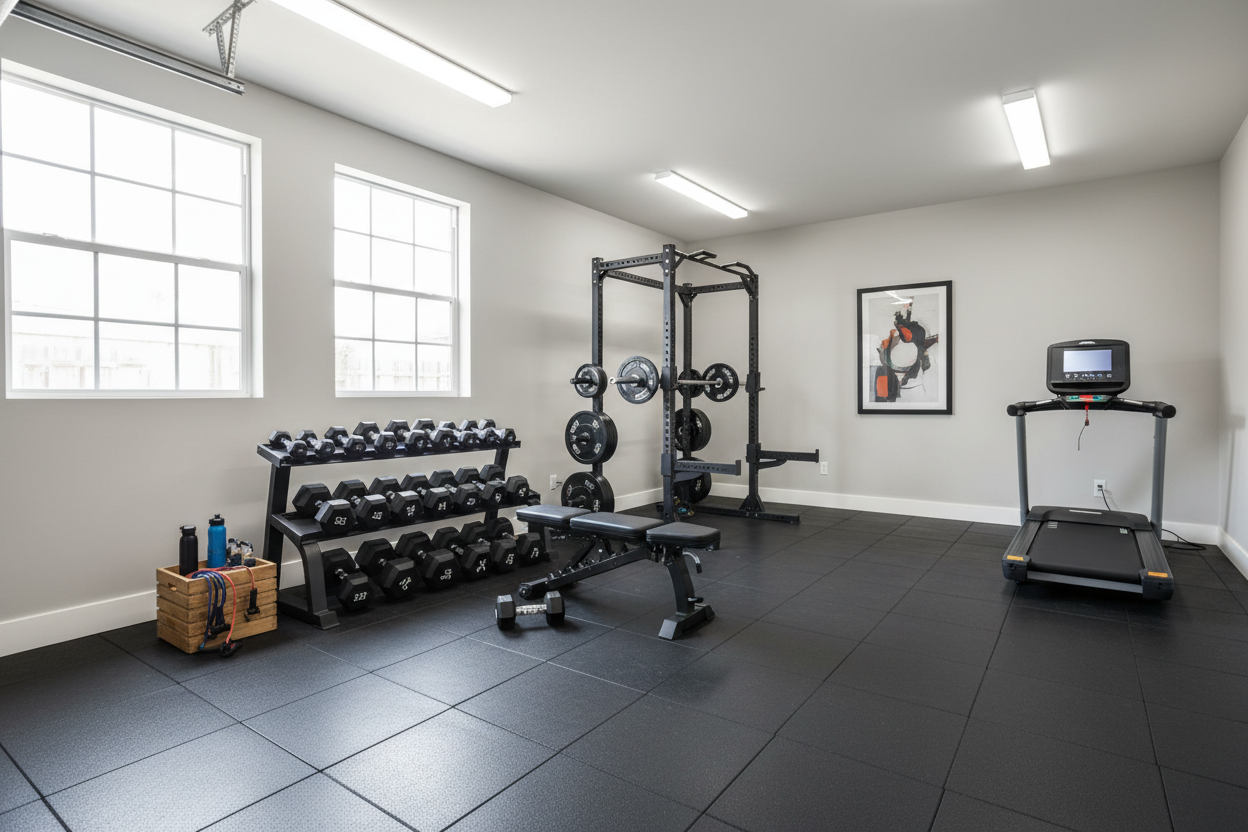
Dumbbells are the next logical step. If you have the space, a rack of hex dumbbells is great, but for most garage lifters, a solid pair of loadable or adjustable dumbbells is the way to go. This allows you to follow a weekly free weight workout schedule without needing a 10-foot storage rack. Focus on gear that is multi-functional. If a piece of equipment only does one thing, it probably doesn't belong in your garage.
The Core Movements You Can't Fake
If you want to get strong, you have to embrace the barbell. The foundational lifts—squats, deadlifts, overhead presses, and rows—drive about 90 percent of your total results. These movements recruit the most muscle mass and allow for the greatest amount of progressive overload. You can do 50 sets of lateral raises, but they won't build the rugged frame that heavy pressing will.
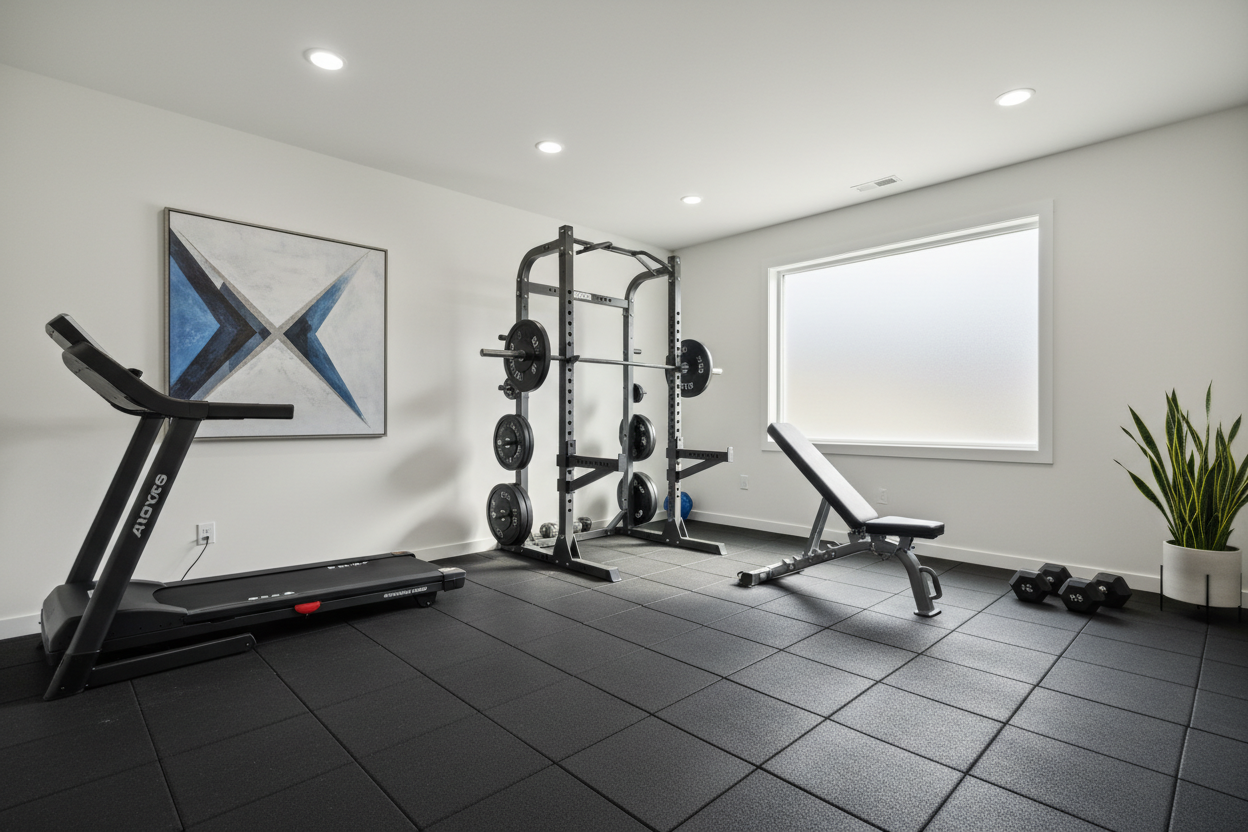
Safety is the biggest hurdle when training alone in a garage. I never recommend maxing out your back squat unless you have a solid power rack setup with reliable safety pins or spotter arms. This allows you to push your limits on the big lifts without the fear of getting pinned under the bar. Once you have that security, you can focus entirely on the technique of the lift rather than the 'what if' of a failed rep.
Dumbbell work should complement these big lifts. Think of the barbell as your primary tool for building raw strength and the dumbbells as your tools for fixing imbalances and adding volume. Lunges, goblet squats, and single-arm rows are staples. Mastering these basic variations beats doing endless 'fancy' isolation exercises every time. If your free weight workout guide doesn't include a heavy row and a deep squat, it's not a guide worth following.
Structuring Your Weekly Free Weight Workout Schedule
For most people balancing a job and a life, a 3-day or 4-day weekly free weight workout schedule is the gold standard. A common mistake is trying to train six days a week like a pro bodybuilder. In a home gym, you are the janitor, the loader, and the lifter. That extra overhead adds up. A 3-day full-body split or a 4-day Upper/Lower split works best for recovery.
On an Upper Day, you might start with a heavy barbell bench press, follow it up with dumbbell rows, and finish with some overhead work. A Lower Day would center around the squat or deadlift, followed by lunges and maybe some RDLs. This structure ensures you hit every muscle group with enough intensity to trigger growth while giving your central nervous system a break between sessions.
The key is consistency. Your free weight workout plan should look similar from week to week. You don't need 'muscle confusion.' You need to get better at the movements you've chosen. If you're constantly changing your workout plans with free weights, you'll never know if you're actually getting stronger or just getting better at learning new exercises.
Progressive Overload vs. Just Getting Sweaty
There is a massive difference between a training session and a 'workout.' A workout just makes you tired; training makes you better. Many people confuse being out of breath with being productive. While a heavy free weight workout schedule will certainly be taxing, the goal isn't to leave you gasping for air after every set of five. That's conditioning, not strength building.
If your goal for the day is to increase your squat max, save the high-intensity stuff for later. You might swap one of your lifting days for an intense HIIT session with weights if you're looking to burn some extra fat, but don't try to do both at the same time. Heavy iron requires focus and rest. If you're only resting 30 seconds between sets of deadlifts, you aren't training for strength—you're just doing expensive cardio.
Progressive overload is the only 'secret' in fitness. This means adding a little more weight, doing one more rep, or shortening your rest periods over time. In a garage gym, this is where a simple logbook becomes your most valuable piece of equipment. Track every set. If you did 200 lbs for 5 reps last week, try for 205 lbs or 6 reps this week. It’s boring, it’s slow, and it’s the only thing that actually works.
How to Scale Your Free Weight Workout Plan
Eventually, the linear gains will slow down. You won't be able to add five pounds to the bar every week forever. This is when you need to get smart with how you scale your free weight workout plan. Micro-loading is a lifter's best friend. Investing in a pair of 1.25-lb plates allows you to keep the progress moving when a 5-lb jump feels like hitting a brick wall.
You can also manipulate volume. If you've hit a plateau on the 5x5 protocol, try moving to 3x8 with a slightly lower weight but more focus on the eccentric (lowering) phase of the lift. Changing the tempo or the rest intervals can provide a new stimulus without needing to buy heavier dumbbells immediately. This keeps your free weight workout programs effective for years, not just weeks.
Finally, listen to your joints. One of the perks of a home gym is that you set the schedule. If your elbows are screaming after a heavy pressing session, take an extra rest day or swap the barbell for dumbbells for a week. The best free weight workout guide is the one that keeps you lifting consistently for the next decade, not the one that breaks you in six months.
Personal Experience: The 'Cheap Bench' Lesson
Early in my garage gym journey, I tried to save $100 by buying a generic bench from a big-box store. It looked fine in the photos, but the first time I tried to bench 225 lbs, the whole frame creaked like a haunted house floorboard. There was a noticeable wobble every time I moved. I ended up selling it for $20 on Craigslist and buying a real, heavy-duty bench. I learned the hard way that you don't trust your spine to thin-gauge steel and plastic bolts. Buy once, cry once.
Frequently Asked Questions
How much space do I really need for a free weight gym?
You can get a lot done in an 8x8 foot space. An Olympic barbell is 7.2 feet long, so you need at least 8 feet of width to load plates comfortably. If you're tight on space, consider a 'shorty' bar or focusing more on dumbbell movements.
Can I build as much muscle with free weights as machines?
Absolutely. In many cases, you'll build more. Free weights force you to stabilize the load, which recruits more 'supporting' muscle fibers. Machines have their place for rehab or extreme isolation, but for 99 percent of people, a barbell and dumbbells are all you'll ever need.
Do I need rubber flooring?
If you're lifting on concrete, yes. Not just to protect the floor, but to protect your gear. 3/4-inch horse stall mats from a farm supply store are the gold standard—they're cheaper and tougher than the 'fitness' tiles you find at most retailers.