Cycling Before or After Weights: Which Should You Do?
Deciding on cycling before or after weights is one of the most common dilemmas in balanced fitness programming. When you combine cardio and weights in a single training block, the order in which you perform them shapes your session quality, your energy levels, and how quickly your body adapts. Determining whether to ride a stationary bike before or after lifting weights comes down to your personal priorities, the muscles you plan to target, and how you manage overall muscle fatigue.
Both endurance intervals and demanding resistance training draw heavily on your physical reserves. Understanding how each training style affects your body helps you plan a balanced weekly routine without compromising your progress on the bike or under the barbell.
Cycling Before or After Weights: Quick Decision Guide
Choosing whether to do cycling before or after weights depends on which fitness adaptation you want to prioritize during that workout. If your primary aim is building muscle mass or improving your strength on heavy compound lifts, place your primary strength training block first when your coordination and freshness are highest. Conversely, if your central target is building aerobic capacity or preparing for an outdoor ride, complete your dedicated indoor cycling session before touching dumbbells or a barbell.
A simple way to decide whether you should ride a bike before or after workout lifting is to consider where you want your fresh stamina directed:
- Prioritize lifting weights: Place cycling at the end of the session, or limit pre-lifting riding to a brief warmup.
- Prioritize aerobic conditioning: Complete your cycling intervals first, then follow with complementary accessory work.
- Balanced general health: Alternate the sequence across your training week, or separate the sessions into morning and evening blocks.
When you ask whether to schedule cycling before or after workout sets, remember that fatigue from the first activity will naturally reduce the output of the second. Ordering your training is an intentional choice about where your energy goes.
When Cycling Before Weights Makes Practical Sense
There are clear scenarios where doing cycling before or after weights leans toward getting on the saddle first. The most common application is using a low-effort warm up spin. A short, easy pedal session elevates core body temperature, promotes joint lubrication in the hips and knees, and increases systemic blood flow without accumulating significant muscle fatigue. When used as a gentle transition tool, light cycling prepares the body for demanding resistance training.
A gentle spin maintains an easy pedal cadence with minimal flywheel resistance. If you choose this approach, keeping the duration brief ensures that fuel stores remain available for heavy sets. Lifters who enjoy an active transition into their training often find that spinning their legs gently helps clear mental distractions before approaching loaded barbell stations.
If you are searching for equipment suitable for both gentle warmups and focused endurance blocks, reviewing a detailed guide to choosing a cycling workout bike can help you select a frame that fits your space and training goals. When endurance is your number-one goal, scheduling full-effort indoor cycling before strength training ensures that your cardiovascular system gets your best effort before tiredness sets in.
Why Cycling After Weight Training Protects Lifting Form
For most lifters focused on strength, cycling after weight training is the preferred structure. Heavy multi-joint movements like squats, deadlifts, and overhead presses require focused balance, trunk stability, and muscular power. Pre-exhausting your legs on a stationary bike before handling heavy loads can alter posture and degrade movement control.
By scheduling cycling after weight training, you ensure that your focus is fresh for heavy barbell work. Once your main sets and accessory exercises are finished, you can transition to the bike for dedicated aerobic conditioning. When you ride after lifting, maintaining balance is straightforward because the stationary frame provides continuous external support, allowing you to push cardiovascular capacity without the balance demands of standing free-weight exercises.
If you want ideas for structuring post-lift cardio intervals, our post-lifting cardio session guide explores practical time splits and pacing tactics. Completing your cardio finisher after lifting also leaves you free to adjust intensity based on how much energy remains, ensuring a productive session without compromising technical form during your main lifts.
Tailoring Your Routine: Upper-Body vs. Lower-Body Days
The decision regarding cycling before or after weights changes significantly depending on whether you are working through an upper-body split or tackling demanding lower body workouts. The degree of local muscular interference between pedaling and lifting depends heavily on which muscle groups are called upon under load.
Is It Better to Do Cycling Before or After Weights on Upper-Body Days?
It is generally much easier to combine cycling with upper-body lifting because the working muscle groups do not directly compete for localized recovery. On days dedicated to chest, back, shoulders, or arms, performing indoor cycling either before or after lifting presents fewer mechanical conflicts. Even so, doing an intense spin class directly before pressing or rowing can deplete overall energy reserves and reduce your lifting output.
Many lifters find that stocking their training area with gear from a dedicated strength training accessories collection makes alternating between upper-body supersets and cardiovascular work seamless. On these days, deciding whether you ride your bike before or after workout sets comes down purely to personal preference and daily schedule flexibility.
Does Cycling Before Leg Day Affect Squat Performance?
Yes, cycling intensely before leg day directly impairs squat performance by fatiguing the quadriceps, glutes, and hamstrings beforehand. Because pedaling relies on repetitive knee extension and hip drive, challenging resistance on the bike depletes local muscular fuel stores before you ever unrack a barbell. This fatigue compromises your stability in the bottom of a squat and reduces the total volume you can complete comfortably.
To protect your progress on lower body workouts, save high-effort cycling for non-lifting days or place an easy recovery spin after your lifts are finished. If you must cycle on leg day, keep it to a light warm up spin with an easy pedal cadence to mobilize the hips without inducing premature quad exhaustion.
Home Gym Setup: Bike Placement and Floor Protection
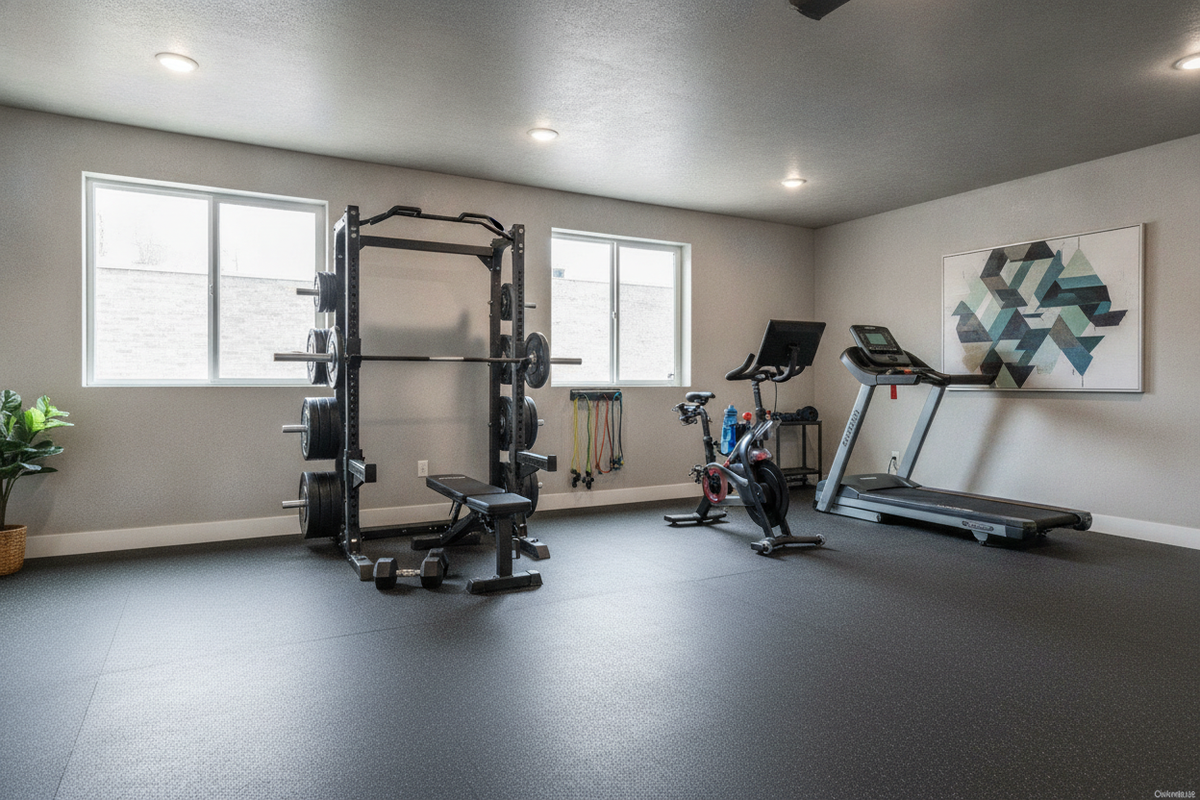
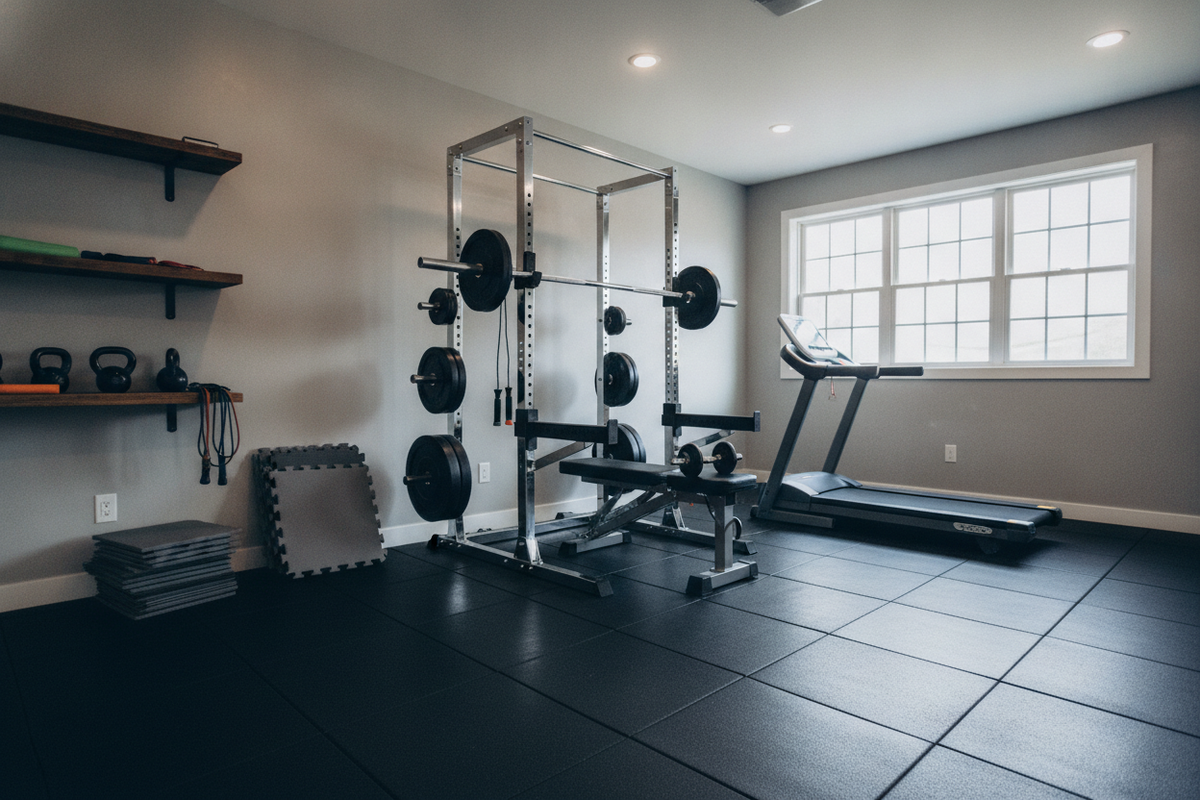
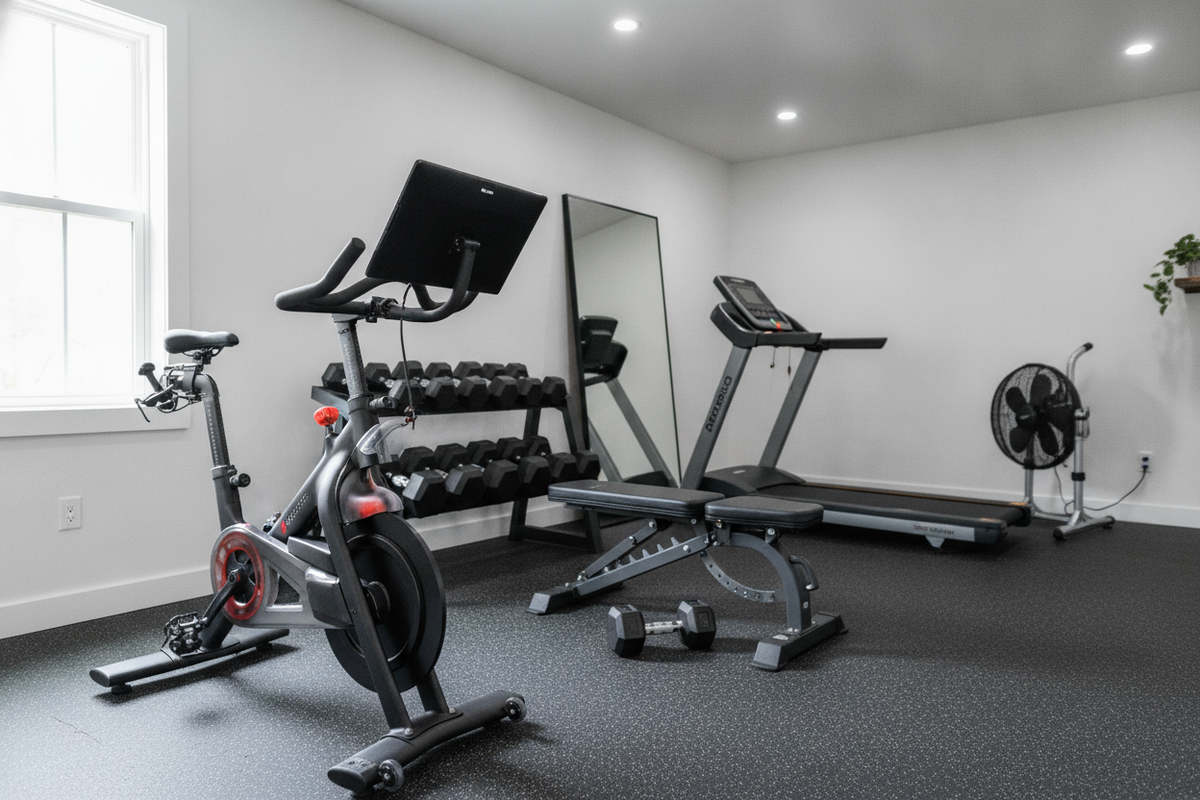
Organizing your training space carefully makes alternating between cardio and weights far more convenient. When combining a heavy stationary bike with free weights, thoughtful floor layout and surface protection are essential for preserving your equipment and protecting your home.
How Should You Arrange a Stationary Bike and Lifting Area at Home?
You should arrange your stationary bike along an outer perimeter or wall to keep the central floor clear for barbell paths, dumbbell circuits, and bodyweight movements. A well-planned home gym setup designates distinct zones for high-impact lifting and fixed-frame cardio, ensuring you can move between stations without tripping hazards or shifting heavy equipment between sets.
A durable exercise mat beneath your bike serves multiple purposes. First, it acts as a dependable sweat shield, preventing moisture from pooling on delicate hard floors or carpet. Second, high-density matting provides vital vibration dampening, muting the hum and flywheel oscillation created during aggressive pedaling so household members are not disturbed.
For lifters performing varied routines in a single footprint, investing in a robust surface like our large multipurpose workout mat provides reliable coverage for both lifting stations and cardio machinery. A dependable large workout mat offers essential subfloor protection against dropped plates and shifting bike levelers while giving your footwear solid, non-slip traction during heavy sets.
Integrating a resilient protective gym mat ensures that wherever you position your bike and free weights, your space remains quiet, tidy, and ready for frequent transitions.
Programming Tips for Combining Cardio and Weights
Structuring your weekly calendar properly helps avoid burnout when incorporating both endurance training and resistance training. Here are practical strategies to keep your progress on track:
- Separate sessions when possible: If your schedule permits, split your cardio and lifting into morning and evening windows to give your muscles time to recharge.
- Adjust intensity intentionally: If your lifting routine involves maximal loads, keep your cycling after weight training at a steady, conversational pace rather than doing high-intensity intervals.
- Monitor total leg volume: Treat intense spin sessions as lower-body training stress, and space them away from your heaviest leg day to give connective tissues sufficient recovery time.
- Maintain stable hydration and fuel: Sustaining two distinct training modalities in a single workout requires adequate hydration and nutrition to keep your stamina consistent from the first movement to the final cooldown.
Summary Guidelines for Cycling and Lifting
Ultimately, there is no single rule that fits every exerciser. The right choice for cycling before or after weights depends on your immediate training priorities. By placing your primary training focus first, keeping warmups light, and setting up a dedicated training zone with proper floor protection, you can build cardiovascular endurance and muscular strength simultaneously without compromising your performance.