Cycling Workout Bike: What to Know Before You Invest
Let's face it: dragging yourself to a crowded spin studio at 6 AM or dealing with unpredictable weather can quickly derail your cardio goals. If you're looking to build a sustainable, joint-friendly routine, a dedicated cycling workout bike is arguably the most efficient cardio investment you can make.
Whether you want to crush HIIT intervals, build endurance, or simply enjoy a steady-state ride while catching up on podcasts, this guide will help you navigate the sea of home cardio options to find your perfect match.
Key Takeaways
- Magnetic resistance offers a whisper-quiet, maintenance-free ride compared to traditional friction pads.
- A heavier flywheel (30+ lbs) provides a smoother, more realistic road feel for your indoor bike cycle.
- Most home cycling bikes require a minimal footprint of roughly 4 feet by 2 feet, making them ideal for small spaces.
- Seat and handlebar adjustability is non-negotiable for preventing joint pain during long training sessions.
Designing Your Cardio Setup
Space Requirements and Placement
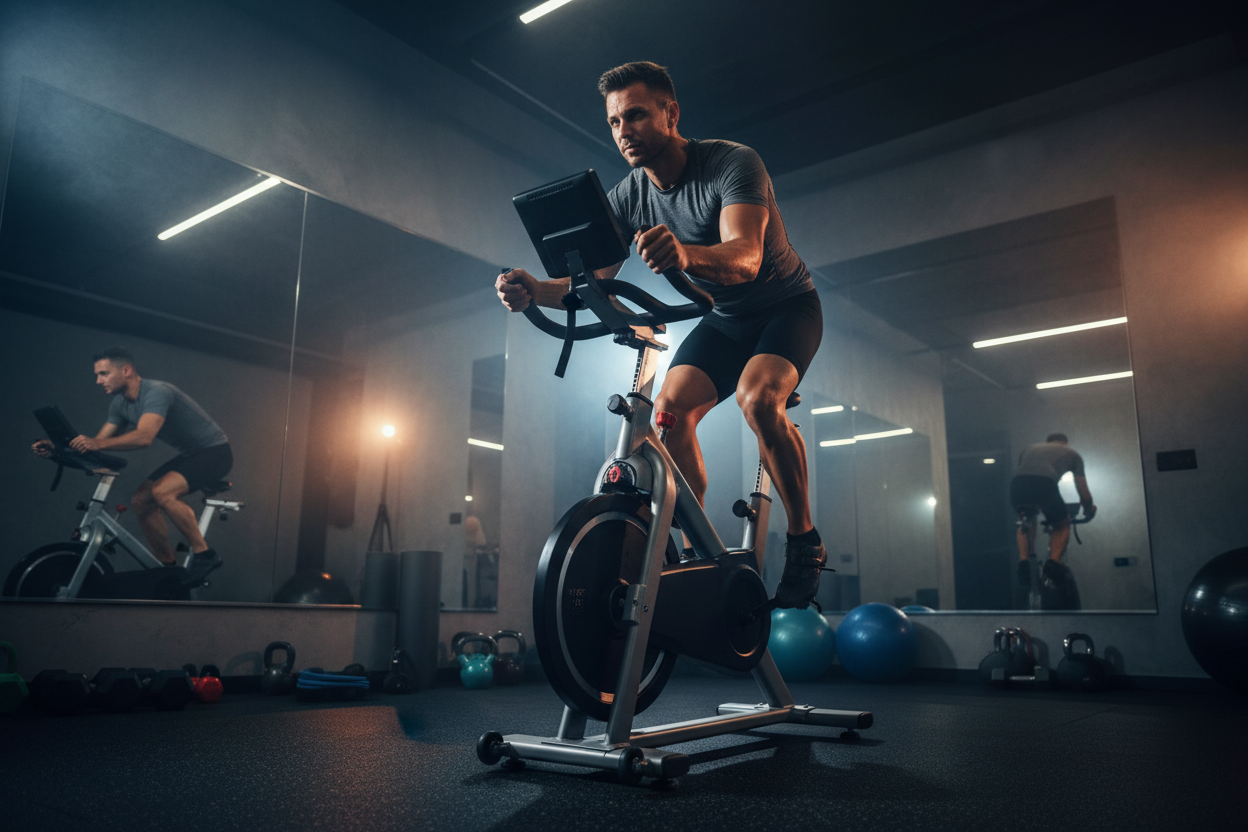
Adding a bicycle in home doesn't require a massive two-car garage gym. Unlike sprawling treadmills or bulky ellipticals, a standard bike in home takes up roughly 8 square feet of floor space. If you're setting up a room bicycle in a tight apartment, prioritize a model with front-mounted transport wheels so you can easily tuck it into a corner after your session. When planning for cycling machines for home, always leave at least 24 inches of clearance on all sides for safe mounting, dismounting, and out-of-the-saddle movements.
The Mechanics of a Great Ride
Magnetic vs. Friction Resistance
The heart of any training exercise bike is its resistance system. Friction resistance uses felt pads that physically press against the flywheel—it's cost-effective but requires regular lubrication and eventually pad replacements. On the other hand, magnetic resistance uses magnets that move closer to or further from the flywheel without ever touching it. This makes your cycling indoor bike virtually silent, which is a massive advantage if you share walls with neighbors, have sleeping kids, or just want to watch TV without blasting the volume.
Flywheel Weight and Stability
When browsing home cycling bikes, pay close attention to the flywheel weight. A heavier flywheel generates more momentum, mimicking the smooth pedal stroke of an outdoor road bike. If you are looking at stationary spin bikes for intense out-of-the-saddle climbing or heavy resistance intervals, aim for a flywheel over 35 pounds. This prevents that jerky, stop-and-go feeling at the bottom of your pedal stroke, ensuring a fluid motion.
From Our Gym: Honest Take
As someone who logs over 100 miles a week on cycling equipment indoor, I've tested dozens of models from budget big-box finds to premium commercial studio brands. My honest take? The jump from a $200 friction bike to a $500+ magnetic spinning machine bike is absolutely worth the money. Last year, I upgraded my personal garage setup to a heavy-duty magnetic model. The difference in noise was staggering—I could finally hear my coaching app without maxing out my speaker volume.
However, a quick caveat: almost every stock saddle on a cycle in home is brutally uncomfortable for the first two weeks. Don't immediately return the bike or assume you bought a bad model; just invest $30 in a quality pair of padded bib shorts or a gel seat cover. Your sit bones will adapt, but the right gear makes the transition painless.
Frequently Asked Questions
Is an indoor bike cycle better than a treadmill?
It depends on your joint health and goals. A cycle bike at home offers a high-intensity, low-impact workout that spares your knees and ankles from the repetitive pounding of running. It's generally safer for home cycling recovery days and long-term joint longevity.
How much space does a cycling indoor machine need?
Most models require a physical footprint of about 48 inches long by 24 inches wide. However, you must account for vertical space as well—ensure you have at least 7 to 8 feet of ceiling clearance so you don't bump your head when standing up on your cycling bike for home.
Can I lose weight just using a training exercise bike?
Absolutely. Consistent cardiovascular exercise combined with a caloric deficit drives weight loss. A 45-minute vigorous session on your cycling workout bike can burn anywhere from 400 to 600 calories, making it a highly efficient tool for fat loss and metabolic conditioning.