HIIT Exercise Workout Guide for Home Gyms
Starting a dedicated hiit exercise workout at home gives you an efficient path toward building endurance, burning energy, and developing agility without needing expensive machinery. When you tackle high-intensity interval training in a living room, garage, or dedicated studio, every burst of effort counts. A well-planned hiit exercise workout challenges your cardiovascular system while testing balance, muscular control, and mental discipline.
Because interval training alternates between rapid bursts and short pauses, organizing your training space and movement selection is essential. Executing a hiit exercise workout requires steady footing and enough space to jump, lunge, and drop to the floor safely. Understanding the balance between work intervals and active recovery helps you make steady progress without undue fatigue.
What Is a Standard HIIT Exercise Workout Format for Home Fitness?
A standard home hiit exercise workout format alternates brief intervals of high-effort movement with measured recovery windows to sustain elevated training intensity across twenty to thirty minutes. In practice, high-intensity interval training relies on structured timing rather than continuous steady-state jogging or cycling. You perform a vigorous hiit exercise for twenty to forty seconds, followed by a designated rest period that allows your breathing to partially steady before the next cycle.
Structuring each work interval around functional bodyweight exercises keeps your heart rate elevated while building coordination. A typical hiit workout might feature four to six distinct movements completed in round-robin fashion. By cycling through varied patterns, a complete hiit exercise workout taxes different muscle groups sequentially, allowing one area to recover slightly while another drives the action. When you organize your hiit workout cardio sessions this way, you achieve a balanced full body workout without overburdening any single joint.
High-Intensity Cardio Examples and Floor Movements
Exploring diverse high-intensity cardio examples helps you maintain training variety and challenge your body from multiple angles. When choosing cardio intense exercises for home training, focus on patterns that require minimal equipment while maximizing ground engagement. A practical hiit exercise workout incorporates both vertical drive and horizontal transitions to simulate athletic conditioning.
For additional movement breakdowns and programming ideas, explore our high intensity exercise guide to refine your form across intense intervals. Adding varied hiit cardio examples ensures that your training remains engaging over many months.
Fast Footwork and Agility Drills
Fast footwork drills generate rapid cardiovascular spikes without requiring deep knee flexion on every repetition. Excellent hiit cardio examples include high knees, quick-step lateral line hops, and skater jumps. Skater jumps challenge single-leg stability while demanding forceful side-to-side push-offs.
Because lateral movement tests ankle stability, these cardio intense exercises demand absolute traction underfoot. Attempting rapid lateral movement across slick tile or loose rugs can easily disrupt your rhythm. When you integrate skater jumps and agility drills into your hiit exercise workout, maintaining firm contact on a stable floor allows you to focus fully on speed and control.
Explosive Ground-to-Standing Transitions
Ground-to-standing transitions represent some of the most demanding cardio intense exercises in any conditioning program. Classic movements like burpees, squat thrusts, and mountain climbers require you to rapidly drop your hands to the deck, kick your feet back, and return to an upright stance. Performing mountain climbers challenges core bracing and shoulder endurance while driving rapid knee drives.
Similarly, jump squats recruit the quads, hamstrings, and glutes in an explosive vertical leap. Combining jump squats with ground drills creates an exhaustive hiit exercise workout that elevates conditioning quickly. However, landing repeatedly from jump squats creates notable joint impact. Managing that cumulative joint impact requires soft landings, clean alignment, and supportive flooring.
How to Structure a Sustainable Routine HIIT Plan
To establish a sustainable routine hiit schedule, aim for two to three targeted sessions each week separated by non-consecutive recovery days. Because a true hiit exercise workout demands substantial physical effort, daily high-intensity training can lead to diminished power output and excessive joint strain. Balancing your hiit cardio sessions with active recovery walks or light mobility drills preserves training quality.
In each session, adhere strictly to your intended work interval and rest period targets. A popular starting point is a 1:2 ratio, such as twenty seconds of maximum effort followed by forty seconds of rest. As your capacity builds, you can adjust toward a 1:1 ratio, such as thirty seconds of effort paired with thirty seconds of rest. For guided interval structures, you can follow our hiit workout cardio guide to vary your weekly pacing.
A well-rounded routine hiit schedule might look like this:
- Day 1: Upper-body and core emphasis incorporating mountain climbers, push-up walkouts, and high-knee intervals for a balanced hiit exercise workout.
- Day 2: Active recovery, mobility work, or easy walking.
- Day 3: Lower-body agility focusing on skater jumps, jump squats, and side shuffles to emphasize lateral movement.
- Day 4: Rest and light stretching.
- Day 5: A comprehensive full body workout blending ground transitions and vertical leaps for an intense hiit workout.
- Weekend: Rest or light recreational movement.
Adhering to a measured routine hiit framework helps you reap the advantages of high-intensity interval training while giving soft tissues adequate time to adapt between sessions.
Why Does Home Flooring Matter During Explosive Cardio Movements?
Home flooring matters during explosive movements because reliable traction prevents slips during fast directional shifts, while resilient cushioning absorbs landing forces to protect your joints and subfloor. When you execute a hiit exercise workout on bare hardwood, laminate, or thin carpet, the lack of shock attenuation can make continuous landings uncomfortable. Hard floors can also suffer scuffs from athletic footwear during rapid pivoting.
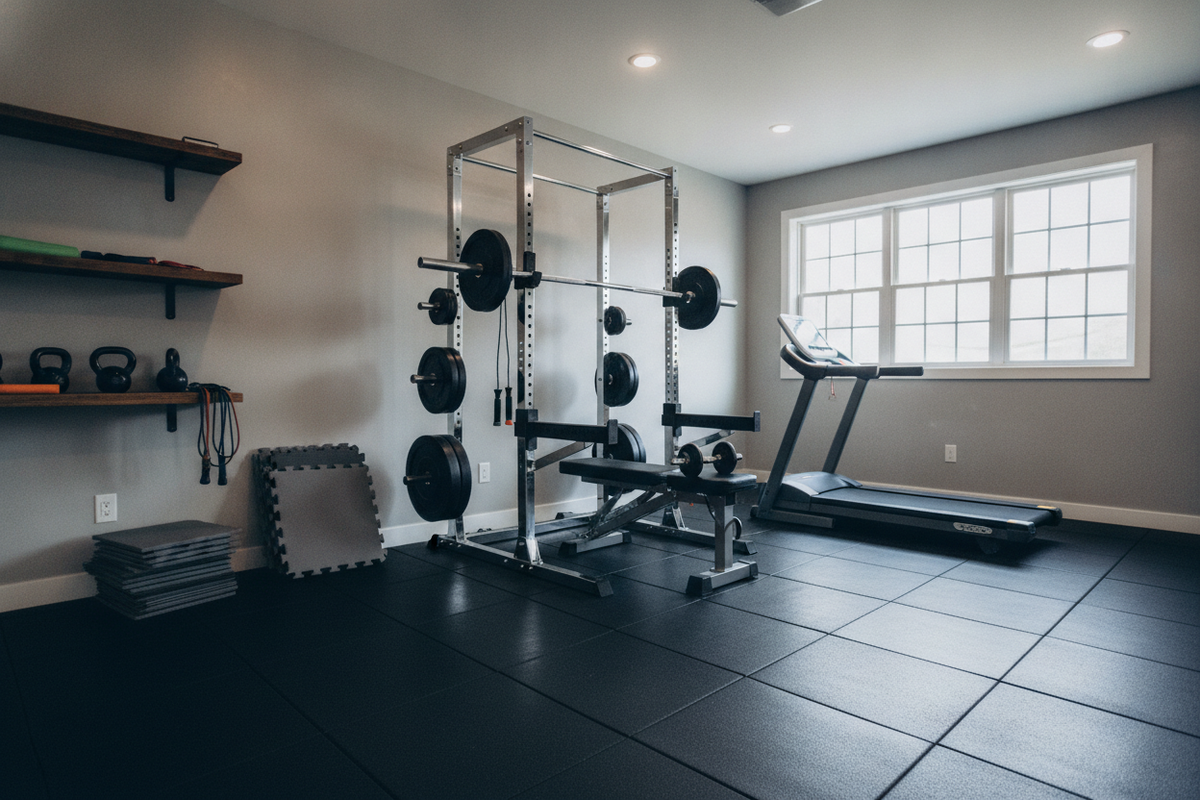
Investing in quality home gym flooring transforms any open room into a safer, dedicated fitness area. A heavy-duty exercise mat absorbs energy from burpees and plyometrics, reducing the concussive force traveling up through your ankles, knees, and hips. Browse our exercise mat collection to find durable protective surfaces tailored for intense home conditioning.
A supportive exercise mat also provides essential subfloor protection against dropped weights, scuff marks, and moisture accumulation. During a demanding hiit exercise workout, perspiration inevitably drips onto the floor. High-density home gym flooring with dependable sweat resistance prevents moisture from penetrating through to delicate subfloors below.
When selecting a dedicated surface, prioritize a textured non-slip surface on both the top and bottom faces. A top-side non-slip surface keeps your athletic shoes planted during rapid burpees, while the textured underside prevents the mat from bunching or shifting across slick floors. Utilizing a large workout mat gives you enough uninterrupted space for sprawling bodyweight exercises, wide lateral bounds, and seamless ground transitions throughout your hiit exercise workout.
Caring for Your Workout Mat After Sweaty Cardio Sessions
Maintaining your exercise mat ensures consistent grip and prolongs the lifespan of your training area. Because an intense hiit exercise workout creates substantial perspiration, cleaning your equipment after every session preserves surface hygiene and traction. In my view, wiping down your floor surface right after cooling down quickly becomes a rewarding habit that keeps the room welcoming.
Follow these straightforward maintenance steps:
- Wipe Down Immediately: Use a soft microfiber cloth lightly dampened with warm water and mild dish soap to remove sweat and oils from the non-slip surface.
- Avoid Harsh Solvents: Steer clear of bleach or abrasive scrubbers, which can degrade the protective finish and diminish sweat resistance over time.
- Air Dry Thoroughly: Allow your large workout mat to dry completely before rolling it up or placing heavy items back on top, protecting against persistent moisture.
- Check Mat Placement: Periodically lift the mat to verify that no dust or moisture is trapped underneath, maintaining effective subfloor protection across your entire training footprint.
With a reliable setup, thoughtful movement selection, and consistent spacing between sessions, your hiit exercise workout becomes an enjoyable cornerstone of your home fitness lifestyle. By mastering functional bodyweight exercises and grounding your training on resilient home gym flooring, you can pursue challenging conditioning goals right from the comfort of home.