Correct Way to Workout at Home: Form and Setup
Finding the correct way to workout at home often begins with understanding that exercise is about quality movement rather than sheer exhaustion. When people decide to start training in their living rooms, basements, or spare bedrooms, enthusiasm runs high. However, without a coach present, discovering the proper way of working out requires attention to technique, appropriate pacing, and a secure physical environment. Establishing a reliable workout routine allows you to develop strength, mobility, and confidence over time.
Whether you are starting a beginner workout or refining an advanced strength workout, moving with intent is essential. When you commit to working out properly, your body learns how to recruit muscles efficiently while avoiding unnecessary strain on your joints. In this guide, we walk through foundational habits, session design, and the physical setup needed to maintain the correct way to workout week after week.
What Is the Correct Way to Workout at Home?
The correct way to workout at home is to combine deliberate movement control, balanced posture, and sensible training stages on a secure, stable surface. When training outside a traditional fitness facility, it is easy to rush through sets or overlook your stance. Maintaining clean workout form begins before you lift a single weight or jump into a high-intensity circuit.
Working out properly means listening to your body's physical feedback. In a home gym setup, you do not have trainers adjusting your elbows or pointing out uneven hips. Therefore, you must develop self-awareness regarding posture and alignment. By pacing each repetition and focusing on full range of motion, you reinforce healthy movement patterns that carry across every daily workout you perform.
Core Principles and the Proper Way of Working Out
Understanding the proper way of working out requires mastering a few universal movement principles. Regardless of whether you prefer bodyweight movements, dumbbells, or resistance bands, these fundamentals never change.
Prioritizing Controlled Movement and Range of Motion
One common pitfall in home exercise is moving too fast. True muscular strength develops through controlled movement, where you control both the lifting phase and the lowering phase of each exercise. Hurrying through repetitions often leads to momentum doing the work, which decreases the effectiveness of the exercise and degrades your workout form.
Achieving a complete range of motion ensures that your muscles stretch and contract under tension. For instance, performing deep bodyweight movements like squats or push-ups with steady tempo produces far better balance and joint stability than rapid, half-depth repetitions. When you master controlled movement, you solidify the correct way to workout without needing excessive resistance.
Maintaining Core Engagement and Alignment
Solid lifting technique begins at your center. Proper core engagement does not mean holding your breath; rather, it involves bracing the abdomen as if anticipating a sudden bump while maintaining smooth, steady breathing. This bracing protects the spine and stabilizes posture and alignment throughout lunges, hinges, and overhead presses.
When executing complex movements, keeping a neutral spine and stable joints ensures that the workload stays on the intended muscle groups. A consistent focus on posture and alignment is a hallmark of the proper way of working out, helping you build full-body resilience during every session.
How Should a Beginner Structure a Daily Workout Session?
A beginner should structure a daily workout session into three distinct phases: a dynamic warm-up, a focused strength or conditioning block, and a gentle cooldown with floor exercises. Following this logical sequence ensures your body is prepared for effort and given adequate time to recover afterward, which is the correct way to workout for steady, sustainable gains.
Phase 1: Dynamic Warm-Up and Movement Prep
Jumping directly into high-effort sets without preparation invites stiffness and poor coordination. Preparing your joints with warm up exercises increases local circulation and primes the nervous system. Dedicating five to ten minutes to dynamic stretching—such as arm circles, hip openers, torso twists, and walking lunges—elevates body temperature and readies your muscles for physical effort.
Using dynamic stretching rather than holding static positions before training helps maintain joint stability while waking up movement pathways. It prepares you mentally for the upcoming exercises and sets the tone for working out properly.
Phase 2: Main Strength and Conditioning Block
Once warmed up, transition to your core training. For many, a balanced routine features a strength workout built around foundational compound movements like squats, hinges, pushes, and pulls. Planning your exercise order strategically makes a noticeable difference in your energy levels. Always place multi-joint, demanding lifts early in the session when your concentration and energy are highest.
As you progress through your sets, be mindful of your rest between sets. Allowing adequate recovery time between heavy or complex efforts ensures that your lifting technique remains crisp from the first repetition to the last. If you need help structuring your training schedule, exploring a comprehensive workout resource can give you balanced schedules suited to your personal goals.
Phase 3: Cooldown and Floor Exercises
After finishing the primary work, avoid stopping abruptly. An effective cool down routine lowers your heart rate gradually while easing muscle tension. This is the ideal stage for relaxing floor exercises, including gentle hip openers, hamstring stretches, and abdominal breathing.
Spending a few minutes on the floor allows you to assess how your body feels after training. Consistently following a cool down routine closes the session smoothly and supports recovery, reinforcing the correct way to workout day after day.
Why Is Proper Footing and Floor Grip Important During Exercise?
Proper footing and floor grip are important during exercise because balance, power generation, and joint alignment all rely on a secure connection between your feet and the floor. When your feet slip on smooth tile, hardwood, or uneven carpet, your body instinctively compensates by tensing secondary stabilizing muscles, pulling your joints out of natural alignment.
Whether you are performing standing lunges, rapid mountain climbers, or heavy dumbbell rows, firm traction ensures that force travels straight through the ground without sudden slipping. Having reliable footing is integral to the proper way of working out at home, giving you the confidence to plant your feet firmly and maintain strict workout form.
Organizing Your Space with Gym Flooring and Mats
Your physical environment plays a substantial role in your ability to practice the correct way to workout at home. Hardwood floors, cold concrete, and plush carpets each present distinct challenges, from slippery surfaces to uncomfortable pressure on wrists and knees during floor exercises.
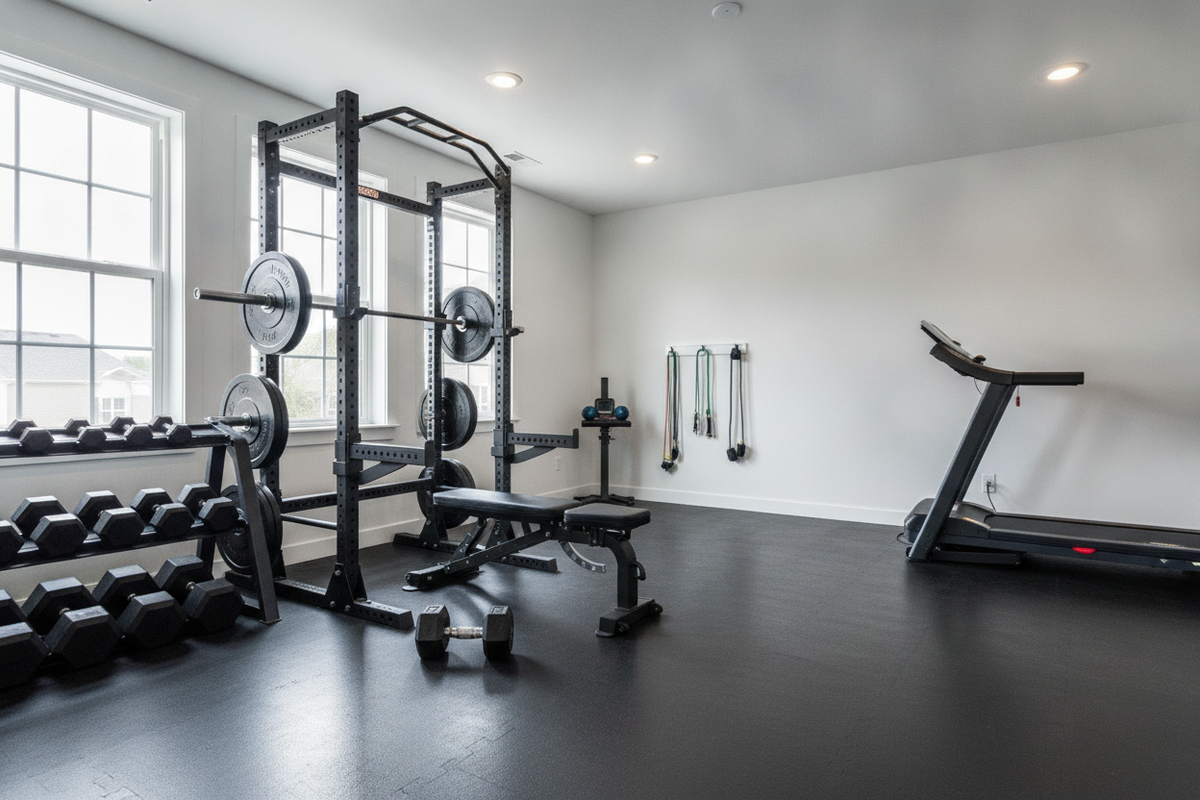
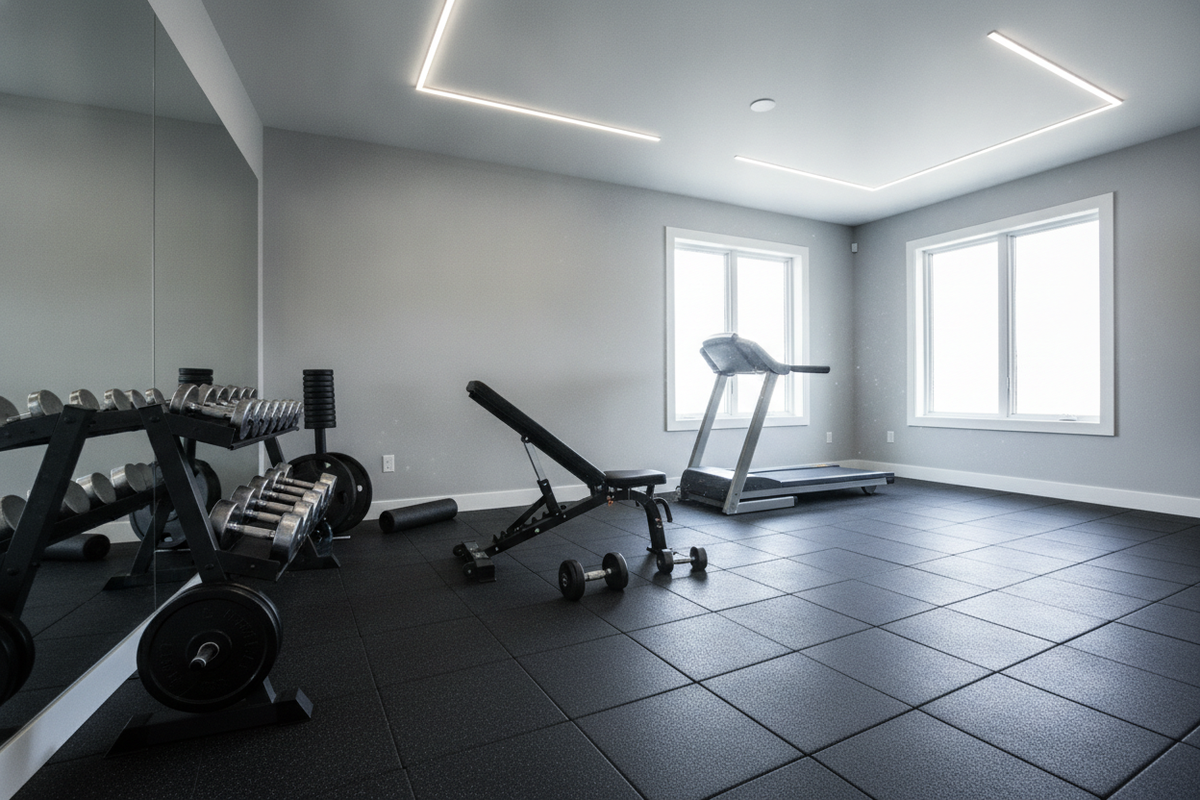
Investing in dedicated gym flooring transforms an ordinary room into a dependable exercise station. High-density gym flooring provides critical subfloor protection by absorbing the impact of repeated foot strikes and dropped equipment. When outfitting your training area, pairing your space with a workout product like a large exercise mat creates a seamless zone for both standing lifts and ground-based movements.
A durable workout mat offers the right blend of firmness and cushioning. Too much softness causes ankles to wobble, whereas a firm, non-slip mat preserves joint stability during lunges and balance drills. In my own home gym setup, laying down a durable workout mat completely changed how grounded my floor exercises felt, eliminating distractions so I could focus entirely on form. Choosing the right layout and accessories—as outlined in our working out guide—ensures your training area supports your fitness journey.
Common Form Mistakes and How to Avoid Them
Even motivated athletes stumble when training in isolation. Recognizing common errors helps you stay aligned with the correct way to workout.
- Rushing Through Repetitions: Fast, jerky movements compromise your core engagement and increase joint stress. Maintain controlled movement on every rep.
- Skipping Rest Periods: Inadequate rest between sets leads to premature fatigue, which degrades your lifting technique toward the end of your session.
- Neglecting Warm-Ups: Bypassing warm up exercises deprives muscles of mobility, making dynamic stretching an indispensable starting point.
- Training on Inadequate Surfaces: Slippery or uneven floors compromise workout form. A large exercise mat ensures dependable grip.
- Disorganized Exercise Order: Placing exhausting conditioning drills before technical lifts impairs coordination; adjust your exercise order to place demanding compound moves first.
If you find that your progress has stalled despite consistent effort, reviewing our article on out workout working guide can help pinpoint subtle programming flaws that hold you back.
Building a Sustainable Routine You Can Stick With
Knowing the proper way of working out means pacing your long-term consistency. A sustainable workout routine does not require endless hours of daily effort; rather, three to four well-structured sessions each week are often enough to make meaningful progress. When setting up a beginner workout or advancing an ongoing workout routine, start with manageable volumes and focus on working out properly before increasing intensity.
Celebrate small milestones in posture and alignment, movement quality, and control. When you treat exercise as a craft—combining thoughtful warm up exercises, crisp lifting technique, and a dedicated home gym setup featuring reliable gym flooring—you will enjoy the physical and mental benefits of the correct way to workout for years to come.