I Finally Figured Out Why Your Routine Gym Workout Isn't Working
I remember walking into my old commercial gym at 5:30 PM, seeing the same guy doing the same seated chest press with the same two 45-lb plates he’s used since the Obama administration. It is a depressing sight. Most people spend their lives sleepwalking through a routine gym workout, wondering why their physique looks exactly like it did three years ago despite 'putting in the work.'
Quick Takeaways
- Stop chasing a 'pump' and start chasing progressive overload with a logbook.
- Junk volume is the enemy; if a set doesn't challenge your technique, it’s just cardio.
- Focus on the 'Big Four' movement patterns: Squat, Hinge, Push, and Pull.
- Invest in high-quality basics for your home setup rather than cheap, multi-purpose machines.
The 'Autopilot' Trap of Modern Fitness Centers
Most commercial gyms are designed for retention, not results. They want you to feel comfortable, not challenged. This leads to the 'Autopilot Trap,' where your workout routine at gym becomes a series of mindless transitions between selectorized machines while you scroll through your phone. You hit the treadmill for ten minutes, move to the leg extension, then maybe some bicep curls, and call it a day.
The problem is that your body is an adaptation machine. If you give it the same stimulus every Tuesday, it has zero reason to build new muscle or get stronger. I’ve seen guys spend two hours in the facility, yet they never break a sweat or add a pound to the bar. They are just going through the motions of a generic routine at gym because it’s easier than actually training with intent.
Intensity is the missing ingredient. If you aren't tracking your rest periods or pushing within two reps of technical failure, you aren't training; you're just exercising. There is a massive difference between the two. One changes your body; the other just burns a few calories so you can justify a post-workout bagel.
Junk Volume vs. Actual Mechanical Tension
We’ve been brainwashed into thinking that more is always better. People think a 'good' workout routine for at the gym requires twenty different exercises and three hours of floor time. In reality, most of that is 'junk volume'—reps that make you tired but don't actually stimulate growth. You’re better off doing three sets of heavy, high-quality squats than ten sets of leg presses where you’re checking your watch between reps.
Real growth comes from mechanical tension. This means putting a muscle under a heavy load through a full range of motion. If you’re just 'feeling the burn' on a cable crossover, you’re mostly just chasing metabolic stress. While that has a place, it shouldn't be the meat of your program. I’ve found that a highly focused 30 minute gym workout female routine often yields better results than a bloated two-hour circuit precisely because it forces you to prioritize the lifts that actually matter.
Stop measuring the success of your session by how much you sweated. Start measuring it by whether you did more reps or more weight than you did last week. If the answer is no, you’re just spinning your wheels in the same old gym routines that failed you last year.
Rebuilding a Program That Actually Drives Progress
If you want to see actual changes in the mirror, you need to scrap the fluff. Strip your program down to the bare essentials. I’m talking about movements that require stability, coordination, and raw effort. When you focus on compound lifts, you get a higher return on investment for every minute spent on the floor.
I recommend building your week around a few key sessions rather than trying to hit every single muscle group from six different angles. If you can't get strong on a basic overhead press, why are you worried about your lateral raise variations? Simplicity is the ultimate sophistication when it comes to the iron. Most of the strongest people I know have the most 'boring' programs.
The 4 Main Movements You Shouldn't Ignore
Every effective routine at gym should be built on these four pillars. First, the Squat pattern (goblet squats, back squats, or lunges). Second, the Hinge pattern (deadlifts, RDLs, or kettlebell swings). These two cover your entire lower body and posterior chain. If you aren't hinging, you aren't building a back that can handle real life.
Third and fourth are the Push and Pull. This means some form of overhead or chest pressing and some form of rowing or pull-ups. If you master these four movements and consistently add weight to them over six months, you will look like a completely different person. Everything else—the calf raises, the forearm curls, the cable flyes—is just the cherry on top.
How to Track Your Lifts Without Being Weird About It
You don't need a complicated spreadsheet or a dedicated social media following to track your progress. A simple $5 notebook or a basic notes app on your phone is enough. Write down the date, the exercise, the weight, and the reps. That is it. If you aren't tracking, you are guessing.
I’ve realized that my most productive training cycles always coincided with when I was most diligent about my logbook. Seeing that I hit 205 lbs for 5 reps last week gives me the objective goal of hitting 205 lbs for 6 reps today. That is how you beat the plateau. Without data, you’re just a person in a gym moving weights around randomly.
Don't Bring Bad Commercial Habits Into Your Garage
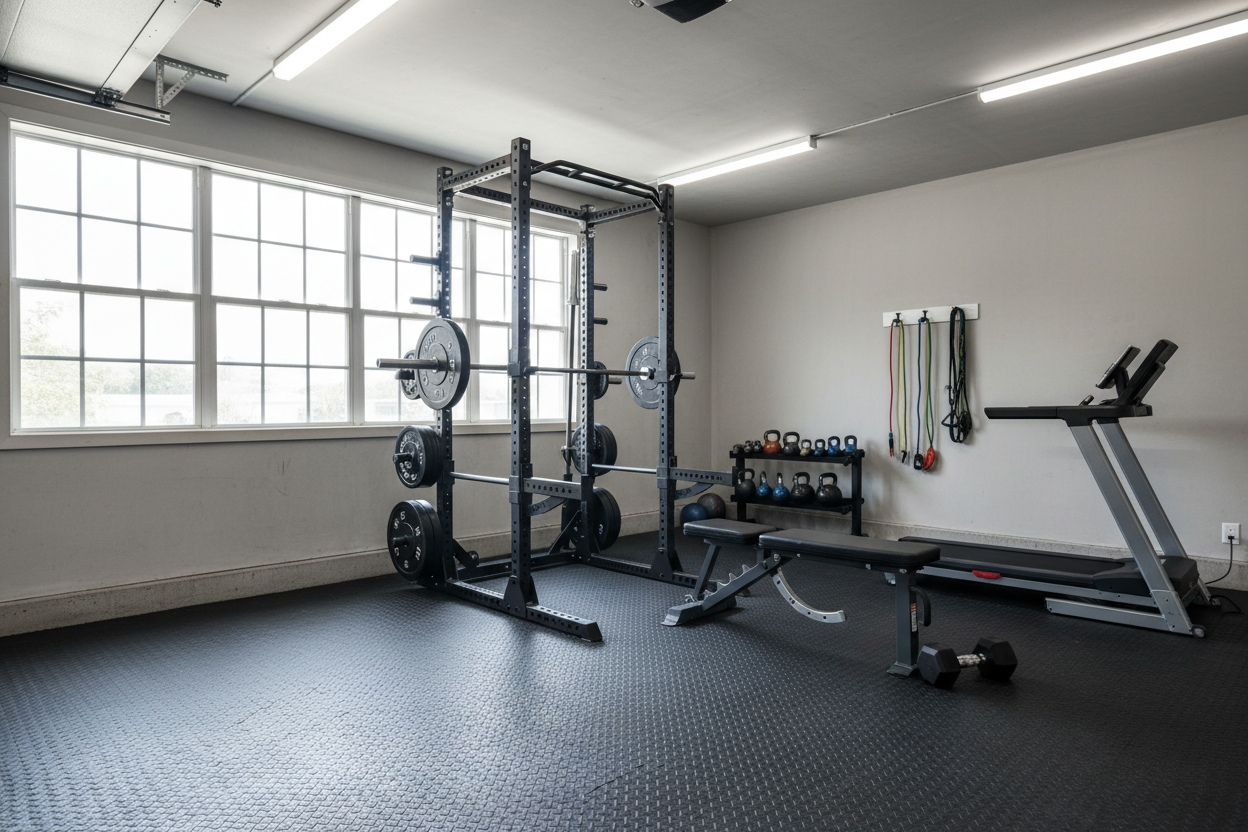
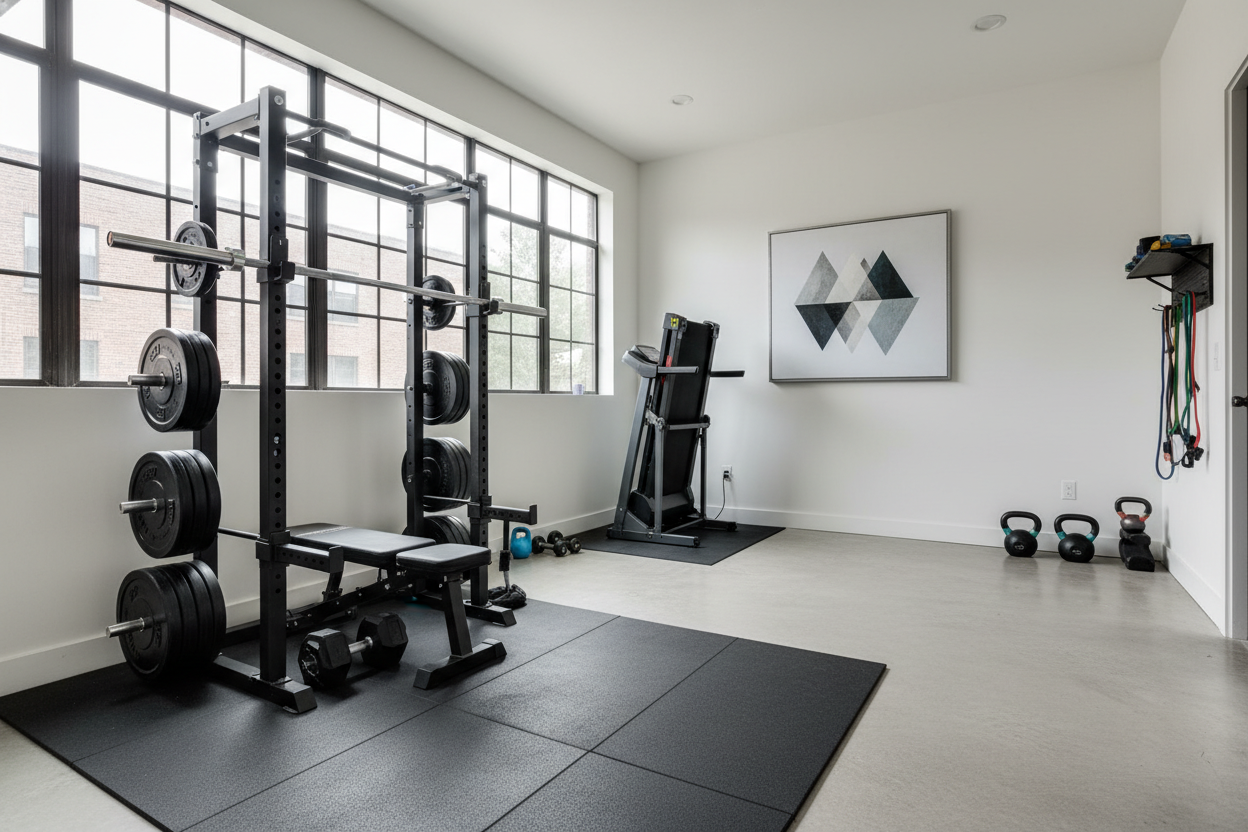
When people finally make the jump to a home setup, they often try to replicate the commercial experience by buying five different low-quality machines. That is a mistake. Your garage isn't a 24-hour fitness; it’s a laboratory for strength. You don't need twenty stations; you need one high-quality rack, a barbell that won't bend, and durable gym flooring for home workout that can handle a dropped deadlift.
Focus your budget on the 'big' items first. A solid power rack and a set of iron plates will last you a lifetime. If you do want to add some variety, skip the cheap plastic home gyms and look into the best at home workout machines like a functional trainer or a high-end rower that actually provides a meaningful stimulus. Quality over quantity is the mantra of the home gym veteran.
My own garage gym started with a cheap bar and some rusty plates on a concrete floor. It wasn't pretty, but it was effective because there were no distractions. No one was waiting for my rack, and there were no machines to hide on. When it's just you and the bar, you're forced to focus on the movements that actually move the needle.
Personal Experience: My 'Variety' Mistake
A few years ago, I fell into the 'muscle confusion' trap. I changed my routine every two weeks because I was bored. I bought every attachment Amazon suggested. My garage looked like a graveyard of failed fitness gadgets. The result? I stayed exactly the same strength for a year. It wasn't until I sold the junk, kept the rack, and committed to a boring 5x5 program for six months that I actually saw my deadlift move from 315 to 405. Boring works. Consistency is the only 'hack' that actually exists.
FAQ
How many days a week should I train?
For most people, 3 to 4 days of high-intensity lifting is the sweet spot. This allows for enough recovery time between sessions. Remember, you don't grow in the gym; you grow while you're sleeping and eating.
Can I build muscle with just dumbbells?
Absolutely, but you'll eventually need heavy ones. If you're stuck with a light set, you'll have to increase the reps or decrease the rest time to maintain intensity. Eventually, you'll want to transition to a barbell for the big compound movements.
What is the best way to warm up?
Skip the 20-minute treadmill walk. Do a few minutes of dynamic stretching, then start with the empty bar for whatever lift you're doing first. Gradually add weight until you reach your working sets. This primes the specific muscles you're about to use.